Terror from the Sky and the Nazi Ghost Factory in Police: How the Third Reich Tried to Win the War with Synthetic Fuel from Coal
Terror from the sky and the Nazi phantom factory in Police: how the Third Reich wanted to win the war with synthetic fuel from coal
Introduction
World War II left behind many non-obvious material traces embedded in the contemporary cultural landscape. Among the more intriguing are the remains of Nazi synthetic liquid fuel factories, which during the war sustained the functioning of the German war machine. In the final years of the conflict, these facilities became the target of intense Allied bombing raids. In the post-war reality, however, these costly and technologically advanced installations quickly lost their significance. High operating costs and relatively low efficiency made them obsolete, and their continued use was not economically justified. Their function passed away along with the fall of the Third Reich and its criminal ideology.
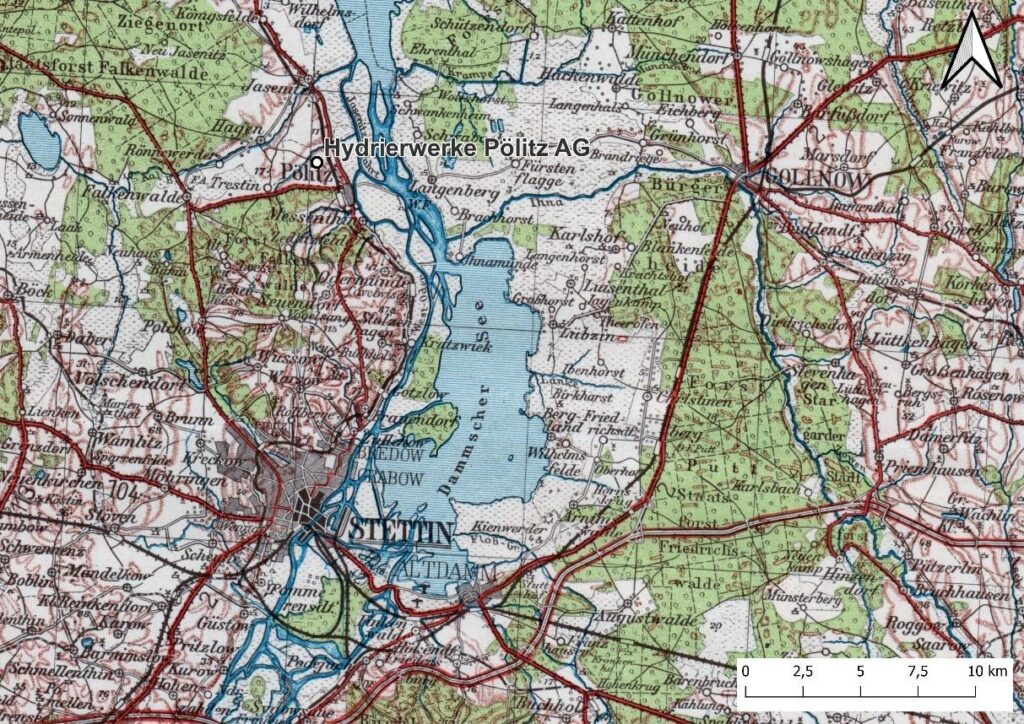
The article presents the history of the Hydrierwerke Pölitz AG chemical factory, which was established near Police in today’s West Pomerania (Figure 1), shown through the prism of reconnaissance aerial photographs taken by the U.S. 8th Air Force.
Figure 1. Location of the Hydrierwerke Pölitz AG plant against the background of the 1942 Übersichtskarte von Mitteleuropa map
The Nazi dream of economic autarky and liquid fuels for the war machine
Around 90% of the energy consumed in Nazi Germany in the late 1930s came from coal. By comparison, the share of liquid fuels in energy production at the time was only 3%. However, their importance soon began to grow in connection with ongoing preparations for the coming war, which was to change the face of the Old Continent forever. In 1938, Nazi Germany, then the world’s second-largest economy, produced and imported about 7 million tons of liquid fuels. This was significantly less than the production capacities of the Third Reich’s future opponents at the time. That same year, Great Britain imported 12 million tons, the Soviet Union (at that time an informal ally of the Third Reich) produced 29 million tons, and the United States—164 million tons.
In the sphere of liquid fuels in the 1930s, the German economy was almost entirely dependent on the import of crude oil and other raw materials from abroad. It was clear to Nazi planners that the approaching war would drastically limit the supplies of strategic raw materials, including crude oil. For this reason, key sectors of German industry, including fuel production, were heavily subsidized in order to increase their efficiency.
During World War II, Nazi Germany’s fuel policy relied on two main pillars: crude oil and the synthetic industry. The exploitation of oil resources within the Third Reich and in occupied and allied territories required continuous investment in exploratory drilling. An additional difficulty was that the chemical composition of the crude oil extracted in Europe made it poorly suited for aviation fuel production. Due to a shortage of domestic natural raw materials, the National Socialists focused on developing the production of synthetic fuels from coal, the only raw material of which the Third Reich had an abundance.
Of the two available technologies for producing synthetic liquid fuels in Nazi Germany, the Bergius hydrogenation process—belonging to I.G. Farben Industrie—was preferred over the Fischer-Tropsch synthesis used by Ruhrchemie. Although the Bergius method was more complicated and energy-intensive, it could use both brown coal (lignite) and hard coal, which Germany had in no short supply. The Fischer-Tropsch method required the use of coke, which was an essential raw material in metallurgy and military production. The Bergius hydrogenation process yielded a high-quality base for refining aviation fuel and other liquid fuels, rubber, and various useful chemicals. For these reasons, Hermann Göring supported investments in synthetic plants utilizing this technology. It is worth noting, however, that synthetic fuel produced by this method was several times more expensive than petroleum products imported from abroad or refined from crude oil.
In 1936, Nazi Germany imported 70% of the liquid fuels consumed in its economy. In the following years, however, it significantly increased its domestic production potential. In 1938, the annual synthetic production capacity reached 1.6 million tons and grew rapidly over the next 5 years. Peak production occurred in 1944, when the annual forecast, based on production from the first four months, was nearly 6 million tons, while total fuel consumption by the German war machine reached 11 million tons. Still, this remained far short of the 19 million tons of liquid fuels identified before the war as the minimum needed to drive the war machine and economy of the Third Reich.
From May 1944—pursuant to the decision of General Carl A. Spaatz—the German fuel industry became the primary target of raids by the U.S. air forces and underwent rapid destruction. The operation was directed against synthetic plants and refineries as well as logistical infrastructure, including railway lines, in order to disrupt the transport of coal to the plants and the distribution of finished products. Consequently, by December 1944, synthetic industry production dropped to 16% of its initial level from the beginning of the year.
Hydrierwerke Pölitz AG and its surroundings
The construction of the Hydrierwerke Pölitz AG synthetic liquid fuel plant began in 1938. Over the next two years, the construction of many key hydrogenation installations was completed, and fuel production was initiated shortly after the French campaign, on July 15, 1940. The plant was established about 10 km north of Szczecin, the largest city in the region, featuring a developed industry and a large port, several shipyards and automotive factories, a Junkers aircraft engine manufacturing plant, a steel mill, a paper mill, and many other smaller companies, most of which had already been converted to wartime production. Many of the aforementioned plants consumed large quantities of liquid and solid fuels, as well as other petroleum-derived chemicals, in their production processes.
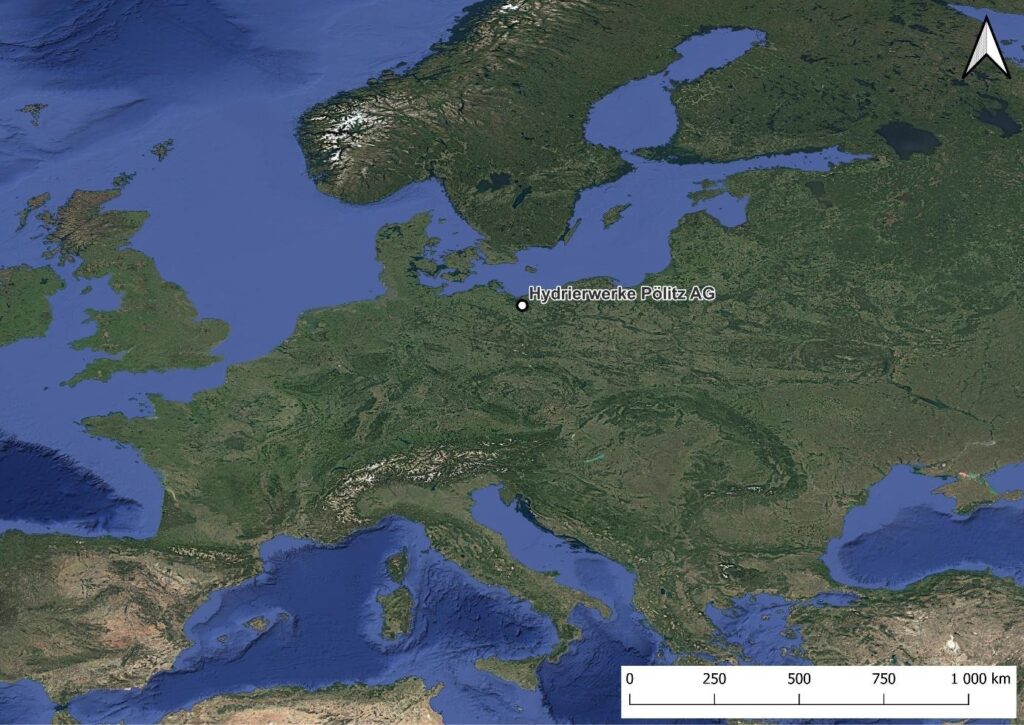
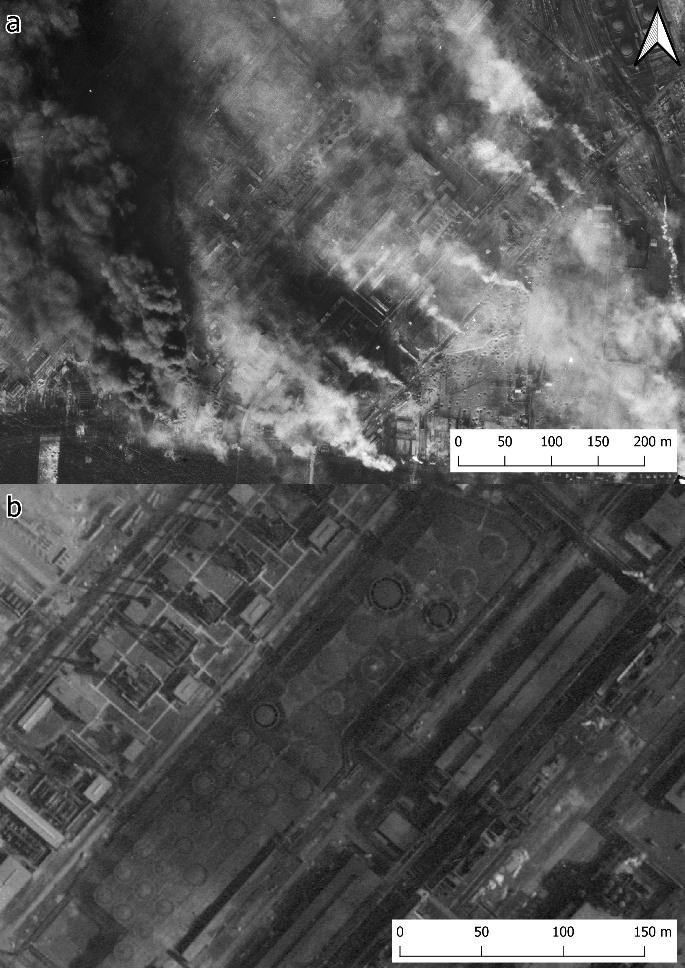
One of the main factors determining the location of Hydrierwerke Pölitz AG was the proximity of waterways. The facility had convenient access to the Baltic Sea via the Szczecin Lagoon and to the distant mining areas of Upper Silesia through the Oder River and its tributaries. Direct access to freshwater sources was also essential for the technological processes. Additionally, a well-developed railway network already existed in the region, allowing for the efficient transport of manufactured fuels to military units. Furthermore, the plant was located far from anticipated frontline areas and enemy airfields (Figure 2). Consequently, in the early stages of the war, it might have seemed that the factory was relatively well protected against potential bombing and sabotage. However, it soon turned out that this sense of security was illusory.
Figure 2. Hydrierwerke Pölitz AG against the background of a map of Europe
The functioning of the factory required investment in new waterfront infrastructure along the Oder River. To this end, a complex of interconnected logistical facilities was created, most of which involved the handling of raw material transport. The plant needed uninterrupted supplies of huge amounts of coal. To produce one ton of finished synthetic fuel, about 7 tons of hard coal were consumed. Of this amount, about 5 tons were burned to produce the electrical and thermal energy needed in the process, and the remaining 2 tons were used for hydrogenation. As a result, hundreds of thousands of tons of coal and other hydrocarbons had to be delivered to the factory every month to ensure its uninterrupted operation.
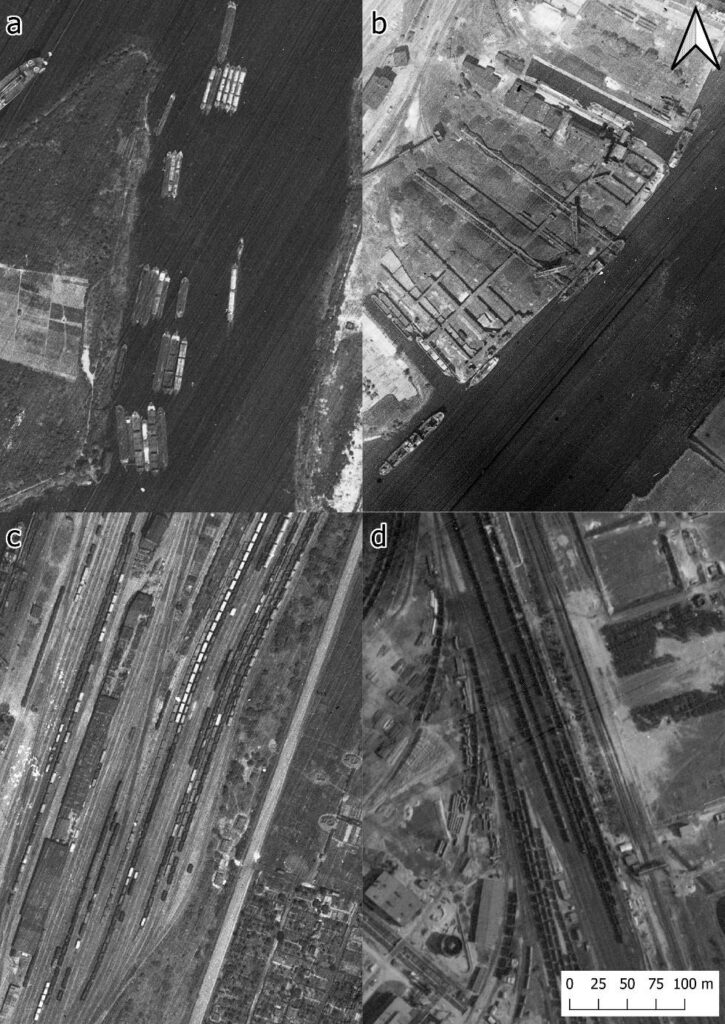
Aerial photographs of the Oder River near Szczecin taken by the U.S. 8th Air Force in the earlier stages of the war show, among other things, a large number of coal barges sailing down the river current, as well as empty barges returning after unloading (Figure 3a). Several large coal terminals and storage areas were established on the Szczecin waterfront, where the barges were unloaded (Figure 3b). The coal was then loaded into railway cars and transported to the plant (Figure 3c). In the event of a failure or destruction of one of the elements of the logistical chain, the remaining terminals could continue to function, ensuring a steady supply of coal to the factory. In turn, on the large railway siding near the factory, there were tank cars used to transport the produced fuels to the front lines (Figure 3d).
Figure 3. Railway logistics and waterfront infrastructure in 1943: a. coal barges sailing down the Oder River (July 26, 1943); b. coal terminal on the left bank of the Oder River (May 20, 1943); c. railway siding with coal cars (July 26, 1943); d. railway siding with tank cars at Hydrierwerke Pölitz AG (July 26, 1943)
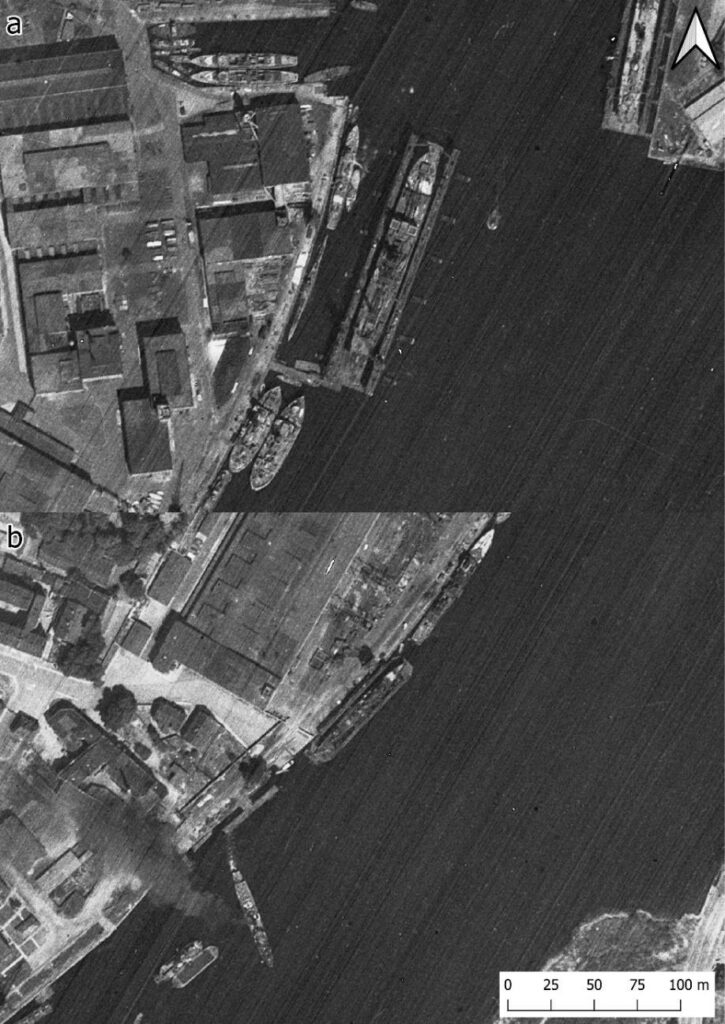
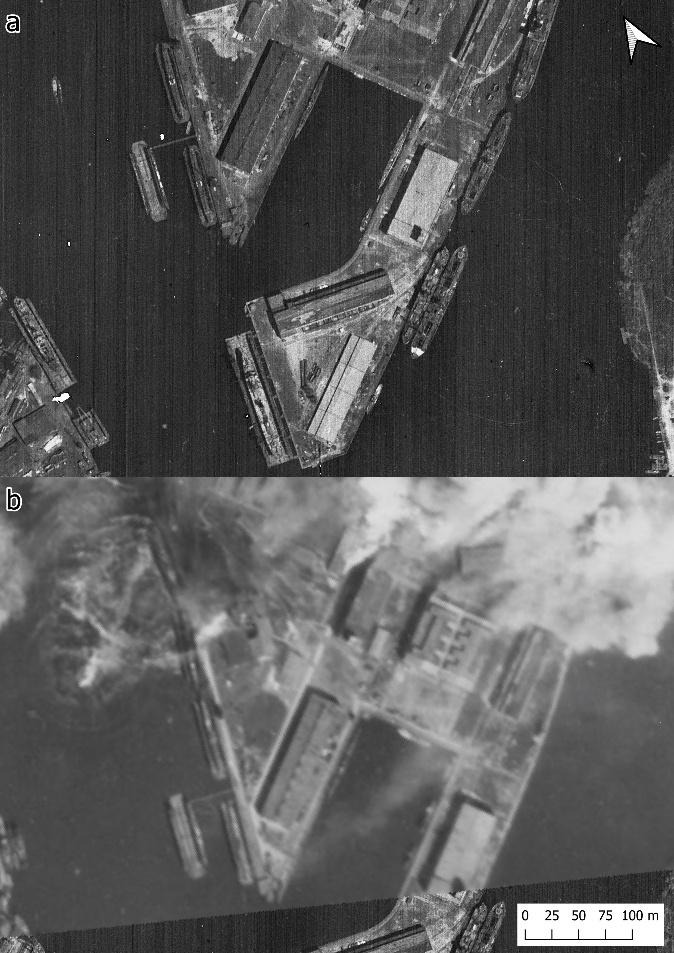
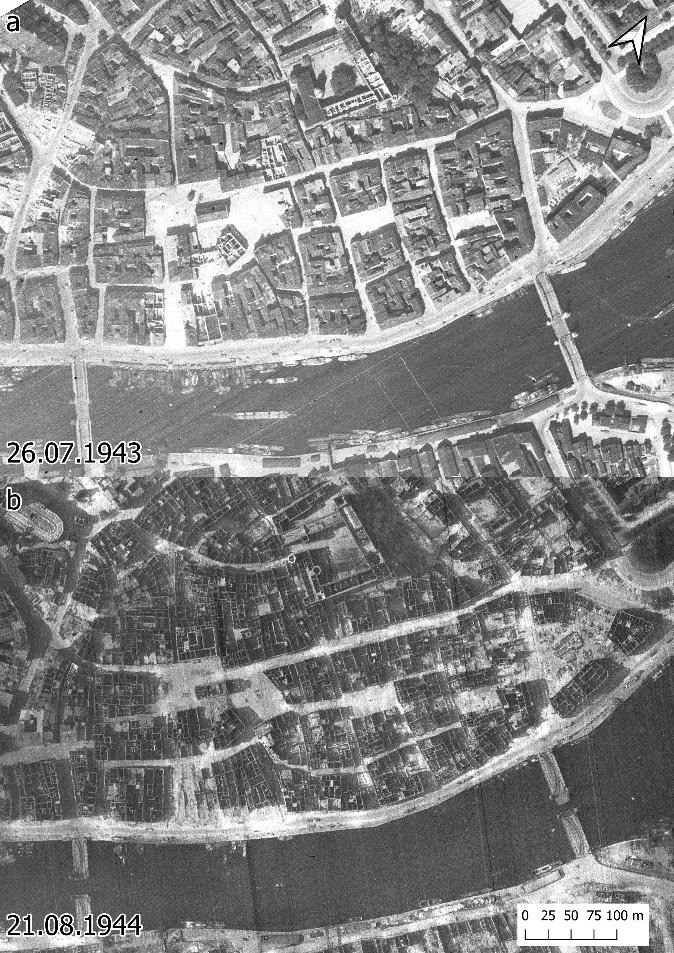
Reconnaissance aerial photographs from July 1943 also show numerous Kriegsmarine vessels moored along the quay of the Szczecin port (Figures 4a and 4b). Some of them were waiting to be resupplied and refueled with diesel produced at Hydrierwerke, while others were undergoing major repairs and maintenance in floating docks. In the aerial photographs from this period, U-boats under construction can also be seen near the Vulcan shipyard quay (Figure 5a). All these facilities, located near the historic center of Szczecin, were later bombed (Figure 5b) by the U.S. 8th Air Force and razed to the ground along with the historic part of the city (Figures 6a and 6b). However, thanks to the analysis of World War II aerial photographs, it is possible to understand and tell the story of this complex system of locations that did not survive the war.
Figure 4. Kriegsmarine units moored to the quay in Szczecin (July 27, 1943)
Figure 5. The Vulcan Shipyard in Szczecin: a. photograph from July 26, 1943; b. photograph taken during the bombing on April 24, 1944
Figure 6. Aerial photographs of Szczecin: a. July 26, 1943; b. August 21, 1944
Slave Labor – A Totalitarian Microcosm
The construction and operation of the synthetic fuel production plant in Police required the influx of thousands of workers into this predominantly agricultural region. Along with the development of new housing estates on the outskirts of Police, temporary camps with wooden barracks were also established for newcomers. Before the outbreak of the war, the factory and its subcontractors employed free wage laborers from various countries. Soon after the end of the September campaign, forced laborers from the occupied territories of Poland began to be brought to Police, and subsequently also from other countries conquered by the Third Reich. In connection with this, intensive work also began on the construction of new slave labor camps.
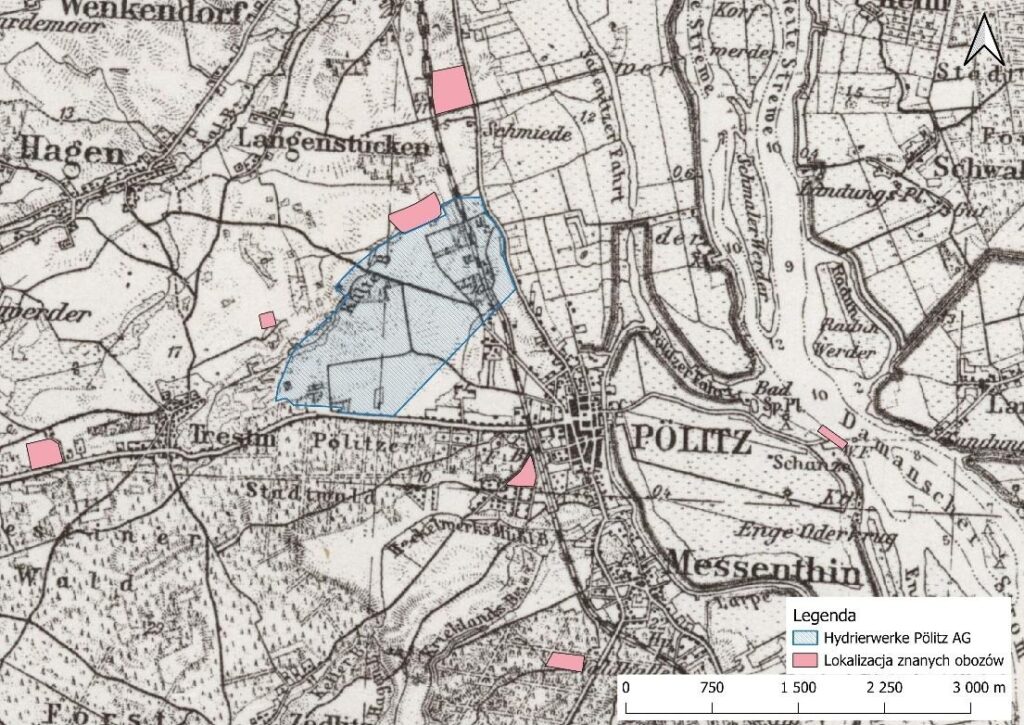
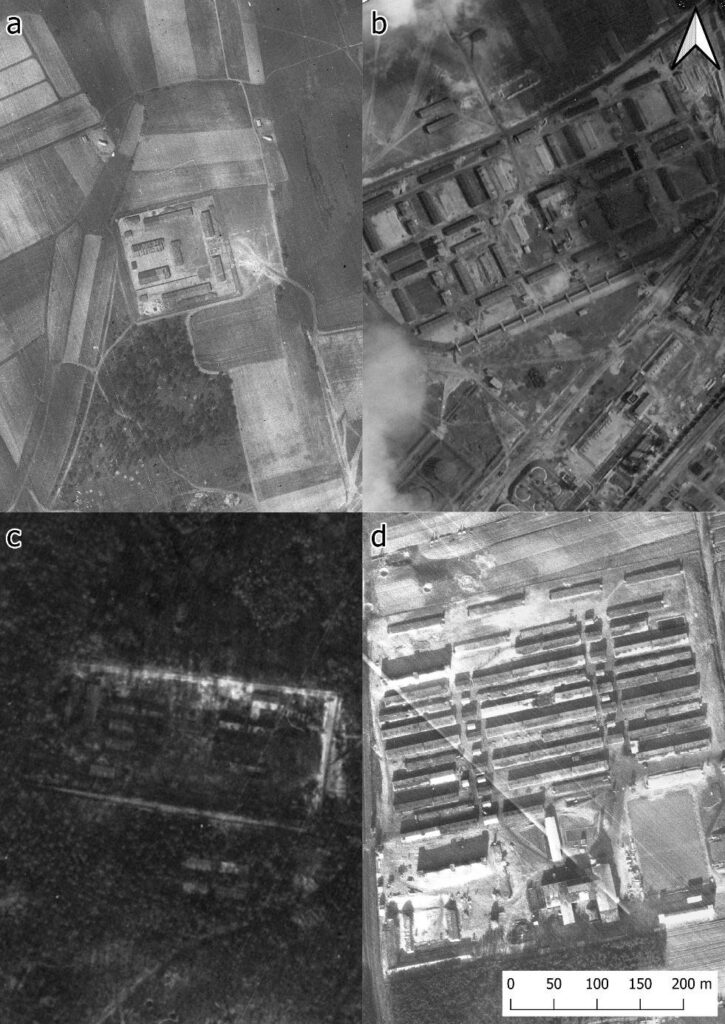
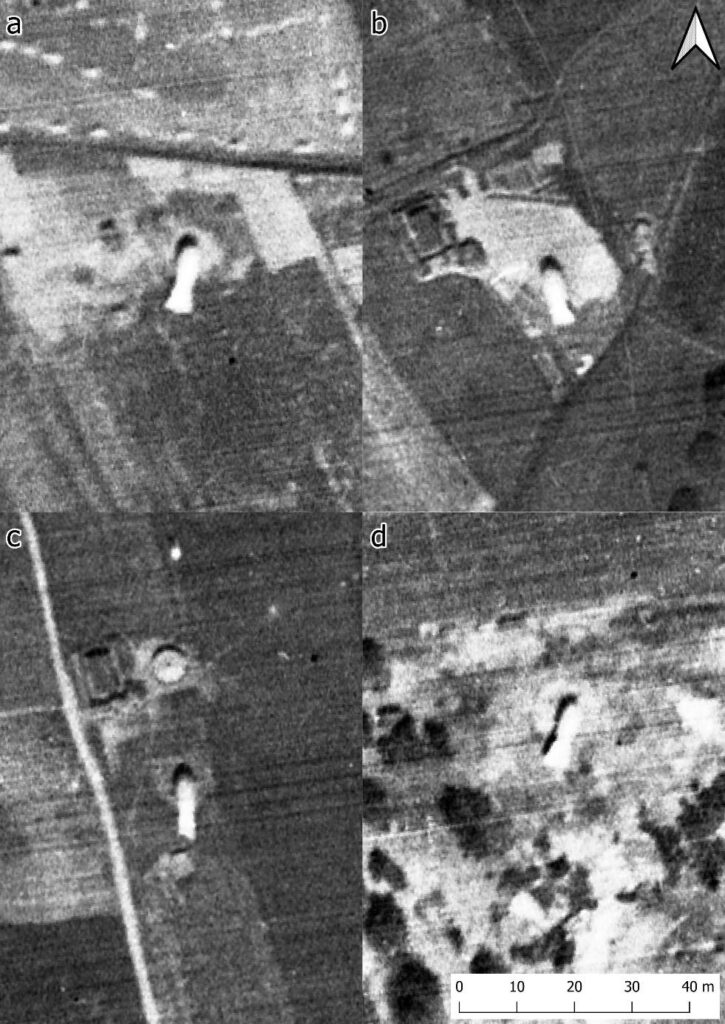
It is estimated that in 1940, Hydrierwerke employed about 6,500 wage laborers, 1,000 soldiers, and tens of thousands of forced laborers. In the vicinity of the plant, there were many different camps (Figure 7). The camps varied in size, function, and living conditions. Among them were, among others, four labor camps, two penal camps, and a joint sub-camp of the Stutthof concentration camp (Figure 8). According to witness accounts, forced laborers died there as a result of accidents, starvation, disease, overwork, and executions. Forced laborers were also frequently victims of Allied bombings. Instances of camp infrastructure destruction and fires caused by bombings were also documented in aerial photographs from that time. Prisoners were also used to defuse unexploded Allied bombs.
Figure 7. Location of camps (labor, penal, and concentration camps) in the immediate vicinity of Hydrierwerke Pölitz AG
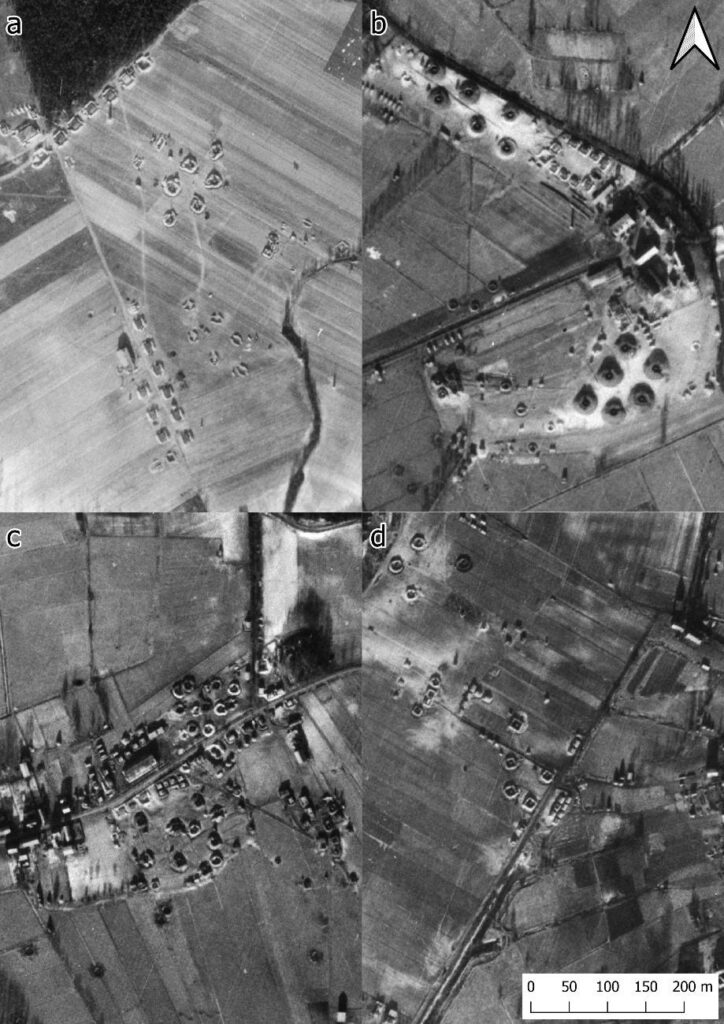
Figure 8. Selected examples of camps captured in reconnaissance aerial photographs: a. Arbeitserziehungslager Hägerwelle penal camp (May 20, 1943); b. Pommernlager labor camp (May 24, 1944); c. Stutthof concentration camp sub-camp (December 22, 1944); d. Tobruklager labor camp (December 22, 1944)
Despite difficult living conditions, the prisoners frequently engaged in active and passive resistance against their oppressors. In 1943, the Polish Home Army carried out Operation “Synthesis” (Operacja „Synteza”), aimed at gathering intelligence regarding Hydrierwerke. The obtained data, based primarily on observations reported by forced laborers and railway workers, was passed on to the Western Allies and contributed to the preparations for the 1944 bombing campaign.
Militarization
On September 5, 1940, less than two months after the launch of fuel production, the plant was attacked for the first time by RAF bombers. The raids were repeated later that same year. Their intensity and the destruction they caused were moderate, but it became clear that the factory was no longer safe. These conclusions served as an impetus for the intensive militarization of the plant’s surroundings.
As part of anti-raid camouflage measures, hundreds of stove smoke generators were built. These devices emitted highly toxic substances into the atmosphere (chlorosulfonic acid and a mixture of ammonium chloride and heavy oil) in the form of dense white smoke. Numerous Allied photographs taken during raids document smoke screens over the plant. However, the smoke screen was never sufficient to completely hide the factory from the sight of Allied crews (Figure 9a). Many concrete generators have survived to this day in the vicinity of the Hydrierwerke ruins. As part of the camouflage of the factory itself, camouflage nets and camouflage painting were also used, although these methods also had limited effectiveness (Figure 9b). Due to the electrostatic charges generated by wind-blown camouflage nets and out of fear of potential fires, this method of concealment could only be used in a few spatially limited parts of the factory.
Figure 9. Passive protection methods of Hydrierwerke Pölitz AG: a. smoke screen over the factory (December 22, 1944); b. camouflage net covering tank cars (June 23, 1943)
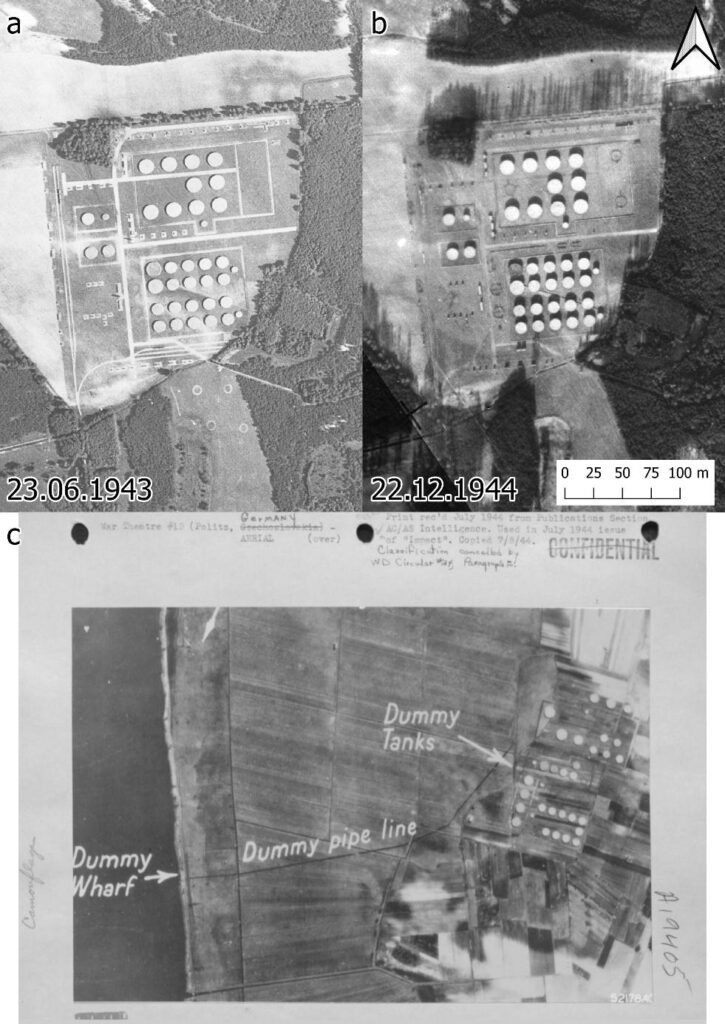
Another passive method of protecting the factory was three refinery mock-ups located about 10 km north and northwest of the plant, surrounded by vast forests (Figure 10). In daylight, they were relatively easy to spot and bypass. To increase the credibility of the imitation, active anti-aircraft artillery batteries were deployed around them. At night, however, fires were lit to simulate bomb explosions and blazes, which, along with other lighting effects, were intended to distract Allied pilots. However, it appears that these target imitations were largely ineffective—available aerial photographs from the period of daytime raids do not show obvious signs of damage in the following months (Figures 10a and 10b).
Figure 10. Mock-ups imitating fuel tanks to deceive bomber crews: a. mock-up in Zalesie on June 23, 1943; b. the same mock-up on December 22, 1944; c. mock-up in Uniemyśl (July 1944)
Analysis of Airborne Laser Scanning (ALS) data also shows no traces of bomb craters near the mock-ups, even though these sites are surrounded by an old forest, and other World War II features (trenches, artillery positions, etc.) are still visible there. This most likely indicates that Allied pilots knew about the existence of the mock-ups, and identifying them did not pose a major problem for them (Figure 10c).
Figure 11. Barrage balloons in the vicinity of Hydrierwerke Pölitz AG (July 26, 1943)
In the early stages of the war, Hydrierwerke was protected by dozens of barrage balloons deployed across the surrounding fields (Figure 11). They were used from 1940 until the end of 1943, after which they were removed when it was deemed that they posed no threat to Allied aircraft flying at high altitudes, far beyond the reach of the balloons.
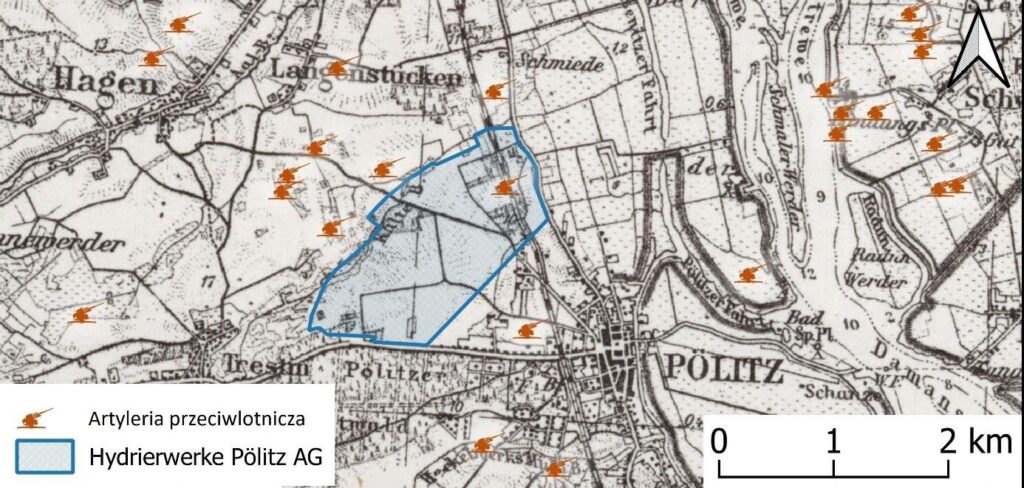
Figure 12. Deployment of anti-aircraft artillery positions against the background of a Messtischblatt topographic map
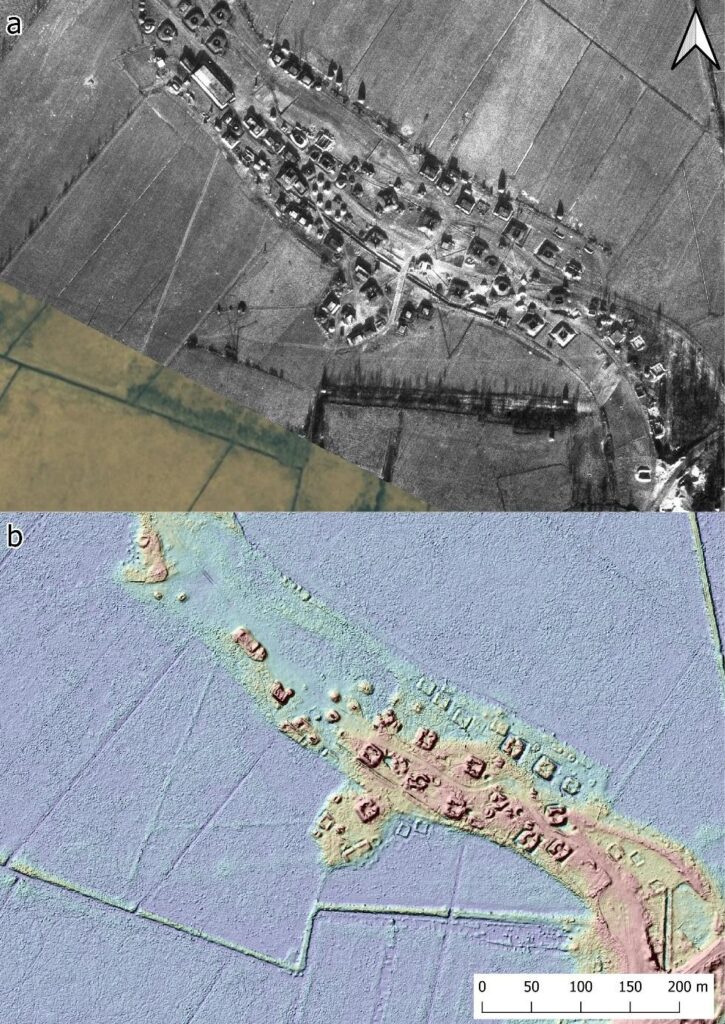
The main pillar of Hydrierwerke’s active defense consisted of hundreds of anti-aircraft guns of various calibers (Figure 12). Analysis of aerial photographs shows that their number grew until mid-1944. German anti-aircraft units utilized advanced technologies, including Würzburg fire control radars, rangefinders, communication systems, searchlights, analog ballistic computers, and a well-developed logistical network ensuring ammunition supplies. Anti-aircraft positions were often located on sandy elevations amidst marshy areas and forest clearings (Figure 13). Many of the earthen fortifications protecting the guns and ammunition depots have survived to this day in very good condition and can be recorded using ALS technology (Figure 14).
Figure 14. Anti-aircraft artillery position on the right bank of the Oder River opposite the factory: a. aerial photograph from December 22, 1944; b. contemporary remains of the same artillery position on LiDAR imagery
The Third Reich in Ruins and the Nazi “Green Alternative”
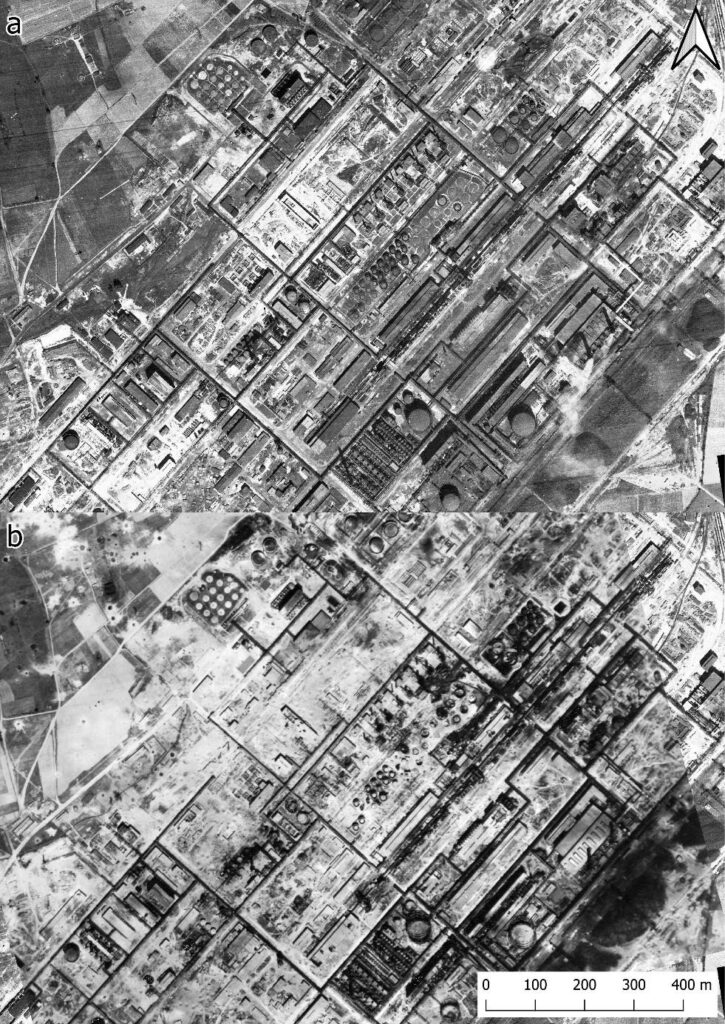
The intense Allied air raids of 1944 led to the complete devastation of the synthetic liquid fuel plant in Police. Analysis of World War II aerial photographs allows for a detailed tracking of the gradual process of the plant’s destruction, revealing the intensification of the bombings and the final desperate attempts at ad-hoc repairs and restarting production regardless of the costs (Figure 15). Due to the notorious inaccuracy of the bombings, many bombs fell on the surrounding villages and fields, causing casualties among the civilian population and destroying farms.
Figure 15. Destruction of Hydrierwerke Pölitz AG: a. photograph from July 26, 1943; b. photograph from July 27, 1944
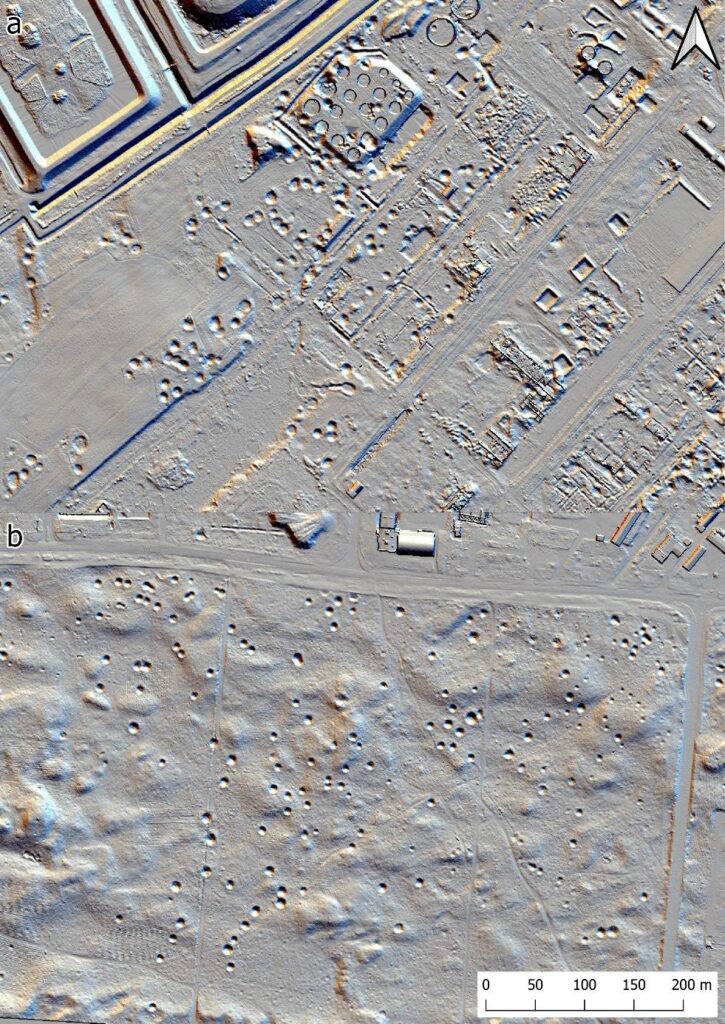
The raids left numerous bomb craters that have become a permanent feature of the modern landscape of Police. Hundreds of such traces have been preserved in the forested zone around the factory (Figure 16). In cultivated fields, the situation is different: some craters have survived only in agricultural wasteland and small mid-field woods. Most of them were filled in during post-war land reclamation work, but they can still be spotted as positive vegetation marks in crops during periods of drought.
Figure 16. Bomb craters preserved in the contemporary landscape of Police.
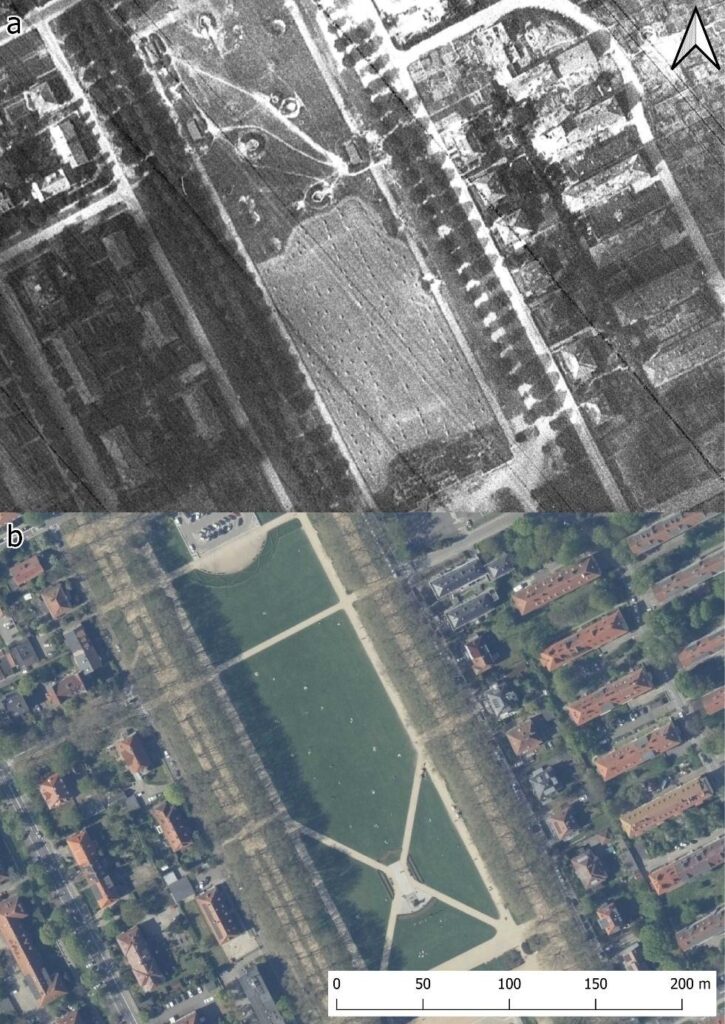
Intense Allied bombings in the second half of 1944 led to a catastrophic liquid fuel deficit in Nazi Germany. The effectiveness of the bombings is also indirectly confirmed by an aerial photograph taken on August 21, 1944, by the U.S. Eighth Air Force, which shows a recreational area directly behind the Szczecin town hall and the NSDAP headquarters (contemporary City Hall and Jasne Błonia). Half of the large lawn in the photograph is occupied by an anti-aircraft battery, while the other half has recently been mown to form haystacks for horses, which—due to fuel shortages for trucks—once again became crucial for maintaining Wehrmacht logistics chains (Figure 17). Because of problems with food production and distribution, many lawns, parks, and squares—often located among ruined houses—were converted into vegetable gardens, reminiscent of the Western concept of “victory gardens.”
Figure 17. Jasne Błonia in Szczecin: a. photograph from August 21, 1944; b. contemporary orthophotomap
Contemporary local identity and difficult past
As a result of the decisions made at the Yalta and Potsdam conferences, Poland gained territories in the west and north that had previously belonged to Nazi Germany, while simultaneously losing its eastern lands.
Both Szczecin and Police ultimately became part of Poland, although this process was accompanied by certain complications.
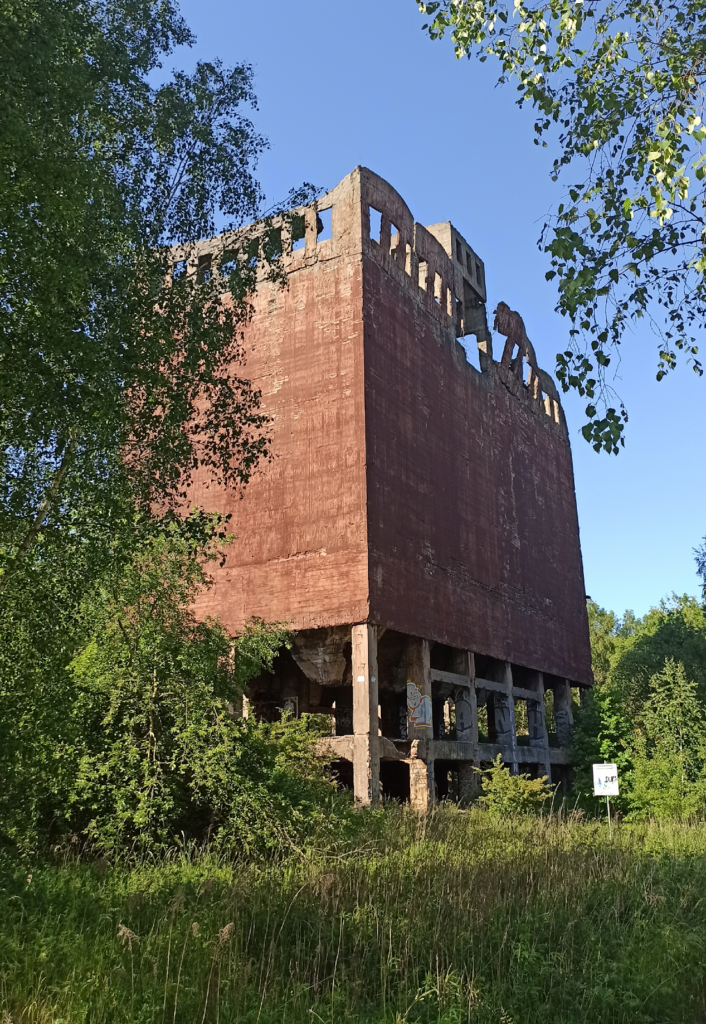
Figure 18. Contemporary photograph of the ruins of the Hydrierwerke Pölitz AG factory
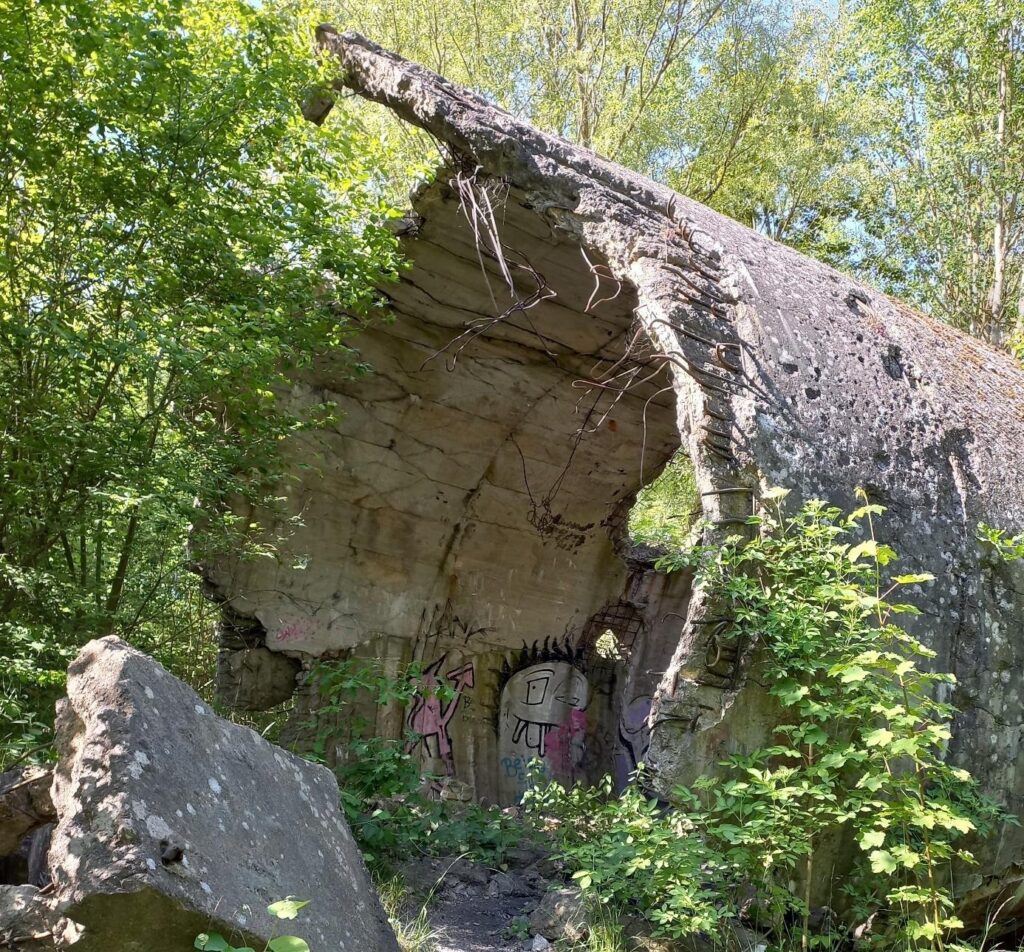
Monumental ruins of the former Nazi chemical plant have survived to this day, making a clear presence in the cultural landscape of modern Police (Figures 18 and 19). Beginning in October 1945, Police was transformed into a Soviet military enclave, temporarily excluded from Polish administration. The presence of the Red Army and its activities worsened the already poor technical condition of the facility. Soviet soldiers used thousands of German prisoners of war and civilian laborers to dismantle valuable installations that had survived the war. All secondary materials, including non-ferrous metals and other valuable raw materials, were also salvaged and transported to the USSR by rail and sea.
Figure 19. Contemporary photograph of the ruins of the Hydrierwerke Pölitz AG factory.
Following the liquidation of the enclave in September 1946, the area was placed under the custody of the Polish Army. In 1965, the construction of a new chemical plant producing mineral fertilizers began in the vicinity of the old factory. As a result, the ruins of Hydrierwerke Pölitz AG became a troublesome, if not entirely unwanted, heritage. As is often the case with abandoned military installations, the site became shrouded in an aura of mystery—all the more so because Polish military supervision was maintained until the 1990s.
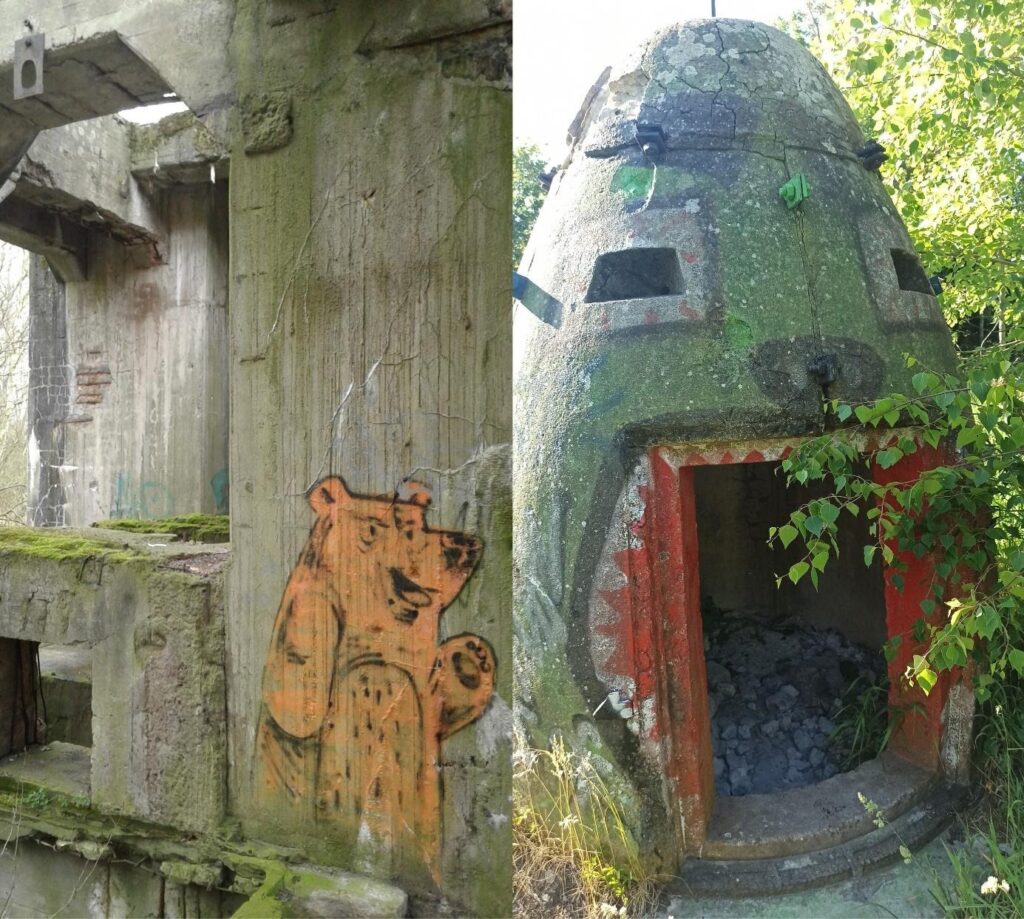
After the fall of the Iron Curtain, the site of the old factory became accessible to the general public. The era of appropriation and initial wild explorations began. In the collective local memory, the ruins of the plant changed their face: from a forbidden place, they transformed into an “otherworld” where everyday rules and norms did not apply. The 1990s and the early 2000s were a period when the ruins attracted various subcultural groups: punks, people addicted to psychoactive substances, or alleged “satanists.” The presence of these real or imagined subcultures fitted into the perception of the ruins as an inverted or alternative dimension. A visible trace of this presence is the numerous graffiti on the walls of the ruined buildings (Figure 20).
Figure 20. Contemporary photograph of the ruins of the Hydrierwerke Pölitz AG factory
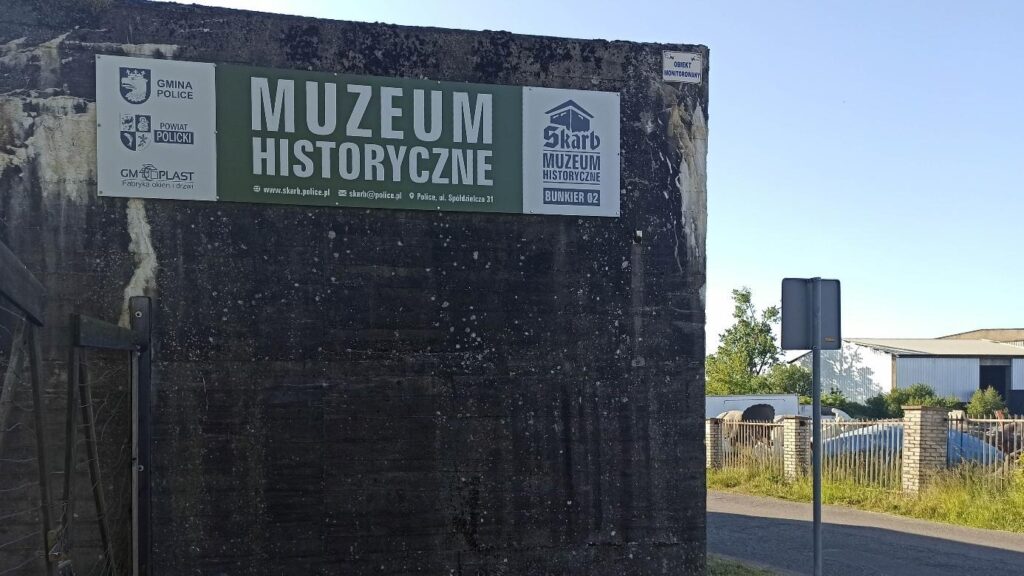
However, over the past roughly 20 years, a significant change has taken place. The growing awareness of the historical significance of this place, as well as its deteriorating technical condition, led to the first grassroots initiatives aimed at commemoration and protection. An important step was the establishment of the “SKARB” association in 2006 by local history enthusiasts. Thanks to their involvement, civil supervision was introduced and cleanup work was carried out. Some of the brushwood was removed, information boards were installed, and paths ensuring safe movement for visitors were designated. The association organizes weekly tours of the Hydrierwerke site, hosts thematic events (e.g., Museum Night), and publishes valuable historical and popular science articles. Despite difficulties, since 2006 the old factory has begun to function as an important element of the cultural landscape of modern Police. Currently, the Association rents two World War II air-raid shelters adjacent to the old factory (Figure 21). They serve as exhibition spaces for military artifacts and educational materials. A large part of the exhibition is dedicated to commemorating the fate of thousands of forced laborers.
Figure 21. Headquarters of the SKARB Association
Currently, we are observing a growing need to shift the narrative from an “enclave of otherness/entertainment” toward the memory of crimes and victims. The first stage of this process took place especially in the 1990s, when the ruins were described as “forbidden,” “mysterious,” and “unknown” places. The initiatives of the “SKARB” association have introduced a gradual change in narrative—one that is more mature and empathetic, based on the biographies of the victims and an understanding of the value of this unique place.
Rycina 2. Hydrierwerke Pölitz AG na tle mapy Europy (Google Earth; oprac. G. Kiarszys).
Rycina 3. Logistyka kolejowa i infrastruktura nabrzeżna w 1943 roku: a. barki z węglem płynące w dół Odry (26 lipca 1943); b. terminal węglowy na lewym brzegu Odry (20 maja 1943); c. bocznica kolejowa z wagonami z węglem (26 lipca 1943); d. bocznica kolejowa z wagonami cysternami przy Hydrierwerke Pölitz AG (26 lipca 1943) (Archiwum Narodowe w Waszyngtonie; oprac. G. Kiarszys).
Rycina 4. Jednostki Kriegsmarine przycumowane do nabrzeża w Szczecinie (27 lipca 1943) (Archiwum Narodowe w Waszyngtonie; oprac. G. Kiarszys).
Rycina 5. Stocznia Vulcan w Szczecinie: a. fotografia z 26 lipca 1943; b. fotografia wykonana 24 kwietnia 1944 podczas bombardowania (Archiwum Narodowe w Waszyngtonie; oprac. G. Kiarszys).
Rycina 6. Fotografie lotnicze Szczecina: a. 26 lipca 1943; b. 21 sierpnia 1944 (Archiwum Narodowe w Waszyngtonie; oprac. G. Kiarszys).
Rycina 7. Lokalizacja obozów (pracy, karnych i koncentracyjnych) w najbliższym otoczeniu Hydrierwerke Pölitz AG (http://igrek.amzp.pl/result.php?cmd=id&god=2453&cat=TK25; oprac. G. Kiarszys).
Rycina 8. Wybrane przykłady obozów utrwalonych na zwiadowczych zdjęciach lotniczych: a. obóz karny Arbeitserziehungslager Hägerwelle (20 maja 1943); b. obóz pracy Pommernlager (24 maja 1944); c. filia obozu koncentracyjnego Stutthof (22 grudnia 1944); d. obóz pracy Tobruklager (22 grudnia 1944) (Archiwum Narodowe w Waszyngtonie; oprac. G. Kiarszys).
Rycina 9. Bierne metody ochrony Hydrierwerke Pölitz AG: a. zasłona dymna nad fabryką (22 grudnia 1944); b. siatka maskująca cysterny (23 czerwca 1943) (Archiwum Narodowe w Waszyngtonie; oprac. G. Kiarszys).
Rycina 10. Makiety udające zbiorniki z paliwem w celu zmylenia załóg bombowców: a. makieta w Zalesiu 23 czerwca 1943; b. ta sama makieta 22 grudnia 1944; c. makieta w Uniemyślu (lipiec 1944) (Archiwum Narodowe w Waszyngtonie; oprac. G. Kiarszys).
Rycina 11. Balony zaporowe w sąsiedztwie Hydrierwerke Pölitz AG (26 lipca 1943) (Archiwum Narodowe w Waszyngtonie; oprac. G. Kiarszys).
Rycina 12. Rozmieszczenie stanowisk artylerii przeciwlotniczej na tle mapy topograficznej Messtischblatt (http://igrek.amzp.pl/result.php?cmd=id&god=2453&cat=TK25; oprac. G. Kiarszys).
Rycina 13. Stanowiska artylerii przeciwlotniczej na fotografiach zwiadowczych (22 grudnia 1944) (Archiwum Narodowe w Waszyngtonie; oprac. G. Kiarszys).
Rycina 14. Stanowisko artylerii przeciwlotniczej na prawym brzegu Odry na wysokości fabryki: a. fotografia lotnicza z 22 grudnia 1944; b. współczesne pozostałości tego samego stanowiska artylerii na zobrazowaniu lidarowym (a. Archiwum Narodowe w Waszyngtonie; b. GUGiK; oprac. G. Kiarszys).
Rycina 15. Zniszczenia Hydrierwerke Pölitz AG: a. fotografia z 26 lipca 1943 i b. fotografia z 27 lipca 1944 (Archiwum Narodowe w Waszyngtonie; oprac. G. Kiarszys).
Rycina 16. Leje po wybuchach bomb utrwalone we współczesnym krajobrazie Polic. Przetworzenie danych z lotniczego skanowania laserowego (GUGiK; oprac. G. Kiarszys).
Rycina 17. Jasne Błonia w Szczecinie: a. fotografia z 21 sierpnia 1944; b. współczesna ortofotomapa (a. Archiwum Narodowe w Waszyngtonie; b. GUGiK; oprac. G. Kiarszys).
Rycina 21. Siedziba stowarzyszenia SKARB (fot. G. Kiarszys).
More:
Grzegorz Kiarszys, Maksymilian Dzikowski, The Archaeology of a Nazi Synthetic-Fuel Plant and Its Legacy: The Hydrierwerke Pölitz AG, „Antiquity” 98, no. 402 (2024), 1641-1661 https://doi.org/10.15184/aqy.2024.154