


The “Solidarity” Carnival
In the summer of 1980, a massive wave of strikes swept across Poland, leading to the creation of the Independent Self-Governing Trade Union “Solidarity” and the emergence of a vast ten-million-strong social movement that transformed the one-party socio-political system of the Polish People’s Republic. Western Pomerania was one of its birthplaces and most important centers.
Throughout Poland, social tensions had been rising since the late 1970s as the economic crisis deepened. Shortages of basic goods, empty store shelves, and long queues became part of daily life. People were further irritated by the government’s “propaganda of success,” which painted a rosy picture of the country’s situation while living conditions continued to deteriorate. The spark that ignited the wave of strikes was the price increase introduced on July 1, 1980. Within that same month, the first strikes began to erupt in various regions of the country. The authorities sought to “extinguish” them by granting wage increases in the striking workplaces — a move that only encouraged further protests elsewhere. The key turning point came with the outbreak of the strike at the Lenin Shipyard in Gdańsk on August 14, 1980. The Gdańsk shipyard workers soon formed the Inter-Enterprise Strike Committee (MKS), led by Lech Wałęsa, and presented a list of 21 demands. At the top of the list was a call for the government’s consent to create independent trade unions, free from party and state control, that would genuinely defend workers’ interests.
On August 18, in a gesture of solidarity with the striking shipyard workers in Gdańsk, shipyard workers in Szczecin also went on strike. The first to do so were the employees of the “Parnica” Repair Shipyard, led by Aleksander Krystosiak. A few hours later, workers at the Adolf Warski Szczecin Shipyard joined them, electing storekeeper Marian Jurczyk as chairman of the Strike Committee. In the following days, more workplaces from Szczecin and the surrounding region joined the protest. At the Warski Shipyard, an Inter-Enterprise Strike Committee (Międzyzakładowy Komitet Strajkowy, MKS) was established, headed by Jurczyk. The Szczecin MKS presented a list of 36 demands, placing — like its Gdańsk counterpart — the creation of independent trade unions at the top of the list. Negotiations with the Szczecin strikers were undertaken by a government commission led by Deputy Prime Minister Kazimierz Barcikowski. By the end of the strike wave, the Szczecin MKS represented around 340 workplaces.
The two striking centers established contact, exchanged delegates, and agreed to continue their protests jointly until the authorities accepted the first and most important demand. However, the Szczecin Inter-Enterprise Strike Committee (MKS) signed its agreement ending the strike on August 30 — one day before Gdańsk. Several factors influenced this decision: communication difficulties (at the crucial moment of negotiating the end of the strike, telephone connections were cut), general exhaustion among the strikers, a desire to secure and “make use of” the concessions already achieved, and the belief that the Gdańsk workers would sign their agreement later that same day. The separate signing of the agreements caused some tension between Gdańsk and Szczecin in the following weeks, but these differences were eventually overcome. In both centers, the most important achievement was the government’s consent — with only minor technical differences between the accords — to fulfill the first and key demand of the strikers.
After the strikes, efforts began to establish the new trade union. The Szczecin Inter-Enterprise Strike Committee (MKS) was transformed into the Inter-Enterprise Workers’ Commission (Międzyzakładowa Komisja Robotnicza, MKR), with Marian Jurczyk remaining as its chairman. The first headquarters of the MKR consisted of two small rooms in a shipyard building at 42 Nocznickiego Street in Szczecin. Alongside Jurczyk, the group of MKR leaders included: Maria Chmielewska, Ludwik Gracel, Stanisław Kocjan, Michał Kurowski, Franciszek Łuczko, Henryk Makieła, Jerzy Mirski, Jan Nowak, Wiesław Polczyk, Franciszek Skwierczyński (who, as it later turned out, was also an informant of the Security Service), Adolf Szutkiewicz, Stanisław Wądołowski, and Stanisław Wiszniewski.
On September 2, the first plenary session of the Inter-Enterprise Workers’ Commission (MKR) was held at the Shipyard Cultural Center “Korab” in Szczecin, with the participation of representatives from workers’ commissions across the region. Discussions focused on how to initiate the establishment of workplace organizations within the new trade union. Participants were uncertain whether to create entirely new structures and resign from existing branch unions or to conduct new elections within them. During the meeting, the voice of Andrzej Milczanowski — a legal adviser and organizer of the strikes at the Provincial Public Transport Company (WPKM) in Szczecin — stood out strongly. Milczanowski criticized the Szczecin MKS for ending its strike a day earlier than the Gdańsk committee and called for cooperation with Gdańsk in creating a single, unified trade union.
On September 17, a congress of founding committees and workers’ commissions from across the country was held in Gdańsk. Western Pomerania was represented by Stanisław Wądołowski, deputy to Marian Jurczyk in the Szczecin Inter-Enterprise Workers’ Commission (MKR). He was the first to take the floor during the session, advocating for the creation of a single, nationwide organization. Ultimately, the decision to adopt this solution was strongly influenced by the arguments of Jan Olszewski from Warsaw and Karol Modzelewski from Wrocław, the latter also proposing the name “Solidarity.” During the meeting, it was also decided to establish a provisional national leadership for the new union — the National Coordinating Commission (Krajowa Komisja Porozumiewawcza, KKP). Western Pomerania was represented in this body by Marian Jurczyk and Stanisław Wądołowski, who, in February 1981, became a member of the KKP Presidium.
A distinctive feature of Szczecin during the first months of the “Solidarity” carnival was the operation of the Joint Commission (Komisja Mieszana), established to oversee the implementation of the August Agreements. It was created by order of the Prime Minister on September 2, 1980. The commission was headed by Deputy Prime Minister Kazimierz Barcikowski and included representatives of both the authorities — Janusz Brych (First Secretary of the Szczecin Voivodeship Committee of the Polish United Workers’ Party), Jerzy Białkowski (Deputy Minister of the Heavy and Agricultural Machinery Industry), and Henryk Kanicki (Szczecin Voivode) — as well as the MKR, represented by Jarosław Mroczek, Marian Juszczuk, and Aleksander Krystosiak. The commission quickly became a source of controversy among Solidarity leaders. Its critics accused its members of “fraternizing” with government officials, elevating themselves above other leaders of the new movement, and forming what was effectively a “parallel trade union authority” in the region alongside the MKR. The commission was also criticized by union leaders in Gdańsk, who argued that it duplicated the responsibilities of the National Coordinating Commission (KKP). Amid growing tensions and conflict, the Joint Commission was dissolved in November 1980.
That same month brought an event confirming Western Pomerania’s significant position within the “Solidarity” movement. On November 18–19, the National Coordinating Commission (KKP) held its first off-site meeting in Szczecin. Among those who came to the city were Lech Wałęsa, Andrzej Gwiazda, and Jacek Kuroń. The KKP members met at the Shipyard Cultural Center “Korab” with representatives of workplaces from across the voivodeship. Additionally, an open meeting for the general public was organized at the Summer Theater in Kasprowicz Park, attended by around 10,000 people.
The organizational structures of “Solidarity” were gradually established throughout the country and the region. For example, on September 19, the Inter-Enterprise Workers’ Commission (MKR) in Świnoujście was formed, with Waldemar Kaśkiewicz as its chairman. On October 9, the Szczecin MKR created a branch in Barlinek (also covering Dębno and Myślibórz), where Jan Chojnacki and Waldemar Kukiełka were responsible for organizing the union. In Gryfice, the Inter-Enterprise Coordinating and Consultative Commission was established on November 19, led by Andrzej Romanowicz (who was replaced by Andrzej Popielski in January 1981). All of these bodies operated autonomously but remained subordinate to the Szczecin MKR. By the end of February 1981, “Solidarity” in Western Pomerania had around 400,000 members — meaning that as many as 90% of all employed persons in the region belonged to the union.
The activity of “Solidarity” in Western Pomerania, as in the rest of the country, extended far beyond traditional trade union matters. In addition to defending workers’ rights, the union became involved in a wide range of social issues. In March 1981, the Regional Committee for the Defense of Prisoners of Conscience was established at the Szczecin Inter-Enterprise Workers’ Commission (MKR), headed by Stanisław Wądołowski and including, among others, lawyers Jerzy Zimowski and Andrzej Milczanowski. Union activists also participated in the creation of workers’ self-management councils in enterprises. At the end of July 1981, a “women’s and children’s hunger march” was organized in Szczecin to draw the authorities’ attention to the worsening living conditions of society. During times of crisis and social tension, “Solidarity” in Western Pomerania was able to mobilize large numbers of people to protest. This was the case during the nationwide warning strike of October 3, 1980 (linked to the authorities’ delay in registering the union — the official registration was finally granted on November 10, 1980) and again during the so-called Bydgoszcz Crisis in March 1981, when the brutal beating of “Solidarity” activists in Bydgoszcz led the entire movement to prepare for a general strike — one that was eventually called off after the signing of the so-called Warsaw Agreement.
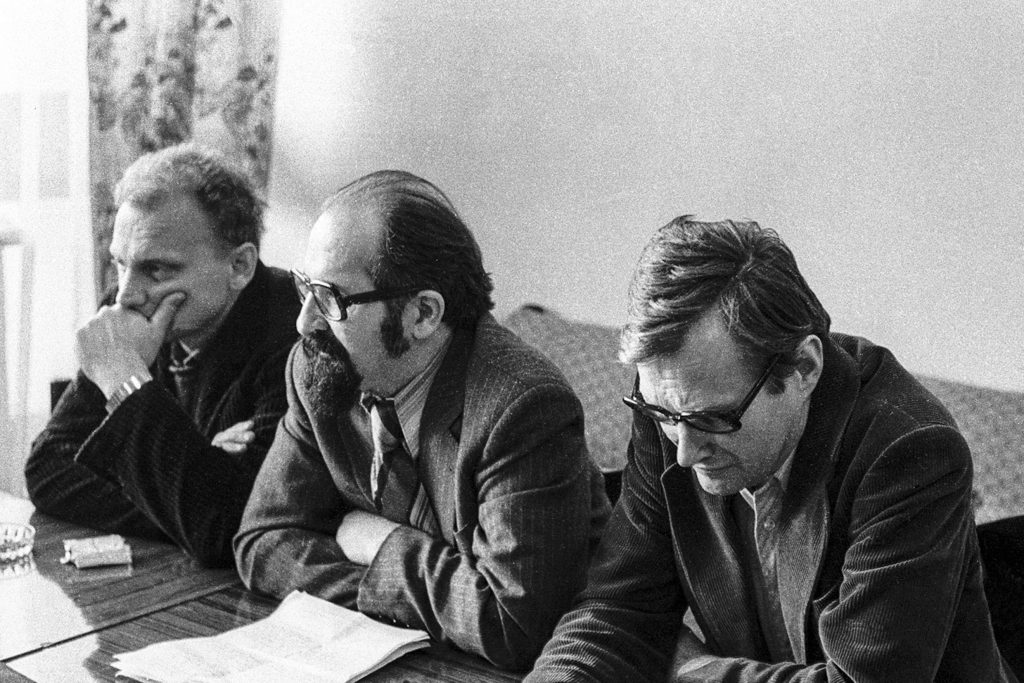
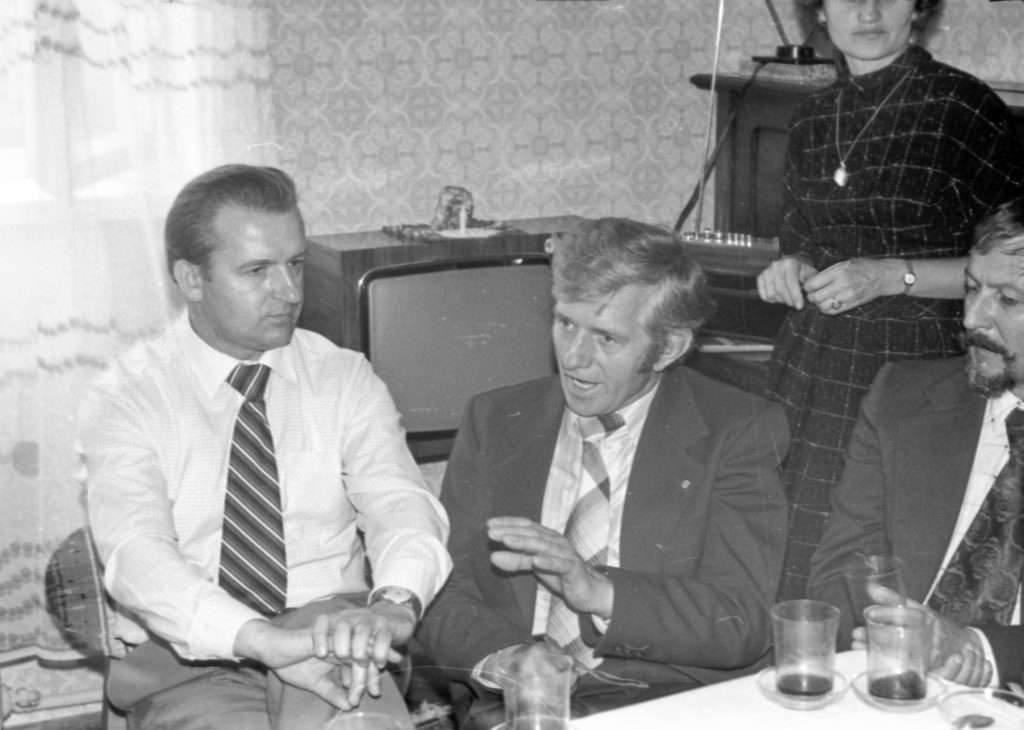
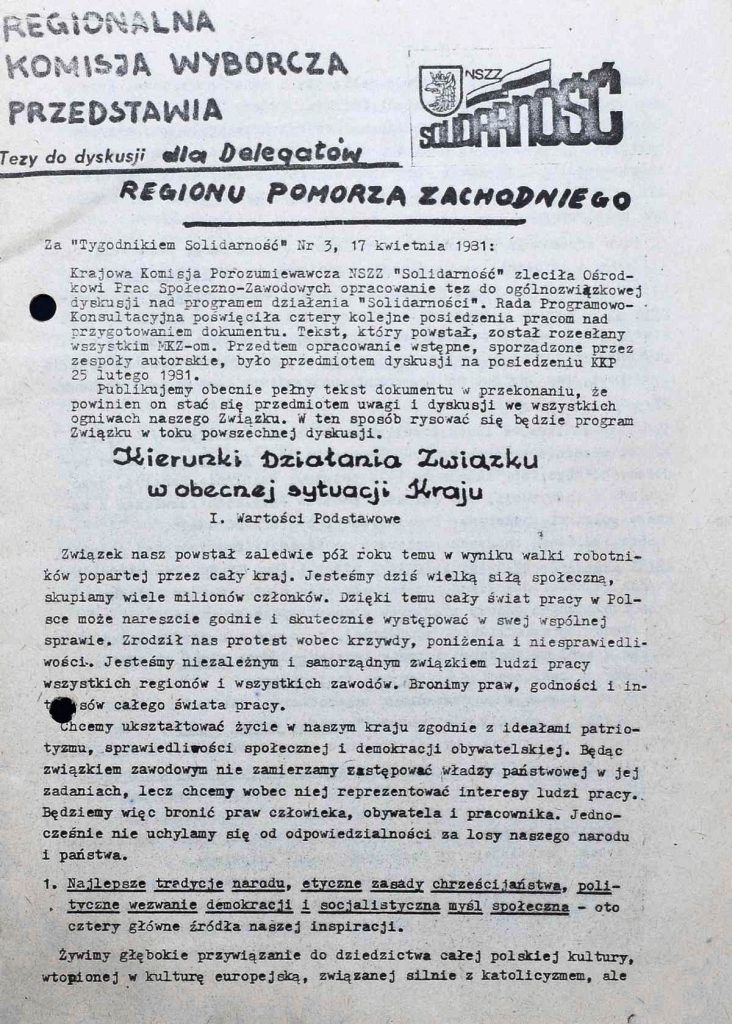
For “Solidarity” activists, internal union elections served as a true school of democracy. In June 1981, during the First General Assembly of Delegates of the Western Pomerania Region held at the Shipyard Cultural Center “Korab” in Szczecin — with the participation of nearly 500 delegates — the union’s permanent regional leadership was elected, with Marian Jurczyk remaining as chairman. The Presidium of the Regional Board of NSZZ “Solidarity” Western Pomerania included: Aleksander Krystosiak and Stanisław Wądołowski (both as vice-chairmen), Stanisław Kocjan (secretary), and Przemysław Fenrych, Kazimierz Kostrzewski, Jan Nowak, Grzegorz Olejnik, Jan Tarnowski, Mieczysław Ustasiak, and Ewaryst Waligórski (members). At the First National Congress of Delegates, held in Gdańsk in two sessions (September 5–10 and September 26–October 7, 1981), Jurczyk ran for the position of national chairman of NSZZ “Solidarity.” With the support of 24.1% of the delegates, he finished second after Lech Wałęsa, but he was elected to the National Commission, where Stanisław Wądołowski became one of the vice-chairmen.
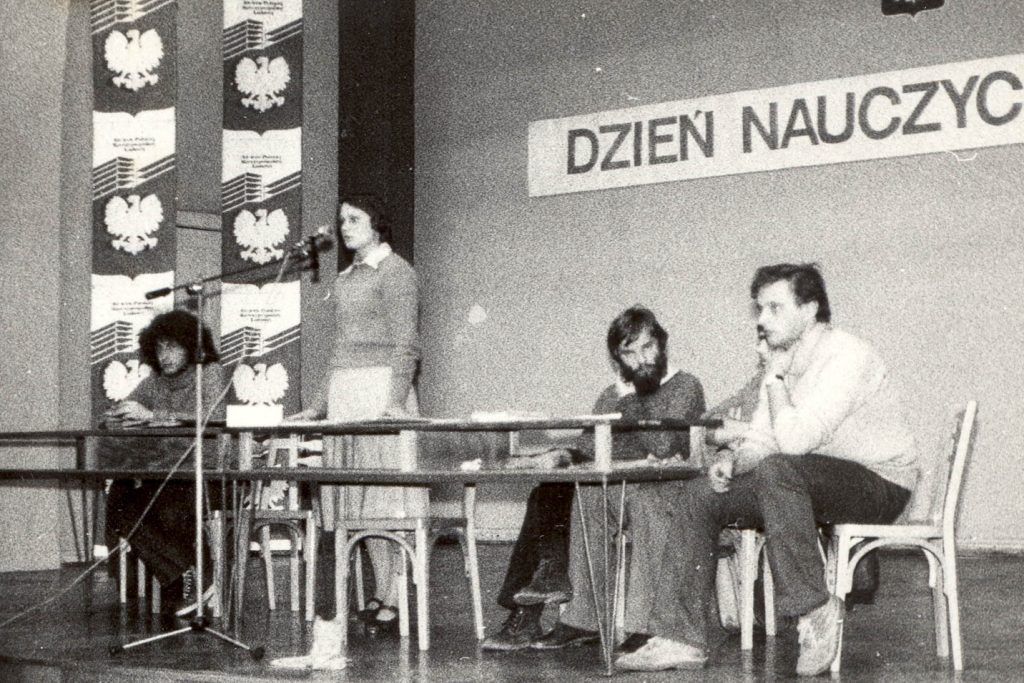
During the “Solidarity” carnival, there was a genuine explosion of civic activity across Poland — including in Western Pomerania — as various social groups, inspired by the workers’ movement, began forming their own independent organizations. Alongside the main “Solidarity” trade union, new branches were established such as the “Solidarity” of Individual Farmers and the “Solidarity” of Independent Craftsmen. At all universities in Szczecin, the Independent Students’ Association (Niezależne Zrzeszenie Studentów, NZS) was founded, organizing strikes and actions modeled after “Solidarity” to fight for student rights. The movement also opened opportunities for lay Catholic groups to begin legal activity. In December 1980, after many years of effort, the Szczecin Catholic Club (Szczeciński Klub Katolików) was officially registered.
After August 1980, independent publishing initiatives began to flourish on an unprecedented scale, breaking the state’s long-standing monopoly on information. The most important “Solidarity” publication in the region was the weekly Jedność (“Unity”), which first appeared during the August 1980 strikes as a strike bulletin. Its editor-in-chief was Leszek Dlouchy, and the editorial team included, among others: Tadeusz Dziechciowski, Karol Markowski, Michał Paziewski, Lidia Kowalińska-Maślanka, Tomasz Zieliński, Stanisław Wiszniewski, Ewa Gutkowska, Jarosław Piwar, and Andrzej Węglarz. Szczecin’s librarians published their own periodicals (Biuletyn, Pro Memoria), as did the employees of the Polish Steamship Company (Biuletyn Informacyjny), steelworkers (Głos Hutnika), teachers (Informator NSZZ “Solidarność” Pracowników Oświaty i Wychowania w Szczecinie, Wolna Oświata), and railway workers (Właściwy Tor). Students at Szczecin’s universities, organized under the Independent Students’ Association (NZS), were especially active in publishing. At the Higher School of Pedagogy (Wyższa Szkoła Pedagogiczna), they issued Półgębkiem and Komunikat; at the Szczecin University of Technology, Głos Studencki, Prawda, and Muchomor; at the Agricultural Academy, Kret, New Striker, and Old Striker; and at the Pomeranian Medical Academy, Złoty Róg.
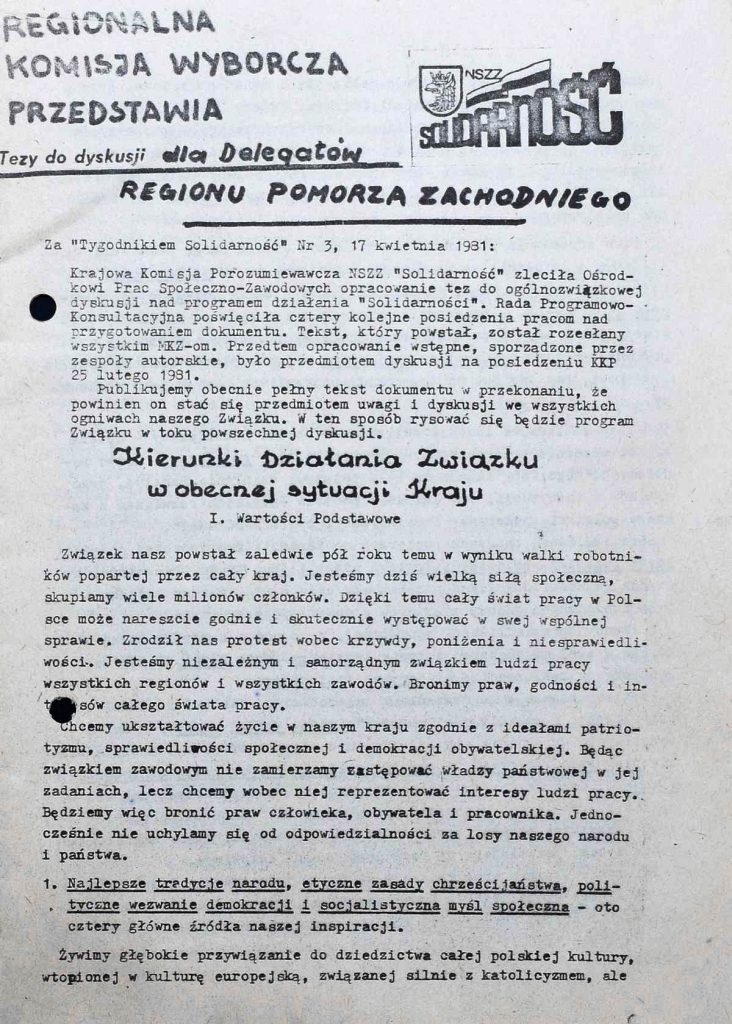
Throughout 1980–1981, the conflict between “Solidarity” and the authorities intensified steadily. From the very beginning, the communist leadership refused to accept the loss of its monopoly over public life, delaying the implementation of key provisions of the August Agreements and obstructing the functioning of the independent union. Practically all of 1981 was marked by a series of smaller and larger confrontations — many of them deliberately provoked by the authorities as part of the Polish United Workers’ Party’s (PZPR) strategy of so-called “sectoral confrontations.” At the same time, the economic crisis continued to deepen: queues in stores grew longer, and market supplies failed to improve. In this situation, “Solidarity” began to adopt increasingly radical slogans, demanding, among other things, the organization of free and democratic elections to local councils and later to the Sejm of the Polish People’s Republic. One of the most extreme examples of union radicalism was Marian Jurczyk, the chairman of the Western Pomerania branch of “Solidarity.”
The “Solidarity” carnival came to an end with the imposition of martial law on the night of December 12–13, 1981. Power in the country was seized by the Military Council of National Salvation (WRON), headed by General Wojciech Jaruzelski. The activities of all independent organizations — foremost among them “Solidarity” — were suspended, and a military-police regime was introduced. This included the militarization of workplaces, the imposition of curfews, restrictions on movement and communication, and harsh penalties for organizing protests or printing underground publications. Union leaders, including key figures of Western Pomerania’s “Solidarity,” were interned and placed in detention centers. Strikes organized by activists who remained at liberty — including the protest at the Adolf Warski Szczecin Shipyard — were crushed by force, with the use of militia and army units.
More:
Robert Kościelny, Wiosna wolnych Polaków. Wersja szczecińska, Warszawa: Wydawnictwa Drugie 2017.
Zdzisław Matusewicz, Szczecin 1980–1981. Rewolucja „Solidarności”, Szczecin: Wydawnictwo Naukowe Uniwersytetu Szczecińskiego 1997.
Michał Siedziako, Marian Jurczyk (1935–2014). Biografia polityczna szczecińskiej legendy „Solidarności”, Gdańsk: Europejskie Centrum Solidarności 2014.
Małgorzata Szejnert, Tomasz Zalewski, Szczecin: Grudzień – Sierpień – Grudzień, Szczecin: Wydawnictwo Walkowska 2008.
Michał Siedziako