


The Cedynia–Gozdowice–Siekierki National Memorial Area
The Cedynia–Gozdowice–Siekierki National Memorial Area is located in a bend of the Oder River, encompassing the westernmost part of Poland. It includes a series of memorial sites and monuments situated along the riverbank, stretching from Cedynia in the north through Osinów Dolny, Stara Rudnica, Siekierki, Stare Łysogórki, and Gozdowice, down to Czelin in the south. These sites commemorate events associated with two — as historians have described them — pivotal moments in Polish history: the years 972 and 1945.
The first date refers to the famous battle fought by Mieszko I against the German margrave Hodo near a locality called Cidini by Thietmar of Merseburg, the medieval German chronicler. The second date encompasses several key events that took place in this area: on February 27, 1945, Polish soldiers of the 6th Independent Pontoon-Bridge Battalion erected the first Polish border post on the Oder River; on March 26–27, in the vicinity of Osinów Dolny, Soviet troops supported by the Polish 1st Independent Mortar Brigade eliminated the last German bridgehead on the right bank of the Oder; and on April 16, near Gozdowice and Siekierki, began the bloody operation of crossing the Oder by the Polish 1st Army — an assault that paved the way for the Allied advance on Berlin.
The first commemorations along the Oder River appeared as early as 1945, when soldiers erected a wooden plaque near the railway line in Siekierki. Later that same year, on the site of a small cemetery between Stare Łysogórki and Siekierki, work began on creating a collective necropolis for the soldiers of the 1st Polish Army. The exhumation of fallen soldiers’ bodies was initiated at that time. It was originally a typical military cemetery, featuring a wooden chapel and the grave of an unknown soldier. In December 1946, a decision was made to design two twin cemeteries for the Polish armies at their respective crossing sites — the First Army in Siekierki and the Second Army in Zgorzelec. The plan envisioned the necropolis as a symbol of Poland’s presence on the Oder, crowned by a monument visible to Germans across the river. However, the actual work to organize and arrange the cemetery did not begin until the autumn of 1948, following the completion of exhumations on German territory.
Already in those early years, the first commemorative gatherings began to be organized at the newly erected memorial sites — particularly at the cemetery — initially of a local or regional nature. The first major ceremony took place in April 1952, attended by General Jerzy Bordziłowski, former commander of the engineering troops of the 1st Polish Army, during which the first Sapper Monument in Gozdowice was unveiled.
In the mid-1950s, another reconstruction of the cemetery in Siekierki was undertaken, as it was intended to serve as the site for central national ceremonies. The overall layout of the necropolis remained unchanged, but uniform concrete crosses were introduced, and both the chapel and the grave of the unknown soldier were removed.
In the mid-1950s, Czesław Piskorski — a Szczecin pioneer of regional tourism — was likely the first to draw a parallel between Mieszko I’s battle and the Oder River operation of the 1st Polish Army. This marked the beginning of a symbolic linkage between the two victories. The idea was later expanded upon in the writings and research of archaeologist Władysław Filipowiak, then director of the Museum of Western Pomerania, who in 1956 began the first archaeological excavations at the stronghold in Cedynia, continuing until 1961. These excavations revealed an image of Cedynia as a fortified stronghold strengthened by Mieszko I. Filipowiak reconstructed the battle as having unfolded in two phases, stretching between the bridge in Osinów Dolny and the hillfort in Cedynia. This interpretation made it possible to incorporate Cedynia into the nationwide celebrations of the Millennium of the Polish State, whose inauguration in the Szczecin Voivodeship took place there in July 1959. During the celebrations, another monument was erected — a commemorative stone on Czcibor Hill, at the site traditionally associated with the 972 battle, named after Mieszko’s brother Czcibor, who, according to Thietmar of Merseburg, played an important role in the clash.
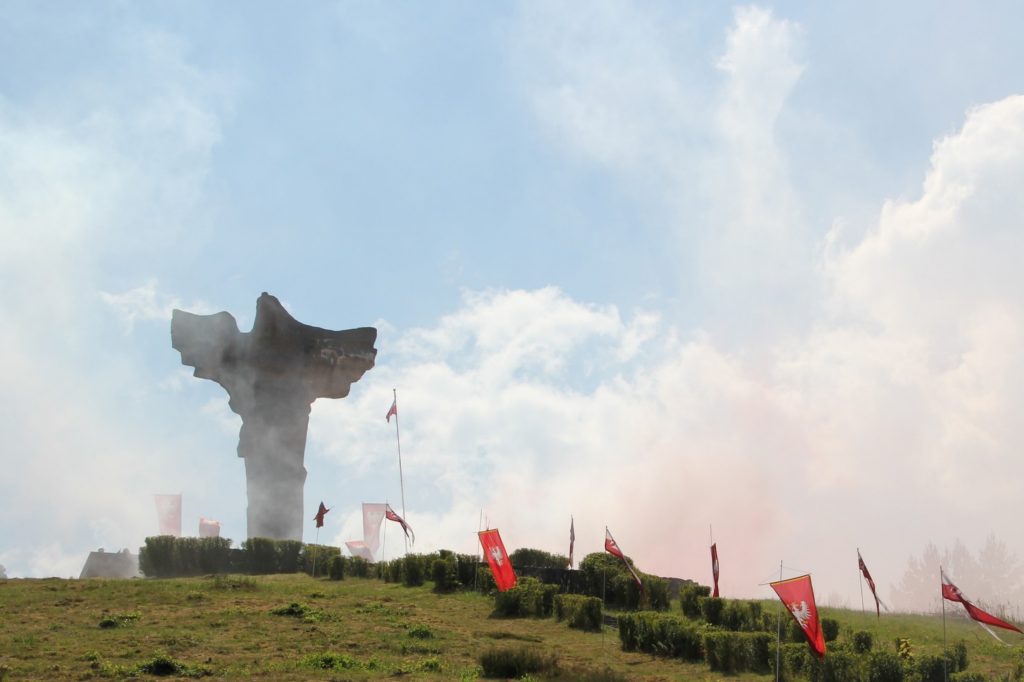
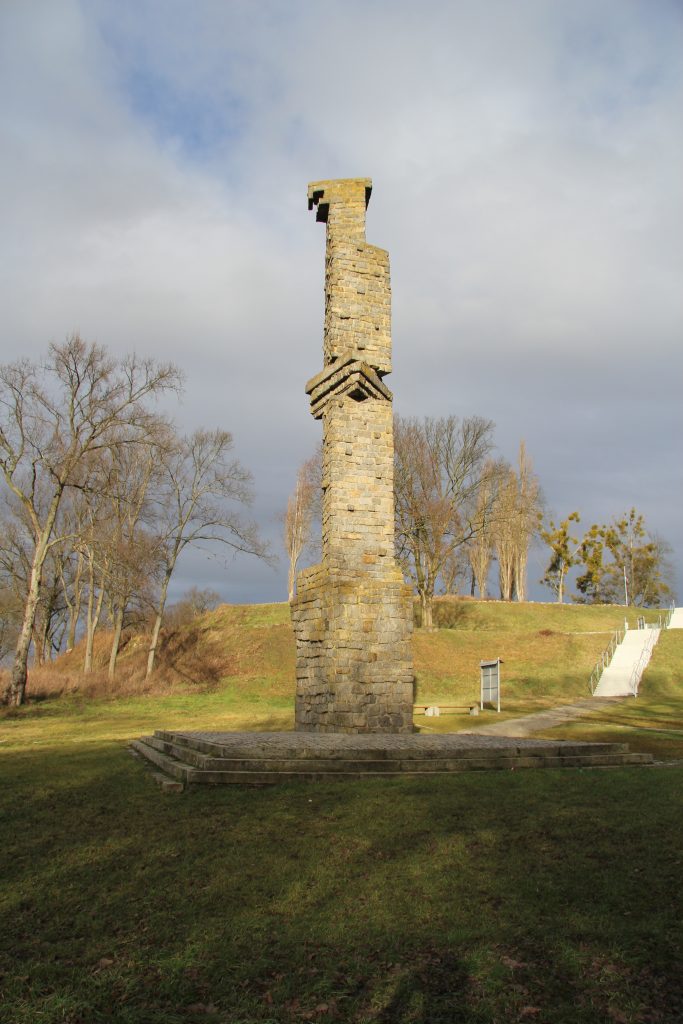
Over time, additional monuments were erected in the area. In the early 1960s, the idea emerged to construct a dominant monument at the cemetery in Siekierki. It was designed by Szczecin sculptor Sławomir Lewiński and unveiled during a nationwide ceremony in 1961. The composition consisted of an obelisk made of fieldstones collected through community volunteer efforts, bearing symbols of national memorial sites; two Grunwald swords, symbolizing both Polish and Slavic victories over Germany as well as the brotherhood-in-arms between the Polish Army and the Soviet Army; and two standing figures — a soldier with a rifle (ultimately removed before the unveiling by political decision and later displayed in 1965 in Węgorzyno) and a woman holding a child, representing the return of the Oder territories to the Motherland. The backdrop of the composition was a sail, symbolizing the crossing of the Oder River. Nearby, a small Museum of the 1st Polish Army Memorabilia was hastily opened in Siekierki. The following year, at the request of General Wojciech Jaruzelski — himself a veteran of the battles on the Oder — a stone plaque inscribed with the Commander-in-Chief’s order of May 9, 1945, was placed at the cemetery. In 1960, on the initiative of Commander Henryk Kalinowski, one of the sappers who had driven the first Polish border post into the ground on the Oder in February 1945, a small obelisk was erected in Czelin. However, it was rather modest, and in 1968 it was replaced with a more imposing monument — a stylized eagle in the form of a stone obelisk — unveiled by the then Minister of National Defense, General Wojciech Jaruzelski. In 1965, another small museum was opened in Gozdowice, and commemorative plaques were unveiled at several river-crossing sites: in Siekierki near the railway tracks (on the spot of the old wooden plaque), in Stare Łysogórki, and in the so-called Wąwóz Śmierci (“Ravine of Death”) in Gozdowice.
The emerging memorial area exerted an increasing influence on its surroundings, aided by the presence of military settlers in the region. Monuments and place names referring to the battles fought here and to their heroes began to appear in nearby localities such as Lubiechów Dolny, Chojna, and Mieszkowice. In Mieszkowice, in 1957, a statue of Mieszko I was erected — placed on a prewar German pedestal that had once supported a statue of Germania — symbolically replacing the old imperial imagery with that of Poland’s first ruler.
The period of the Millennium of the Polish State celebrations (1958–1966) was marked by a massive state-sponsored campaign promoting — through virtually every available communication channel — the ideas forming the foundation of the narrative surrounding the Oder River memorial area: the continuous struggle of the Polish army from the times of Mieszko I to 1945. From that time onward, regular commemorative ceremonies were held in the region: on February 27 — the anniversary of erecting the first Polish border post in Czelin; on April 16 — the anniversary of the Oder River crossing; on July 22 — the Polish National Day of Rebirth; and on October 12 — the Polish Armed Forces Day (commemorating the Battle of Lenino). These rallies often had a supraregional character and served as political platforms. The events were also used to reference current international affairs, such as the Vietnam conflict. Many high-ranking state officials attended these ceremonies, including Chairman of the Council of State Aleksander Zawadzki, First Secretary of the Polish United Workers’ Party Władysław Gomułka, Speaker of the Sejm Czesław Wycech, Prime Minister Józef Cyrankiewicz, Minister of National Defense General Marian Spychalski, and Marshal Andrei Grechko, Commander of the Unified Armed Forces of the Warsaw Pact. Foreign delegations also began to visit — first from Warsaw Pact countries, later from beyond the bloc, and, from 1972 onward, even from across the Iron Curtain.
The culmination of the Millennium celebrations came in 1966, with the most significant event being the commemoration of the Battle of Cedynia. The ceremonies began at the hillfort, where a commemorative plaque was unveiled at the site of the former archaeological excavation, and the Regional Museum, founded on the initiative of Władysław Filipowiak, was officially opened.
A mass rally then took place on Czcibor Hill. Among the many events held, particularly noteworthy were the relay marches — extensively publicized by the national media — which passed through Cedynia and Siekierki, symbolically linking the entire country. One route ran from Bogatynia to Szczecin, and another from Chełm Lubelski to Siekierki.
Starting in 1966, the Marathon for the Blue Ribbon of the Peace Border (Maraton o Błękitną Wstęgę Granicy Pokoju) was also organized in the area. The competition held considerable prestige, attracting athletes from various countries. In 1969, the IAAF (International Association of Athletics Federations) included the following year’s race (1970) in its official calendar as one of only seven Polish athletic meetings. After 1972, the event was moved to Dębno, where it evolved into one of Poland’s most notable long-distance races.
Already in the second half of the 1960s, preparations were underway for the millennium anniversary of the Battle of Cedynia (1972). The multifaceted celebrations were planned on a nationwide scale, with virtually all cultural institutions in the Szczecin voivodeship taking part in the preparations.
Cedynia itself experienced a renaissance — its name appeared on the hull of a newly launched ship, on mead labels, patches, postcards, commemorative medals, postage stamps, matchboxes, and even on the name of a mountain peak in Iran. Numerous studies, books, radio programs, and documentaries were produced, all referring to the events of 972. Film director Jan Rybkowski made the feature film Gniazdo (“The Nest”), which, however, reflected more the spirit of Edward Gierek’s Poland than the age of Mieszko I.
New monuments and public buildings were also created. On Czcibor Hill, a monumental Monument of the Polish Victory on the Oder was erected. At the foot of the hill, a mosaic depicting the battle scene was installed, showing Polish warriors dressed in white and German warriors in black. In Cedynia itself, two more mosaics were made — one with the coat of arms of Cedynia, and another illustrating the battle scene. At the town entrance, a welcome sign with the coat of arms was erected, and at the path leading to the hillfort, a directional signpost was placed. Along the road from Szczecin, near Widuchowa, a statue of a mounted knight with the inscription STARY TRAKT (“Old Route”) was set on a tall pedestal.
Additionally, the Slavic Restaurant (Restauracja Słowiańska) was opened, and the town’s infrastructure was renewed, giving Cedynia a fresh, ceremonial appearance in preparation for the great anniversary.
The celebrations themselves lasted several days but began just a few weeks after the ratification of the treaty between the Polish People’s Republic (PRL) and the Federal Republic of Germany. As a result, the previously dominant anti-German narratives were toned down and replaced by calls to strengthen the socialist community, which significantly reduced the political prominence of the event. During the millennium celebrations of the battle, the idea emerged to link the various individual memorial sites along the bend of the Oder River into a single, comprehensively planned entity — the Cedynia–Gozdowice–Siekierki National Memorial Area, which was officially established on May 16, 1973. In practice, this act merely gave administrative definition to what already existed in public space and social consciousness. The project envisioned revitalizing the surrounding area and expanding the memorial infrastructure. Among the works completed were three monuments — in Gozdowice, Osinów, and Siekierki. Other initiatives, such as the construction of a large Museum of the 1st Polish Army Memorabilia on the Oder River terraces in Gozdowice, remained only on paper. This was due not only to the economic crisis of the Polish People’s Republic but also to the administrative reform of 1975, which abolished the powiats (counties). The newly created small communes lacked the financial resources for such ambitious undertakings.
After 1972, the narrative centered on Mieszko I’s battle gradually receded into the background. However, when Piotr Jaroszewicz and Wojciech Jaruzelski — both veterans of the 1945 battles along the Oder — assumed the positions of Prime Minister and Minister of National Defense, respectively, the memorial area gained renewed prominence, becoming one of the most important sites of national remembrance in Poland. In 1977, the region was awarded the Order of the Grunwald Cross, 2nd Class, in recognition of its symbolic significance. Later, in 1983, three monuments commemorating this honor were erected in the main towns of the memorial area — Cedynia, Gozdowice, and Siekierki.
The rise of Solidarity, the weakening of the ruling camp, and the coming to power of Helmut Kohl in the Federal Republic of Germany — whose policies were perceived as potentially favoring a revision of Poland’s western border — caused anti-German narratives within the Memorial Area to regain prominence. These narratives supported the atmosphere of threat that the communist authorities sought to cultivate. Unexpectedly, the Party found an ally in shaping this historical vision in Bishop Kazimierz Majdański, who from 1984 began efforts to rebuild the church in Siekierki and to establish there the first sanctuary in the Szczecin voivodeship. The church was finally consecrated in 1990, marking the beginning of a new religious and commemorative chapter in the region. At that same time, a monumental cross was erected at the Siekierki military cemetery, reinforcing its role as both a national and spiritual site of remembrance.
The collapse of communist rule in Poland in 1989 had a decisive impact on the functioning of the Memorial Area. The state’s memory policy shifted eastward, focusing on commemorating Polish sites of martyrdom in the former Soviet territories. Although anniversaries continued to be organized, they increasingly took on a local rather than national character. In the following years, the monument on the hillfort in Cedynia deteriorated and eventually collapsed, while the monument in Osinów was dismantled to make way for the construction of a new border crossing. The small local communes faced other, more pressing challenges, and a visible lack of coordination and unified vision emerged — one that persists to this day. Cedynia continued to center its historical narrative around Mieszko I’s battle, while Mieszkowice emphasized the 1945 wartime operations. The normalization of relations with reunified Germany, following the treaty confirming the Polish-German border on November 14, 1990, and the Treaty of Good Neighborliness and Friendly Cooperation on June 17, 1991, paved the way for new developments. In 1993, a border crossing was opened in the area, followed by the creation of local trade markets. In the ensuing years, German representatives began attending commemorative events — notably in 2000, when Manfred Stolpe, Prime Minister of Brandenburg, participated in the ceremonies. Veterans from both sides also took part in symbolic gestures of reconciliation, such as the unveiling of a Polish-German “Reconciliation Stone” in Neu Küstrinchen, bearing inscriptions in four languages.
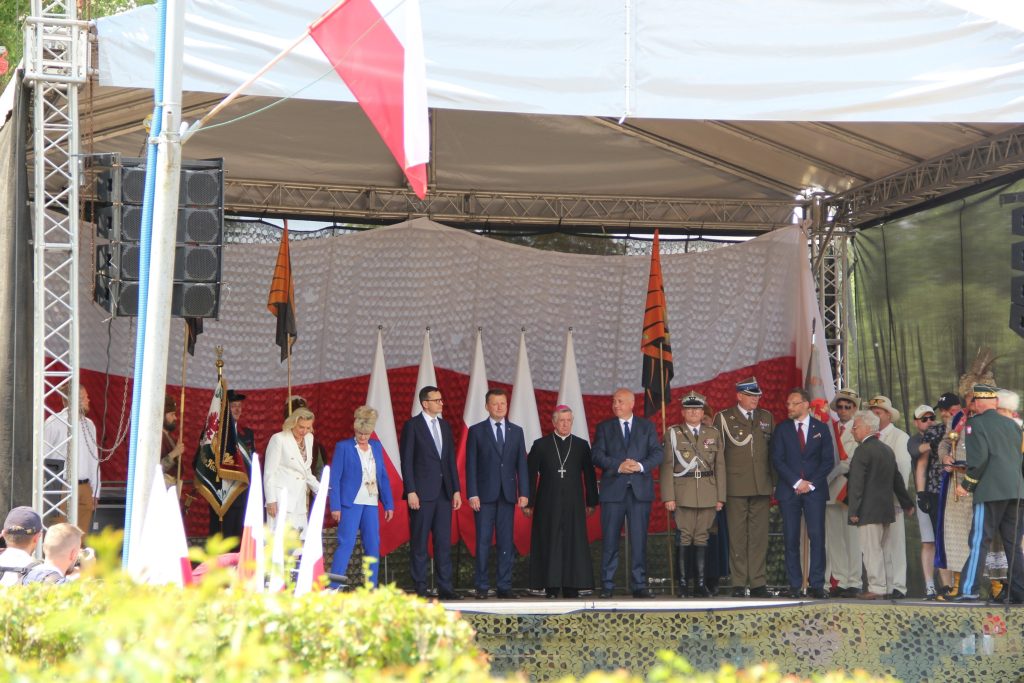
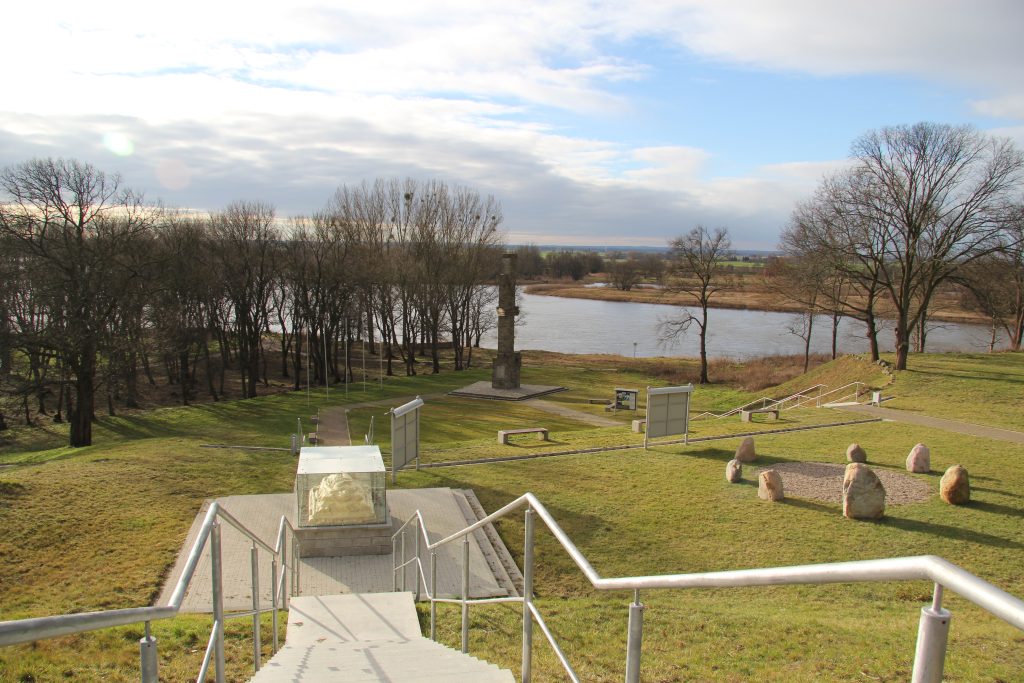
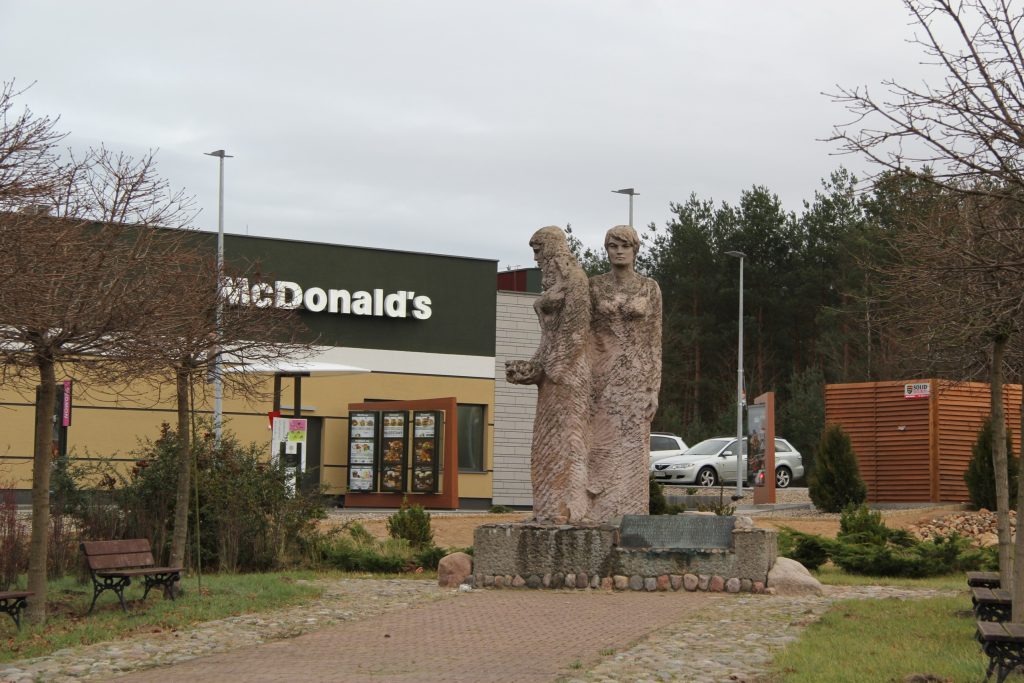
Only at the turn of the millennium did the increasingly stable local communes begin to seek effective ways to promote themselves through historical policy. In 1999, the commemoration of the Battle of Cedynia was revived in the form of a popular historical festival, and in 2004, the monument in Osinów was rebuilt — though today its backdrop is unfortunately marred by a fast-food restaurant belonging to a global chain. Similarly, the Mieszkowice commune undertook efforts to restore and preserve the memorial sites within its area. In Czelin, between 2012 and 2013, the surroundings of the monument were redesigned, now featuring an archaeological exhibition. The Siekierki cemetery area was also redeveloped — notably, after 1990, the site has been officially located in Stare Łysogórki rather than Siekierki. A lapidarium composed of the old concrete crosses from the cemetery was established there. The museums in Stare Łysogórki and Gozdowice were renovated and expanded, becoming the Museum of the 1st Polish Army Memorabilia and the Museum of the History of the Mieszkowice Region, respectively. These initiatives represent a renewed chapter in the history of the Cedynia–Gozdowice–Siekierki Memorial Area in the second decade of the 21st century, culminating in the restoration of its national significance. In 2017, the Siekierki Military Cemetery was visited by President Andrzej Duda, and in 2022, the 1050th anniversary of the Battle of Cedynia was honored by the presence of Prime Minister Mateusz Morawiecki. Unfortunately, despite these notable efforts, there remains a lack of cohesion and coordination between the riverside and neighboring communes. Without unified action, the Memorial Area still falls short of achieving the full dignity and splendor that its historical and symbolic importance deserves.
On the other hand, in recent years, the very foundations of the Cedynia–Gozdowice–Siekierki National Memorial Area have increasingly come under scrutiny. Some circles have begun to question the justification for the heavy sacrifices of Polish soldiers from the 1st and 2nd Polish Armies in 1945, while historians have raised doubts about whether the Battle of Cidini could have taken place at all. They have pointed out inconsistencies and anachronisms in earlier research — not only concerning the site proposed by Władysław Filipowiak, but also regarding the wider region of Pomerania as a possible setting for the battle. Ultimately, it appears that Professor Stanisław Rosik has effectively dispelled the notion of the Battle of Cidini as a historical event, arguing that it should be regarded more as a legend than a verified fact. This does not, however, amount to a total rejection of the area’s past. The narratives created in the 20th century have become deeply embedded in the cultural and symbolic landscape of the region. The Memorial Area remains a place of remembrance for both the Piast dynasty and the post-1945 Polish resettlement of the western territories. These intertwined stories have evolved into a foundational myth for the local community — a shared narrative shaping its sense of belonging. This was particularly evident in the 2007 public debate on the Battle of Cedynia and regional identity, published in Gazeta Chojeńska, which revealed how strongly these memory constructs continue to resonate in local consciousness.
More:
Paweł Migdalski, „…w tej strażnicy Rzeczypospolitej”. Rejon Pamięci Narodowej Cedynia–Gozdowice–Siekierki, Szczecin–Poznań: Wydawnictwo Sorus 2007.
Paweł Migdalski, Bitwa pod Cidini w historiografii, [w:] Cedynia i okolice poprzez wieki, red. Paweł Migdalski, Chojna-Szczecin: Stowarzyszenie Historyczno-Kulturalne “Terra Incognita”, Szczecin : Instytut Historii i Stosunków Międzynarodowych Uniwersytetu Szczecińskiego2013, s. 37–64.
Paweł Migdalski, Dzieje cmentarza wojennego żołnierzy 1 Armii Wojska Polskiego w Siekierkach, [w:] „Tym samym pociągiem…”. Przesiedlenia przymusowe i procesy integracyjne na Pomorzu Zachodnim i ziemi lubuskiej w latach 1939–1949 w wyborze prac magisterskich powstałych na seminarium Jana M. Piskorskiego, red. Katarzyna Marciszewska, Paweł Migdalski, Chojna–Szczecin: Stowarzyszenie Historyczno-Kulturalne „Terra Incognita” 2013, s. 141–162.
Paweł Migdalski, Gozdowickie miejsca pamięci w Polsce Ludowej, [w:] IV Nadodrzańskie spotkania z historią 2016, red. Andrzej Chludziński, Pruszcz Gdański-Mieszkowice: Wydawnictwo Jasne, Gmina Mieszkowice 2016, s. 161-179.
Paweł Migdalski, Obchody tysiąclecia bitwy pod Cedynią w 1972 r. w świetle prasy regionalnej, [w:] Prasa jako źródło do dziejów Śląska i Pomorza w XIX i XX w., red. Edward Włodarczyk, Joanna Nowosielska-Sobel, Szczecin: Wydawnictwo Naukowe Uniwersytetu Szczecińskiego 2005, s. 159–182.
Paweł Migdalski, Obchody Tysiąclecia Państwa Polskiego w Cedyni (badania naukowe, uroczystości w 1959 i 1966 r.), „Rocznik Chojeński” 8, 2016, s. 257–297
Paweł Migdalski, Pomnik pierwszego polskiego słupa granicznego w nadodrzańskim Czelinie jako miejsce pamięci, w: III Nadodrzańskie spotkania z historią 2015. Konferencja Naukowa Mieszkowice, 17 kwietnia 2015 r., red. Arkadiusz Chludziński, Pruszcz Gdański – Mieszkowice: Wydawnictwo Jasne, Gmina Mieszkowice 2015, s. 193–214.
Stanisław Rosik, Cidini 972. Thietmar’s account of margrave Hodo’s raid into Mieszko I’s country and the »Battle of Cedynia«, „Quaestiones Medii Aevi Novae” 26, 2021, s. 55-78
Paweł Migdalski