


Nikita Khrushchev in Szczecin.
ChatGPT powiedział: On a beautiful, sunny Friday, July 17, 1959, at 11:45 a.m., an IL-18 aircraft landed at the Goleniów airport near Szczecin, carrying the Prime Minister of the Soviet Union and First Secretary of the CPSU Central Committee, Nikita Khrushchev. This visit, along with the city visits by Pope John Paul II in 1987 and Mikhail Gorbachev in 1988, has become a permanent part of Szczecin’s postwar history. Most accounts of the city’s postwar history note Khrushchev’s stay in Szczecin, often emphasizing that it ultimately confirmed the city’s belonging to Poland. The visit has been recognized as one of the 20 most important events in Szczecin in the second half of the 20th century.
The idea of Nikita Khrushchev visiting Szczecin, one of the most powerful men in the world at the time, was linked to the rapidly changing international situation in the late 1950s. Beyond the obvious benefits of the noticeable thaw in international relations, discussions about the final territorial status of Germany — which had not been settled by treaty after the war — became a matter of concern for Poland. The ambiguous stance of the great powers, and even that of the German Democratic Republic, caused unease among Polish authorities, which was not eased by rumors of an uncertain position within the USSR.
For Władysław Gomułka, obtaining international recognition of Poland’s western borders was one of the most important goals of his policy throughout his fifteen-year rule. Paradoxically, the deterioration of relations between the major powers during the Berlin Crisis of 1958 opened up new opportunities for Poland. Almost immediately after the crisis began, during a visit to Moscow in November 1958, Gomułka proposed to Khrushchev the idea of visiting Poland. After receiving approval, on March 3, 1959, Gomułka sent an official invitation for the visit through the Polish ambassador in Moscow, Tadeusz Gede.
Discussions lasted several months, and in May it was decided that the Soviet guest would participate in the fifteenth-anniversary celebrations of the PKWN Manifesto on July 22. The final version of the visit program was approved by the Political Bureau of the Central Committee of the Polish United Workers’ Party (KC PZPR) on July 6. The key points of the visit were to be mass rallies in Warsaw and Katowice. In addition, it was planned that Nikita Khrushchev would visit Oświęcim, Dwory, Szczecin, Poznań, villages in Greater Poland (Pławce, Racot, Stary Gołębin, Jerka), Łańsk, and Rzeszów. From Poznań, two groups of guests (without the First Secretary) were to visit Gdańsk, Sopot, and Łódź, as well as Kazimierz on the Vistula, Puławy, Lublin, and Majdanek. From the Polish perspective, the presence of a Soviet statesman on the western side of the Oder River was intended to serve as evidence of the USSR’s unwavering position regarding Poland’s western border.
For all the cities, the visit of such an extraordinary guest was undoubtedly a distinction, and for local authorities, an opportunity to showcase their achievements and strengthen their position within the power apparatus. Direct preparations for receiving the Soviet guest in Szczecin began in early July. However, the 15th-anniversary celebrations of the People’s Republic of Poland, held from the first days of June, and the central Sea Days events located in Szczecin, allowed for the mobilization of both society and state services. In the Voivodeship and City Committees of the PZPR, commissions responsible for the organization and conduct of the visit were appointed. The coordinator of events at the voivodeship level was the First Secretary of the PZPR Voivodeship Committee, Józef Kisielewski.
The program of Khrushchev’s visit to Szczecin was developed by the Central Committee and followed ritualized patterns. It included: Welcoming the Soviet guests at the Goleniów airport A motorcade to the headquarters at Wały Chrobrego A tour of the port aboard a Navy minesweeper A formal session of the City National Council A rally at Jasne Błonia An evening reception hosted by the First Secretary of the PZPR Voivodeship Committee and the Chairman of the Presidium of the Voivodeship National Council The following morning, the Soviet delegation was scheduled to depart by train to Poznań.
The preparations for the event involved not only Szczecin staff but also activists from the Nowogard, Goleniów, and Stargard counties, which lay along the route of the motorcade transporting the Soviet delegation from Goleniów to Szczecin. During the city decoration, the streets were divided into two zones: those directly visited by the Kremlin delegation and the rest. The former were lavishly decorated.
In a report full of enthusiasm to the Central Committee, the Szczecin organizers noted that hundreds of Soviet and Polish flags of various sizes were placed on every usable pole. More than 100 banners with slogans in Polish and Russian were produced and displayed along the route. Several-meter-high emblems featuring stylized images of the eagle, Roman XV, hammer and sickle, and red star were installed along the route. Building facades were decorated, portraits of Comrades Khrushchev and Gomułka were displayed, and several blank walls were painted with murals thematically linked to the 15th anniversary of the People’s Republic of Poland.
Beyond these traditional decorative elements (flags, portraits, coats of arms), along Jasne Błonia, two 300-meter friezes were installed, symbolizing the Oder and Nysa rivers, with the names of Polish cities located along them. To mobilize Szczecin residents to attend the motorcade route and later the rally at Jasne Błonia, nursery and kindergarten hours were extended by three hours, and working hours of offices were shortened.
Ensuring the safety of the Soviet guests posed a significant challenge for the security services. To secure the visit nationwide, 1,280 personnel were mobilized. In Szczecin, there were concerns about a repeat of an incident that had occurred in Silesia two days before Khrushchev’s arrival. On July 15, in the town of Zagórze (between Dąbrowa Górnicza and Sosnowiec), located along the planned route of the Soviet delegation’s motorcade, a small homemade explosive planted under a roadside tree detonated. While it posed no significant danger, the incident prompted heightened mobilization of state security forces. Ultimately, on Friday, July 17, at 10:20 a.m., the government IL-18 departed from the 39th Fighter Aviation Regiment of the Country’s Air Defense in Mierzęcice, Silesia, heading north. With a fifteen-minute delay, it landed at Goleniów airport near Szczecin at 11:45 a.m.. The Soviet guests were accompanied by Władysław Gomułka, Deputy Prime Minister Piotr Jaroszewicz, Polish ambassador in Moscow Tadeusz Gede, and five senior Ministry of Foreign Affairs officials.
On the airport tarmac, in the presence of several thousand spectators, the guests were welcomed by, among others: Prime Minister Józef Cyrankiewicz Ministers: Adam Rapacki (Foreign Affairs), Marian Spychalski (National Defense), Stanisław Darski (Shipping and Water Management) First Secretaries of the PZPR Voivodeship Committees: Józef Kisielewski (Szczecin), Mieczysław Bodalski (Koszalin), Tadeusz Wieczorek (Zielona Góra), and the City Committee Secretary in Szczecin, Andrzej Grabski Chairmen of the Presidiums of the Voivodeship and City National Councils in Szczecin: Włodzimierz Migoń and Jerzy Zieliński Military commanders: Vice Admiral Zdzisław Studziński (Navy), Gen. Zygmunt Huszcza (Pomeranian Military District), and Gen. Wojciech Jaruzelski (12th Mechanized Division, Szczecin) Even in their welcome speeches, the speakers referred to the expected confirmation by the Soviet leader of Poland’s rights to Szczecin.
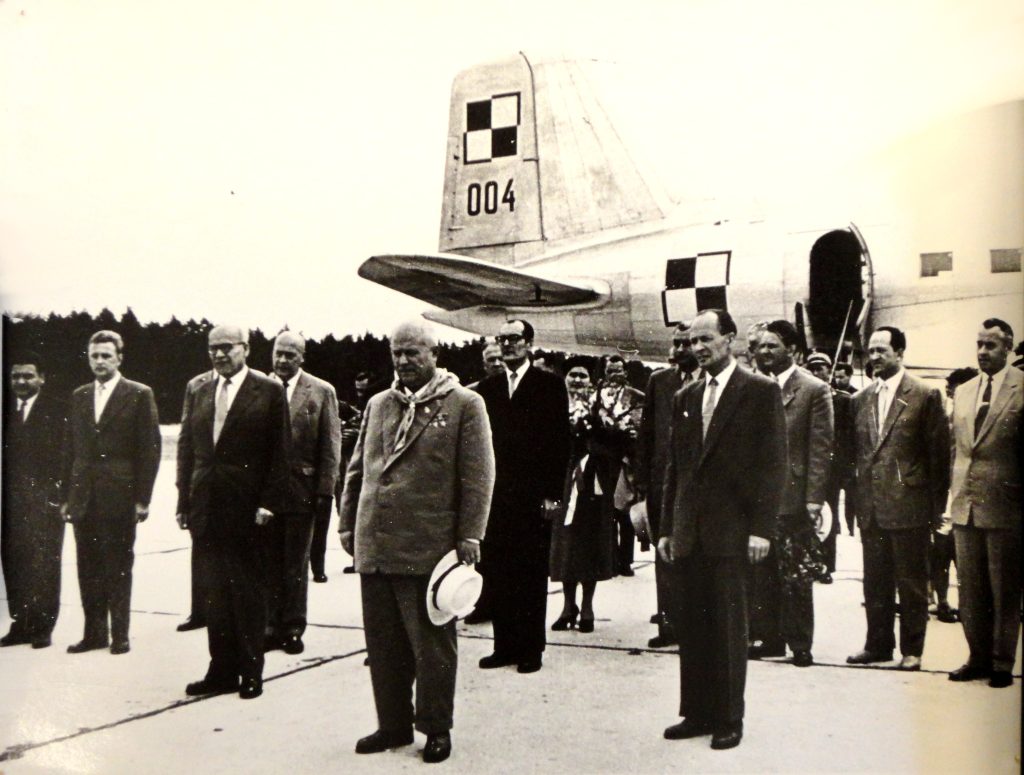
There is no doubt that — as throughout Poland — from the very first moments of his stay in Western Pomerania, Nikita Khrushchev inspired genuine sympathy among the local population. A symbol of the visit and of the guest’s openness toward society became his choice of car for traveling around Szczecin: a large Buick convertible roadster. The sight of Khrushchev in a light-colored suit in the black convertible remained etched in the memories of those who attended the event.
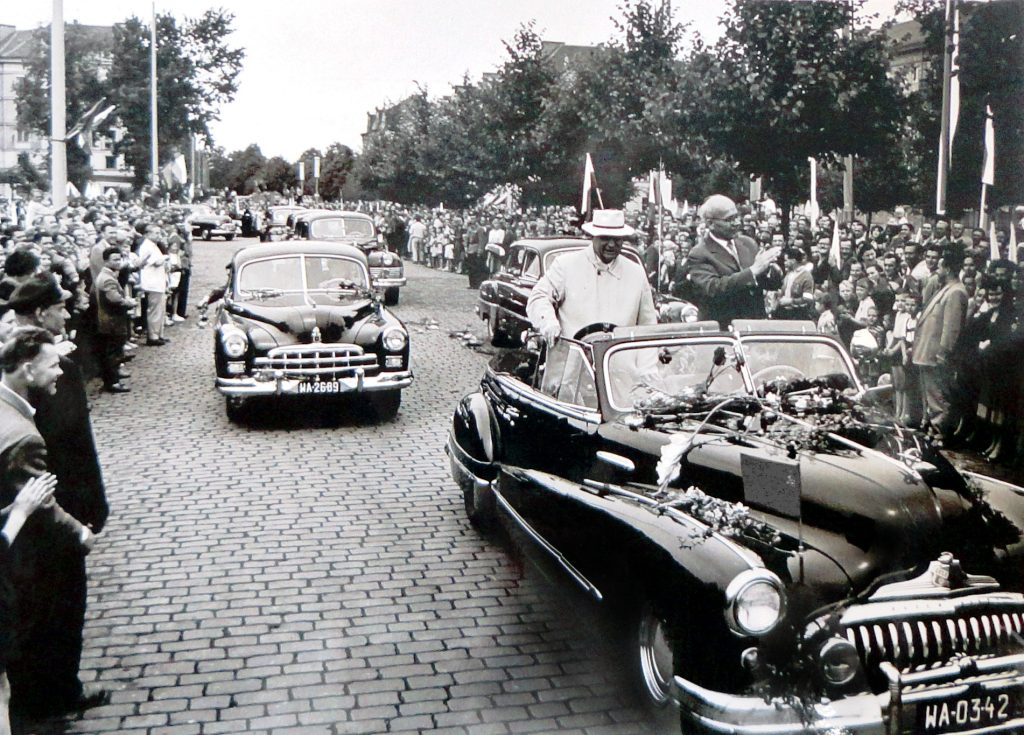
After the official welcomes, the motorcade proceeded to Szczecin. The journey itself proved to be a great success for both the guest and the local organizers. Despite a delay of over an hour, more than 100,000 residents gathered along the route, and the cheers, showering of the car with flowers, and other expressions of admiration were, in large part, spontaneous. After being accommodated at the residence on Wały Chrobrego, the Soviet delegation visited the Szczecin port aboard the Navy minesweeper ORP “Łoś”.
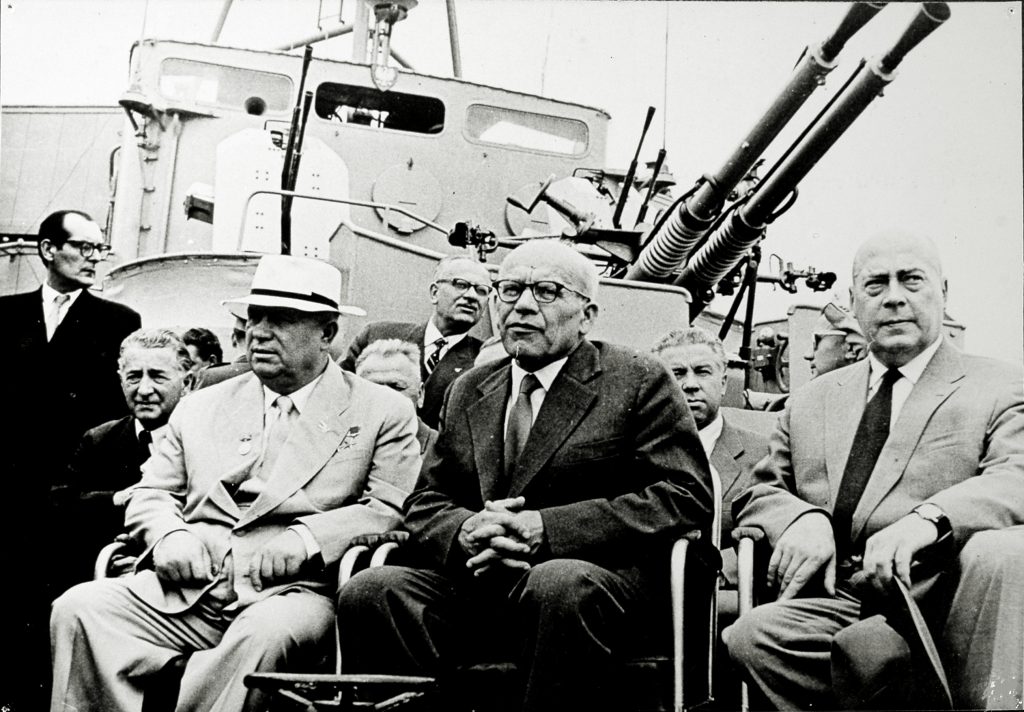
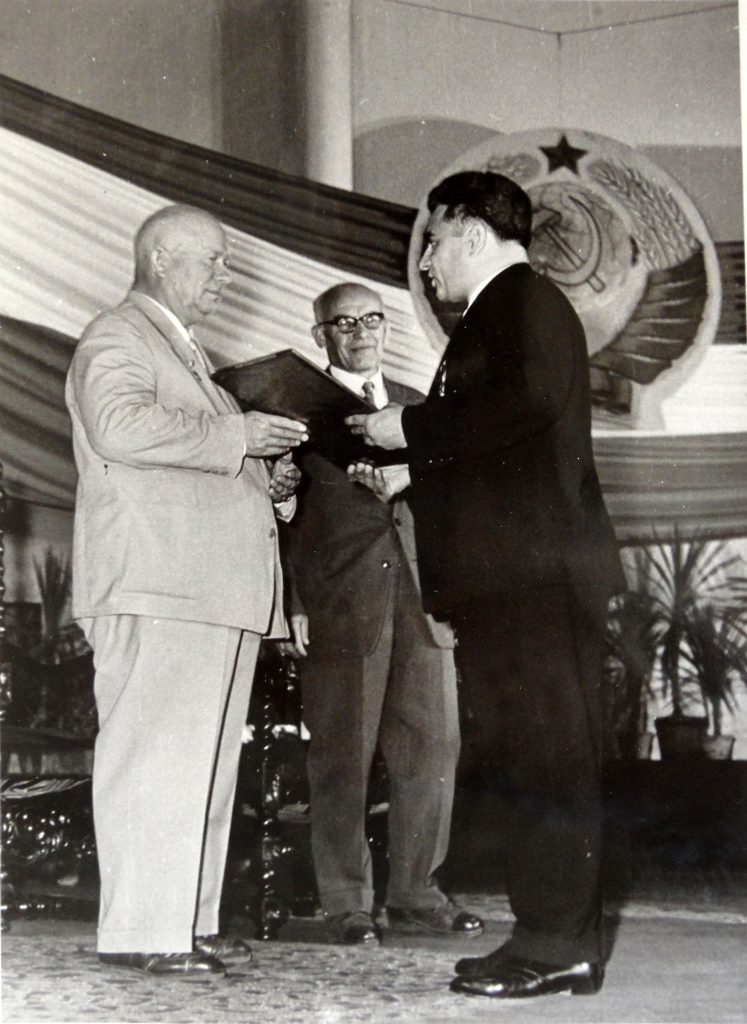
The key points of the visit were the formal session of the City Council, during which the Soviet leader was awarded the title of Honorary Citizen of Szczecin, and the rally at Jasne Błonia. The ceremony in the Philharmonic Hall began at 4:45 p.m. and was relatively brief. In the presence of nearly 400 guests, following the unanimous adoption of the relevant resolution by the City Council, its chairman, Jerzy Zieliński, presented Khrushchev with the diploma granting him honorary citizenship, while the Chairman of the Voivodeship National Council, Włodzimierz Migoń, awarded him the gold “Pomeranian Griffin” badge. Short speeches were delivered by Jerzy Zieliński and Khrushchev himself, who also signed the City’s Golden Book. The ceremony was broadcast to the residents of Szczecin who had gathered for the rally in the square in front of the municipal government building.
Fifteen minutes after the City Council session ended, at 5:30 p.m., the rally began, gathering approximately 100,000 residents of Szczecin. The vast majority had been obliged to attend by workplace management, party, social, and youth organizations. Schoolchildren were also brought in, which was not an easy task during the summer holidays. Nevertheless, there were undoubtedly people who came of their own accord, curious to see one of the most powerful men in the world and expecting his words of support for Poland’s borders.
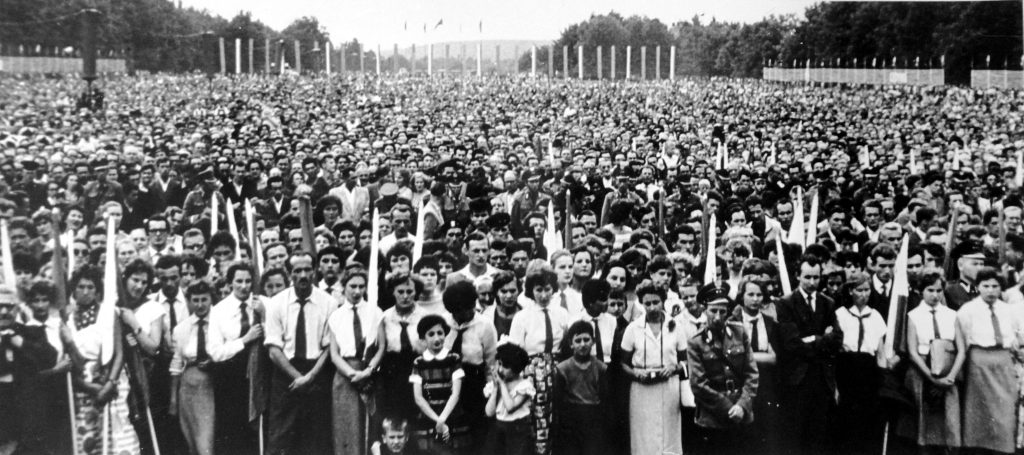
After listening to the welcome speeches by First Secretary of the PZPR Voivodeship Committee, Józef Kisielewski, and Prime Minister Józef Cyrankiewicz, the Soviet leader presented his own vision of the current international situation and the historical Polish-Russian relations. Referring to the tradition of Grunwald, he argued for the enduring foundations of today’s alliance.
For the audience, the most important were his declarations of readiness to defend Poland’s western borders. He stated:
“There are statesmen in Bonn, and not only in Bonn, who sponsor and inspire this vengeful propaganda; they declare that they do not recognize Poland’s western border, and even openly demand its revision. These gentlemen have clearly lost all sense of reality. They dream of turning Wrocław back into Breslau, Gdańsk into Danzig, and Szczecin into Stettin. Let them know, however, that Wrocław, Gdańsk, Szczecin are Polish cities and will remain so forever. The historical rights of the Polish nation to the Western Lands, the blood shed together by us for their liberation, and the enormous work of the Polish people in rebuilding them — all of this is sacred and no one will be allowed to mock it.”
He further declared that Poland has “faithful allies such as the USSR and all the countries of the socialist bloc. They will defend the borders of the People’s Republic of Poland as their own borders. […] The border posts on the Oder and Nysa will be defended by all of us, hand in hand with the Polish people.”
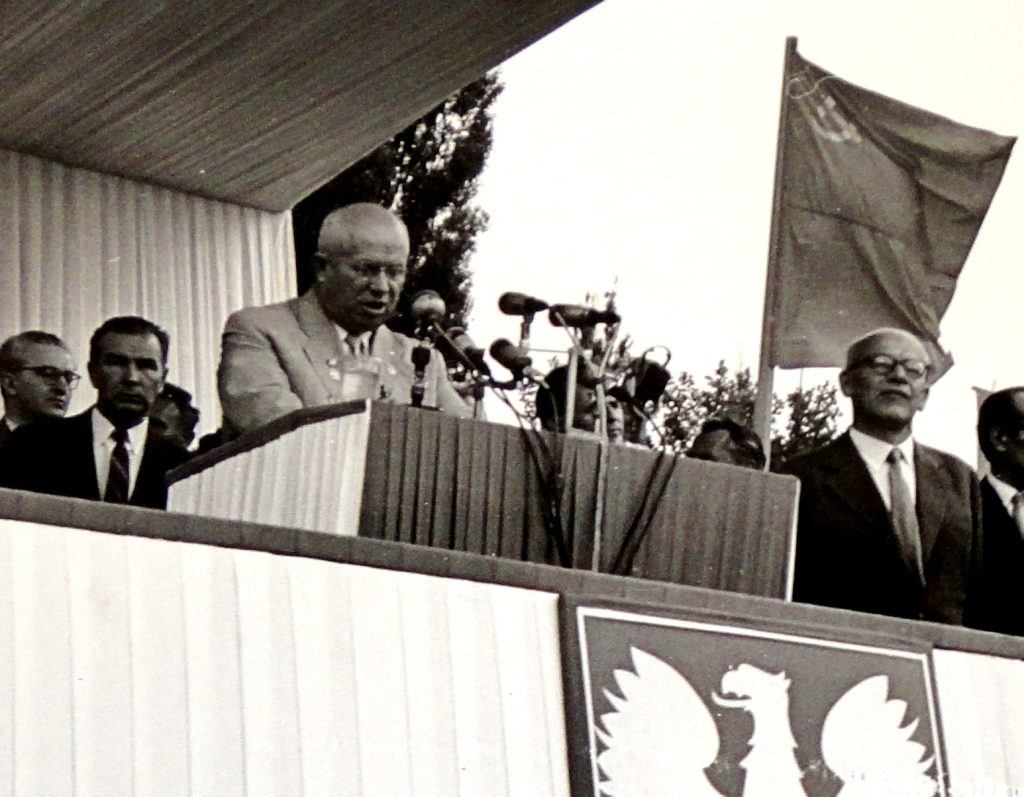
Khrushchev’s words sparked enthusiasm among the rally attendees. It appears that the applause exceeded the authorities’ expectations. During the preparation of the rally, different objectives were assigned to various participant groups. A 2,000-strong team of ZMS activists, brought in from across the voivodeship, was tasked with eliciting visible signs of admiration. They fulfilled their role, often shouting the loudest cheers, but the other groups also eagerly applauded upon hearing the anticipated promises. The rally concluded with a resounding “Sto lat” (a traditional Polish celebratory chant wishing a hundred years).
These points of Khrushchev’s visit to Szczecin can be regarded as a major success for Poland and the city. The situation was less successful, however, with the subsequent events. Local authorities had high expectations for the reception scheduled for 8:00 p.m. in the conference hall of the PZPR Voivodeship Committee. Invitations were sent to around 200 people, primarily members of the diplomatic corps, party apparatus, managerial staff of workplaces, military, and police. In the draft toast, the First Secretary of the PZPR Voivodeship Committee intended to reiterate the Soviet commitments announced at Jasne Błonia. On the orders of the central authorities, the plan for the reception was changed six times, and it was ultimately canceled, with the Soviet guests spending the evening in private.
The morning farewell was also underwhelming. Instead of the customary receiving lines along the short route from Wały Chrobrego to the railway station, the Soviet delegation was greeted by only a few people. A crowd of about 5,000 gathered only in front of the station hall. The traditional farewell speeches were delivered by the Chairman of the Presidium of the Voivodeship National Council, Włodzimierz Migoń, and — as had been the case at the Goleniów airport welcome — M. J. Szumauskas. In the end, in four short sentences, Nikita Khrushchev promised to visit Szczecin again. The authorities explained the lackluster farewell by citing the early hour of departure and concerns that, as on the previous day, the crowd would have to wait a long time for the motorcade. It seems that the farewell ceremony was simply not prepared, and these objective factors were invoked to avoid accusations of negligence against the Szczecin organizers.
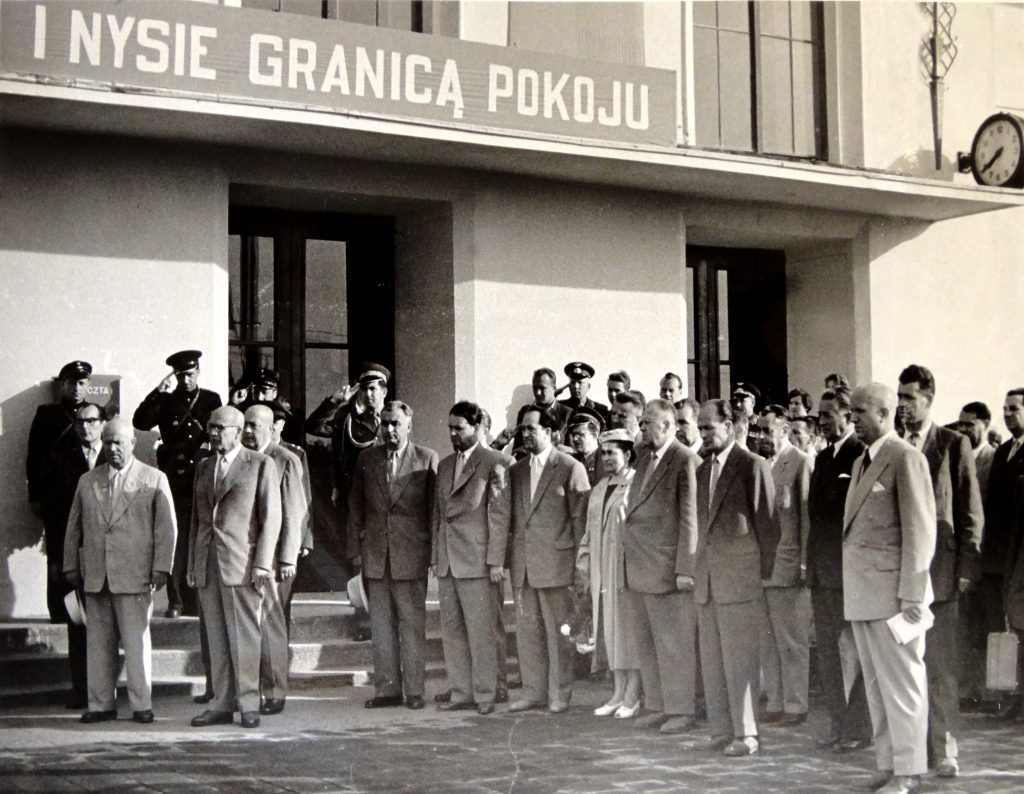
It can be assumed that, a few minutes before eight o’clock, when the special train carrying the First Secretaries of the CPSU and PZPR, along with their entourages, departed from Szczecin station, the local political leaders must have felt a great sense of relief. They had recorded a major success while avoiding serious mistakes, and could feel a stronger legitimacy to exercise power, both in the eyes of their central superiors and the public. In this context, it is somewhat surprising that the topic of the visit almost immediately disappeared from public life. Although the residents themselves continued to discuss it for some time, official interest quickly vanished. The only reference to the presence of the Soviet Premier at the mouth of the Oder was a July 25 announcement reporting that the Soviet consul in Szczecin, Igor Skaczkow, presented a Rubin-102 television set to Szczecin port workers as a gift from Nikita Khrushchev. A broader reflection on the July 1959 visit appeared in the pages of the “Kurier Szczeciński” only nearly forty years later, on the eve of a visit to the capital of Western Pomerania by one of Khrushchev’s successors, Mikhail Gorbachev.
Despite the great importance attributed to Khrushchev’s visit by the residents of the city and region, it cannot be said to have had a significant impact on the international confirmation of Poland’s rights to Szczecin. Neither the Polish nor the Soviet diplomacies referred to it, and it did not appear in Polish propaganda. It seems that its greatest role was in convincing the inhabitants of Western Pomerania of the permanence of Poland’s presence at the mouth of the Oder.
Source of all photographs: State Archives in Szczecin, Photograph Collection, 24.
More:
Adam Makowski, Nikita Chruszczow w Szczecinie. Historyczna wizyta czy historyczne okoliczności?, „Przegląd Historyczny” 2014, z. 2, s. 161-195.
Adam Makowski