


Leonard Borkowicz and His Pomerania
“When I began dealing with the affairs of the Szczecin Land, which was in the spring of 1945, I had just turned thirty-four. Behind me was a rather eventful life: prisons, the Bereza camp, emigration, service in the Soviet Army and the Polish Army. There was enough time for my views, in the light of general experiences and personal trials, to strengthen and mature. Up to now, they had made my life difficult while facilitating my understanding of the world. Will it be the same now?”. The quoted memoir was written down in the 1980s, but it reflects the feelings that accompanied the first post-war voivode of Szczecin in the immediate post-war period. It also briefly presents his biography, which can safely be said to have been complicated and colorful. It also fit into the collective portrait of the generation of pre-war communists of Jewish origin who transformed from “rebels” into “builders” of the new system.
Leonard Borkowicz was born in 1912 in Vienna and came from an intellectual Jewish family with assimilationist aspirations. The cradle of the family was Drohobych and Lviv, and it was there that the young Borkowicz attended school. He interrupted his education—or more precisely, was forced to do so—as a result of his involvement in the communist movement. Already as a seventeen-year-old, he became associated with the communist youth organization and subsequently became a member of the illegal Communist Party of Poland. It was precisely this activity that led him first to prisons and the camp in Bereza, and then to Soviet-occupied Lviv. Assigned to a penal construction battalion, which was a forced labor camp, he escaped and, thanks to the intercession of Wanda Wasilewska, made his way first into the Red Army and then—with the rank of captain—into the 1st Tadeusz Kościuszko Infantry Division in Sielce on the Oka. Promoted and decorated after the Battle of Lenino, in 1944 he was sent to the Volhynia region and later—after military operations in that area had ended—to Białystok. There, he served as the plenipotentiary of the Polish Committee of National Liberation and subsequently became the deputy commander-in-chief of the Citizens’ Militia. At the beginning of 1945, he set off for the West—initially as the plenipotentiary of the Provisional Government with the 1st Belorussian Front, only to become the plenipotentiary for the 3rd District (Western Pomerania) a few months later. In April—in the final year of the war and the first year of peace—Borkowicz began his four-year period of governing the Szczecin Voivodeship. For him, this was “the most beautiful time of his life.”
The area managed by Leonard Borkowicz from April 1945 onwards was part of the territories incorporated into Poland as a result of World War II, officially referred to in propaganda as the “Recovered Territories.” They covered over 100,000 square kilometers and accounted for one-third of the country’s territory. They were divided into districts (in order): Opole Silesia, Lower Silesia, Western Pomerania, and Warmia and Mazury. Among them, Western Pomerania was the largest, occupying over 30,000 square kilometers, which is the area of modern-day Belgium. It should also be emphasized that the new Polish administrative entity included separate territorial units from the German period—namely the regencies of Szczecin, Koszalin, and Frankfurt, as well as the borderlands. Translating this into contemporary voivodeships, we are talking about West Pomeranian, Greater Poland, Lubusz, and Pomeranian voivodeships. Borkowicz’s task was to integrate these fragments into a single, cohesive organism.
Considering that in the spring of 1945 masses of fleeing German civilians, advancing Red Army soldiers, and retreating Wehrmacht troops rolled through there, it is difficult to speak of conditions favorable to these activities. Nor was this favored by the destabilized status of these lands. During the “Big Three” conference in Potsdam (in the summer of 1945), the powers adopted only a draft of the course of Poland’s western border, which was ultimately to be sanctioned in a peace treaty—a treaty that was never created. Placing the “Western Territories” solely under the “administration of the Polish state” opened the door to various interpretations, including those undermining the sense of stability among Polish settlers intended to populate these areas and kindling hope among the existing German residents. This was also not helped by the ubiquitous Red Army, which treated these areas first as “cursed Germania” and subsequently as a reservoir of raw materials and all kinds of goods that could be carried away or destroyed.
Borkowicz’s task was therefore exceptionally difficult. However, he possessed a considerable package of experiences that helped him cope with it. His membership in the Communist Party and his position among the country’s new political elite; his officer rank and familiarity with the military environment; his knowledge of Russian and the rules governing the Soviet Union—these were only some of them. Also important were his experiences as a “plenipotentiary,” which, although brief, gave him an idea of the challenges awaiting him. Also significant were the prerogatives granted to Borkowicz, who was the “organizer and head of consolidated authorities,” and furthermore had non-consolidated offices and institutions under his command (which under normal conditions reported directly to central government agencies or ministries), such as school inspectorates and tax chambers. Temporarily, security offices also fell under his jurisdiction. Analogous competencies were held by the district (county) plenipotentiaries sent out by Borkowicz and subordinate to him. Their initial number reached 41, until a decree of the Council of Ministers of May 29, 1946, transforming the district into the Szczecin Voivodeship, set their number at 26.
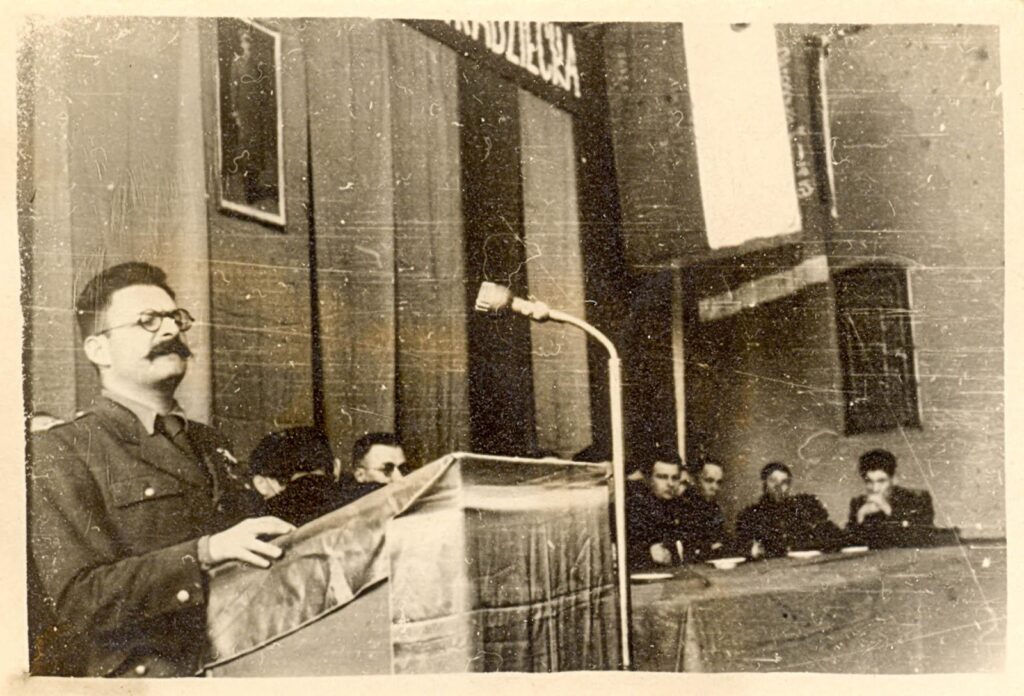
In 1945, Borkowicz’s activity was visible in many areas. Dispatching local operational groups tasked with organizing the Polish administration and establishing relations with Soviet commandants, he set the hierarchy of the actions they were to undertake: accommodation, provisioning, industry, agriculture, and settlement. At the same time, he counted on their agency, noting in a relevant instruction that their initiative “in this initial period should find the widest possible application.” He himself toured successive cities and towns, repeatedly intervening with the “Soviet authorities” in order to save the equipment of factories or enterprises from being looted. He was an active player in the dispute over the affiliation of Szczecin, which was taken over by the Polish administration three times—his unconventional, albeit effective, actions in this field undertaken in Berlin, where the Soviets were stationed, were deemed by the Warsaw headquarters as an “unacceptable overstepping of his authority.”
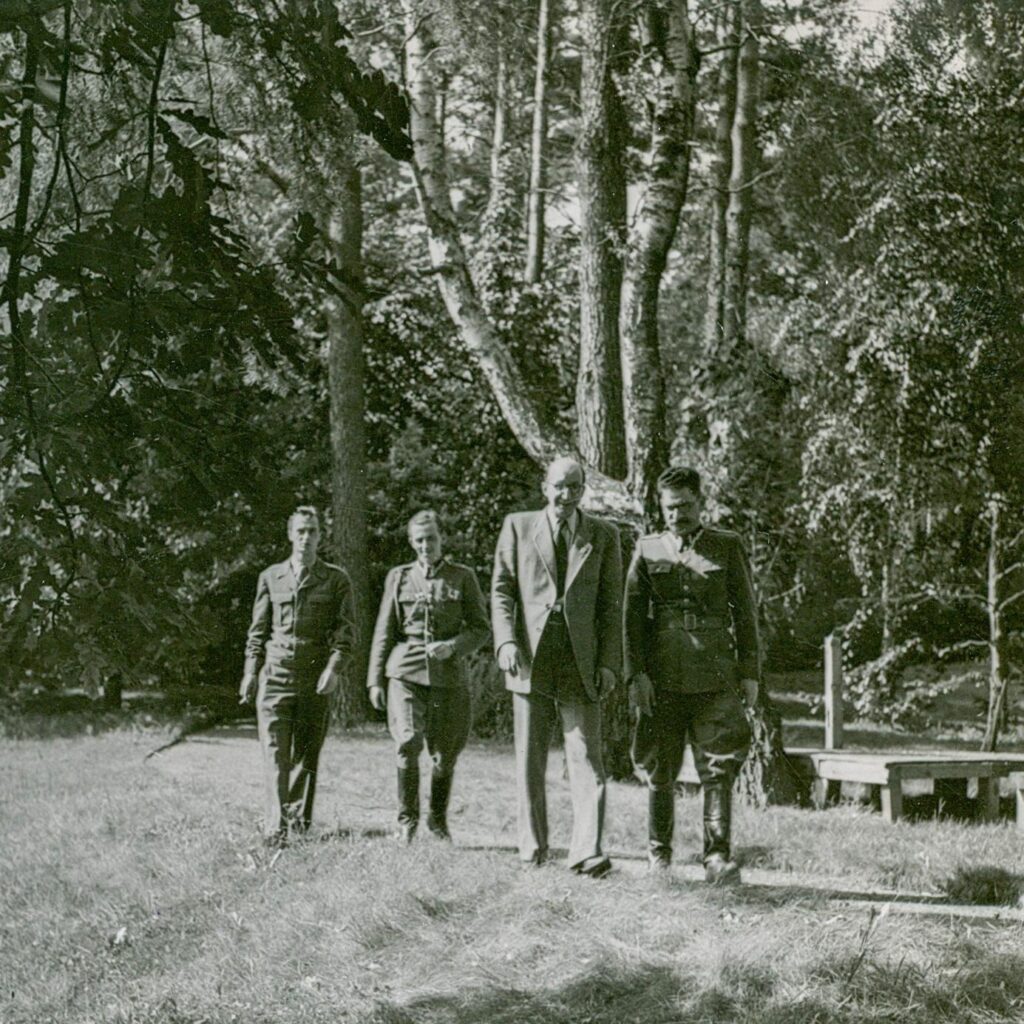
Photo 2. Border delimitation, surroundings of Berlin, September 20, 1945. In the foreground: Leonard Borkowicz and Piotr Zaremba, collections of the Pomeranian Library.
However, he achieved his goal. He showed similar activity during the border delimitation in the West Pomeranian section, the process of liquidating military commandants, and taking over the Szczecin port from Soviet hands. He held talks with General Georgy Zhukov and General Konstantin Rokossovsky. At the same time, he sent alarmist dispatches to Warsaw: “The city is being systematically burned by the Soviets. The command does not control the situation. A wave of rapes. Polish women are raped every day. Frequent incidents of beatings of Poles.” Despite his communist background, in the autumn of 1945 he was deemed a representative of “Polish reaction” by the Soviets for organizing the collection of “false statements slandering Red Army soldiers.”
As Polish authority in Western Pomerania strengthened, along with the influx of Polish settlers and the mass expulsion of Germans, Borkowicz solidified his position. Regarded almost as an “independent ruler” whose standing in the region seemed unquestionable, he became involved in successive political campaigns intended to determine the communists’ hegemony in Poland. He was particularly active during the so-called people’s referendum of June 1946. He ruthlessly attacked members of the Polish People’s Party (PSL), accusing them of supporting “forest gangs,” among other things; he delivered fiery speeches and organized rallies and demonstrations. He attempted to weaken the people’s party structures by offering them lucrative positions or threatening them with the loss of their current ones. However, in these actions, he did not use the apparatus of repression, with which—to put it mildly—he was “not on the same wavelength.” Nonetheless, the actions taken at that time by Security Office (UB) officers against the opponents of the communists firmly placed Borkowicz on a specific side of the ongoing political struggle.
At the same time, he organized major propaganda events intended to enhance the significance of the region he administered and unite people around the idea of the “Recovered Territories.” Conventions of autochthons, industrialists, and journalists held in Szczecin temporarily focused media attention on the northwestern edge of Poland.
Of particular importance was the event of April 1946, held under the slogan “We Stand Guard on the Oder.” This mass event was intended to be an expression of widespread support for the western border, but it turned into a pro-Mikołajczyk demonstration with the participation of thousands of scouts. It was a highly significant display of public social opposition against the communists ruling the country. Borkowicz blamed the local committee of the Polish Workers’ Party for this image defeat, which led to a change in the position of First Secretary. Tadeusz Rajner was replaced by Wiktor Kłosiewicz, who had a much stronger position in the party than his predecessor. From that time on, the party activity of the Szczecin voivode declined. Instead, he proved himself in other fields.
Borkowicz devoted himself to activities strengthening the development of the region on many levels, a particular expression of which was the “literary settlement” campaign. As a man with broad horizons and interests, although lacking formal higher education, he was a representative of the intelligentsia. Well-read, fluent in…
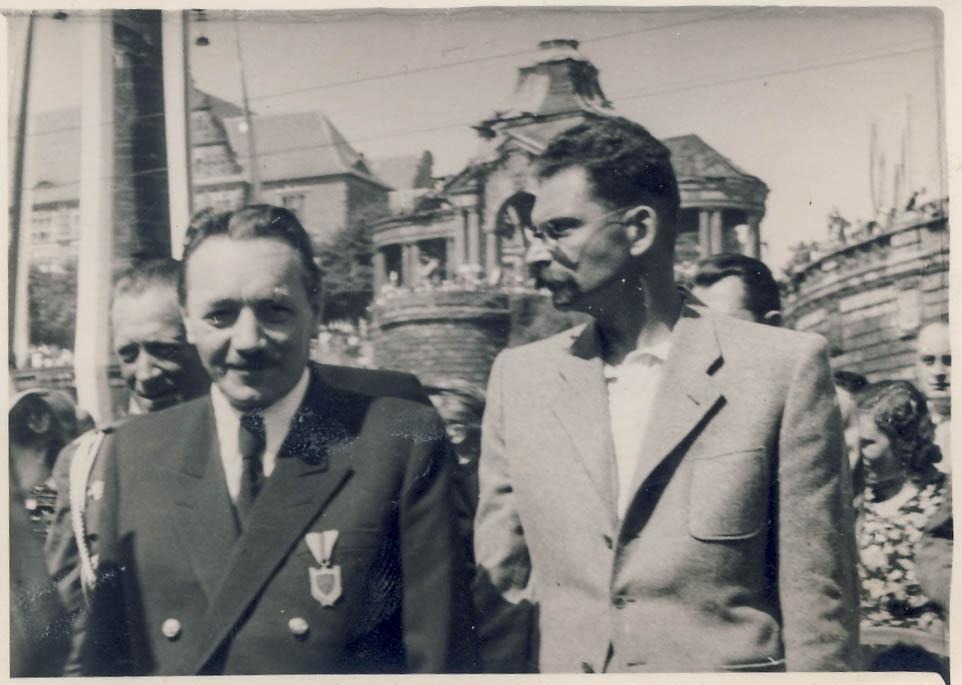
foreign languages, traveling across Europe, and embedded in the cultural milieu, he supported bringing renowned writers to Szczecin. Between 1947 and 1949, Franciszek Gil, Witold Wirpsza, Konstanty Ildefons Gałczyński, Jerzy Andrzejewski, and Edmund Osmańczyk settled in the voivodeship capital. They remembered Borkowicz as a man full of passion, capable of getting things done, convinced of the importance of his mission, and able to persuade others of it. Gałczyński wrote to his wife: “I will be in a Polish port, the voivode of Szczecin is a friend of poets, besides Gil and Papuga, Andrzejewski and Mycielski will live there, we’ll create the ‘atmosphere’, no worries! And a little house with a garden is tempting!” The voivode also engaged in the mission of organizing a theater, appointing Stanisław Czapelski—an actor and administrative director of pre-war theaters in Lviv, Poznań, Warsaw, and Gdynia, originally from Lviv—to carry it out. From the perspective of many years, Borkowicz bitterly evaluated the results of his work: “I must say that this attempt failed, in the sense that it is not enough to have certain people, even outstanding creators. You need durable, developed institutions. I mean publishing houses, magazines, newspapers, radio stations. People have to make a living from something, and creators were drawn to Warsaw.” Of the writers mentioned above, only Franciszek Gil remained in Szczecin. All the others left.
In 1948, Borkowicz’s position was shaken. A struggle was taking place within the highest circles of the PPR at that time—on one side was Władysław Gomułka, the Secretary-General of the PPR and Minister of the Recovered Territories, and on the other was Bolesław Bierut, the then-President of the Republic of Poland who worked closely with the Kremlin. The accusation against Gomułka of a “right-wing nationalist deviation” and the concurrently conducted unification campaign of the PPR and the Polish Socialist Party (which resulted in the creation of the Polish United Workers’ Party in December 1948) allowed for a large-scale verification campaign of party activists. Borkowicz also experienced this; associated with “Gomułkaism,” he was accused of a “non-collective” and “leader-style” management approach, as well as having a “cluttered apparatus” in the Voivodeship Office. Years later, he stated that he did not feel up to “making a turnaround regarding people, matters, and methods. I took the opportunity and quickly agreed to take the post of ambassador to Czechoslovakia.” Ultimately, he parted ways with Western Pomerania in February 1949.
more:
Pierwszy wojewoda szczeciński. Dokumenty i komentarze (1945–1949), oprac. Zdzisław Chmielewski, Kazimierz Kozłowski, Szczecin: Wydawnictwo Glob 1986.
Katarzyna Rembacka, Komunista na peryferiach władzy. Historia Leonarda Borkowicza (1912–1989), Szczecin-Warszawa: Instytut Pamięci Narodowej 2020.
Katarzyna Rembacka