


The Municipal System in Ducal Pomerania
The colonization under German law in Pomerania during the thirteenth century introduced a new form of organization for the population engaged in non-agricultural occupations. In place of strongholds and their adjacent trading settlements (suburbia), towns chartered under Magdeburg or Lübeck law emerged in accordance with Western models. They constituted self-governing communes, with their own administrative bodies—town councils—and judicial bodies—town benches. Large Pomeranian towns actively participated in the Hanseatic League and, owing to their economic standing, served as partners and even rivals in the political activities of the Pomeranian dukes. The municipal system of Pomeranian towns formed in the Middle Ages endured until the beginning of the nineteenth century.
The Municipal System in Ducal Pomerania
The colonization of Pomerania, carried out from the late twelfth century by the rulers of the Griffin dynasty, profoundly influenced civilizational transformations. Their foundation was written law, referred to as German law (ius teutonicum) due to the region of its reception. In this process, a new form of organization for the population engaged in non-agricultural occupations emerged—towns chartered under written law—replacing the strongholds and their surrounding trading settlements (suburbia), which had previously functioned as economic centers (i.e., towns under ducal law). The first urban charters of this type in Pomerania occurred at the turn of the 1230s and 1240s—Prenzlau (1237), Szczecin (1237–1243), Stargard (1243), Dąbie (1249), Kołobrzeg (1255), and other towns. This process lasted until the mid-fourteenth century, although individual urban centers were still established in the subsequent centuries: Węgorzyno (before 1460), Miastko (before 1503), Franzburg (1587), and Bergen on Rügen (1613). By the mid-seventeenth century, 60 towns had been founded in Pomerania under Magdeburg or Lübeck law, as well as under Kulm law (used in the Teutonic Order’s state) on the eastern fringes of Pomerania, and under Schwerin law on the western borders. All of these were variations of the Western legal system of urban organization, and the differences between them stemmed from the emphasis placed on their individual elements. In Lübeck law, for instance, in the absence of male descendants, women retained the right to inherit a house in the town, whereas in Kulm law (imposed by the Teutonic Knights), municipal authorities possessed less independence from their patron (the locator—the sovereign lord).
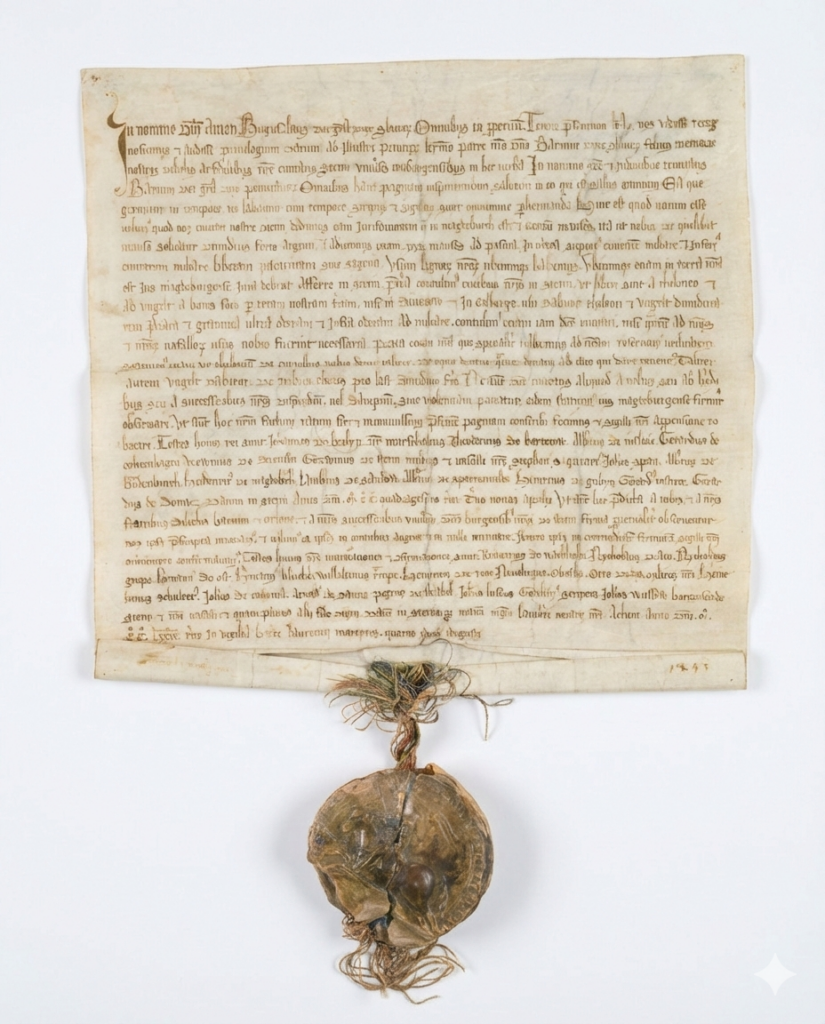
Miasta lokowane były przez władców pomorskich, a także przez biskupów kamieńskich we władztwie świeckim tych ostatnich (np. Kołobrzeg, Nowogard, Koszalin, Karlino), a także przez rycerstwo (miasta prywatne), np. Dobra założona przez ród von Dewitz; Łobez, Resko, Strzmiele, Węgorzyno przez ród von Borcke itp. Tych ostatnich było na Pomorzu książęcym aż 17 do połowy XVII wieku.
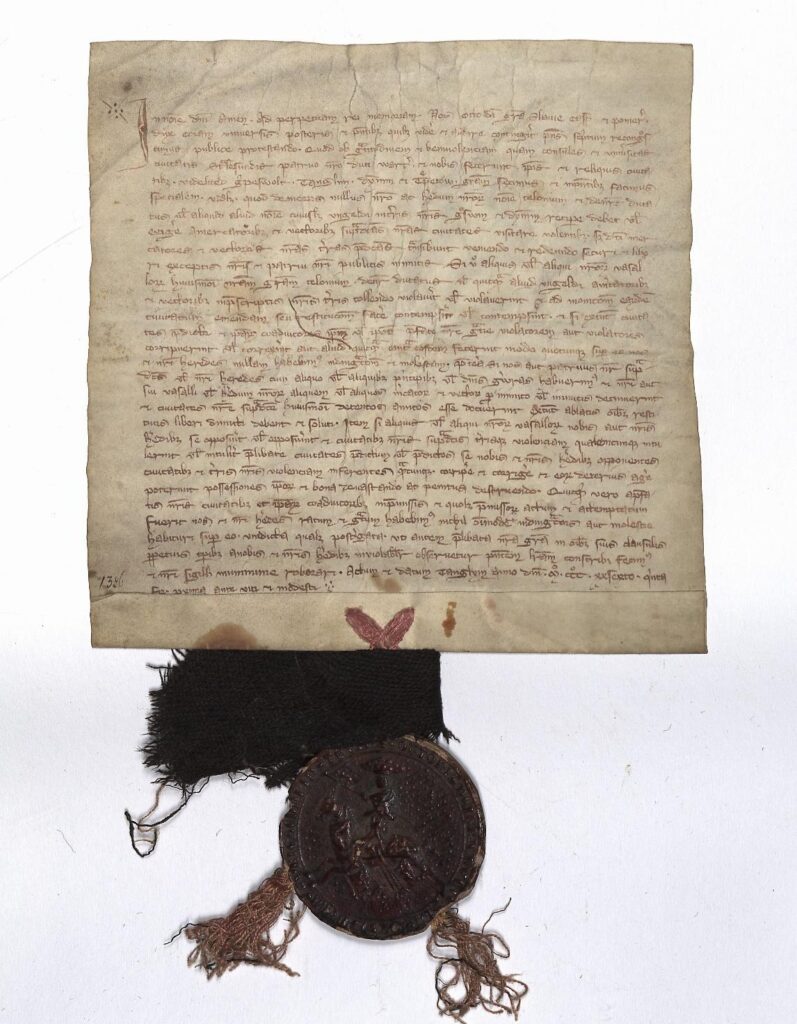
The system of production and trade in the towns operated on the basis of craft guilds and merchant guilds. These organizations also formed the foundation of social and vocational self-governance. Thanks to new forms of production and commerce, large and medium-sized towns (Szczecin, Stralsund, Greifswald, Stargard, Kołobrzeg, Anklam, and others), alongside the nobility, rapidly acquired a significant social and political role in the duchy. Most notably, they emancipated themselves from the guardianship of the dukes or other patrons, often pursuing their own policies, which were sometimes in conflict with the activities of the monarchs. The towns served, among other things, as guarantors of the public peace (Landfrieden) at the end of the thirteenth century and of the 1295 treaty partitioning the duchy between the sons of Barnim I—Bogislaus IV and Otto I. This political standing of the towns stemmed primarily from their economic power based on trade, especially long-distance trade, as well as craft production and ties with the Hanseatic League. This alliance of towns and merchants, established in the thirteenth century, constituted the dominant political force in the North Sea and Baltic basins during the fourteenth and fifteenth centuries, stretching from Bruges to Novgorod the Great in the east and Bergen in Norway to the north. The Hanseatic League was headed by Lübeck. Representatives of the member towns gathered there periodically for the so-called Hansetage to formulate common policy. The Hanseatic League was divided into several territorial quarters. The Pomeranian towns—Szczecin, Stralsund, Greifswald, Kołobrzeg, Wolgast, Stargard, Anklam, and others—belonged to the Wendish Quarter. The basis of the Hanseatic towns’ trade was the import of manufactured and luxury products from Western countries to the Baltic region and Central Europe, alongside the export of forestry and agricultural products (grain) and others from this region. One of the primary commodities traded by the Hanseatic towns was fish, particularly herring. Pomeranian towns possessed their own trading posts (factories) on the southern fringes of Scania, including in Skanör and Falsterbo, where fish caught in the Baltic were stored and processed (dried, salted, and barreled).
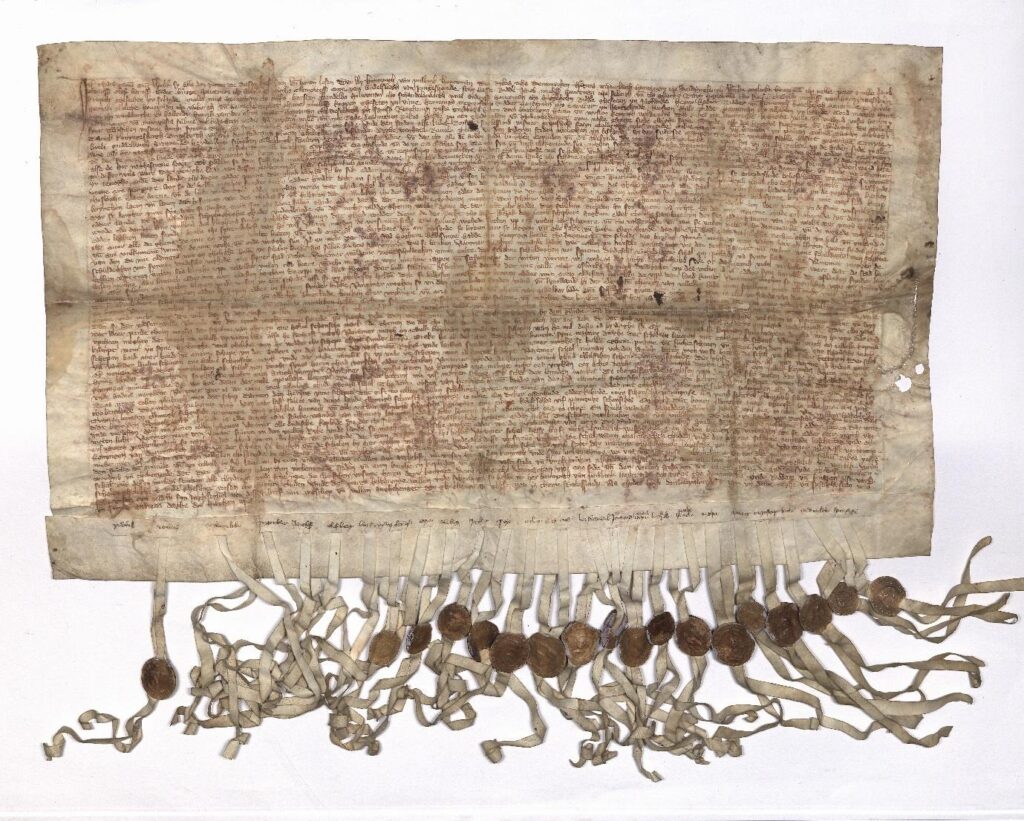
At the turn of the sixteenth century, the political position of towns in the Duchy of Pomerania was restricted by Duke Bogislaus X, who forced them to submit to the sovereign’s will. Szczecin and other urban centers continued to attempt to emancipate themselves from ducal authority; however, only Stralsund attained a political position sufficiently independent to aspire to the status of a Free Imperial City in the early seventeenth century. Ultimately, however, these ambitious plans were shattered by the Thirty Years’ War (1618–1648) and the Swedish ‘protection’ established in 1628.
The internal organization of the towns was based on the law adopted during their chartering; as mentioned above, towns in the duchy were most frequently established according to the Magdeburg or Lübeck model. Under the former, power in the town was exercised on behalf of the patron by a vogt (advocatus) and a bench (schöffen) elected from among the burghers. Fairly rapidly, in towns under Magdeburg law—as part of their emancipation from ducal authority (the locator)—a second independent representation of the burghers emerged: the town council. It assumed prerogatives related to the administration of the commune from the vogt, restricting his power to the judiciary exercised jointly with the town bench (the jury court). Over time, towns bought out the office of the vogt (along with the judicial rights) from the monarch, and the vogt became one of the municipal officials, presiding over the town bench. Within the town council, specific offices emerged—namely the burgomaster and the chamberlain (camerarius / municipal treasurer), who were responsible for the direct management of the town and its finances (assets). Conversely, in towns under Lübeck law, a town council was established immediately upon chartering alongside the vogt as a representation of the entire populace. In Lübeck-law towns, no separate town bench was appointed; instead, the town council managed the commune and fulfilled the role of the municipal court. The jurors, councilors, burgomasters, and treasurers hailed from the wealthiest stratum of the urban community—the patriciate (including merchants, brewers, and drapers). The next social group was the commoners (pospólstwo). This group comprised the majority of artisans, as well as shopkeepers (retail merchants), and so forth. Representatives of these two social groups (usually about one-third of the total population) held the status of town citizens and were ‘inscribed into the municipal law,’ thereby constituting fully fledged burghers. The lowest and most numerous layer of the urban population, which enjoyed the town’s protection (the right to utilize social welfare) but was deprived of municipal citizenship, was the plebeians (plebs). It consisted of day laborers, porters, sailors, journeymen, and apprentices training under masters (artisans), as well as domestic servants. Furthermore, within every commune, a portion of its inhabitants was comprised of ‘marginalized people’ (beggars, the disabled, the elderly, thieves, and prostitutes), who were excluded from the fringe of the urban community.
Town councils managed the city’s governance, its police, sanitary, and fire safety, social welfare, the maintenance of municipal facilities, and the administration of property (including municipal villages and estates, public buildings, and facilities) and finances (the town’s revenues and expenditures). Furthermore, they issued municipal ordinances (wilkierze)—regulations governing various aspects of urban, economic, or social life, such as guild statutes. Initially, these were enacted at joint assemblies of all burghers; however, by the fifteenth century, town councils passed new ordinances independently, merely communicating their contents to the inhabitants at general assemblies. The town council consisted of anywhere from a few to several dozen members, including the aforementioned municipal officials. In Szczecin, this body numbered 28 members, including 3 burgomasters and 3 chamberlains each, while in Bergen on Rügen in 1613, the council comprised 11 members, including 3 burgomasters and 2 treasurers. In Gryfice, the body consisted of 12 members, including 3 burgomasters and 3 chamberlains each. In Kamień Pomorski, the town council consisted of 13 members, including 3 burgomasters and 2 treasurers each. Council members held their seats for life, and its composition was replenished through co-optation, meaning the election of a new councilor by the body itself from among the patriciate. In the Middle Ages, the council in many towns (e.g., Szczecin, Kamień, Wolin) was divided into two halves: one directly managed the commune during a given year, while the other consisted of ‘resting’ councilors who were not involved in the day-to-day administration of the town. Both parts operated rotationally on an annual cycle. Individual councilors not only participated in the sessions of the town council but also managed various sectors of the urban economy or institutions; for instance, they supervised craft or merchant guilds, fraternities, charitable institutions, mills, the port (e.g., in Szczecin), or other municipal facilities and enterprises.
Conversely, the town bench in towns under Magdeburg law constituted the municipal court, executing both lower and higher (capital) jurisdiction. The bench in Szczecin (consisting of 11 jurors) also functioned as a superior court of Magdeburg law for other towns within the Duchy of Szczecin. Szczecin thus served as an appellate court, as well as a body issuing legal opinions for other town benches. Furthermore, the parties to disputes, as well as the municipal authorities, could appeal to Magdeburg or Lübeck—depending on the model of municipal law they possessed. In such cases, the authorities of those cities issued ortels (legal verdicts, instructions, or rulings) to the interested parties in the cases referred to them.
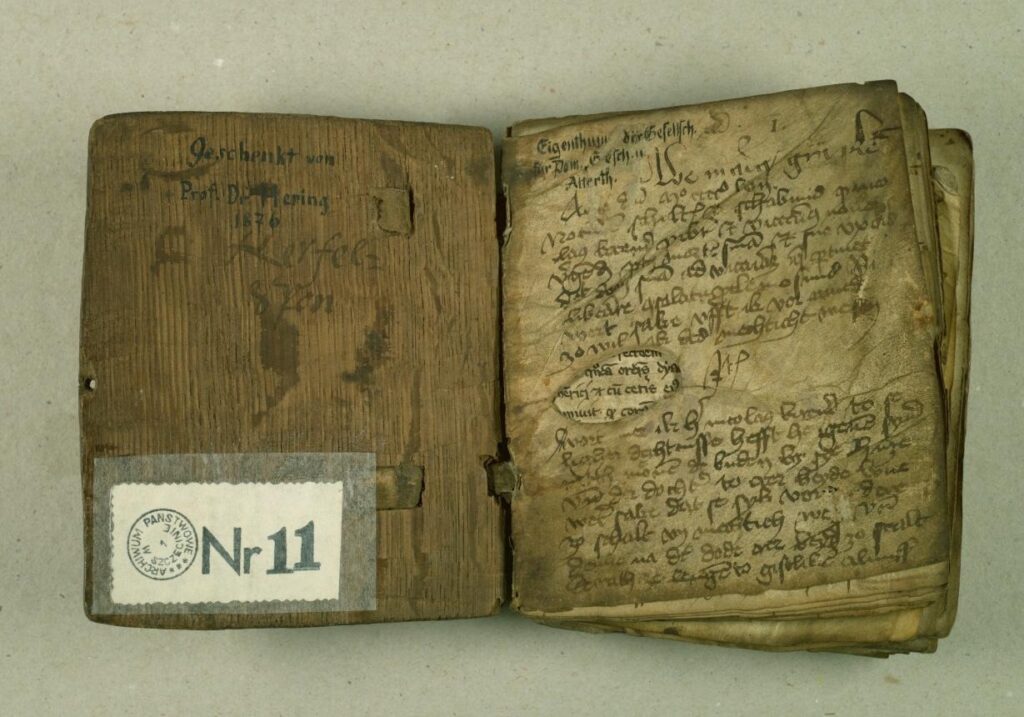
Libri civitatis, hereditatum, scabinorum—under these names lie the municipal books, also known as jury court books. In small towns, usually a single book was kept, containing entries regarding municipal property as well as contentious and criminal cases resolved by the town bench. Municipal books are an exceptional source for understanding the functioning of a town and the lives of its inhabitants. The entries concern matters such as securing the property of children from a first marriage, settlements in property disputes, matters related to the turnover of estates, credits, pledges, the repayment of debts, and the administration of municipal property. The oldest entries date back to 1322, while the youngest were made after 1566. The municipal book of Chociwel consists of 68 parchment folios, 12 cm wide and 14 cm long. In the nineteenth century, it became the property of the Society for Pomeranian History and Antiquities in Szczecin (Gesellschaft für pommersche Geschichte und Altertumskunde) and was compiled by Hugo Lemcke. Manuscript, parchment, book, 12 x 14.5 x 2.8 cm, wooden binding, in Latin and German. State Archives in Szczecin, Memoir Collection, shelfmark 11 (69 folios). After: Neighbors in Europe, the Duchy of Pomerania and the Kingdom of Poland (1000–1648), Kraków–Szczecin–Greifswald 2012, pp. 170–171.
In addition, the municipal authorities employed professional officials—a town (court) clerk and a syndic, who served as the town’s legal counsel. The duties of the former included managing the municipal (as well as court) chancery, which involved maintaining the municipal books, recording the minutes of the meetings of the town council or the jury court, and drafting documents issued by the municipal authorities. The syndic, for his part, oversaw the council’s deliberations from a legal standpoint to ensure that its decisions did not violate municipal, ducal, or imperial law. The syndic also functioned as a municipal diplomat; alongside the burgomasters, he represented the town before the duke and at the Pomeranian parliament (diet), or before the Court of Appeal (Sąd Nadworny) in Szczecin or Wolgast, the Imperial Chamber Court (Reichskammergericht), the emperor, or other monarchs.
Apart from the two aforementioned officials, the municipal service worked for the town, including night watchmen, gatekeepers, field guards, market masters (responsible for collecting fees at marketplaces and fairs), weighmasters (inspectors of the town scale), quartermen (supervisors of the town districts), beadles, or town hall servants, and so forth. In port towns, port officials and harbor workers were also employed, such as the boom master (responsible for the harbor boom), bridge masters, and supervisors of wharves, warehouses, and storage yards.
In the sixteenth and seventeenth centuries, tensions between the patriciate controlling the town councils and the commoners over the control of authority led to tumults (revolts), particularly during periods of economic downturn or famine. As a result, compromises were sometimes reached between the parties under the patronage of the dukes, leading to the establishment of bodies to oversee the municipal authorities, known as committees of citizens (colleges of men). For instance, a council of 48 citizens (48-mężów) was created in Szczecin in 1528, followed by a council of 60 citizens (60-mężów) in 1613. Their task was to control municipal finances and monitor the expenditures incurred by the town council.
The municipal system of Pomeranian towns formed in the Middle Ages existed uninterrupted until the beginning of the nineteenth century, although in Prussian Pomerania during the eighteenth century, it underwent major legal transformations, which, however, did not disrupt the social structure (the patriciate, commoners, and plebeians).
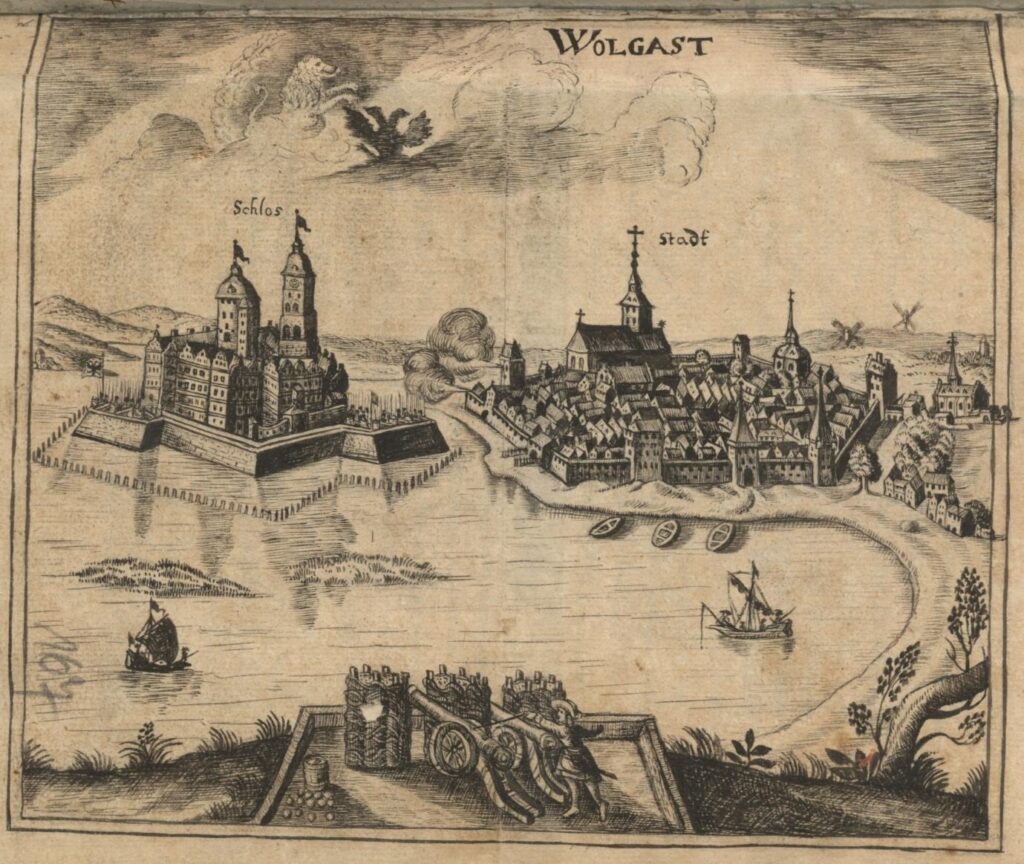

More:
Radosław Gaziński, Administracja Szczecina w czasach Paula Friedeborna, w: Friedeborn i jego dzieło, red. Paweł Gut, Szczecin: Zamek Książąt Pomorskich 2021.
Jan Maria Piskorski, Miasta księstwa szczecińskiego do połowy XIV wieku, Warszawa: Państwowe Wydawnictwo Naukowe 1987.
Pomorze Zachodnie poprzez wieki, red. Jan Maria Piskorski, Szczecin: Zamek Książąt Pomorskich 1999.
Bogdan Wachowiak, Pomorze Zachodnie w początkach czasów nowożytnych (1464–1648). Odrodzenie się i upadek państwa pomorskiego, w: Historia Pomorza, t. 2 cz. 1, red. Gerard Labuda, Poznań: Wydawnictwo Poznańskie 1976.
Paweł Gut