


Archbishop Kazimierz Majdański
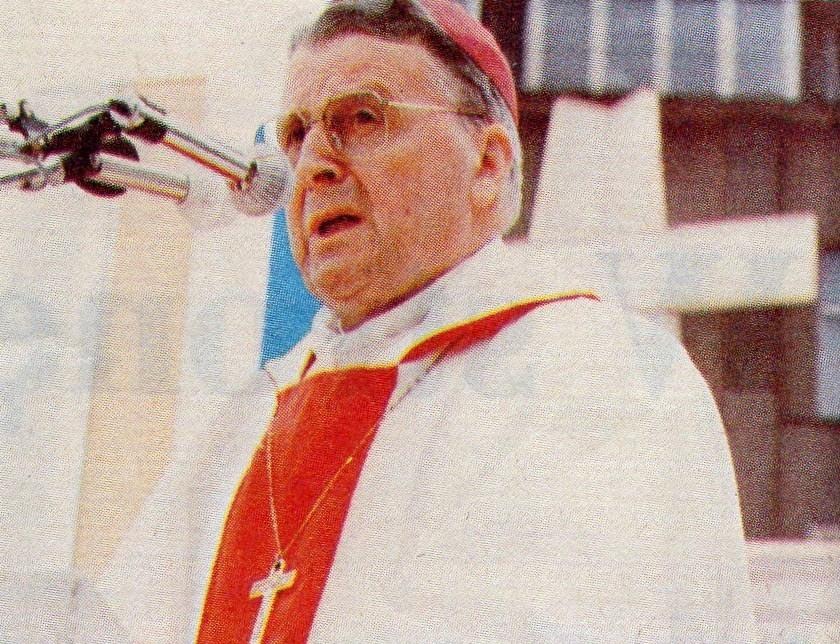
Kazimierz Majdański was born on March 1, 1916, in Małgów near Kalisz, as the youngest of thirteen children of Rozalia and Józef Majdański. His family was deeply religious, so it came as no surprise to anyone that after graduating from the Pius X Gimnazjum (secondary school) in Włocławek and passing his matura (high school exit exam), he entered the Higher Theological Seminary in the same city in 1934. He was in his final, sixth year of studies when World War II began. On November 7, 1939, he was arrested by the Gestapo. As he recalled years later, initially no one was interested in his identity; thus, the arrest was not about him personally, but about the cassock he wore. Many other seminarians and priests were arrested alongside him, including Bishop Michał Kozal. The Bishop of Włocławek was one of those clergymen who did not live to see freedom and perished in a concentration camp, becoming one of the martyrs of World War II beatified by John Paul II in 1987. Majdański survived.
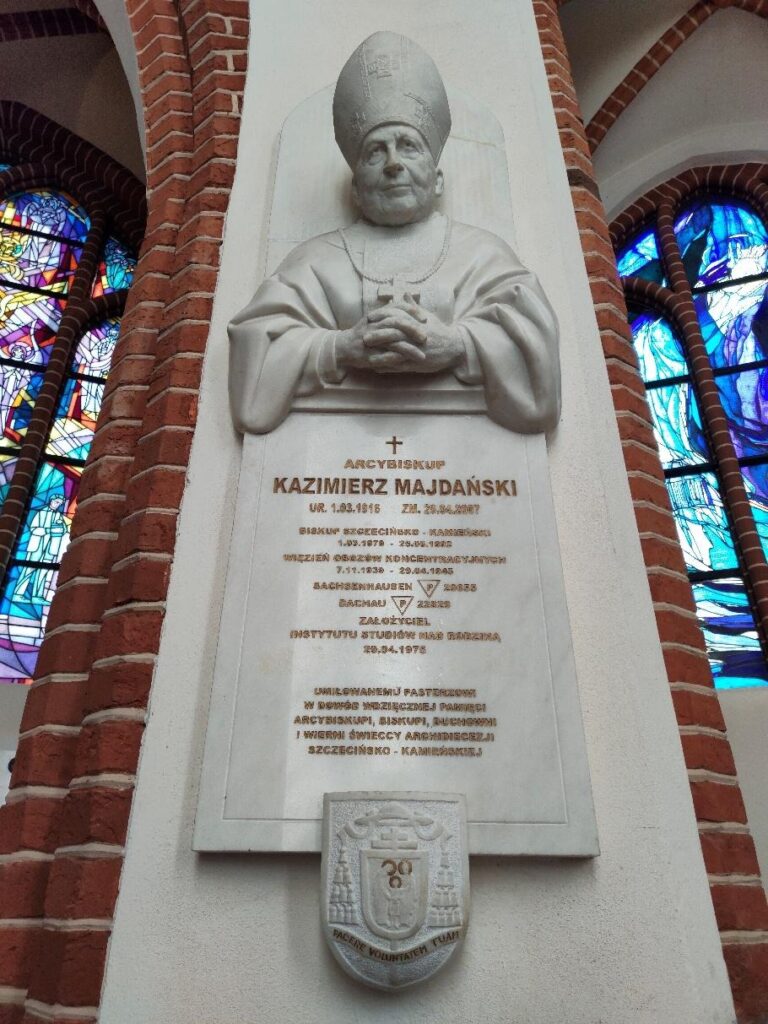
He was imprisoned successively in the Włocławek prison, the internment camp in Ląd nad Wartą, the Sachsenhausen concentration camp (camp number: 29655), and from December 1940 until the end of the war, in the Dachau concentration camp (camp number: 22829). As a prisoner, Majdański tried to help his fellow inmates. Among other things, he cooperated with Father Stanisław Frelichowski in caring for typhus patients. Both contracted the disease. Frelichowski passed away. In 1999, he was beatified, and because he was a scoutmaster and chaplain of the Polish Scouting and Guiding Association (ZHP), he was proclaimed the patron saint of Polish scouts.
Between 1942 and 1943, Majdański was subjected to pseudoscientific medical experiments involving so-called artificial phlegmon, a severe bacterial infection of the connective tissue. The experiments were conducted by Dr. Heinrich Schütz. Majdański survived thanks to the help of two nurses: Heinrich Stoer, a German, and Zdenek Zámečnik, a Czech. Although Stoer was likely a craftsman by trade, as a nurse he cared for the patients with great dedication, despite the danger he faced for doing so. He likely gave Majdański and a dozen other prisoners life-saving injections. After the war, Stoer testified as a witness at one of the trials of German war criminals, mentioning Schütz and his experiments, but at the time, no one pursued the matter. As a committed socialist, Stoer became involved in politics with the SPD and in social work, campaigning among other things for the construction of a nursing and retirement home in his hometown of Weissenburg. He was known as the “Angel of Dachau” and passed away in 1958. Majdański did not manage to meet him to express his gratitude. He did, however, meet the “Executioner of Dachau.”
After the war, Heinrich Schütz lived a peaceful life in Essen, running his own medical practice and starting a family. It was not until 1966 that the German prosecutor’s office took an interest in him. He was arrested in 1971, and the investigation and trial dragged on for years. There were many witnesses to his post-war life who could not believe what he had done during the war, and who emphasized his innocence. However, the testimony of the former prisoners was too credible. One of them was Bishop Kazimierz Majdański, who testified before a court in Munich in 1975. During the trial, he did something that shocked onlookers and, through media reports, spread throughout Germany and reached Poland. Majdański approached his former tormentor and shook his hand as a sign of forgiveness. He later recalled that Schütz held onto his hand for a long time, reluctant to let go. Majdański faced many expressions of astonishment and even outrage, but to him, it was the only natural stance to take. And he remained consistent in this attitude, both in his actions and his words. He never denied the crime, yet at the same time, he was a great advocate for reconciliation between the two nations. His voice as a former prisoner subjected to pseudomedical experiments carried immense weight. The Germans also recognized this. In 1991, he became the first Pole to receive Germany’s highest decoration awarded to foreigners—the Knight Commander’s Cross of the Order of Merit (Great Cross of Merit with Star).
Immediately after the liberation of Dachau, Majdański went to Paris at the invitation of Edmond Michelet—a fellow prisoner and later a minister in Charles de Gaulle’s government. It was there, on July 25, 1945, that he was ordained a priest. In January 1946, he began his licentiate and subsequently doctoral studies at the Faculty of Theology at the University of Fribourg. In 1949, he earned his doctorate in moral theology. It was also then that he received permission to return to Poland.
He returned to Włocławek, where he served as a curate of the cathedral parish (1949–1950), a lecturer (1949–1967), and the vice-rector (1952–1957) at the Higher Theological Seminary. Following his return, he also collaborated with the largest periodical for the clergy, “Ateneum Kapłańskie,” becoming its editor-in-chief in 1956—a role he held until 1975. Furthermore, he performed important functions within various commissions of the Polish Episcopate: he directed the healthcare ministry, served on the Marian Commission, and chaired the group of theologians and sociologists preparing the seventh year of the Great Novena ahead of the Millennium of the Baptism of Poland.
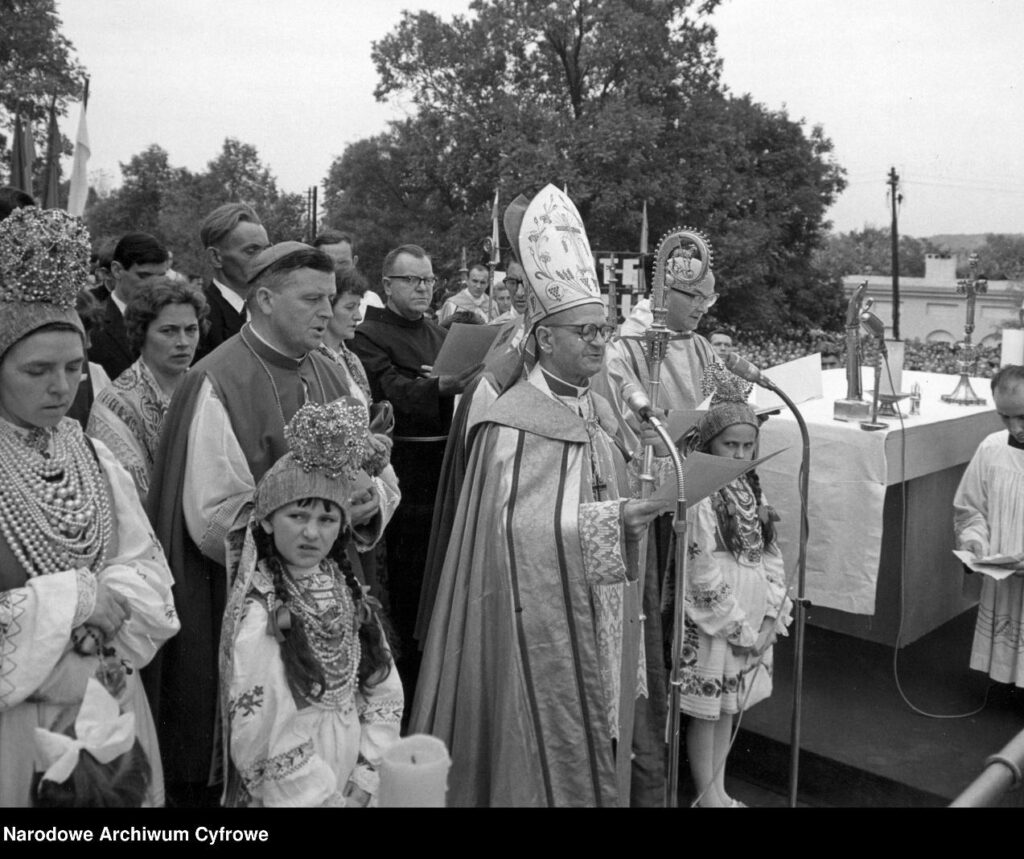
In 1962, Pope John XXIII appointed him auxiliary bishop of the Diocese of Włocławek. For his episcopal motto, he chose a fragment from the Letter to the Hebrews, “To do Your will,” and placed the Holy Family on his coat of arms. He participated in the work of the Second Vatican Council, delivering a speech on behalf of the Episcopate on the need for respect for human life—against all forms of discrimination. This deep concern for human life also resulted in the creation of one of his most significant projects: the Institute of Family Studies. The concept was to create a program that examined marriage and family through the lens of various scientific disciplines. Thanks to these efforts, the Main Council for Higher Education approved a brand new field of study: family sciences. The Institute was based in Łomianki near Warsaw and formed part of the structures of the Academy of Catholic Theology (today the Cardinal Stefan Wyszyński University – UKSW), with Majdański serving as its director for many years. Importantly, Majdański collaborated with many laypeople in establishing and running the institute, and the studies themselves were open to both the clergy and the laity. This was by no means the norm at the time.
On March 1, 1979, Bishop Majdański was appointed by Pope John Paul II as the bishop of the Diocese of Szczecin-Kamień. Following Bishop Jerzy Stroba, he was the second ordinary of this diocese, which had been carved out in 1972 from the vast structure of the Gorzów Diocese. His efforts in the new location were essentially identical to all the initiatives he had undertaken up to that point. He quickly realized that there were too few priests. The solution was to establish a Higher Theological Seminary in the diocesan capital, as until then, future priests had been educated at the seminary in Paradyż-Gościkowo (now in the Lubusz Voivodeship). Despite resistance from the state authorities, the seminary in Szczecin began its operations in 1981 (though it did not yet occupy its current premises). In doing so, he ensured that the formation of priests followed two main tracks: spiritual (e.g., through numerous retreats and days of recollection) and intellectual (he established a branch of the Institute of Family Studies). The role and activity of religious orders were also of great importance to him. In 1983, he initiated the foundation of the Carmel of Merciful Love in Szczecin (the Discalced Carmelite Sisters’ convent on Strzałowska Street). This location also hosted classes for seminarians, and later a diocesan retreat house was built there. For many residents of Szczecin, it remains an important place, sometimes referred to as the “spiritual lungs of the city.” Majdański invited the Dominican and Franciscan orders to the diocese, as well as the Missionaries of Charity (founded by Mother Teresa of Calcutta), who began their work among Szczecin’s poorest. He was also the only bishop who agreed to welcome the newly formed congregation of the Sisters Disciples of the Cross into his diocese, taking them under his care. He was distinctly characterized by his openness to lay Catholics; the Szczecin curia was the only one to employ a lay press spokesperson. In 1986, the bishop established the Holy Family Secular Institute of Consecrated Life, aimed at supporting families. He also extended his patronage to the emerging Single Mother’s Home in Karwów. He supported the organizing communities of the Catholic Charismatic Renewal (Renewal in the Holy Spirit) and the Neocatechumenal Way. In 1989, he became the first bishop to welcome Opus Dei into his diocese.
Despite such broad openness to new ideas, Bishop Majdański had a specific way of carrying himself. Although he often listened to his priests or the faithful, he did not particularly like to show it. He highly valued his own preaching. He was not one of those bishops who believe that the inspiration of the Holy Spirit is enough and that they do not need to prepare for their homilies. His sermons were profound and meaningful, yet they were wrapped in a baroque style of speech that made it difficult to absorb his wise insights. On this matter, however, the ordinary remained unyielding.
An interesting relationship developed between the bishop and the emerging social movement “Solidarity.” Like many clergymen, he initially viewed the August 1980 strikes with suspicion. He feared contacts between the striking workers and organizations such as the Workers’ Defense Committee (KOR). It was likely he who was among those who advised the leader of the Szczecin strike, Marian Jurczyk, not to allow foreign journalists into the Shipyard, and who may have influenced the earlier signing of the August Agreements on August 30, 1980. Majdański, along with auxiliary bishops Stanisław Stefanek, Jan Gałecki, and Marian Kruszyłowicz, played a vital role during martial law. They visited the internees, cared for their families, and supported aid committees. Their deeply committed stance during this difficult time was immensely important to the faithful.
Majdański campaigned for a visit by John Paul II to Szczecin in 1983. Although it did not materialize at the time, a separate meeting with the faithful of the Szczecin-Kamień Diocese was successfully organized at Jasna Góra. In 1985, he initiated the celebrations marking the 40th anniversary of the Polish church administration. Finally, in 1987, Majdański succeeded in organizing the Pope’s visit to Szczecin. Through administrative actions (establishing new parishes), the reconstruction of churches, and the reorganization of the bishop’s curia, he prepared the ground for elevating the diocese to the rank of an archdiocese and creating a metropolitan see in 1992. That same year, due to his age, he submitted his resignation from the position of ordinary. John Paul II granted him the title of archbishop. Kazimierz Majdański returned to Łomianki. He continued to take on numerous commitments related to the care of family, marriage, Polish culture, and reconciliation. He received honorary doctorates (doctor honoris causa) from the University of Szczecin and UKSW, numerous state decorations (including the Order of the White Eagle and the Order of Polonia Restituta), and honorary citizenship of several cities. He passed away in 2007.
More:
Bartosz Dudek, Kat i anioł z Dachau. Zbrodnia i przebaczenie, „Magazyn Wirtualnej Polski” https://magazyn.wp.pl/informacje/artykul/kat-i-aniol-z-dachau-zbrodnia-i-przebaczenie [dostęp: 4.12.2025]
Dzieje Kościoła katolickiego na Pomorzu Zachodnim, red. Michał Siedziako, Zbigniew Stanuch, Grzegorz Wejman, tom IV, Szczecin: Instytut Pamięci Narodowej 2019.
Maria Kabata, „Mówiąc Ojczyzna”. Świat wartości w nauczaniu biskupa Kazimierza Majdańskiego, Szczecin: Wydawnictwo Naukowe Uniwersytetu Szczecińskiego 2014.
Życiorys ks. arcybiskupa Kazimierza Majdańskiego, „Studia nad Rodziną” 11/1-2 (20-21), 2007, s. 9-17.
Zofia Fenrych