


From Protest to Transformation
Szczecin and the Peaceful Dismantling of Communist Rule, 1988–1989
In 1988, the process of a gradual and peaceful dismantling of the communist dictatorship in Poland began. Szczecin and the Western Pomerania region played an important role in this transformation.
From the mid-1980s, Poland experienced a kind of stalemate in relations between the authorities and the opposition. The communist government of the Polish People’s Republic lacked the social legitimacy to carry out the necessary reforms and lead the country out of economic crisis. The “Solidarity” movement, although enjoying public trust and support, was still operating illegally and remained too weak to force the authorities to make concessions. The only effective form of pressure the union could exert was through strikes. A pretext for organizing them came with yet another price increase introduced by the government of Mieczysław Rakowski on February 1, 1988. However, the wave of protests did not erupt immediately—it grew gradually.
In the spring of 1988, strikes broke out in several workplaces, including in Bydgoszcz, Kraków, and Gdańsk. In early May, employees of two depots of the Provincial Public Transport Company (WPK) — in Szczecin-Dąbie and Police — went on strike. The organizers were in contact with Andrzej Milczanowski, leader of the underground Coordinating Council of NSZZ “Solidarity” in the Western Pomerania Region. He planned to use the strike situation to bring forward the key demand for the re-legalization of “Solidarity.” This attempt, however, was unsuccessful, as the authorities suppressed the protest within a few hours. The strike in Police ended under the threat of force and criminal consequences for the participants. The depot in Dąbie was surrounded by ZOMO riot police units. Militia officers then removed three leaders of the protest — Józef Ignor, Romuald Ziółkowski, and Andrzej Kudła — who were detained. Deprived of its leaders, the workforce left the depot, making their return to work the next day conditional upon the release of the three men — which indeed occurred that same evening. However, Ignor and Ziółkowski were soon dismissed from their jobs, prompting another protest. On June 22, a strike began in three depots — in addition to Police and Dąbie, also at Klonowica Street. Yet this protest, too, ended quickly, as the authorities, fearing its escalation, withdrew the decision to dismiss the workers.
Another wave of strikes began on August 15, 1988, at the “Manifest Lipcowy” coal mine in Jastrzębie-Zdrój. Soon, strikes spread to other regions and cities, including Gdańsk and Stalowa Wola. While the spring protests had been dominated by economic demands, this time the call for the restoration of trade union pluralism came to the forefront.
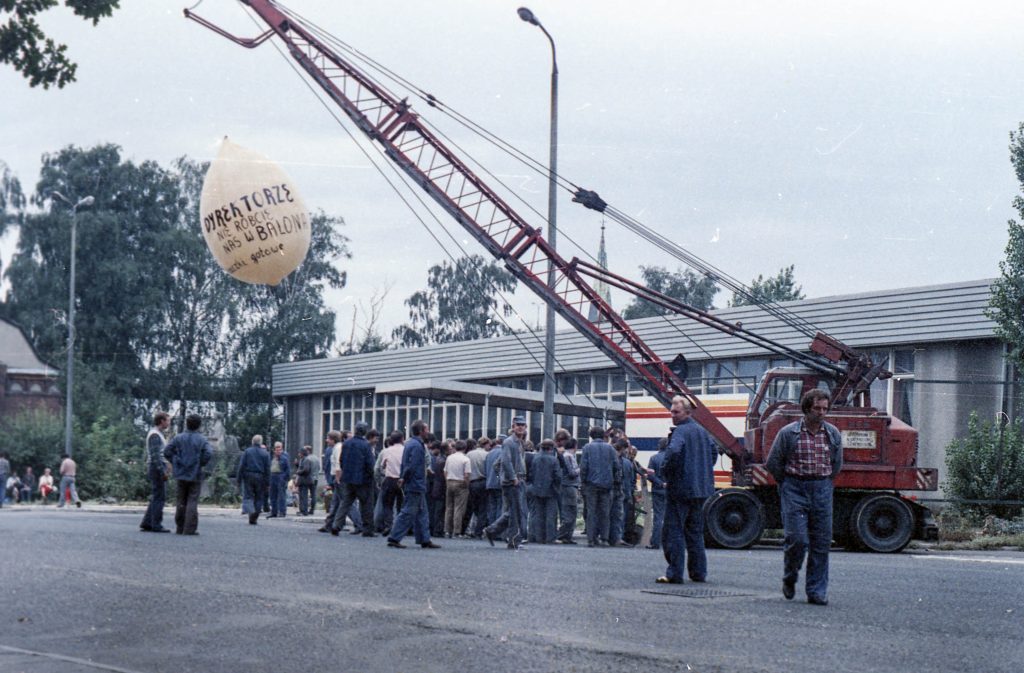
On August 17, workers at the General Cargo Handling Terminal of the Szczecin port went on strike. The immediate pretext was the establishment of outrageously low rates for unloading cement. Andrzej Milczanowski managed to enter the port illegally, in disguise, and together with Edward Radziewicz, Józef Kowalczyk, Jan Dubicki, Michał Achramowicz, and others, began calling for the expansion of the protest — which indeed soon followed. The dockworkers gathered in the recreation hall, where company directors and a prosecutor soon appeared, attempting to halt the protest by arguing that it was illegal and by outlining the possible consequences for participants. However, the assembled workers were not persuaded. A seventeen-member Strike Committee was elected, with Radziewicz as its chairman, and four demands were presented: The restoration of the legal right for NSZZ “Solidarity” to operate; A 50% wage increase for the plant’s employees; The reinstatement of workers dismissed for opposition activities; Guarantees of safety for the strikers and full payment for the duration of the protest. They also demanded that General Wojciech Jaruzelski come to the port to meet with the strikers. In response, a telex was sent from the Office of the Chairman of the Council of State, stating that General Jaruzelski was willing to meet the dockworkers on the condition that they end the illegal strike, expel non-employees from the premises, and compensate for losses caused by the stoppage. The meeting between the strikers and General Jaruzelski never took place — neither in Szczecin nor anywhere else.
ChatGPT powiedział: In the following days, more workplaces joined the striking dockworkers. At the request of Andrzej Milczanowski, Mieczysław Lisowski took part in organizing the WPKM (Provincial Public Transport Company) strike. On the morning of August 18, employees of the bus depots in Szczecin-Dąbie, Klonowica Street, and Police, as well as workers from other port facilities — including the Bulk Cargo Handling Plant, the Shipping Services Plant, and the Central Port Mechanical Workshops — refused to begin work. That evening, an Inter-Enterprise Strike Committee (Międzyzakładowy Komitet Strajkowy, MKS) was established at the port. It reaffirmed the four demands previously put forward by the dockworkers, with the second and third generalized to apply more broadly. The committee’s members included: Edward Radziewicz (chairman), Józef Ignor (vice-chairman, representing WPKM), Jarosław Krakowski (port), Jerzy Wojtowicz (port), and Andrzej Milczanowski (initially without official affiliation, later representing WPKM).
In the following days, employees from additional WPKM depots joined the strike — including the tram depots on Niemierzyńska Street and in Gocław (Golęcin) — as well as workers from the Railway Construction Works (Zakłady Budownictwa Kolejowego). However, attempts to spark a strike at the Adolf Warski Szczecin Shipyard — a symbolic site and the “cradle” of the regional “Solidarity” movement in August 1980 — were unsuccessful. At the “Chemitex–Wiskord” Chemical Fiber Plant, a Strike Committee was formed and a statement of support for the Inter-Enterprise Strike Committee (MKS) was issued, but production was not halted due to technological reasons — the risk of destroying large quantities of raw materials and equipment. The protest also gained support from the Provincial Council of Farmers “Solidarity” of Western Pomerania, the Szczecin Catholic Club named after Michał Plater-Zyberk, the founding committees of “Solidarity” at the Szczecin University of Technology and the Maritime University in Szczecin, the Szczecin branch of “Fighting Solidarity” (Solidarność Walcząca), as well as opposition youth groups operating under banners such as the “Freedom and Peace” Movement (Ruch „Wolność i Pokój”). The latter established direct contact with Milczanowski and assisted in communication, food collection, and medical supply efforts for the strikers. In the days that followed, the personal composition of the MKS changed slightly as new individuals joined. Among those signing its statements, in addition to the previously mentioned members, were Henryk Orliński, Henryk Stachal (ZWCh “Chemitex–Wiskord”), Romuald Wołodźko (Central Port Mechanical Workshops), Andrzej Gruszczyński (Shipping Services Plant), Artur Balazs (Provincial Council of Farmers “Solidarity”), and Edward Dworakowski (Railway Construction Works).
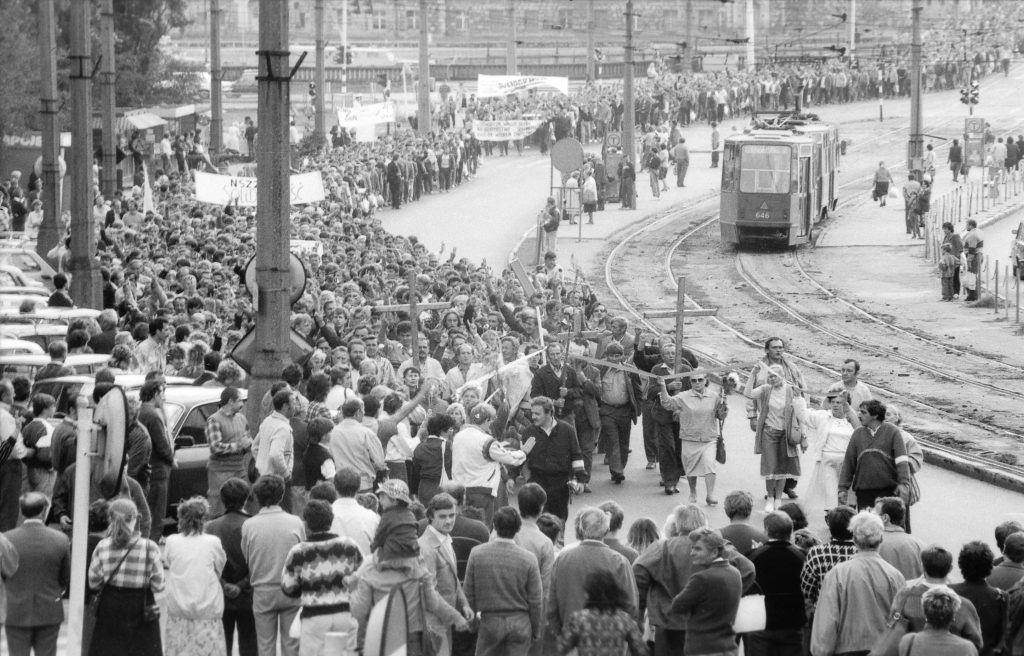
The strikes in Szczecin, along with protests taking place at the same time in other parts of the country, contributed to the decision of the communist authorities to begin talks with the opposition. On August 31, the first official meeting between representatives of the government and “Solidarity” since the imposition of martial law took place. Participants included Lech Wałęsa, General Czesław Kiszczak, Stanisław Ciosek, and Bishop Jerzy Dąbrowski. Following the meeting, Wałęsa issued a statement announcing the organization of the Round Table talks and calling for an end to ongoing negotiations in the various striking workplaces and the suspension of strikes. In Szczecin, despite the lack of an agreement on wage issues, the Inter-Enterprise Strike Committee (MKS) ended the strike on September 3, 1988.
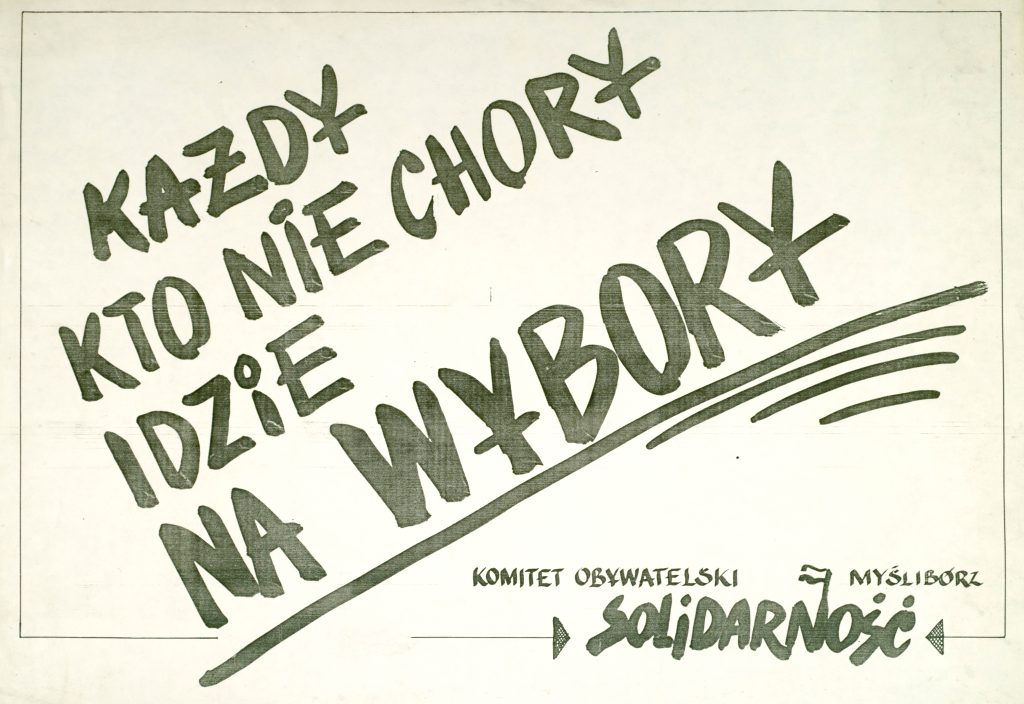
In the following days, based on the Szczecin Inter-Enterprise Strike Committee (MKS), the Inter-Enterprise Organizing Committee of NSZZ “Solidarity” for the Western Pomerania Region was established, with Edward Radziewicz remaining at its head, supported by Andrzej Milczanowski. The group centered around them came to dominate the opposition scene in Szczecin, pushing aside the legendary leader of Szczecin’s August 1980 movement, Marian Jurczyk, and his associates. Attempts at mediation between the two factions proved unsuccessful. Jurczyk and his supporters did not join the Citizens’ Coordination Committee “Solidarity” of the Western Pomerania Region (OKP), formed on March 23, 1989. This body bore the main responsibility for organizing the “Solidarity” election campaign in the Szczecin voivodeship ahead of the “contract” elections negotiated at the Round Table. (At the Round Table itself, Western Pomerania was represented by Radziewicz and, at the so-called legal sub-table, by Milczanowski.) The elections were held under a majority voting system in two rounds — on June 4 and June 18, 1989. In these elections, 35% of the seats in the Sejm were opened to democratic competition, along with the reestablished upper house of parliament — the 100-member Senate, restored after several decades of absence.
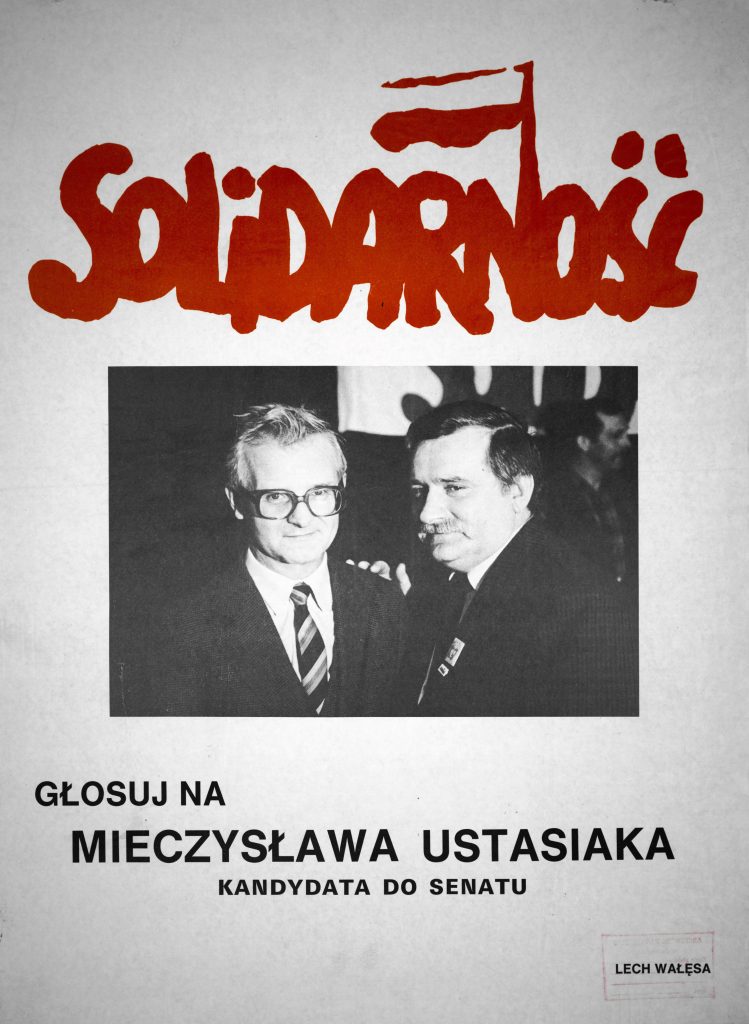
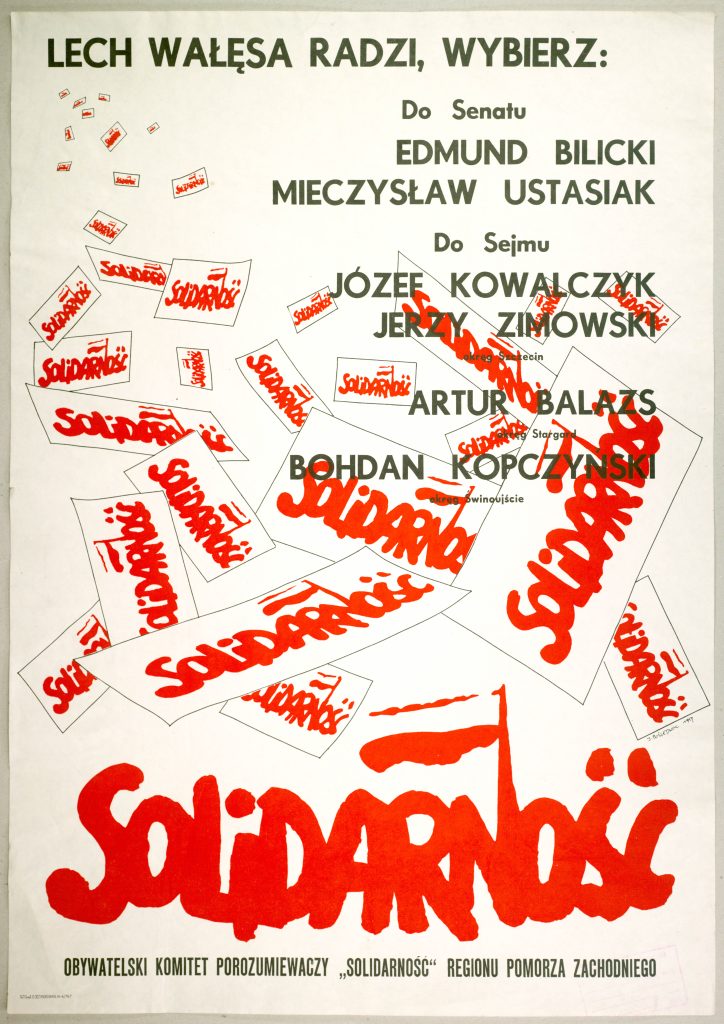
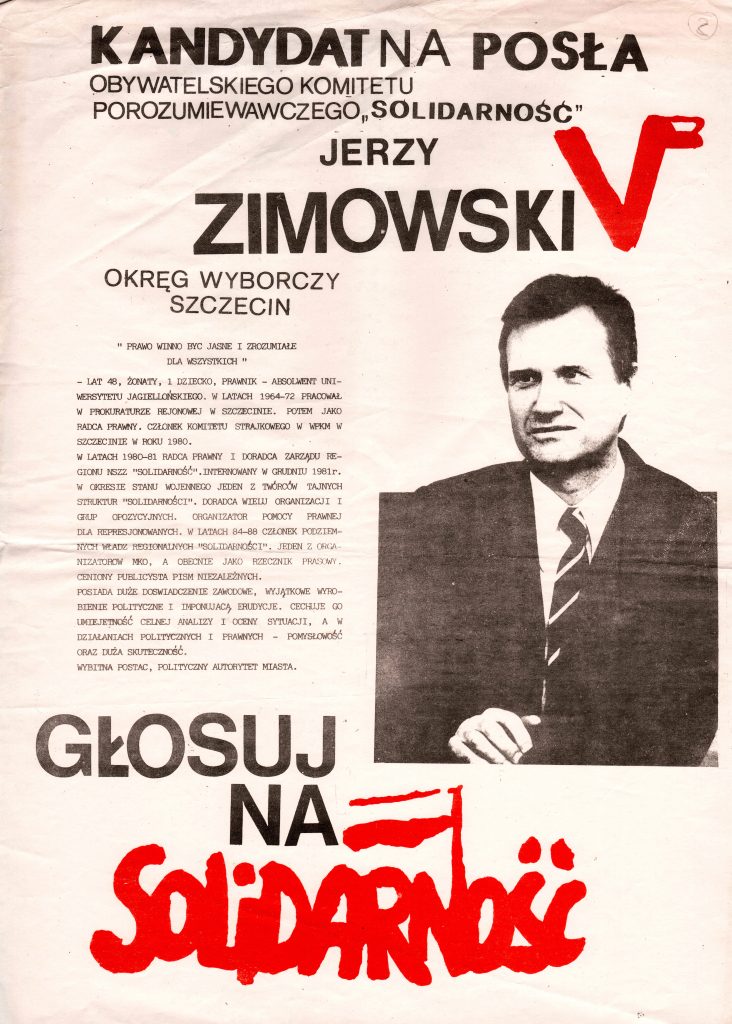
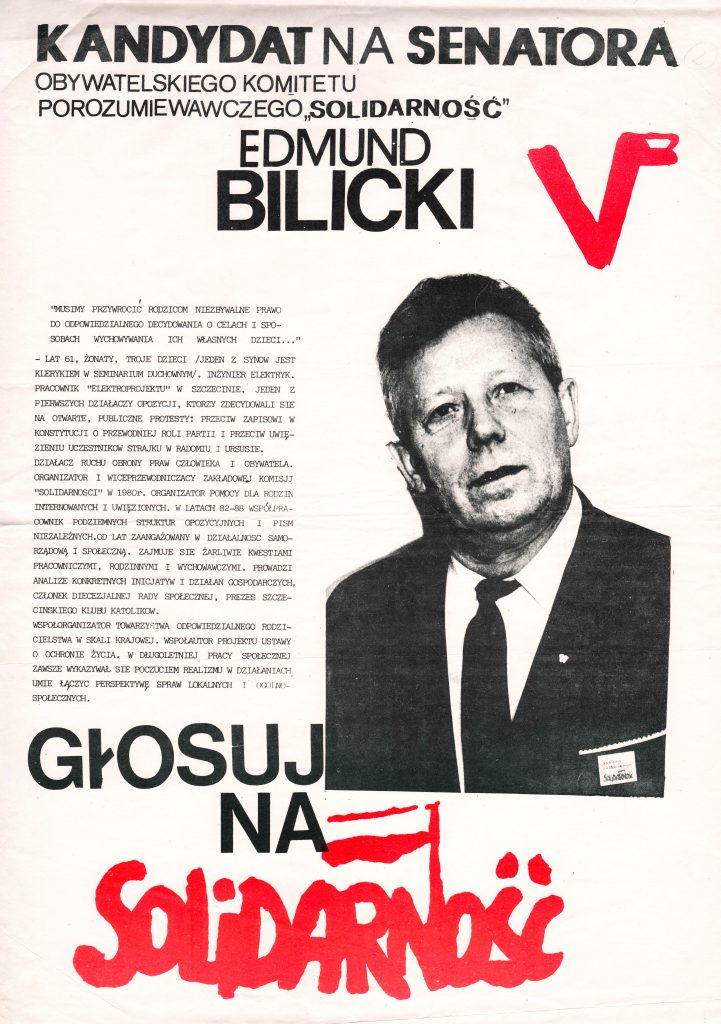
The June elections ended in a crushing defeat for the ruling camp. In the first round, “Solidarity” candidates won 160 of the 161 Sejm seats available for free competition and 92 seats in the Senate. The remaining Sejm seat and eight of the nine remaining Senate seats were captured by representatives of the Citizens’ Committees in the second round of voting. In the Szczecin voivodeship, the first round brought victory to all candidates of the Citizens’ Coordination Committee (OKP). Those elected to the Sejm were Jerzy Zimowski and Józef Kowalczyk (Szczecin constituency), Bohdan Kopczyński (Świnoujście constituency), and Artur Balazs (Stargard constituency). Edmund Bilicki and Mieczysław Ustasiak were elected to the Senate.
The June 1989 elections were a pivotal moment in the peaceful transformation of Poland’s political system. The crushing defeat of the Polish United Workers’ Party (PZPR) and its allies set off a domino effect. The subsequent chain of events included the formation, in September 1989, of the first non-communist government under Prime Minister Tadeusz Mazowiecki; the restoration of the country’s traditional name — the Republic of Poland — in December 1989; the self-dissolution of the PZPR in January 1990; and the launch of intensive economic reforms leading toward a free-market economy, known as the Balcerowicz Plan. This was followed by the first free local government elections in the spring of 1990, the election of Lech Wałęsa as President of the Republic of Poland in the country’s first direct, universal, and free presidential vote that autumn, and finally, the first fully free parliamentary elections in postwar Poland, held in October 1991. The events of 1988–1989 — with the significant participation of the people of Western Pomerania — opened the way to building a new, pluralistic, and democratic Third Republic of Poland.
More:
Koniec pewnej epoki. Wybory parlamentarne 1989 roku w województwie szczecińskim w dokumentach, wstęp, wybór i oprac. Artur Kubaj, Warszawa–Szczecin: Instytut Pamięci Narodowej 2010.
Artur Kubaj, Nie wyrośli z marzeń. Szczecińska podziemna Solidarność, Warszawa: Instytut Pamięci Narodowej 2011.
Narodziny III Rzeczypospolitej. Pomorze Zachodnie w latach 1988–1990, red. Małgorzata Machałek, Jan Macholak, Szczecin: Wydawnictwo „Dokument” 2006.
Michał Siedziako, Szczeciński Sierpień ’88 w trójkącie: władze – Kościół – opozycja [w:] Polski rok 1988, red. Michał Przeperski, Przemysław Ruchlewski, Gdańsk: Europejskie Centrum Solidarności 2024, s. 135–206.
Michał Siedziako