a festival with a long tradition and a transformative turn
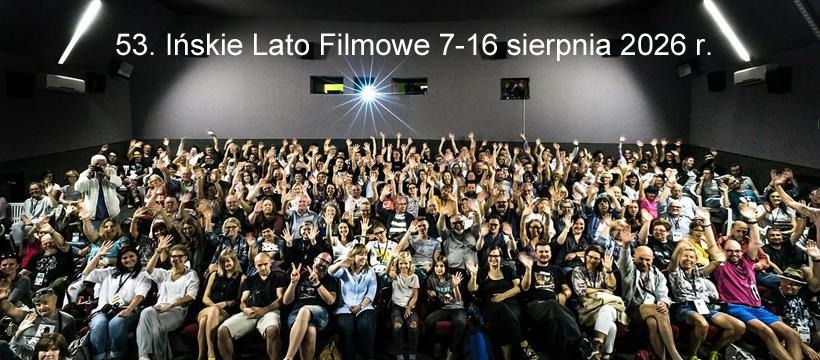
Participants of the Ińsko Film Summer (photo by Jaxa, from the SILF archive collection)
According to the festival’s main initiator and long-time organizer, Bogdan Kowalski, Ińsko—situated by a beautiful lake and equipped with a cinema—was an ideal place for summer film gatherings. The inspiration came from Łagów and the Lubuskie Film Summer held there since 1969, while the idea itself stemmed from a desire to develop film culture, meaning watching movies and discussing them. The organizational nucleus of the festival consisted of film discussion clubs (DKF) and art-house cinemas operating in the Szczecin Voivodeship: in Stargard, this was “Dar” (later “Ina”), and in Szczecin, “Kontrasty,” where Doland Paszkiewicz was actively involved. The idea of organizing a cultural event also met with a warm reception in Ińsko itself, specifically at the Communal Culture Center managed at the time by Kazimierz Dec. From the combination of these grassroots and institutional energies hatched one of Poland’s oldest and longest-running festivals—the Ińsko Film Summer.
Its first edition took place in August 1973, with “comedy review” as its leading theme. The event was targeted at specific audiences: art-house cinema activists, students affiliated with the Union of Socialist Youth (from 1976 onwards, the Union of Socialist Polish Youth), and members of film discussion clubs. Theoretically, local residents and tourists of Ińsko could also participate, but in practice, the event was clearly profiled. Over the course of two weeks, screenings, lectures, and discussions with film critics and film scholars took place, and various cultural events accompanying the festival in subsequent years became permanent fixtures of the program. However, although the “comedy review” was maintained in following editions, the program was gradually expanded. Audiences were offered screenings of art-house films, short films, and—often in pre-premieres—Polish films. Thematic seminars were held, and actors, directors, and film journalists increasingly and in greater numbers traveled to Ińsko and the “Morena” cinema. The film world was learning about the new initiative and wanted to participate in it, even though its status at the turn of the 1970s and 1980s was viewed rather as a “modest regional event” possessing an “authentic, genuine atmosphere of exchange of thoughts and experiences” (*Głos Szczeciński*).
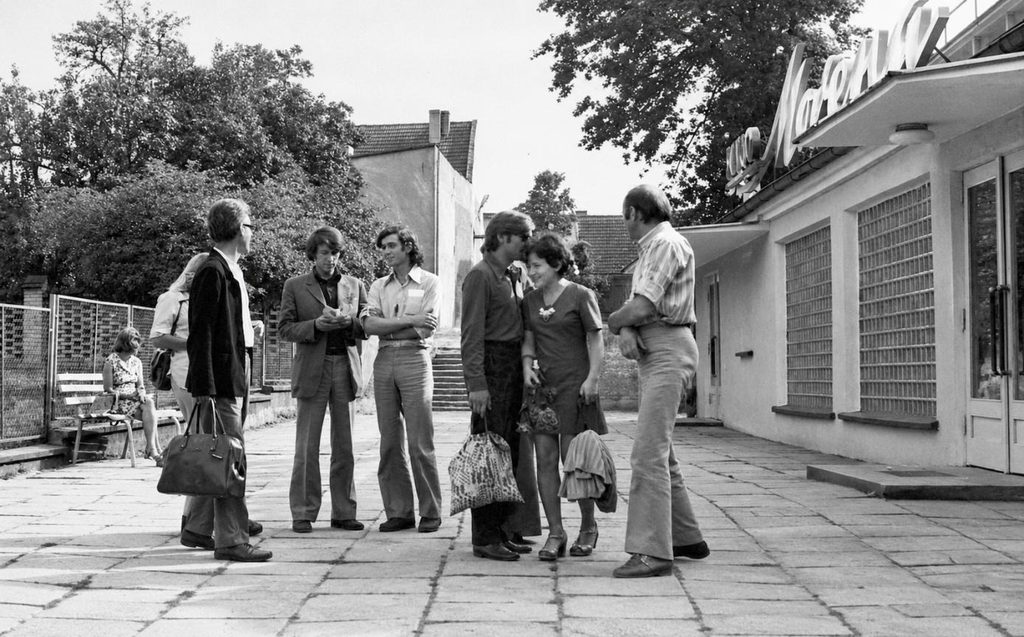
Organizers of the Ińsko Film Summer: B. Kowalski, B. Gierlicki, D. Paszkiewicz, 1970s (from the SILF archive collection)
The 8th Ińsko Film Summer, which took place during the Solidarity “carnival” in 1981, had a very special character. It was then that the “colonels” section appeared in the program, featuring pre-premiere screenings of films that had been blocked by censorship and withheld from public distribution for political reasons. At the “Morena” cinema, audiences could watch, among others, The Eighth Day of the Week (1958) directed by Aleksander Ford, and How to Live (1977) by Marcel Łoziński. The highlight of this edition was the presence of director Agnieszka Holland and a screening of her film Fever (1981). Viewers could also see works by Krzysztof Zanussi (Camouflage, 1977, and The Contract, 1980), as well as a section titled Poland 1980 in Documentary Film (Workers by A. Chodakowski and A. Zajączkowski; The Birth of Solidarity by B. Kosiński). It is worth noting that although the festival also took place during martial law, it was organizationally incorporated into the 1st Ińsko Cultural Summer, which featured exhibitions by visual artists and photographers as well as music workshops. The following year, upon returning to the traditional organizational format, a VCR was used for the first time to screen two films. At the same time, a permanent—and to this day ongoing—headache of everyday festival life emerged, stemming from the growing number of participants: “Every year, the accommodation base is an insurmountable barrier. Private lodgings and a bit of space at campsites are not enough to guarantee a spot for everyone who wants to come” (Kurier Szczeciński).
The 1990s brought significant changes to the functioning of the Ińsko festival. Along with the political and economic transformation, the Union of Socialist Polish Youth (ZSMP) disappeared from among the organizers, which had a direct impact on the event’s participants. “Gone are the days of events generously subsidized by organizations that were once very powerful and wealthy. Hence, this year’s Ińsko Film Summer is expensive (though cheaper than a regular holiday) and certainly constitutes a significant item in the household budget for film enthusiasts.” New patrons and sponsors were sought, and the range of organizers expanded to include central film institutions.
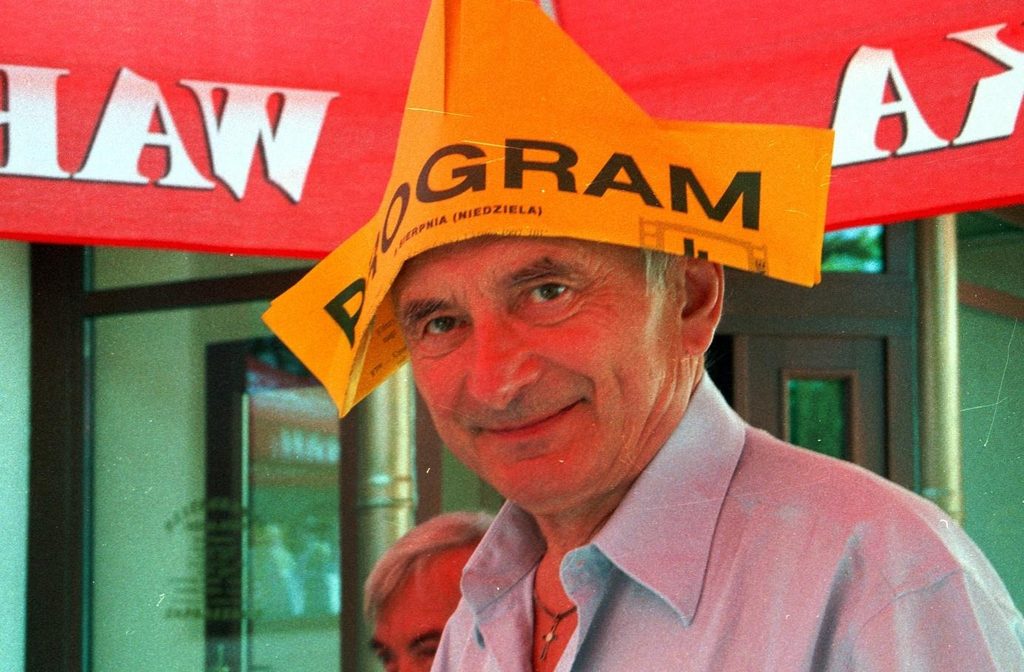
Doland Paszkiewicz (from the SILF archive collection)
However, what constituted the strength of the Ińsko Film Summer (ILF) was its unique, relaxed atmosphere and the closeness between participants and creators. During a modest jubilee organized for the festival’s twentieth anniversary, Doland Paszkiewicz described this relationship as follows: “Alongside events fostering film culture, in my mind’s eye I see, among other things, Hoffman swimming freestyle from the cinema to the island, Kawalerowicz showing nature to his young son, Mateuszek Werner walking alone through the forest with a dog, Sander taking care of Koterski, and Szulkin complaining about his accommodation, which Falk does not do. Everyone was a little afraid of Królikiewicz, but they ate his fish soup with appetite.” In the last decade of the 20th century, the “Cinema of Our Neighbors” series appeared in the program—which would be successfully continued into the 21st century—as well as screenings for children. In this way, the educational mission was extended to young audiences of film culture. Nevertheless, despite the unwavering interest in the festival, it underwent transformative changes. A turning point came in 1997 when the mayor of Ińsko wanted to change the audience profile, intending the ILF primarily for local residents and vacationers. The discussion accompanying these transformations inflamed the situation to such an extent that its main organizers, defending the existing formula, decided to move the festival to Nowogard. It was there that subsequent editions of the event—then called the Szczecin Film Summer—took place, though at the end of the decade it ultimately returned to its rightful place, which is Ińsko. This happened thanks to the initiative of the town’s new mayor, Teresa Działoszewska.
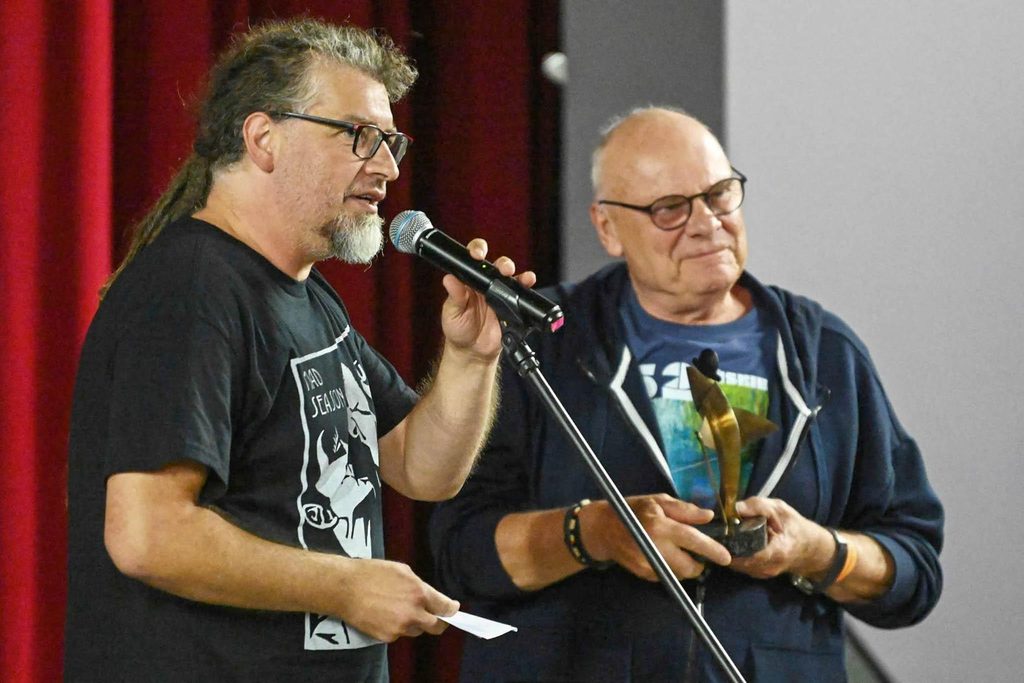
Przemek Lewandowski, artistic director of the ILF, and film director Maciej Drygas with the Golden Fish award for the best Polish film, 2025 (photo by Igor Skawiński, from the SILF archive collection)
The ILF entered the 21st century with new developments. Starting with the 28th edition, Golden Fish awards for the best film began to be presented. The final design of the statuette—a fish resembling Charlie Chaplin—was conceived by Teresa Działoszewska and crafted by metalwork artist Marian Preiss. The festival also saw the publication of its first monograph, Ińskie Lato Filmowe 1973–2000 (The Ińsko Film Summer 1973–2000), authored by Bogdan Kowalski, the tireless chronicler and co-organizer of the event. A strong, good-neighborly accent also appeared in the form of the Ukrainian Film Festival, which accompanied the Ińsko event in subsequent years. It was conceived by Doland Paszkiewicz: “we will do more for Polish-Ukrainian relations than Piłsudski himself,” he joked. His death in 2003, the year of the 30th anniversary of the Ińsko Film Festival, was a massive shock to the entire community. A new organizer had to be found, which turned out to be the Stopklatka Internet Film Service from Szczecin. Thanks to this, Przemysław Lewandowski became the artistic director of the event, permanently embedding himself in the festival’s history and shaping its renewed identity over the coming decades. “The new organizers approached the traditional values of the long-standing event with understanding, attempting to reconcile them with modernity. They operated on the correct assumption that a film review should not be an end in itself, but a unique forum and source of discussion on current contemporary issues, which was reflected in the selection of guests and films.” The program began to feature partner festivals, film schools, and the extremely important series “World Documents – Images of the Present.”
An expression of these transformative changes was also the establishment in 2005 of the Ińsko Film Summer Association (SILF), which became the main organizer of the event. Since 2007, its president has been Adam Bortnik. During this time, it was also possible to modernize the “Morena” cinema and install air conditioning, which improved audience comfort. The offering for children and youth was expanded through the organization of various film art workshops. Concerts, performances, and exhibitions also became a permanent fixture of the festival reality. A significant novelty, democratizing the selection of Golden Fish winners, was replacing the dozen-or-so-person Program Council with several dozen of the most persistent viewers watching the screened films. And their numbers were growing at an avalanche rate; suffice to mention that by 2006, there were already about 140 of them. Another important change in the festival’s program offer was the invitation of the Gryfino Places and Travel Festival “Włóczykij” to cooperate, which resulted in meetings with travelers and screenings of thematic films. A clear turn toward nature, direct contact with it, and reflection on its condition became strongly noticeable in the following decade of the 21st century and is maintained to this day. Its symbolic expression was the title of Bogdan Kowalski’s next book, published by SILF, Where the Water is Clean… The Ińsko Film Summer 1973–2007.
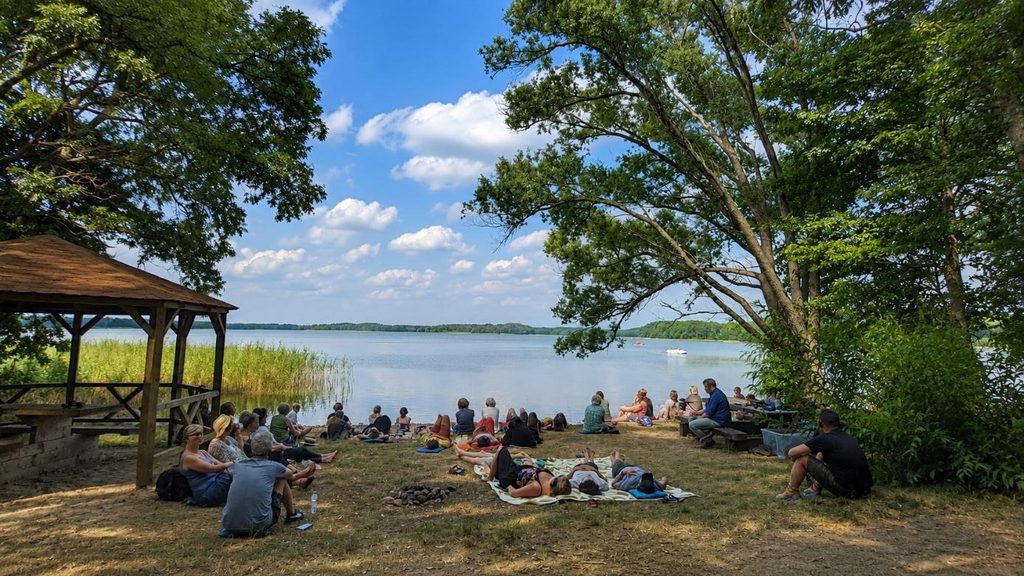
Festival-goers by the Ińsko lake (from the SILF archive collection)
Both the Association’s activities and the event itself have won recognition. The festival has been nominated three times for the prestigious Polish Film Institute Awards in the National Film Event category. In 2015, ILF artistic director Przemek Lewandowski accepted the award during the official gala at the Gdynia Film Festival. Meanwhile, for its outstanding contribution to the development of the region, SILF was honored, among other distinctions, with the Silver Honorary Badge of the West Pomeranian Griffin (2013). It is worth emphasizing this deep rooting in the region and its care for cultural heritage. Since 2021, the effectiveness of these activities has been enhanced thanks to the creation of a new venue, the O.Mega Gallery. It creates a space combining an art gallery, a café, an independent cultural center, and a meeting place for residents and tourists, while hosting workshops, lectures, concerts, and author screenings within its premises. Thanks to O.Mega, the Ińsko Film Summer Association has expanded its activities, although its main and most important goal remains the organization of subsequent editions of this cultural event, which is exceptionally significant for Western Pomerania (and beyond!).
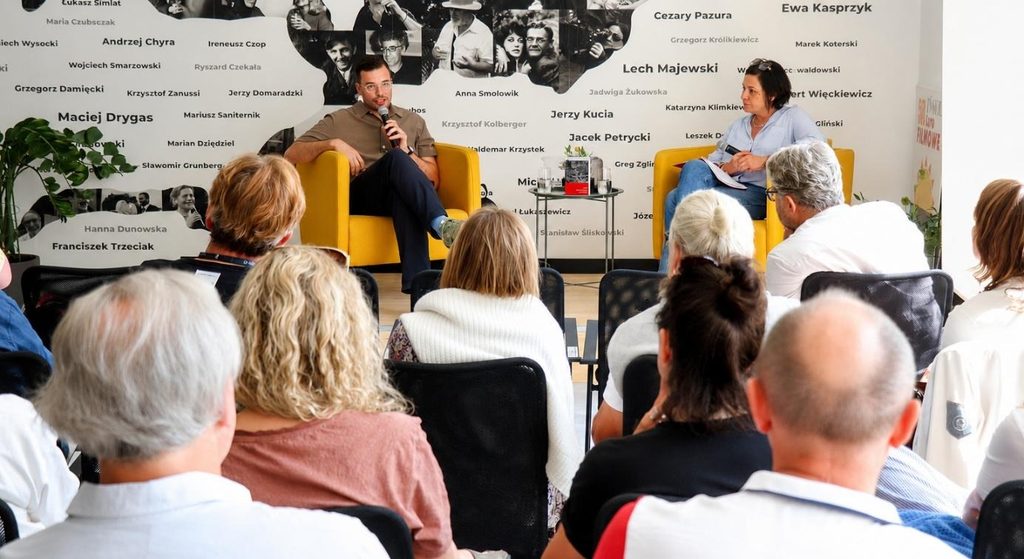
Author meeting at the O.Mega Gallery (photo by Małgorzata Bortnik, SILF archive)
Ińskie lata. Gdzie gwiazdy rezygnują z blasku, reż. Kaha Hoffmann, Polska 2023
Bohdan Kowalski, Gdzie woda czysta… Ińskie Lato Filmowe 1973–2007, Szczecin: Stowarzyszenie Ińskie Lato Filmowe 2008
Barbara Pastuła, 50/50 czyli 50 historii na 50-lecie Ińskiego Lata Filmowego. Zapiski rozmów z Teresą Działoszewską, Ińsko: Stowarzyszenie Ińskie Lato Filmowe 2023
Anna Paszkiewicz, Biografia Dolanda Paszkiewicza. Życie jak w kinie, Szczecin: Stowarzyszenie Ińskie Lato Filmowe 2013