


Junak and Smyk – legends of Szczecin’s automotive industry
The complaints of Tomasz Szczerbicki—Poland’s most eminent automotive historian—capture wonderfully the dilemma faced by anyone who wants to tell the story of the Junak. For the Junak is no longer just a motorcycle produced in Szczecin between 1957 and 1965. Today, it is a legend, an object of cult status, a source of pride.
The early 1950s was a time of discussion among designers, motorcyclists, and people associated with the automotive industry regarding what the heavy motorcycle produced in post-war Poland should be like. Consideration was given to copying the excellent British Bullet motorcycle. The idea fell through because the British motorcycle had too complicated a design and required high-quality materials. And the quality of production in People’s Poland; well, you know…
And besides everything else, nobility obligates. Excellent pre-war motorcycles still rode on Polish roads—such as the Sokół 600 designed by engineer Tadeusz Rudawski. In 1953, the Motorcycle Division of the Automotive Industry Design Bureau in Warsaw, led by Jan Ignatowicz, completed work on the forefather of the Junak. Stefan Poraziński designed the chassis, and Karol Wójcicki designed the 349 cc four-stroke engine. Four pre-prototypes were manufactured with the help of the Warsaw Motorcycle Factory.
During field tests, it turned out that the motorcycle did not handle very well in mud, snow, and sand. Several defects were removed, although the employees of the Szczecin factory struggled with the cracking frame for a long time. The first five Szczecin-made Junaks were built at the factory on Wojska Polskiego Avenue in 1956. Serial production—after dealing with the problematic frame—started a year later. In 1957, 253 M-07 Junaks were produced.
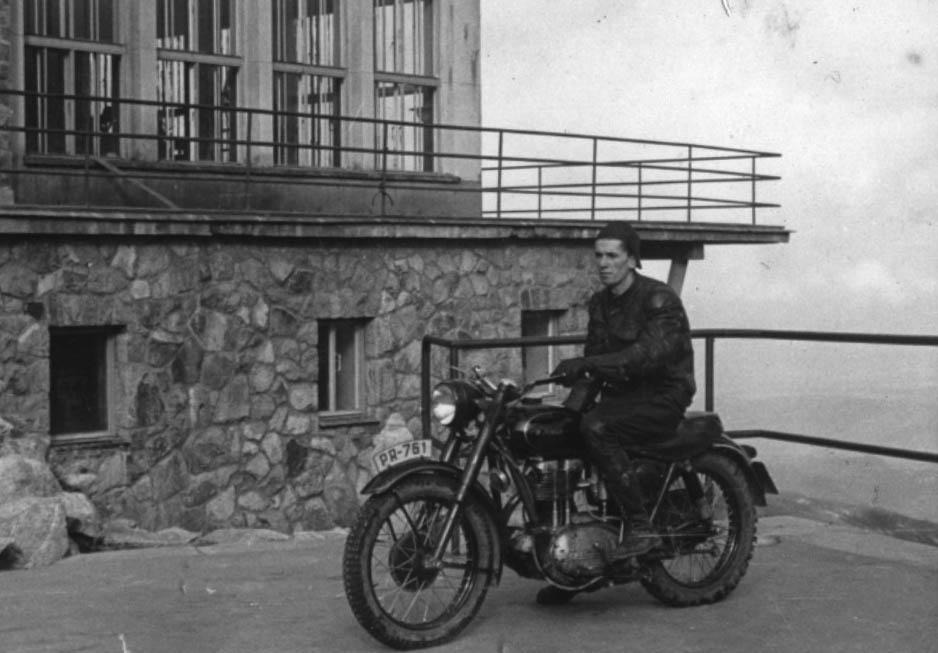
Junaks were produced in three variants, although factory documents list only two—the M-07 and the M-10. The factory design office quickly began improving the motorcycle. The Junak M-07 gradually evolved into the Junak M-10. Motorcycles that possessed features of both models are referred to as “transition models” (“przejściówki”). Without getting into disputes over when exactly the M-07 turned into a transition model, and the transition model into the M-10, it can be assumed that the transition model appeared on the production line in 1959 and disappeared in 1961.
Unfortunately, the Junak was also the most expensive motorcycle in the Polish People’s Republic. It cost 24,000 PLN; a WFM cost 7,000 PLN. These prices are from 1964, when the average salary in Poland was 1,816 PLN. Therefore, one had to work for over 13 months for a Junak, and just under four for a WFM. Moreover, the high price doomed the Junak to death. The Szczecin-made motorcycle was produced for only eight years. A little over 90,000 Junaks were built in all variants.
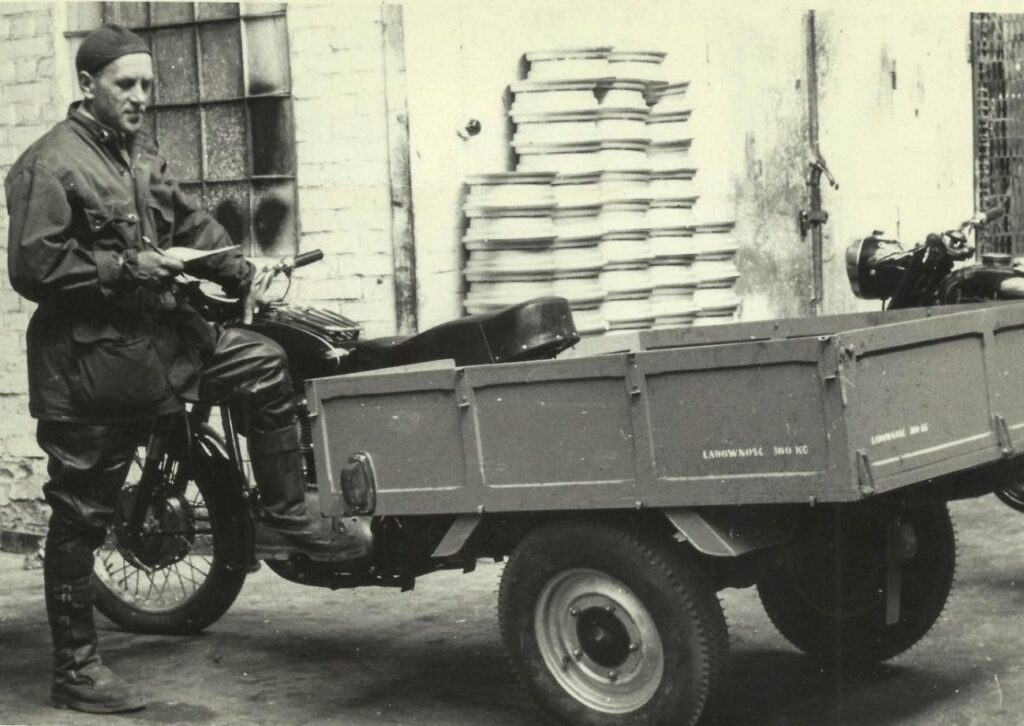
At the end of the 1950s, Poland lacked a small utility vehicle. The Syrena Bosto did not appear until the 1970s. Into this gap rolled a three-wheeled utility vehicle from Szczecin. Szczecin designers prepared two prototypes: the Junak B-20 had the cargo box in the back, while the B-21 had it in the front. The Junak B-20 went into production, even though its competitor handled better. The simplicity of the design was the deciding factor. It was easier to replace the rear wheel with a two-wheeled cargo box than to modify the steering system. In 1960, 1,006 B-20 utility three-wheelers were produced.
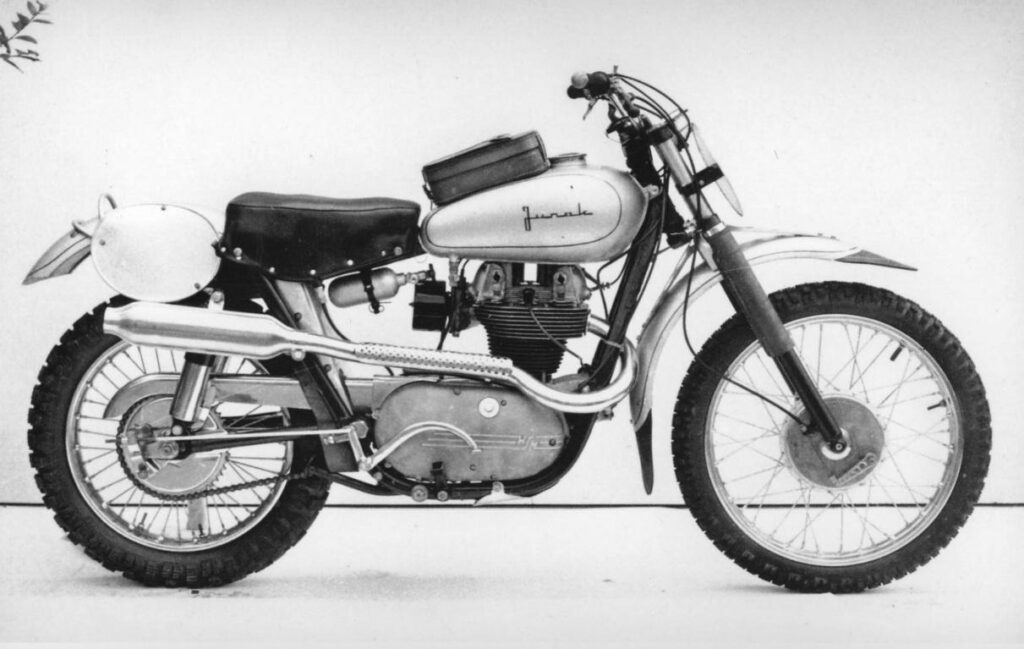
At the Szczecin Motorcycle Factory, two types of sport Junaks were produced – the M-07C and the M-07R. The former dominated domestic motocross tracks in the first half of the 1960s. Many domestic competitions in the 350 cc class were in practice an internal rivalry between riders from the factory’s “Junak” Motor Club. In 1961, Janusz Orzepowski became the Polish motocross champion, Zenon Wiatr was the runner-up, and Edward Kurowski took third place. A clean sweep of the podium for the Junak riders from Szczecin. The “Junak” Motor Club was the team champion of Poland in motocross. For the previous 8 years, that title had been won by Legia Warsaw.
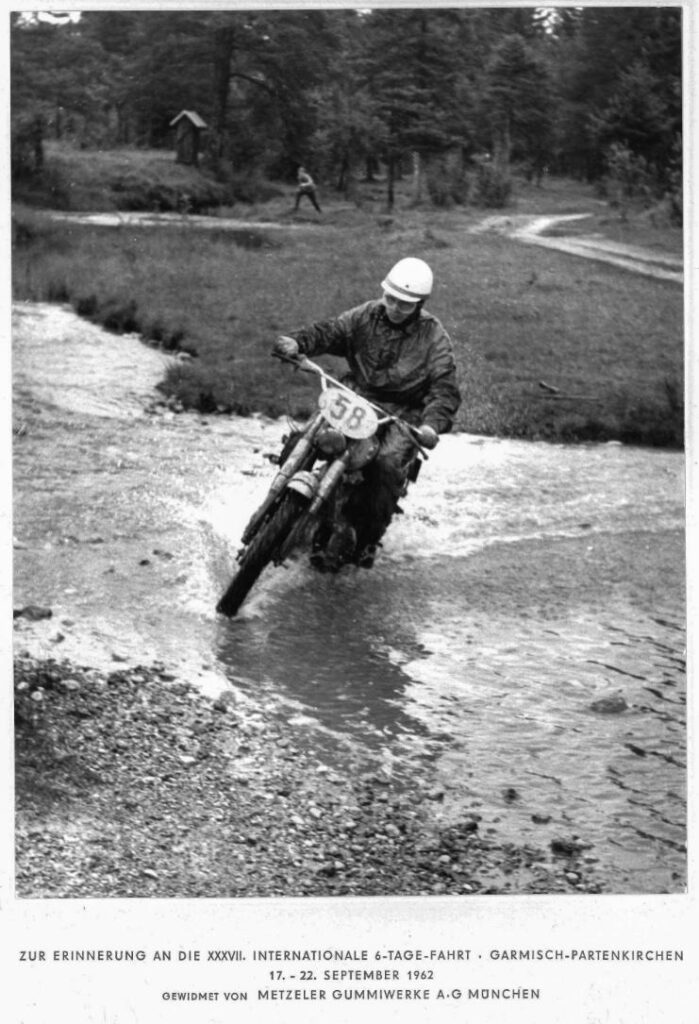
The rally Junak, or M-07R, performed no less admirably. In 1962, in Garmisch-Partenkirchen, at the FIM (Fédération Internationale de Motocyclisme) Six Days Trial, all riders competing on Junaks won gold medals. It was the only time the Poles returned with gold from the Six Days, a competition that is for motorcyclists a cross between the Olympics and the World Championships.
And yet another Polish motorcycle speed record. On April 5, 1959, Franciszek Stachewicz, a rider from the Tri-City, broke the Polish record on a Junak. The attempt took place on a three-kilometer stretch of road between Malbork and Tczew. The Junak reached 149.3 km/h over a one-kilometer section. The record stands to this day, as regulations require the record to be broken on a domestic motorcycle. And no faster motorcycle has been produced in Poland since Junak.
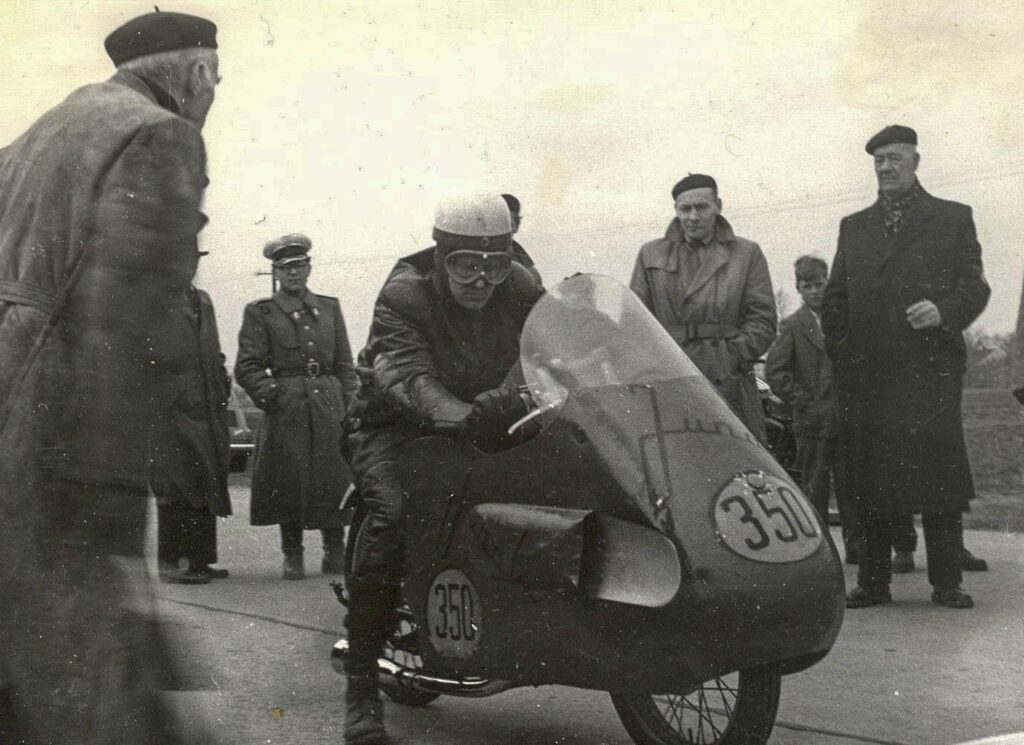
In 1960, SFM designers were working simultaneously on two prototypes. The Junak M-13 was meant to be a better, more modern version of the Junak M-10. The Junak M-13 drew heavily on benchmarks, specifically the best Japanese, English, German, Czechoslovak, and Hungarian motorcycles of the time. The Szczecin factory purchased nine such motorcycles.
An entirely new design was the Junak M-14 Iskra. Looking at its modern line, it is hard to disconnect from associations with another iconic motorcycle of the era of actually existing socialism in Poland, namely the MZ 250 Trophy. Its most characteristic feature was the heavily enclosed headlight—a dead ringer for the one from the Junak M-14.
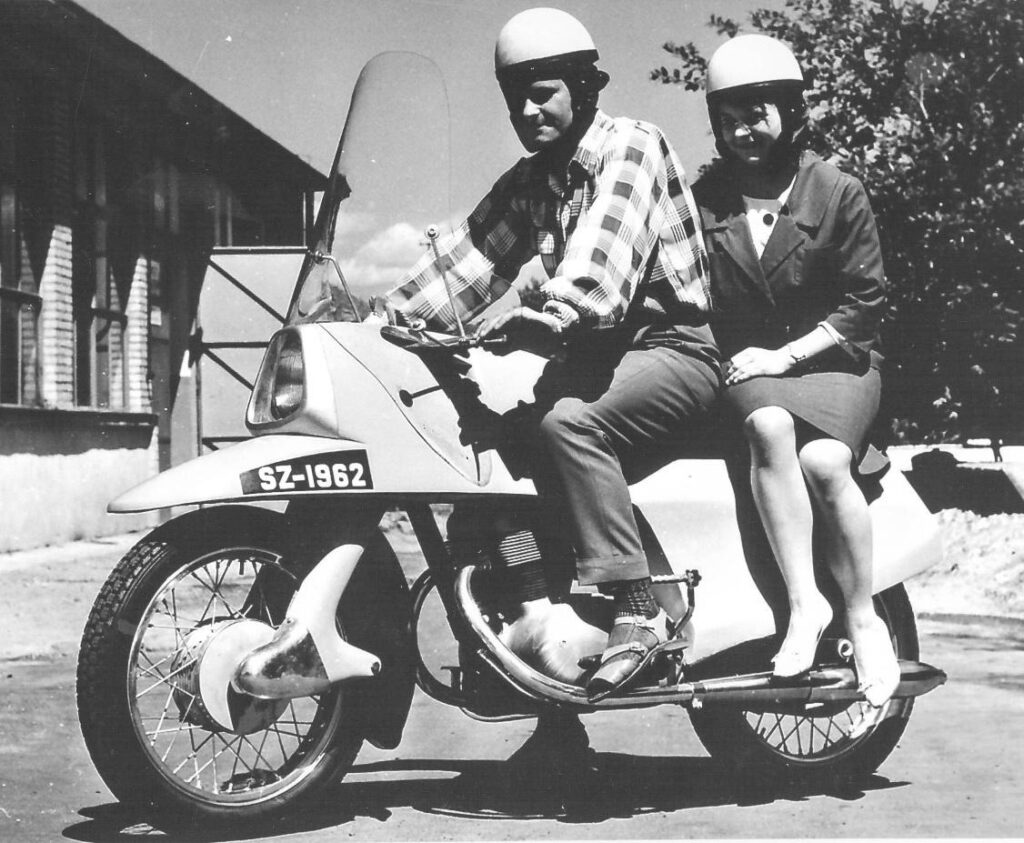
Neither model made it into mass production. In June 1965, the last Junak rolled out of the Szczecin Motorcycle Factory. Over 91,000 of them were produced.
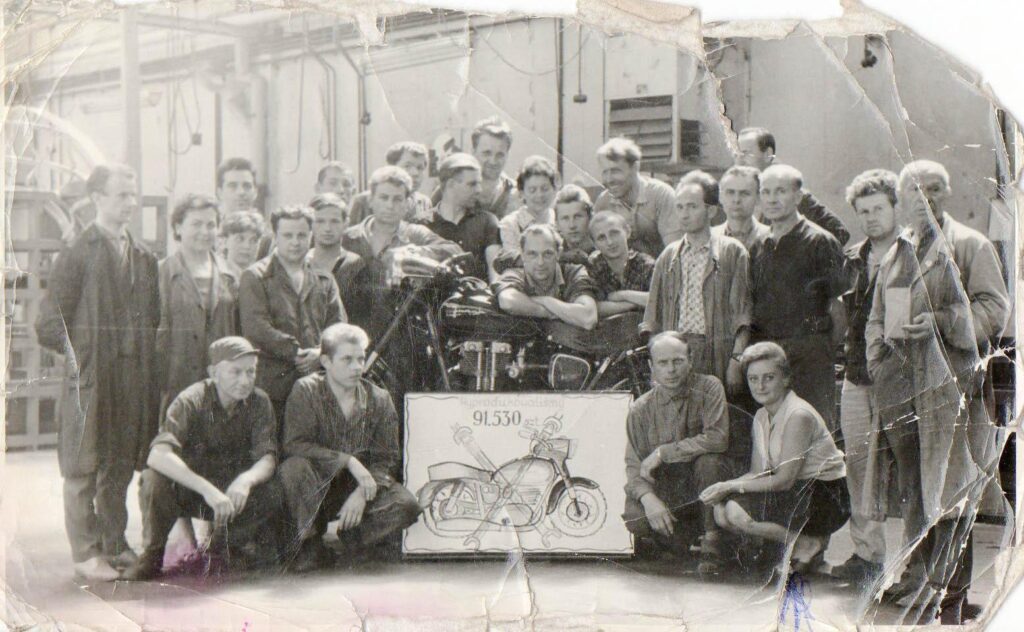
There is no other Polish motorcycle that has accumulated so many anecdotes and myths—often false, yet stubbornly repeated.
The Szczecin Motorcycle Factory was taking over the production of Junak parts at a pretty steady pace. In 1961, it already planned to manufacture 185 parts on its own; ranging from large ones – the frame skeleton, front fork, fuel tank, saddle, exhaust pipe, fenders, shock absorbers – to small items – the fuel filler cap, bolts, nuts, washers, springs, and bushings.
Fifth myth. Junak production was ended so that they wouldn’t compete with Soviet heavy motorcycles. Although the economy of the Polish People’s Republic suffered from a constant shortage of everything, in 1965 this did not apply to motorcycles. In that ill-fated year for motorcyclists, not only the Szczecin Motorcycle Factory was shut down, but also the Warsaw Motorcycle Factory.
The Szczecin Motorcycle Factory also had an automotive episode. In the 1950s, war-devastated Europe was swept by a craze for microcars. Poverty and destroyed factories forced the construction of small, cheap cars. West Germany was a powerhouse in microcar production. This was due to several reasons: the ban on manufacturing combat aircraft after World War II, material shortages, and the demand for small vehicles—often used as invalid carriages. A good example was the Messerschmitt KR 200 microcar. This three-wheeler was built in a factory that had produced the Third Reich’s most famous fighter planes.
One of the many ideas for an affordable Polish car was the Smyk. The prototype was created in 1957. Many experts considered the Szczecin microcar to be the prettiest microcar in the world. From wheels to roof, the Smyk was a Polish design. The main designer of the microcar was Eng. Kazimierz Wójcicki from the Automotive Industry Design Bureau in Warsaw, the body designer was Eng. Andrzej Zgliczyński, and the body stylist was architect Janusz Zygadlewicz. Eng. Jan Ignatowicz was responsible for the powertrain, and Eng. Witold Kończykowski for the suspension. Among the people involved in designing the car, Andrzej Piętaszewski, the creator of the floor pan, is also mentioned.
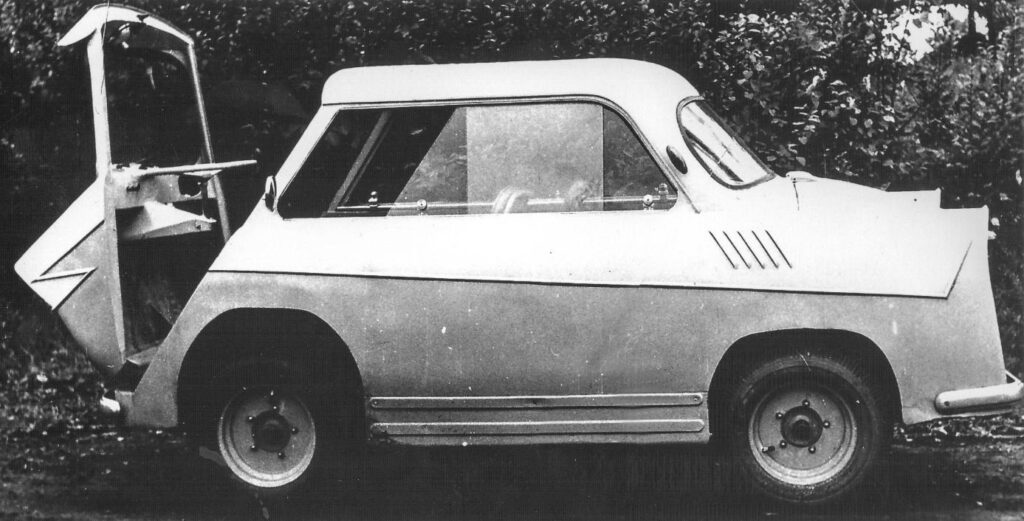
The Smyk was intended to be a vehicle for the “low-income strata of the population.” The designers called their little car a family vehicle for four people with hand luggage. No wonder it was just hand luggage; at no stage of the design work is a trunk mentioned for the Smyk. The Smyk also lacked side doors. You entered the car through an opening front end.
The Smyk was intended to be produced at the Szczecin Car Factory, largely due to the engine and gearbox from the Junak used in the prototypes. It wasn’t a good idea. The motorcycle engine overheated under the hood, unable to power a small, yet still a car. The gearbox turned out to be a nightmare for drivers. It didn’t have a reverse gear. The designers added a reverser, which was an additional gear at the transmission input that turned all gears into reverse ones. As a result, the Smyk had four forward gears and four reverse gears.
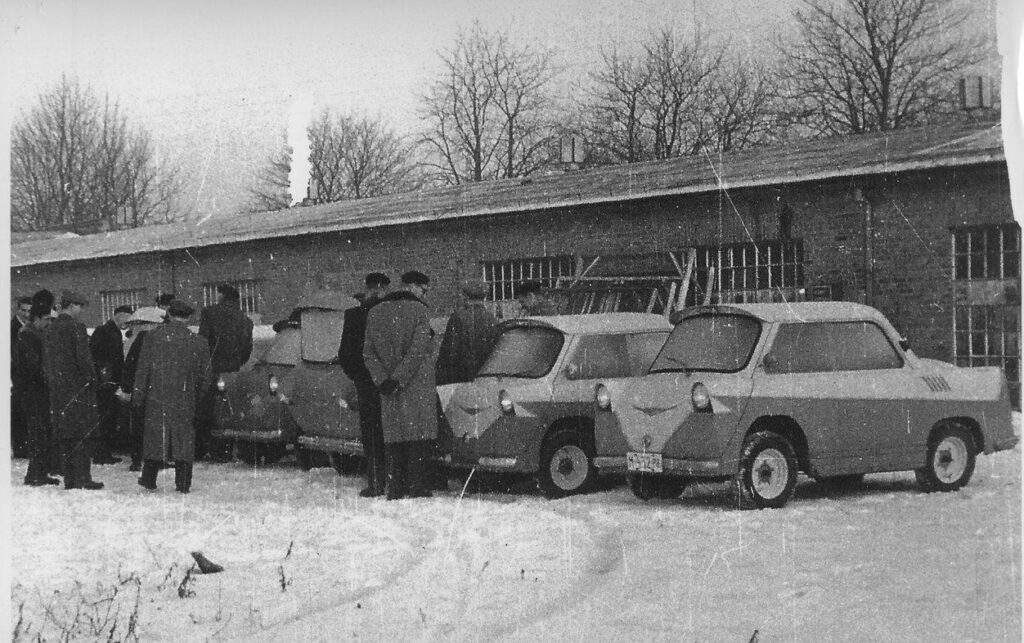

An attempt was still made to save the Smyk. A new version of the Smyk, free from the flaws of its older sibling, was created—featuring a specially designed engine and an epoxy resin body. Only 23 Smyks were ever built; three in Warsaw and twenty in Szczecin. Unfortunately, the Mikrus became the mass-produced Polish microcar. Not many of them were produced, just over 1,700 units. To make matters worse, the Mikrus was a copy of the German Goggomobil.
The largest collection of Junaks – models: M-07, the transitional model, M-10, B-20, B-23, M-14 – can be viewed at the Szczecin Museum of Technology. Smyks can be found there as well.
More:
Jacek Ogrodniczak, Junak, Smyk. Szczecińskie motolegendy”, Szczecin: Muzeum Techniki i Komunikacji – Zajezdnia Sztuki w Szczecinie 2022
Tomasz Szczerbicki, Polskie motocykle, „Motocyklista” 2021, nr 10
Jacek Ogrodniczak