NSDAP and the Nazi Movement in the Province of Pomerania from 1922 to 1945
Until 1928/1929, the National Socialist German Workers’ Party (NSDAP) constituted a marginal and rather unstable political force in Prussian Pomerania. Despite the establishment of the first local group (Ortsgruppe) in Szczecin as early as 1922 and the creation a year later of the Pomeranian district (Gau) headquartered in Greifswald, the party under Adolf Hitler failed to gain deeper political roots there and, consequently, broader social support. This resulted primarily from the dominance of other nationalist groupings, mainly the German National People’s Party (Deutschnationale Volkspartei, DNVP), as well as internal conflicts that plagued the structure and hindered the functioning of the National Socialist movement both in this area and nationwide. Furthermore, this sparsely populated province, whose inhabitants mostly lived in rural areas and made a living from agriculture, had from the outset presented an unfavorable terrain for agitation by the NSDAP, which was geared toward mass mobilization and revolutionary propaganda activism. All of this changed at the end of 1929, when Germany was struck by the global economic crash, which was felt particularly acutely not only in Szczecin but also throughout the Province of Pomerania, resulting in mass unemployment and the severe pauperization of many of its residents. These dramatic circumstances, combined with the ongoing agricultural production crisis (since 1928), significantly contributed to the radicalization of their political moods, which brought about a substantial increase in support for the regional NSDAP in subsequent Reichstag elections (1930–1932).
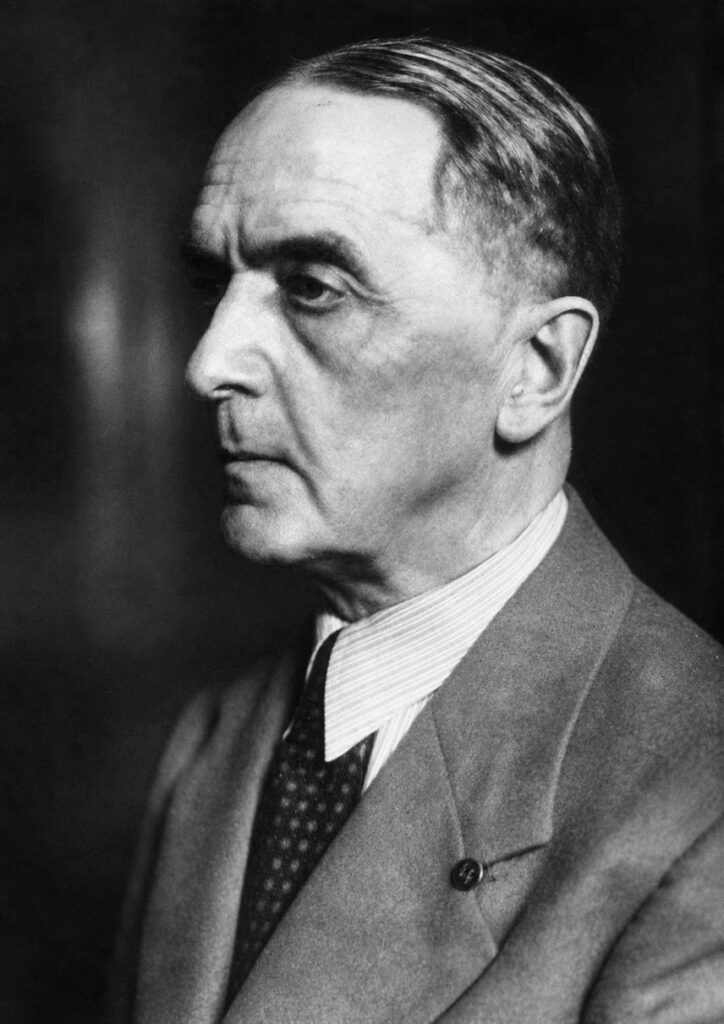
Before the effects of the economic crisis took their devastating toll on the province, nothing foreshadowed the future success of the Nazi party in the area. Following the restoration of the possibility of legal activity for the NSDAP in Germany—which had been banned in the aftermath of the failed Munich Putsch in November 1923—the position of Gauleiter in Pomerania was held from 1925 to 1927 by Karl Theodor Vahlen. He was a professor of mathematics and a former rector of the University of Greifswald, as well as the publisher and owner of “the only National Socialist printing house in Germany,” which included the emblematic newspaper Norddeutscher Beobachter. He was closely associated with Gregor and Otto Strasser, who represented the social-revolutionary wing of the NSDAP, which questioned the programmatic flexibility and tactical political compromises made by Hitler in the course of the NSDAP’s struggle for power in Germany. As Gauleiter, a member of the Reichstag, and the chief organizer of propaganda activities in the Pomeranian district, Vahlen was very active in public life. Alongside his deputy, Fritz Lejeune, he delivered numerous lectures. To this end, he even managed to enlist Joseph Goebbels and Otto Strasser, who visited Pomerania during his tenure. At that time, the number of local NSDAP groups and their members grew rapidly. By the end of 1925, the number of registered Ortsgruppen in the province had increased to 10. Not only there, in the early years of the National Socialist party’s operation, was the division of districts into smaller units (Kreis, Ortsgruppe, Sektion, Strassenzelle) not yet characterized by greater territorial uniformity. Due to Vahlen’s political affiliations with the group gathered around the Strasser brothers—who posed a certain political threat to Hitler after 1925 (at least in northern Germany)—the publication of the Norddeutscher Beobachter newspaper was halted in September 1926 under pressure from the Führer. Shortly thereafter, Vahlen was first suspended and then dismissed from his position as Gauleiter. Along with him, his deputy and several leading party activists left the NSDAP.
Karl Theodor Vahlen, 1939, DP, source: [https://commons.wikimedia.org/wiki/File:TheodorVahlenPortrait.jpg](https://commons.wikimedia.org/wiki/File:TheodorVahlenPortrait.jpg)
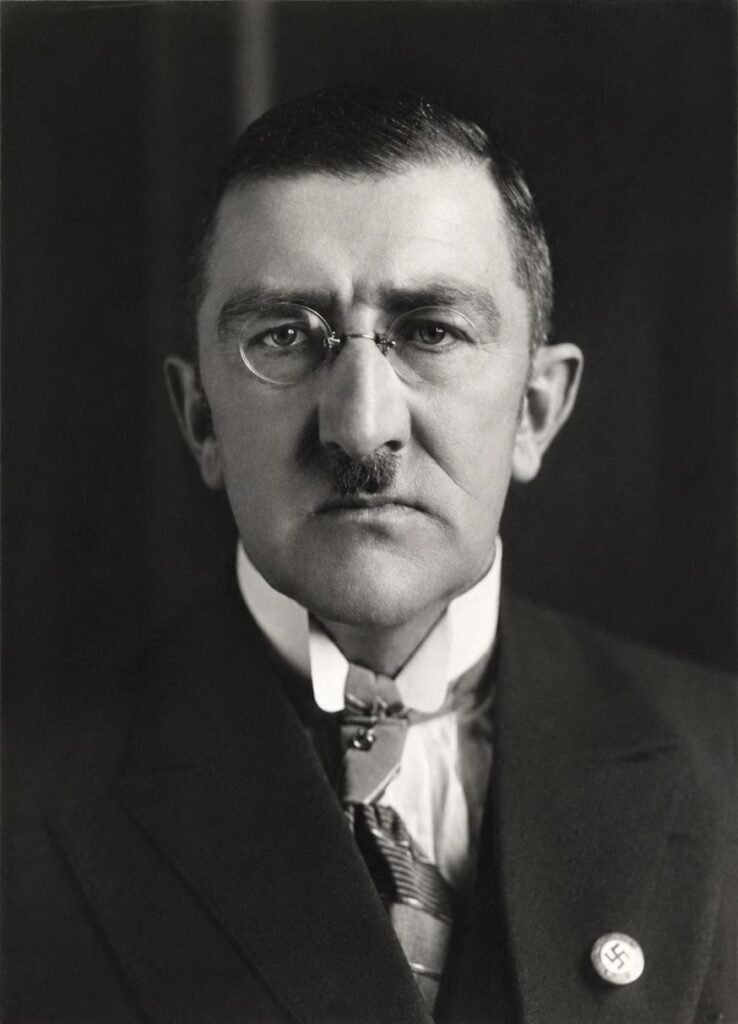
Vahlen’s successor in this position was the Pomeranian Junkers Walther von Corswant, who served as Gauleiter from 1927 to 1931. He operated from his knightly estate in Kuntzow, near Jarmen, which thus became the main center of the Nazi movement in the Province of Pomerania, serving as the seat of the Gauleitung. Although the relocation of party documents from Greifswald to his rural estate caused considerable organizational chaos—which significantly contributed to the crushing electoral defeat of the Nazis in Pomerania in the 1928 Reichstag elections. In that province, the NSDAP won a mere 1.5 percent of the vote. This severe failure had a major impact on changing the forms of activity and political tactics of the National Socialists in the area. In the following years, Corswant sought to give the regional party structures a more militant character, relying mainly on the “storm detachments” (SA), as well as expanding the spectrum of its propaganda activities. In this latter context, the Gauleiter was, among other things, a co-founder of the NSDAP newspaper established in Pyrzyces (Pyritz) named *Die Diktatur* (*Kampfblatt für verantwortungsbewußtes Führertum*).
Walter von Corswant, before 1936, from the collection of the Pomeranian Library, Inv. no. 450/44
In the meantime, the number of members in the Pomeranian NSDAP also increased. In Szczecin, the cadre reserve of this grouping grew to nearly one thousand people by the end of the 1920s, and across the entire province to 10,000 party comrades (Parteigenossen). Due to this, the local group in Szczecin was soon divided into street cells (Strassenzelle), each comprising 10–12 people, headed by a Zellenobmann. By 1931, National Socialist party cells already existed in nearly 200 localities in the Province of Pomerania, which went hand in hand with an increase in its supporters. Confirmation of this fact was provided by the subsequent Reichstag elections in September 1930, which took place in an atmosphere of fierce fighting between SA members and communists not only on the streets or in certain pubs of Szczecin, but also in other larger cities of the region. Under Corswant’s leadership, the party received 24.3 percent of the vote in these elections, trailing only slightly behind the DNVP and the Social Democrats (SPD), which only increased its social recognition. Despite this, von Corswant’s leadership as Gauleiter was soon shaken by conflicts between the Pomeranian SA and the party organization at the Reich level. Corswant himself also did not enjoy much popularity within the leadership of the NSDAP.
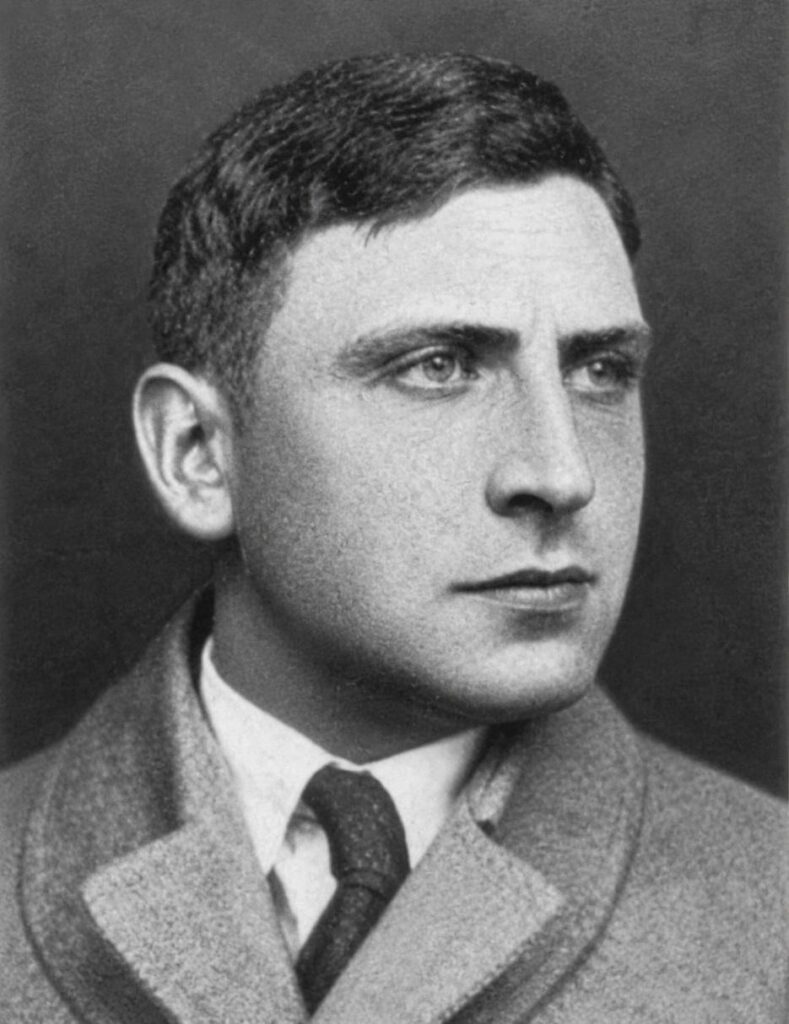
As a result, on April 1, 1931, Hitler appointed Wilhelm Karpenstein, a young lawyer from the party’s Greifswald circle, to the position of Pomeranian Gauleiter. Soon after, Karpenstein moved the seat of the party district to Szczecin and appointed a permanent administrative staff (Gaustab) composed of trusted individuals. Otto Hergt, who had previously been a close associate of Corswant, served as his deputy in the Gauleitung and as chief of staff. Privately, Hergt was Karpenstein’s brother-in-law, which made their relationship decidedly more familiar. He was also responsible for the main personnel department in the Gauleiter’s office, giving him significant influence over staffing matters within the Pomeranian NSDAP apparatus. Meanwhile, Werner Gravenstein, who also maintained close relations with Karpenstein and headed the party’s membership records department, became the managing director of the party structures in the region (Geschäftsführer). Similarly, friendly relations linked the Gauleiter with Ernst Jarmer, a doctor of law who oversaw the political department and the municipal policy department within the Gauleitung. In the 1920s, Karpenstein had worked in Jarmer’s law firm in Greifswald. The staffing of other positions within the structures of the Pomeranian NSDAP and its affiliated organizations looked similarly personal—such as NS-Volkswohlfahrt (National Socialist People’s Welfare), NS-Frauenschaft (National Socialist Women’s League), NS-Dozentenbund/NS-Ärztebund (National Socialist Physicians’ League), the Hitler Youth, the National Socialist Motor Corps (NSKK), and the National Socialist Teachers’ League (NSLB)—which were established even before 1933 to broaden the base of supporters for the Nazi movement.
Wilhelm Karpenstein, 1932 or earlier, PD, source: [https://de.wikipedia.org/wiki/Wilhelm_Karpenstein#/media/Datei:KarpensteinWilhelm.jpg](https://de.wikipedia.org/wiki/Wilhelm_Karpenstein#/media/Datei:KarpensteinWilhelm.jpg)
Generally speaking, it can be said that Karpenstein surrounded himself mainly with comrades from the Greifswald period of the so-called “time of struggle” (Kampfzeit) against the hated Weimar Republic from the first half of the 1920s. “These were primarily young people who stood out for their social-revolutionary radicalism and peculiar ‘conduct’ in the sphere of morals for those times (some of them were homosexuals). Among them, one could also frequently encounter libertines, former criminals, alcoholics, and chronic the unemployed, and thus ‘morally dubious, life-derailed individuals,'” which, however, did not significantly translate into a drop in the NSDAP’s electoral ratings in the region. The Reichstag elections of July 31, 1932 (47.9%) and November 6, 1932 (43.1%) brought political supremacy to the Nazis. They won the most votes among the petty peasantry and agricultural laborers, as well as the nationally and anti-semitically minded petty bourgeoisie in the cities.
Despite his electoral successes, Karpenstein was not very popular within the party leadership at the Reich level (Reichsleitung), not only because of his friendship with the Strasser brothers, but also due to “the chaotic radicalism of his rule, based on revolutionary violence and the brutal elimination of political opponents. In the case of the latter, this also concerned representatives of the national-conservative camp”—as the author of this article wrote. In November 1932, in Słupsk (Stolp), Karpenstein called for the destruction and liquidation of the German National People’s Party, which, as is well known, had been the leading party in Pomerania during the Weimar Republic. He also openly spoke out against the local Junkers as, in his view, reactionary landlords who supposedly exploited the rural population.
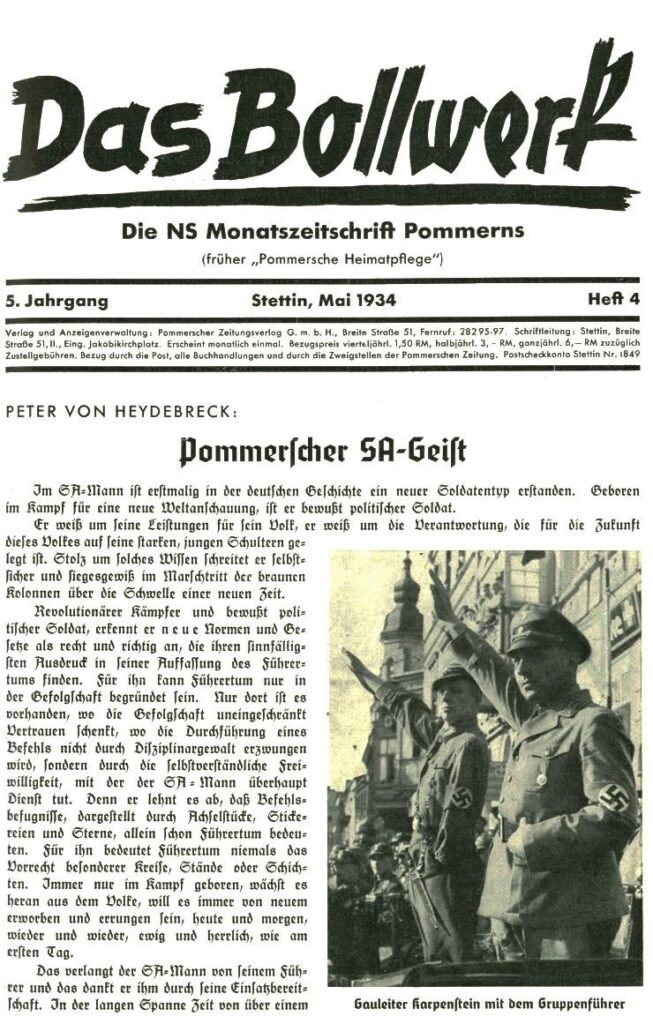
Das Bollwerk, the NSDAP propaganda magazine in Szczecin, May 1934. Peter von Heydebreck discusses the ideology and role of SA members as “political soldiers.”
Starting from January 30, 1933—that is, after Hitler’s seizure of power nationally—under the rule of Gauleiter Karpenstein, there occurred a combination, typical of the initial period, of central interventions in the self-government of the Province of Pomerania with repressions against individual figures who had previously held leadership positions there. In particular, senior officials and members of the provincial assembly (Provinziallandtag), which met for the last time in the spring of 1933, were exposed to political persecution. However, until the summer of 1934, almost no structural or personnel transformations took place at the middle tier of regional administration. Although Karpenstein implemented changes at the top of the regional administration—such as filling the position of provincial director (Landeshauptmann) with Jarmer (an office that in the meantime had been degraded to the role of deputy Oberpräsident of the province)—he did not attach much importance to its infiltration by NSDAP activists. Furthermore, unlike other leaders of Prussian party districts, Karpenstein, despite strenuous efforts, failed to secure the office of provincial governor (Oberpräsident), which had remained vacant since October 1, 1933.
Karpenstein’s career as the Pomeranian Gauleiter came to an abrupt and turbulent end. In the aftermath of the so-called Röhm Putsch—Hitler and his henchmen’s crackdown on the SA leadership—Karpenstein was dismissed from his post and expelled from the NSDAP on July 21, 1934. He was arrested, put on trial, and sentenced for “repeatedly failing to obey the orders of the party leadership.” He spent two years in prison until he was pardoned and subsequently released on the condition that he never set foot on Pomeranian soil again. In reality, Karpenstein’s dismissal and the execution of his close friend, the commander of the Pomeranian SA Peter von Heydebreck, caused severe upheavals within this Prussian district of the NSDAP. Consequently, every effort was made to avoid any impression that might suggest uncertainty or unrest within the local party ranks.
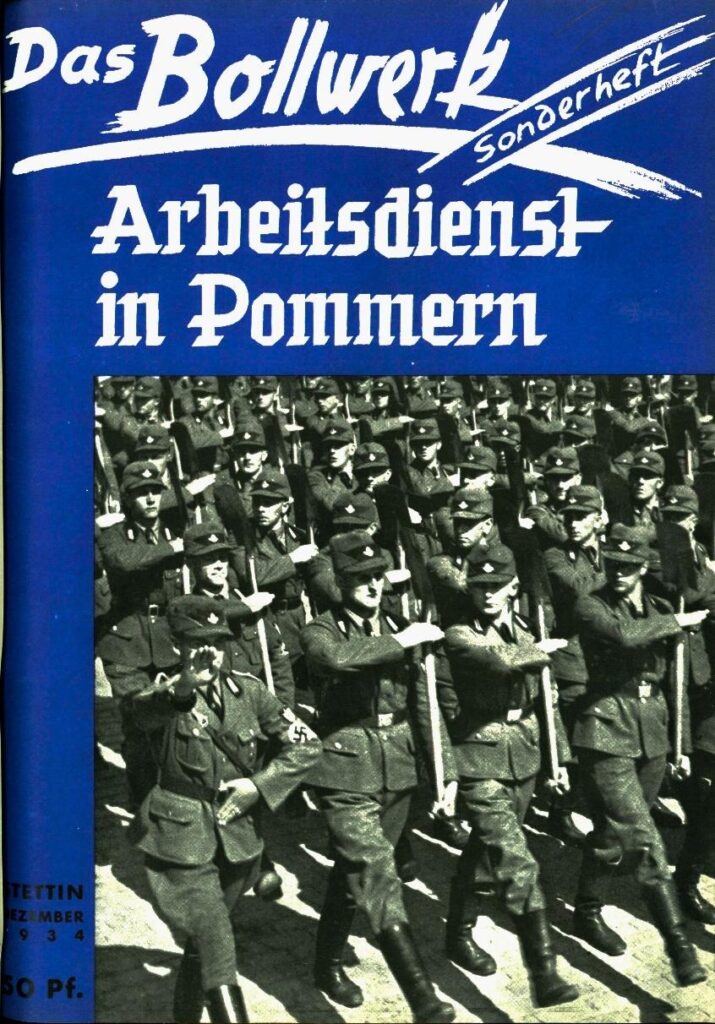
Amid the revolutionary fervor of the entire situation, Franz Schwede-Coburg—who had been designated as early as June 29, 1934, as the president of the Lower Bavaria and Upper Palatinate regency (previously the lord mayor of Coburg, the first city where the National Socialists seized power in Germany)—was unexpectedly appointed as the new NSDAP Gauleiter and Oberpräsident of the Province of Pomerania. Due to his fanatical devotion to Hitler, political experience, and authoritarian leadership style, he seemed to be the right person to restore order and introduce a “new order” in the area. On a propaganda level, Pomerania was henceforth to function as an “economic gateway” to the Baltic Sea as a border province (Grenzprovinz) and a Nazi “bastion in the East” (Bollwerk im Osten), which was followed by tangible successes for the local population by the new authorities in combating unemployment, along with new infrastructural investments and an armaments industry expansion program, primarily in and around Szczecin (e.g., the construction of the grain elevator, the motorway from Berlin, the southern bypass with crossings over the Oder and Regalica rivers, and the revitalization of the Vulcan shipyard). Youth gathered in the Nazi Reich Labor Service (Reichsarbeitsdienst, RAD) organization were also massively employed in public works.
Das Bollwerk, special issue dedicated to the labor service in Pomerania
In a short time after taking power, Schwede-Coburg led to the petrification of the regional NSDAP structures and the securing of a uniform political line, which was accompanied by the further unification of socio-political life and the persecution of the remnants of the political opposition in the province. One of the new Gauleiter’s first actions was the dismissal of all employees of the Gau leadership and the majority of officials. In this way, Franz Schwede-Coburg replaced 23 out of 27 NSDAP district leaders (Kreisleiter). He also restored to favor functionaries who had previously been dismissed by Karpenstein. For example, Robert Schulz, the deputy to Gauleiter von Corswant—who held office until 1931—returned to Pomerania as a member of the new Gauleiter’s personal staff, and Hermann Czirniok (previously the Kreisleiter of Szczecin, a master baker by trade) was appointed head of the municipal department in the Gauleitung (Gauamtsleiter für Kommunalpolitik). Incidentally, the structure of the office was soon divided into appropriate departments (Ämter) and subordinate divisions (Abteilungen), responsible, among other things, for personnel, organizational, training, propaganda, economic, political, and cultural affairs. The department heads (Gauamtsleiter) formed the party district staff (Gaustab), to which the aforementioned mass auxiliary organizations of the NSDAP were also subordinated, weaving like a spider’s web through every sphere of social and professional life in the province.
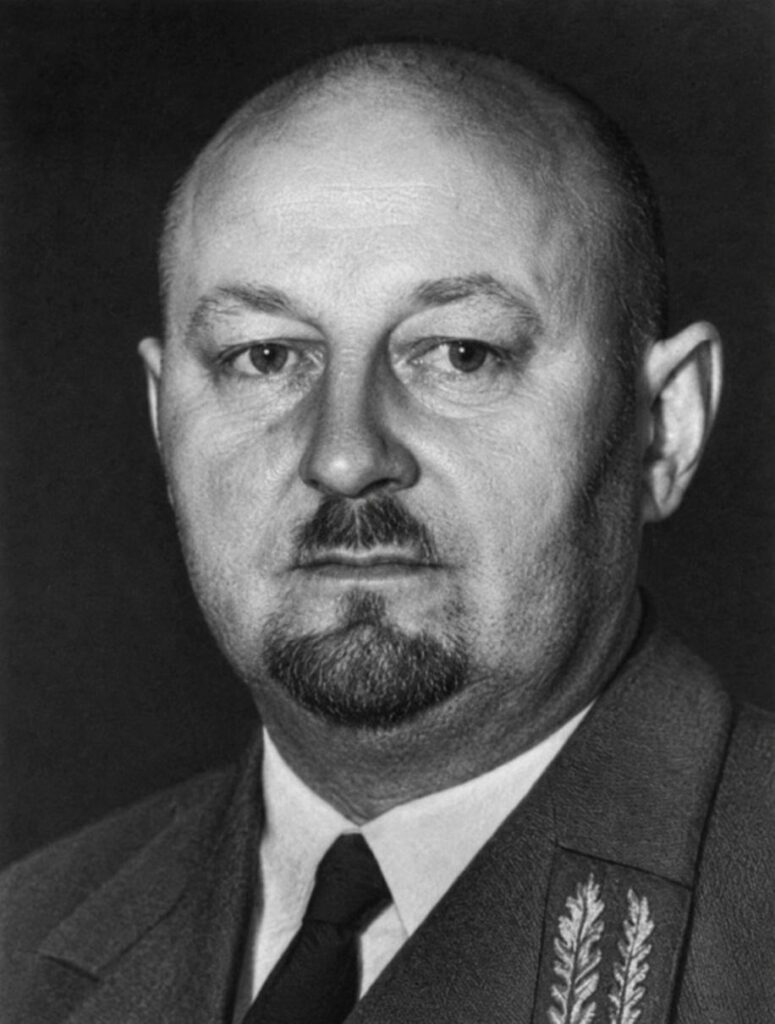
Franz Schwede-Coburg, PD, source: [https://de.wikipedia.org/wiki/Franz_Schwede#/media/Datei:SchwedeFranz.jpg](https://de.wikipedia.org/wiki/Franz_Schwede#/media/Datei:SchwedeFranz.jpg)
In his new role as regional viceroy, Schwede-Coburg wanted to surround himself with trusted people from his Upper Franconian camarilla who had some experience in municipal politics. Thus, among those who followed the new leader to Pomerania from his time spent in Coburg were Arno Fischer as the state building councillor (Landesbaurat), Kuno Popp as the district propaganda manager (Gaupropagandaleiter) and head of the Pomeranian regional branch of the Reich Ministry of Public Enlightenment and Propaganda (Leiter der Landesstelle Pommern des Reichsministeriums für Volksaufklärung und Propaganda), Alfred Seidler as the district treasurer (Gauschatzmeister), Johannes Künzel as the regional head of the German Labour Front (Gauobmann der Deutschen Arbeitsfront), Emil Mazuw as the chief of staff of SS District XIII (Stabsführer des SS-Abschnitts XIII), and Werner Faber as the lord mayor of Szczecin, who held this position until the end of German rule in Pomerania. Furthermore, the new Gauleiter increasingly engaged SS members in running the district as well, an example of which was the appointment of Arthur Kauffmann as his deputy (from 1937 this function was performed by Paul Simon, who had previously been responsible for press propaganda in the district, including its main organ, the newspaper Pommersche Zeitung) and head of the Personnel Office (Personalamt), or Dr. Werner Krug as the head of the Office for Racial Policy (Rassepolitisches Amt der NSDAP) and the Office for Public Health (Amt für Volksgesundheit).
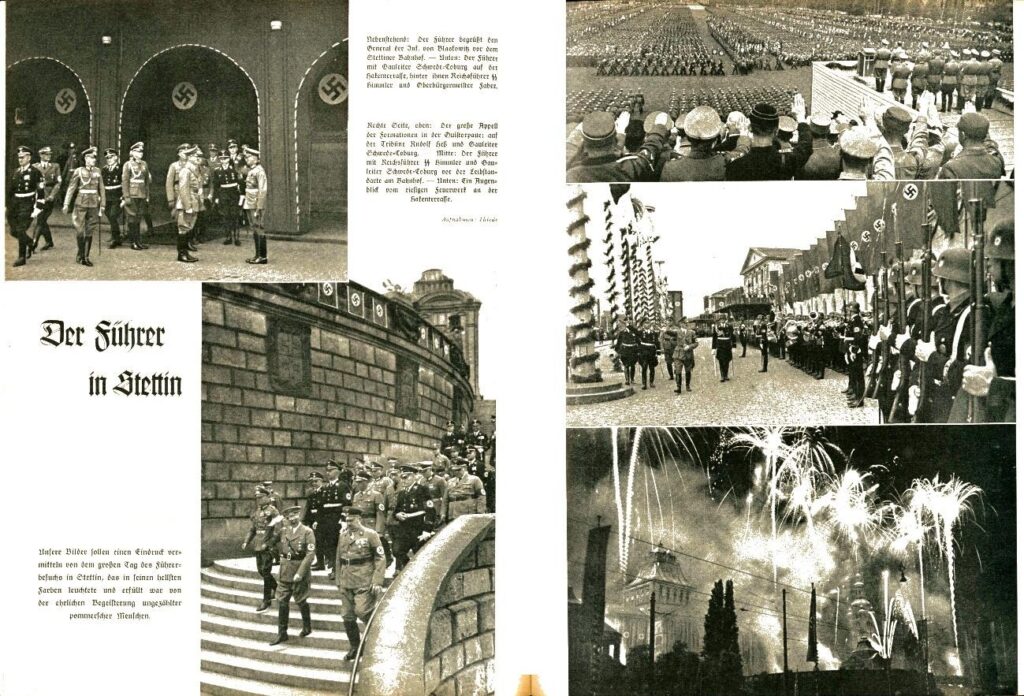
A 1930s propaganda album, Adolf Hitler – Bilder aus dem Leben des Führers. The photographs document Adolf Hitler’s visit to Szczecin
Shortly after Schwede-Coburg assumed his office in Pomerania, the regional NSDAP organization was imposed from above onto the provincial structure. For nearly 11 years of his supreme exercise of power in the area, a close connection—not only personal—developed between the Prussian administrative bodies and the party offices, or rather, the former were subordinated to the authority of the Pomeranian NSDAP. The latter were often represented locally by young people without proper professional training or administrative qualifications, frequently with a low moral standard and a criminal past (for instance, Walter Haut, the Kreisleiter of Kamień, was a drunkard and a brawler), but who were distinguished by absolute loyalty and ideological zeal under the sign of the swastika. They were particularly visible at the level of the party districts (Kreise), the number of which rose to 31 following the reorganization of the district in October 1938. They roughly corresponded to the administrative division of the province. At that time, the number of NSDAP members in the Pomeranian Gau hovered around 165,000 (8 percent of the population). At the same time, throughout the entire district there were 1,050 local party groups (Ortsgruppen), which consisted, starting from the lowest level, of households (Haushaltungen) and party blocks (Blöcke); 4 to 8 blocks formed NSDAP cells (Zellen), which in turn fed the cadre potential of the Ortsgruppen.
Between 1933 and 1945, Gau Pomerania functioned as a regional mid-level authority based on the Prussian administrative structure. The leadership of the party district drew heavily on the traditional administrative structures of the Prussian province in order to utilize, within this combination and division of tasks, “new-state” functions and competencies for the purposes of political and economic mobilization after September 1939, that is, during the war. In this way, a kind of symbiosis emerged between the two entities. Thus, various government departments and special bodies (such as the Office of the Plenipotentiary for the Four-Year Plan) on the one hand, and numerous central and regional party units on the other, constituted merely poles of the same politico-administrative system. The connections between party bodies and the old provincial administration proved to be an essential foundation in this regard, one which the district authorities led by Gauleiter Schwede-Coburg, in the absence of other alternatives, consistently utilized until the collapse of the National Socialist regime in early May 1945.
Despite the NSDAP being declared a criminal organization during the Nuremberg Trials, its Pomeranian leaders were treated relatively leniently by the victors after the war. Karl Theodor Vahlen was imprisoned in May 1945 and died in Czech custody in November. Walter von Corswant did not live to see the end of the war, passing away in Greifswald in December 1942. Wilhelm Karpenstein, who had already been persecuted by the Nazi regime, was interned after the war, but was released in 1947 as a “lesser offender.” He died in 1968. More severe sanctions were faced only by Franz Schwede-Coburg. In May 1945, while fleeing from the Russians, he was taken prisoner by the British. A court sentenced him to 10 years in prison. He was released in 1956 and died 4 years later.
Andrzej Czarnik, Ruch hitlerowski na Pomorzu Zachodnim 1933-1939, Poznań-Słupsk: Wydawnictwo Poznańskie 1969.
Bogusław Drewniak, Początki ruchu hitlerowskiego na Pomorzu Zachodnim, Poznań 1962.
Kyra T. Inachin, Der Gau Pommern – eine preußische Provinz als NS-Gau [w:] Die NS-Gaue. Regionale Mittelinstanzen im zentralistischen „Führerstaat”, red. Jürgen John, Horst Möller, Thomas Schaarschmidt, München: Oldenbourg Wissenschaftsverlag GmbH 2007.
Jan Mittenzwei, Höhepunkt der Kampfzeit – Die Pommersche NSDAP zwischen Auflösung und Machtergreifung, ,,Studia Maritima” 2014, nr 2.
Wojciech Wichert, Wizyta Hitlera w Szczecinie z okazji pomorskiego zjazdu partii nazistowskiej w dniu 12 czerwca 1938 roku (w świetle regionalnego organu prasowego NSDAP), ,,Przegląd Zachodniopomorski” 2014, nr 4.
Wojciech Wichert, Droga NSDAP do zwycięstw wyborczych w niemieckim Szczecinie (1928-1932), ,,Kronika Szczecina 2024. Szczecinianie przy urnach wyborczych”, red. Tomasz Czapiewski, Rafał Miszczuk, Michał Siedziako, Szczecin 2025.