


Oderburg (Oderburg Castle)
On the hill by the Oder, the monks remained until the times of the Reformation. Their monastery dominated the surrounding area, becoming a recognizable landmark for sailors on the Oder River. The Carthusians were famous for their very strict rule and were visited several times in the 15th century by papal visitors. The monks also copied manuscripts, some of which were transferred to Berlin in 1682. Over time, at the beginning of the 16th century, the strict monastic rule became lax and began to foster various misdeeds and crimes, which later, in the case of the entire Catholic Church, brought criticism from Martin Luther and the beginnings of the Reformation. In the Duchy of Pomerania, from 1534 onward, the latter meant the takeover of monasteries and their estates by secular authorities. In May 1538, the prior of the Carthusians, Walenty Syborg, and an accompanying monk handed over the administration of the monastery to Dukes Barnim XI (1523–1573) and Philip I (1531–1560). Whatever the monks did not take from the abandoned monastic buildings was later taken by the inhabitants of nearby villages.
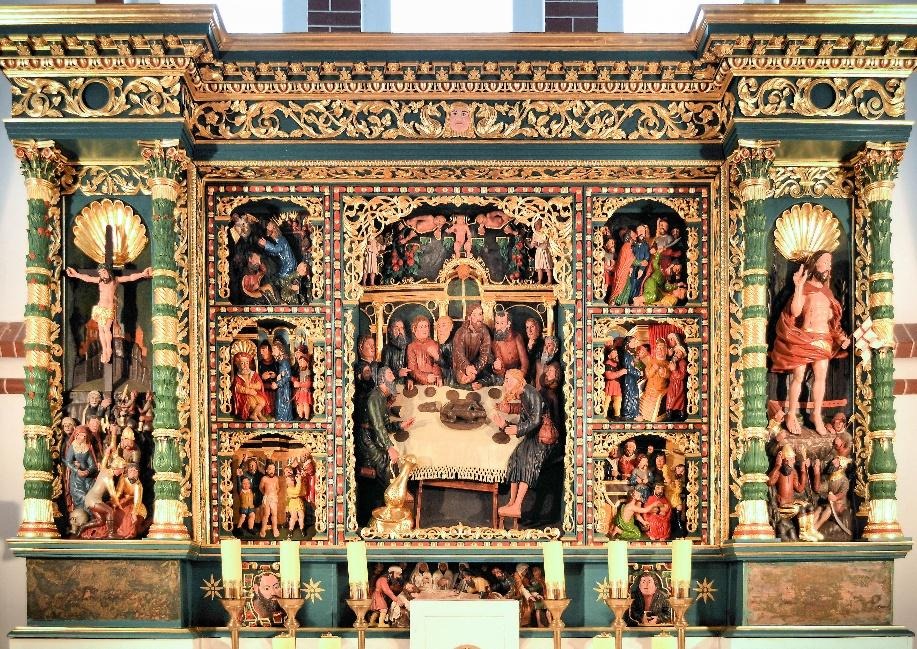
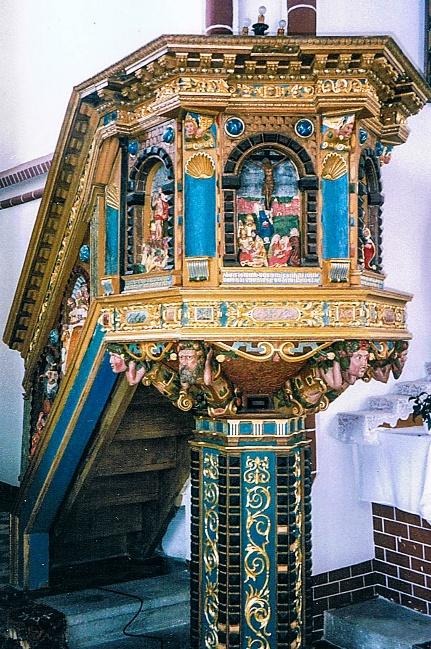
Between 1561 and 1565, another reconstruction of Oderburg in the Renaissance style was carried out, directed by the Dutch architect Jacob van Zwolle/Schwollen. The castle ultimately featured three tall towers topped with copper helmets. There was also a chapel featuring, among other things, funded epitaphs of Barnim III and Bogusław X, a triptych-style altar by Hans Peisser from Nuremberg, and a richly decorated pulpit.
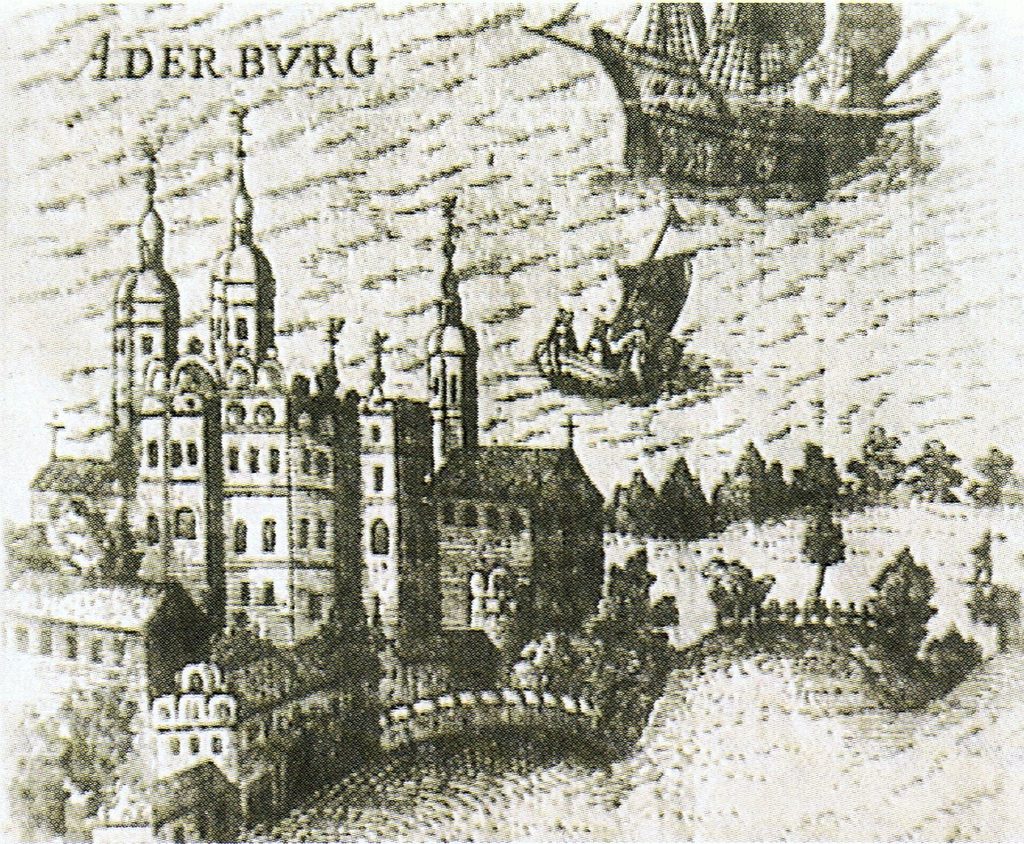
Thanks to the renovations carried out, especially the one between 1575 and 1577 ordered by Duke John Frederick (1569–1600), according to an account from 1590, the castle in Grabowo was more splendid and looked better than the former ducal one. This new residence of the Griffin dynasty became famous among the peasants of Grabowo and neighboring villages under the name “Gluttons’ Castle” due to the lifestyle of its residents. However, Oderburg was a favorite residence primarily for Barnim XI, as other Griffins preferred other residential locations—for example, John Frederick, an avid hunter, chose the court in Sowno, while Philip II built the so-called Lusthaus (visible in 16th and 17th-century illustrations) right below the Szczecin castle on the northern side in 1612. In 1612, the walls of Oderburg hosted a distinguished guest—Holy Roman Emperor Matthias Habsburg on the occasion of his coronation. In his honor, Philip II hosted a grand feast.
However, as it turned out, this was the last moment of glory for the structure. After this date, the castle began to fall into decline. The dukes resided there less and less frequently, as they had returned to their former residence in Szczecin. Between 1619 and 1620, an elderly lady descended from one of the most distinguished families of the Duchy of Pomerania—Sidonia von Borck—was imprisoned there, accused of witchcraft. She was burned at the stake as a “witch” outside the city near the Mill Gate (formerly Mühlen Tor), located at the northern exit of present-day Staromłyńska Street.
During the Thirty Years’ War, in July 1630, the castle was seized by Swedish soldiers from the eight-thousand-strong army of King Gustavus II Adolphus and Field Marshal Johan Båner. During the Swedish occupation, a new gallows was set up near the castle, as is known from David Portius’s design of the Szczecin fortress.
The last duke of the Griffin dynasty, Bogusław XIV (1580–1637), arrived in Grabowo and at the residence of the Swedish ruler to surrender the city. For Oderburg, the stay of the Swedes marked the beginning of a process of gradual destruction and total looting of the structure. The copper sheet metal was also stripped from the towers, the absence of which allowed water to get inside the building and led to its gradual degradation. Nearby oak trees were also cut down.
At the end of the 18th century, a man named Approt wanted to take over this area as a leasehold, but this met with resistance from the village mayor and the Grabowo court. Similarly, other potential buyers sought to acquire it, including the miller Mühl and domain councillor Aue. By the first half of the 19th century, only remnants of walls and foundations remained of Oderburg. Fearing that the castle remains might collapse while children were playing, the area was fenced off.
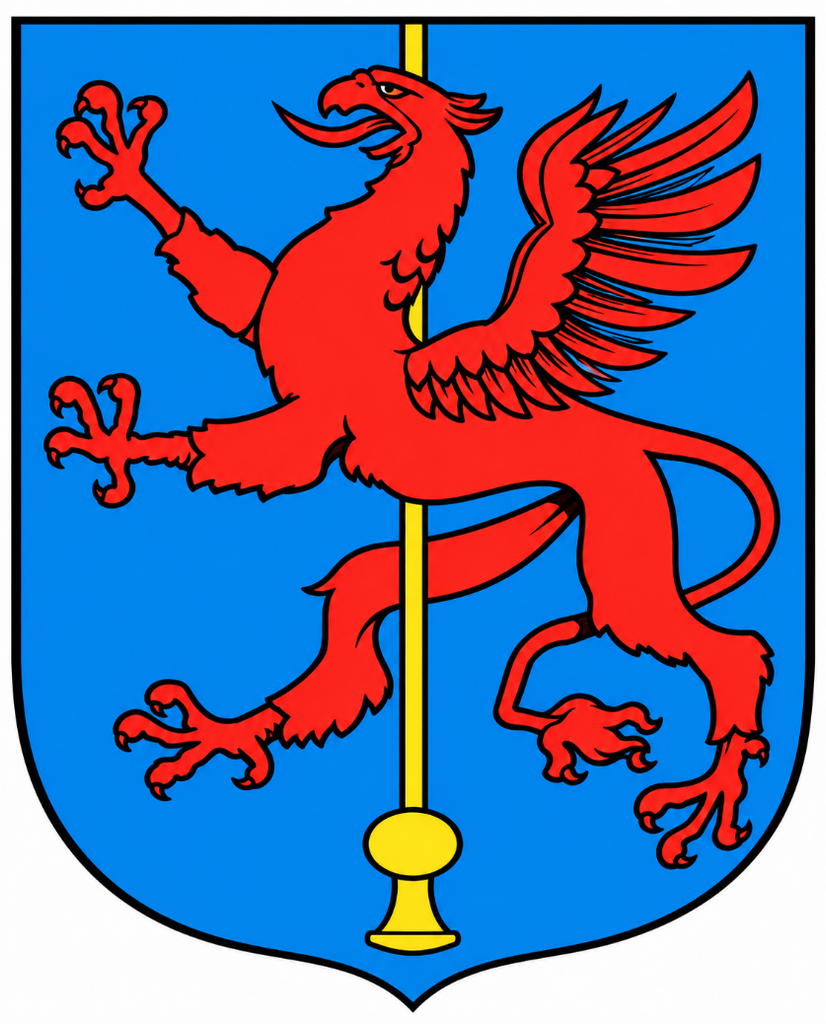
During the period when Grabowo functioned as an independent town (1855–1900), the golden spire with a red Griffin from the castle tower was used as its coat of arms. From the 1860s onward, residential buildings began to appear on the hill above the former Burgstrasse and Schifferstrasse, including a magnificent multi-story villa belonging to the wealthy timber yard owner August Kressmann (Burgstrasse 16). He laid out a landscape park next to the house. The villa was later taken over by J. Stevenson, the owner of the Hedwigshütte company. Additionally, a municipal school (Gemeinde Schule) was built on the former castle grounds, which was subsequently renamed in 1905 into a municipal girls’ school (32. Gemeinde Mädchen-Schule). It was located at number 17.
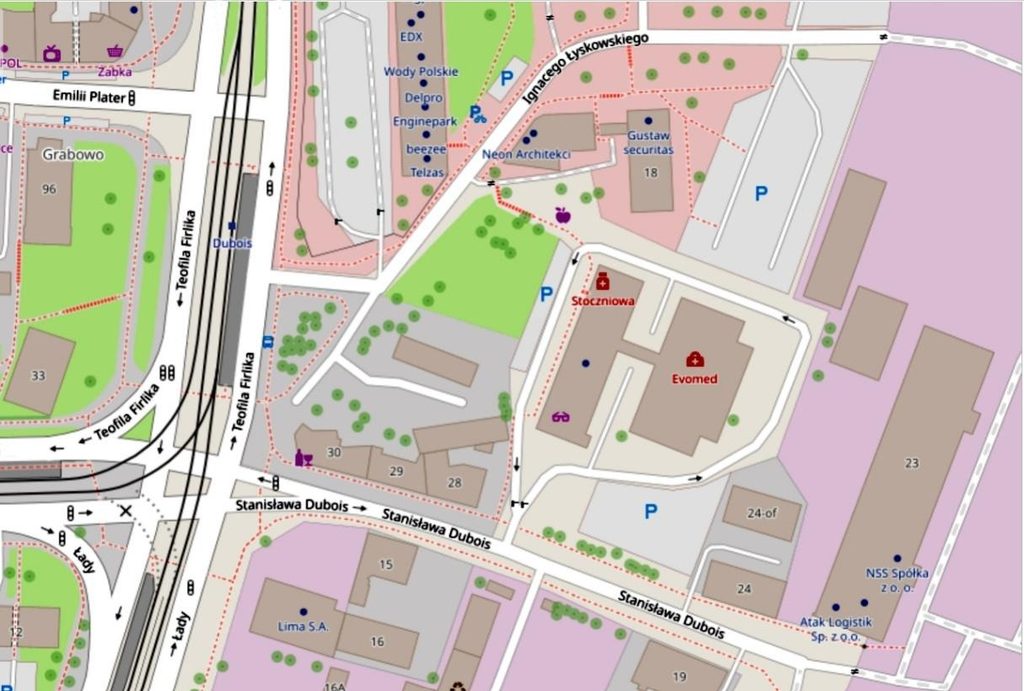
Part of the former castle was located behind later tenement houses at present-day Dubois Street (formerly Poststrasse) numbers 25–26 and 28–30. On the castle hill, apart from Kressmann’s villa and the aforementioned girls’ school, further structures were built. This was the complex of the Königliche Schiffartschule (Royal Navigation/Shipping School), which had existed since 1823 and was expanded between 1845 and 1847, featuring a tower somewhat resembling a medieval bastion with an openwork metal balustrade, designed for training signallers using flag code. Next to it, at Poststrasse 22, stood a small dining establishment called “Oderschlösschen” (Little Oder Castle).
Both of these buildings did not survive the war, much like the Kressmann/Stevenson villa and the nearby municipal school. In its place, on September 1977, the Shipyard Clinic at 27 Dubois Street was put into service. Currently, the remodeled and renovated building houses the EVOMED clinic. From the development of the former Burgstrasse/Łyskowskiego and the area where Oderburg once stood, including the corner with Poststrasse and Schifferstrasse, only a few buildings remain after the air raids and postwar demolitions and clearances. These are the tenement houses at 28–30 Dubois Street and 16 Łyskowskiego Street. A remnant of wartime is the concrete, polygonal guard tower standing on Łyskowskiego Street, guarding the entrance to the Oderwerke shipyard area (from 1948 known as the Szczecin Shipyard). In the late 1970s, between the aforementioned Łyskowskiego Street and Teofil Firlik Street (Giessereistrasse, briefly known as Mosiężna after the war), two office buildings with red glass cladding were erected, which at the time housed the shipyard’s design offices.
A relic originating from Oderburg Castle is a commemorative plaque funded by Duke Barnim XI in 1543 to honor Barnim III. The duke is depicted on it in Renaissance plate armor (completely anachronistic to the realities of the 14th century in which he reigned) holding a two-handed sword. Later, in 1680, it was relocated to the former Cistercian convent located on the northeastern side of the Ducal Castle on Am Klosterhof Street (today Duczyńskiego). After the church was demolished in 1904, the plaque was moved to the Castle and can currently be seen mounted in the northern wing.
Tracing the memory of the Swedish presence in Oderburg and the Grabowo area before 1945 was (since the 19th century) Gustav Adolf Strasse (currently Parkowa Street) and the hotel named after him (Gustav Adolf Gasthaus) in a building at the corner of the former Birkenalle (currently Jacka Malczewski Street) and the aforementioned Gustav Adolf Strasse. Meanwhile, a still-visible trace of Sweden’s sovereignty over part of the former Duchy of Pomerania and Szczecin is the appearance of the municipal coat of arms. As a token of gratitude to the residents of Szczecin, who remained loyal to Sweden during the siege of the city by the troops of the Brandenburg Elector (1659), its king, Charles X Gustav, added a crown to the municipal griffin, and the coat of arms is surrounded by Swedish lions.
More:
Bogdana Kozińska, Bogdan Twardochleb, Szczecin Grabowo Stettin Grabow, Szczecin: Stowarzyszenie Czas Przestrzeń Tożsamość 2005.
Marek Łuczak, Szczecin Grabowo, Szczecin: Pomorskie Towarzystwo Historyczne 2012.
Dariusz Wybranowski, Budynki władzy w Szczecinie dawniej i dziś. O związkach polityki z architekturą, Toruń: Wydawnictwo Adam Marszałek 2025.
Paweł Ziatek, Zamek Odrzański, Oderburg – historia rezydencji w Grabowie, https://historyczny.szczecin.pl/zamek-odrzanski-oderburg-historia-rezydencji-w-grabowie/
Anna Koc, Zamek Odrzański w Szczecinie – zapomniana rezydencja Gryfitów, https://www.facebook.com/groups/SzczecinZnany/posts/1948331309136546/
Dariusz Wybranowski