


Pomeranian-Polish relations in the times of the Griffins
Pomeranian-Polish relations in the times of the Griffins in the 12th century included the exercise of supremacy over the Duchy of Pomerania by Polish rulers (Polish fiefdom). In the following centuries, mutual relations were based on dynastic ties, including those of Bogislaw X with Anna Jagiellon (1491), as well as political and military alliances against a common threat. Furthermore, numerous economic connections existed between both countries, such as the Oder-Warta trade. In the 16th and 17th centuries, the possession of the Lębork and Bytów lands by the Griffins as a Polish fief played a major role in mutual connections.
Pomeranian-Polish relations in the times of the Griffins
From the beginning of the 12th century, Pomerania was an area of expansion by the Polish monarch Bolesław III Wrymouth, who captured Białogard in 1102 and besieged Kołobrzeg in 1103. The Polish ruler seized the territories lying at the mouth of the Oder River into the Baltic Sea between 1119 and 1122, capturing Szczecin, among other places, and the local prince Wartislaw I (born c. 1091, died 1135), the first of the historical rulers of Pomerania from the Griffin dynasty, became his vassal. Furthermore, the Polish monarch forced Wartislaw to accept Christianity (the mission of St. Otto).
The Pomeranian dukes, sons of Wartislaw, Casimir (1130-1180) and Bogislaw (1130-1187), remained vassals of the Polish dukes until the second half of the 12th century. The lack of assistance in the struggles against the Danes and Brandenburg caused the Pomeranian rulers to break their feudal ties with a divided Poland in 1181 and become direct vassals of the Empire. Despite this, the contacts between the Griffins and Polish rulers did not cease. In the face of Brandenburg expansion, Bogislaw II of Pomerania (1178–1220), and later his son Barnim I (1210–1278), maintained good relations with Polish dukes, particularly the Silesian Piasts: Henry the Bearded and Henry the Pious, although they also waged wars with Polish rulers over territories along the lower Warta and Noteć rivers. In the 1270s, Barnim I allied with the Greater Poland Piasts, and in 1273 his granddaughter Ludgarda became the wife of Przemysł II.
The Polish Kingdom became an attractive political partner once again for the dukes of the Griffin dynasty during the times of Władysław the Elbow-high (1320-1333), especially since both countries opposed Brandenburg and Teutonic expansion. In 1325, King Władysław the Elbow-high concluded an anti-Brandenburg alliance treaty with the Pomeranian rulers.
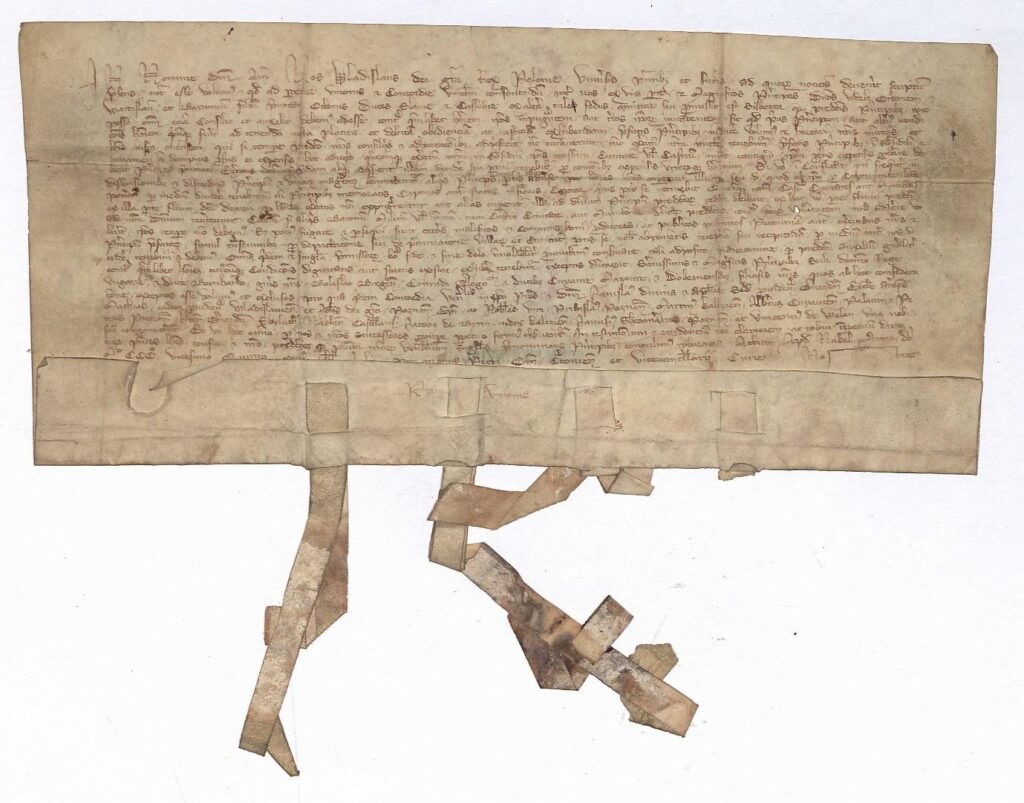
In the mid-14th century, Pomerania, remaining a duchy of the Empire, tightened its contacts with Poland. Pomeranian dukes Bogislaw V, Barnim IV, and Wartislaw V supported King Casimir the Great (1333–1370) in peace talks with the Teutonic Knights in 1343 (the Peace of Kalisz), and Barnim III concluded a treaty of assistance and protection with the Polish king in 1349. This cooperation was strengthened by the marriage of Bogislaw V, Duke of Wolgast-Stolp, to Elizabeth, daughter of King Casimir the Great (1343). This union produced Casimir IV, Duke of Stolp—known as Kaźko of Słupsk, a pretender to the Polish throne after the death of Casimir the Great—as well as Elizabeth, who from 1363 was the wife of Emperor Charles IV. The wedding of this couple took place during the congress of monarchs in Kraków and was accompanied by the famous feast hosted by Wierzynka.
Ties between Pomerania and Poland loosened after the death of Casimir the Great (1370) and the failed attempt by Kaźko of Słupsk to ascend the Polish throne. As an inheritance from his grandfather, Kaźko received Kuyavia, the lands of Dobrzyń, Sieradz, and Łęczyca, as well as Bydgoszcz and Wałcz. However, Louis I of Hungary became king, which thwarted the introduction of a representative of the Griffin dynasty to the Polish throne. Casimir IV retained only Bydgoszcz, Kruszwica, and Wałcz as a fief from the new ruler of the Kingdom of Poland.
The resumption of good relations between Poland and the Pomeranian dukes occurred during the reign of Władysław Jagiełło (1386–1434), who, seeking allies in his rivalry with the Teutonic Knights, concluded a series of agreements with the Griffins as early as the first decade of his reign. He granted them control over castles—among others, Wartislaw VIII received Nakło in 1393, and Barnim V (1369–1402) entered Jagiełło’s service in 1401.
In the face of the Polish-Teutonic rivalry at the beginning of the 15th century (the Great War of 1409–1411), the Pomeranian dukes maintained an equal distance from the warring parties by concluding agreements with both states. After the Battle of Grunwald in 1410, Duke Bogislaw VIII of Stolp sided with the Polish king and also paid him homage for Lębork and Bytów. This duke also stood surety for his cousin Casimir V of Szczecin, who, as an ally of the Teutonic Order, was taken prisoner by the Poles during the battle.
Throughout the 15th century, the Pomeranian dukes sought royal support in Poland, and the Polish rulers made use of their neighboring assistance. In 1419, Władysław Jagiełło concluded an alliance with Eric of Pomerania, the King of Denmark, Sweden, and Norway; this alliance also extended protection to the Pomeranian dukes, the cousins of the Scandinavian ruler. In the following years, the knightage of Greater Poland, led by Jan z Czarnkowa, provided armed support to the Szczecin dukes Otto and Casimir in their war against Elector Frederick I Hohenzollern over the Uckermark (1420–1427).
During the Thirteen Years’ War (1454–1466), Duke Eric II of Pomerania was an ally of King Casimir Jagiellon, in exchange for which he received the lands of Lębork and Bytów into his “faithful hands” (1455). According to historian Fryderyk Papée, Eric II’s son, Duke Bogislaw X, spent his youth at the court of Casimir Jagiellon and, along with the king’s sons, studied under Jan Długosz.
After the death of Bogislaw X (1523), his sons George I and Barnim IX (later called the Old) ruled jointly. In 1526, they concluded agreements in Gdańsk with the King of Poland, Sigismund the Old, regulating the status of the Lębork and Bytów lands as a Polish fief held by the Pomeranian rulers, as well as the issue of Anna Jagiellon’s dowry. The latter matter was finally settled in 1533 with the payment of the last 4,000 florins of the dowry by King Sigismund the Old. In the following years, with every change of ruler in Poland, the Pomeranian dukes renewed their oath of fealty for the Lębork and Bytów lands.
In the 1530s and 1540s, the Pomeranian dukes became involved in the Reformation movement, and in 1536 they joined the Schmalkaldic League, thus standing in opposition to Emperor Charles V. As a result of the Schmalkaldic War (1546–1547), which was lost by the Protestant estates, the Duchy of Pomerania found itself in a difficult political situation. The Emperor accused Barnim IX and Philip I of treason. Charles V’s wrath was mitigated, among other things, by the mediation of the King of Poland. The Griffins had to pay the Emperor a fine of 150,000 guilders, reduced in 1549 to 90,000 guilders, which amounted to two years of the Pomeranian state’s revenue.
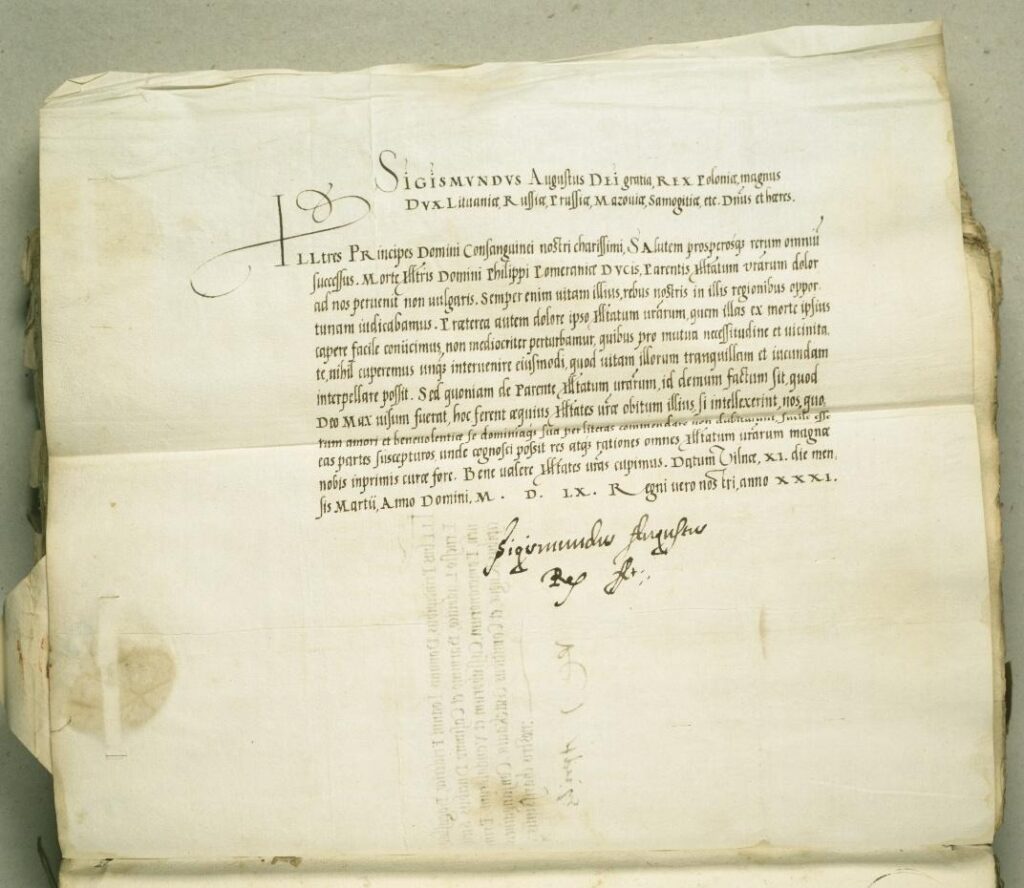
Polish assistance granted to Pomerania in mediation with the Emperor became the basis for tightening contacts between the two states. In 1552, Barnim IX met with Sigismund Augustus in Gdańsk and concluded an agreement with him on combating banditry on trade routes, as well as on mutual assistance during wars. In 1560, upon hearing the news of Philip I’s death, King Sigismund Augustus sent condolences to the sons of the deceased ruler. In turn, in 1563, George I’s daughter, Georgia, was married to a Polish magnate from Greater Poland, Stanisław Latalski of Łabiszyn, the starost of Człuchów.
In the history of Pomerania’s contacts with the Empire and the Polish-Lithuanian Commonwealth in the 16th and early 17th centuries, matters concerning the defense of the Christian faith against the pressure of the Ottoman state also held an important place. At the Imperial Diet in 1521, Bogislaw X undertook to supply armed contingents to protect the southern borders of the Empire against the Turks. Over time, the direct participation of Pomeranian troops was replaced by a special “Turkish tax.” Turkish and Tatar raids on the lands of the Commonwealth, as well as Austrian lands and Hungary, were commented upon at the Pomeranian court and among local society. In these matters, the dukes maintained contacts with Polish rulers and magnates, including Chancellor Jan Zamoyski.
An important element of relations between Pomerania and Poland was economic affairs. One of the symbols of this was trade on the Oder and Warta rivers, as well as the conflict lasting through the 16th and early 17th centuries over the free transit of goods on these rivers from Greater Poland to Pomerania through the New March. In 1512, King Sigismund I the Old concluded a treaty with Bogislaw X in Wschowa concerning the establishment of new trade routes bypassing Frankfurt an der Oder and Wrocław. Throughout the 16th century, both countries sought in negotiations with the electors—often through imperial mediation—to abolish or limit customs duties and the right of deposit on the Oder in Frankfurt and Gorzów Wielkopolski. A change in the position of the Brandenburg elector occurred only in the first years of the 17th century, driven by the Brandenburg plan to take over the fief in Ducal Prussia. From 1611, talks continued between Poland and Brandenburg regarding free trade on the Oder and Warta rivers, though without the participation of Pomeranians. Ultimately, in 1618, a treaty was concluded in Trzebiszew, which proved to be a partial economic success for the Polish side. The agreement ensured the Greater Poland nobility the export of grain to Szczecin after paying reduced customs rates in Kostrzyn nad Odrą, but it did not guarantee similar rights for Polish and Pomeranian merchants in water and land transport through the territory of the New March.
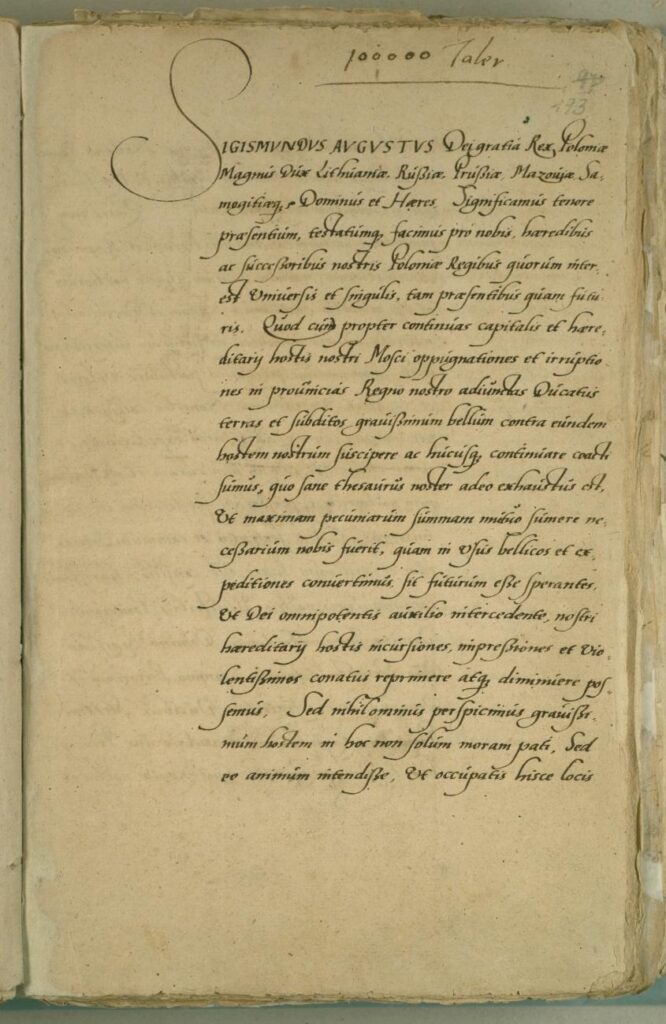
The second of the mentioned symbols of economic ties was the activity of the Loitz banking family from Szczecin and their involvement in financing the political and military operations of the Polish King Sigismund Augustus. Stefan Loitz, who headed the family firm, became a member of the Maritime Commission and one of the Polish delegates to the Szczecin congress thanks to the credits he granted to Sigismund Augustus. He was also the main organizer of a 100,000-thaler loan that the Szczecin banking house of the Loitzes extended in 1568 to the Polish monarch for the continuation of the war for Livonia and the functioning of the Maritime Commission. The capital base of the transaction consisted of deposits from the Pomeranian burghers and nobility, and its guarantor was the Duke of Pomerania. The death of Sigismund Augustus in 1572 caused Pomeranian creditors to demand the immediate return of capital invested in the Loitzes’ ventures; however, the Loitzes proved insolvent, partly due to having generously issued too many unsecured loans to various rulers. The financial crash of the Loitz bank and Stefan Loitz’s flight to Poland caused a severe financial crisis in Pomerania. Many noble and burgher families lost fortunes invested in the Loitzes’ financial operations, which over time also led to bankruptcies and the sell-off of landed estates. The Pomeranian dukes tried for many years to recover the loan made to Sigismund Augustus. The matter was repeatedly brought before the sejms of the Polish-Lithuanian Commonwealth, but both the parliament and successive Polish kings refused to repay the debt, deeming the Pomeranian credit a personal obligation of the deceased Jagiellon rather than a state loan.
During the double election of the King of Poland (December 12–14, 1575) following the flight of Henry Valois, the Pomeranian dukes recognized the election of Stefan Batory, and in November 1576 their envoys asked the Polish king to accept the feudal homage for Lębork and Bytów. In the dispute between Gdańsk and the new monarch over recognizing the election, John Frederick and Ernest Louis maintained an ambiguous stance: they officially sided with Stefan Batory, hoping for the repayment of the earlier 100,000-thaler loan, while at the same time the Duke of Szczecin secretly allowed Gdańsk to recruit troops within his domain—a move pressured by Maximilian II’s successor, Emperor Rudolf II, who in 1575 was a contender for the Polish-Lithuanian crown. Ultimately, Batory’s war with Gdańsk ended with a compromise in December 1577, partly thanks to Ernest Louis, who, alongside Elector John Frederick Hohenzollern, acted as a mediator in concluding the agreement while representing Gdańsk. The following year, the Pomeranian dukes received confirmation of the fief over Lębork and Bytów.
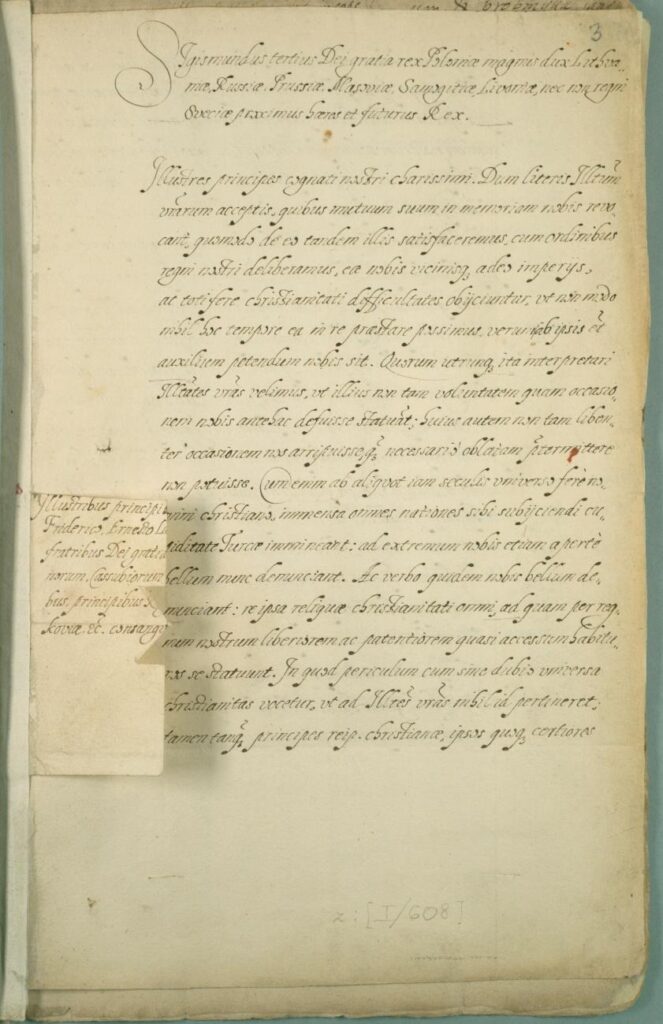
In the following years, the Griffins closely monitored the political situation in the Polish-Lithuanian Commonwealth. Following the accession of the Swedish prince Sigismund III Vasa to the Polish throne in 1587, the Pomeranian dukes quickly secured confirmation of the Lębork and Bytów fief and strove to maintain correct relations with the Commonwealth, especially since the young monarch also ascended the Swedish throne in 1592 after the death of his father, John III Vasa. The Pomeranian dukes were placed in a difficult situation by the rebellion of the Evangelical estates of Sweden against Sigismund III, which lasted from 1596 to 1598 under the leadership of Charles, Duke of Södermanland, the young king’s uncle. The future King Charles IX (1604–1611) was supported by Pomeranian towns, which supplied the Swedish estates with food, weapons, and mercenary troops. Ultimately, the dukes maintained formal neutrality, though the new ruler of Sweden kept quite close contacts with the Griffins—inviting them to his coronation in 1606 and offering Duke Francis I a position in the Swedish army.
The policy of balance and cooperation with all sides in the rivalry for dominance in the Baltic collapsed in the early years of the Thirty Years’ War (1618–1648). In February 1627, Bogislaw XIV was forced to allow a contingent of mercenary Swedish troops, recruited in Mecklenburg, to pass through Pomerania to Royal Prussia to reinforce the army of Gustavus Adolphus fighting against the Commonwealth. This meant breaking the duchy’s neutrality toward Poland and the Emperor. After passing through the Griffin state, the Swedish army was surrounded by Hetman Stanisław Koniecpolski at Czarne (Hammerstein) and subsequently completely routed (April 17), with its remnants fleeing back to Pomerania. Meanwhile, in 1629, Polish King Sigismund III Vasa unsuccessfully attempted to exploit the imperial Edict of Restitution regarding Catholic bishoprics in Protestant lands and demanded the transfer of the Bishopric of Kammin to his son Charles Ferdinand. A few years later, the last Pomeranian duke, Bogislaw XIV, tried to prevent Brandenburg succession in the duchy after his death. He appointed his nephew Ernest Bogislaw de Croy as his successor and began efforts to grant the latter the land of Lębork and Bytów along with the title of a vassal of the Commonwealth. To this end, he dispatched an embassy to the coronation of Władysław IV in 1633 and again to the sejm in Warsaw in 1635. These efforts, supported among other things by reminding the court of the one hundred thousand thalers of King Sigismund Augustus’s unpaid loan, did not yield the expected results. The king and the sejm did not agree to the takeover of the lands of Lębork and Bytów by Bogislaw Ernest de Croy. Following the death of Duke Bogislaw XIV in 1637, Polish troops occupied the Lębork-Bytów fief, and these lands were incorporated into Royal Prussia.

More:
Zygmunt Boras, Książęta Pomorza Zachodniego, Poznań: Wydawnictwo Naukowe UAM 1996.
Zygmunt Boras, Związki Ślaska i Pomorza Zachodniego z Polską w XVI wieku, Poznań: Wydawnictwo Naukowe UAM 1981.
Pomorze Zachodnie poprzez wieki, red. J.M. Piskorski, Szczecin: Zamek Książąt Pomorskich 1999.
Wojciech Kostuś, Władztwo Polski nad Lęborkiem i Bytowem. Studium historycznoprawne, Wrocław: Zakład Narodowy im. Ossolińskich 1954.
Joachim Zdrenka, Polityka zagraniczna książąt szczecińskich w latach 1295–1411, Słupsk: Polskie Towarzystwo Historyczne 1987.
Paweł Gut