


The Duchy of Pomerania and the Thirty Years’ War
On May 23, 1618, the Second (according to some researchers, the Third) Defenestration of Prague took place in Prague. Two imperial governors and their secretary were thrown out of the windows of Prague Castle (Hradčany), which triggered one of the bloodiest conflicts in early modern Europe, known as the Thirty Years’ War (1618–1648). This was the result of a gradual restriction of the privileges granted to Bohemian Protestants by Emperor Rudolf II through the Letter of Majesty in 1609. Tense religious relations within the Empire, which attempts had been made to pacify through the Peace of Augsburg, among other measures, materialized at the beginning of the 17th century in the form of two opposing factions: the Catholic League and the Protestant Union. The religious “fracture” of the empire into the (conventionally) Protestant north and Catholic south eventually also became synonymous with political divisions.
For the Pomeranian dukes, the events in distant Bohemia initially held no major political significance. They were noted, of course, but—in line with the stance of the Saxon electors—they were treated as a rebellion of Bohemian subjects against the emperor. Everything indicated that the local conflict would be quickly pacified (the defeat of the Protestants at the Battle of White Mountain on November 8, 1620) and would in no way affect Pomerania. Much greater interest (and potential threat) could be aroused by the Swedish-Polish wars taking place near the eastern borders of the Duchy, the preparation of Polish reinforcements for the emperor operating near the border with Brandenburg, or finally, the bands of unpaid and undisciplined soldiers periodically approaching the Pomeranian borders, which were an aftermath of the wars waged by the Polish-Lithuanian Commonwealth with its eastern neighbor. In the latter case, we can speak of as many as 10,000 soldiers. Additionally, in the spring of 1627, a Swedish corps of several thousand men marched through the territory of Pomerania on its way from Mecklenburg to Prussia. The battle in which it was defeated took place, admittedly, already on the Polish side of the border near Czarne (Hammerstein), but close to Pomeranian Szczecinek.
***
Such a policy—of neutrality—proved, however, to be short-sighted. Despite the initial advantage of the Catholic side, the conflict did not die down but began to assume an increasingly violent character. More and more states of the Empire began to side with the Union and the League, and external interventions (by Denmark, Sweden, and France) internationalized it. From 1625, Bogislaw XIV ruled over the united Duchy of Pomerania (having been the Duke of Szczecin since 1620), and it was during his reign that Pomerania was drawn into the orbit of the war.
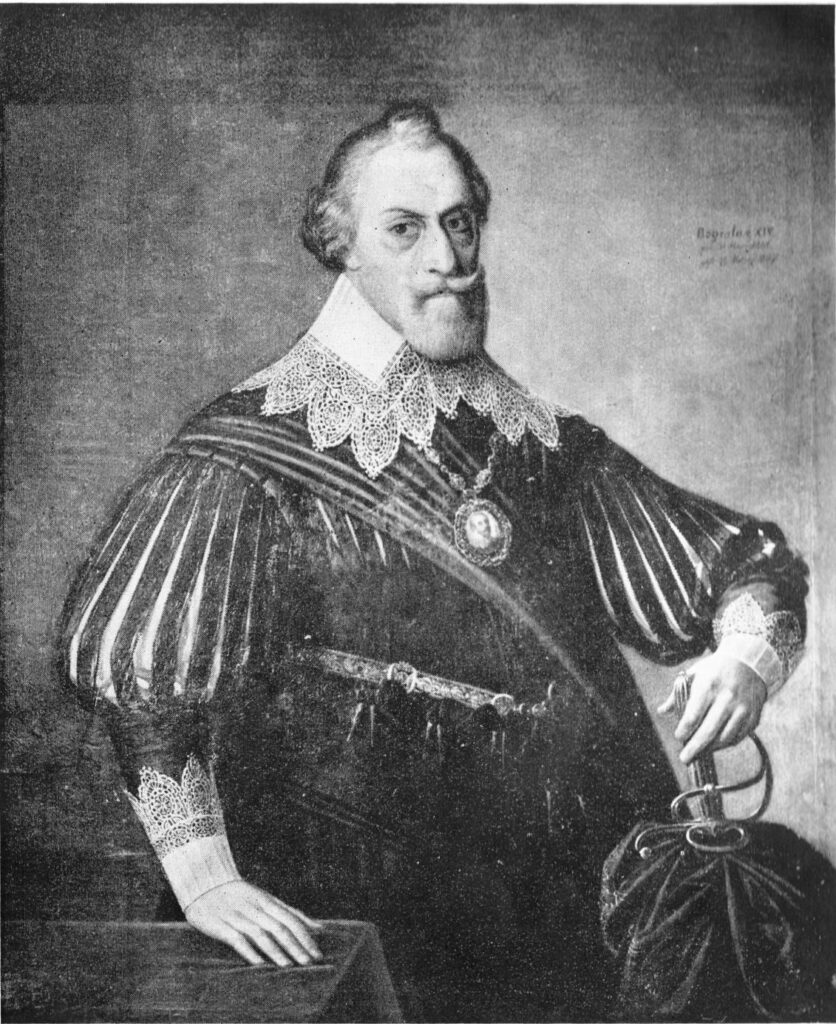
When the imperial troops entered Pomerania in 1627, the Duchy was practically defenseless. Attempts to raise a new levy in the (modest) strength of 3,000 soldiers were met with a lack of understanding from the Pomeranian nobility, which was further compounded by long-standing financial problems and an empty ducal treasury. A similar situation occurred when the duke wanted to reinforce the Pomeranian borders; squadrons or musketeer companies consisting of a few hundred men served for barely a few months due to financial difficulties. As Radosław Gaziński stated, the monthly cost of a 300-man (musketeer) company amounted to 2,847 guilders, while raising a company of one hundred cavalry cost approximately 2,950 guilders. In the face of another refusal from the Pomeranian estates, a levée en masse (pospolite ruszenie) was decided upon, reinforced by a small number of regular troops, which was to be stationed in the vicinity of Polanów and protect the eastern borders of the Duchy. However, it gathered slowly and in a relatively modest representation. Following Radosław Gaziński, it can be summarized that the total number of all Pomeranian forces amounted to around 1,640 infantry and 250 cavalry, including few professional mercenary soldiers. It was estimated that for an effective defense, the state would need several thousand soldiers, so these numbers were far from the strengths proposed somewhat earlier by the ducal councilors (8,000 infantry and 1,500 cavalry).
In June 1623, two 300-man infantry companies (which was half of the planned strength) and a 150-man cavalry unit were called to arms. However, these soldiers served only until the end of the year; high maintenance costs (estimated at over 100,000 florins for six months) and insubordination caused these units to be disbanded in December.
The issue of permanent points of resistance was in a similarly poor state. In fact, apart from Stralsund, which, on the initiative of the municipal authorities, had begun at that time to be reinforced with modern fortifications in the New Dutch style, none of the Pomeranian cities met the conditions necessary for conducting a long-term defense. They were surrounded by medieval stone-and-brick walls, which, given the widespread use of modern artillery, posed no obstacle to potential besiegers. Although the Duke of Szczecin, Francis, ordered the cities to reinforce their walls and castles and to stockpile ammunition, the response to this appeal was rather modest. The most important city in Pomerania—Szczecin—can serve as a characteristic and telling example here. As late as the autumn/winter of 1629, there were plans to raise three mixed companies of musketeers and pikemen for the city’s defense (totaling around 1,000 soldiers), but ultimately nothing came of these plans—firstly, the soldiers would have had nothing to garrison, and secondly, it would have involved high expenditures that the city, rather than the ducal treasury, would have had to bear. This situation changed after the capture of Szczecin by the Swedes in 1630, when modern fortifications for that era were constructed over the course of a dozen or so years (more on this in the text dedicated to the Szczecin fortress).
***
The military situation changed in 1626 due to the intervention, and subsequent defeat, of King Christian IV of Denmark. The Scandinavian ruler’s ambitions reached far—given the weakening of the Protestant camp, he desired to become its leader and, as the Lion of the North, liberate German Protestants from papist oppression. His plans were quickly thwarted by the imperial troops commanded by Albrecht von Wallenstein. Successive defeats, including those suffered in the New March (Neumark) neighboring Pomerania, caused the King of Denmark to withdraw from the conflict. Soon, his place was taken by the King of Sweden—Gustavus Adolphus.
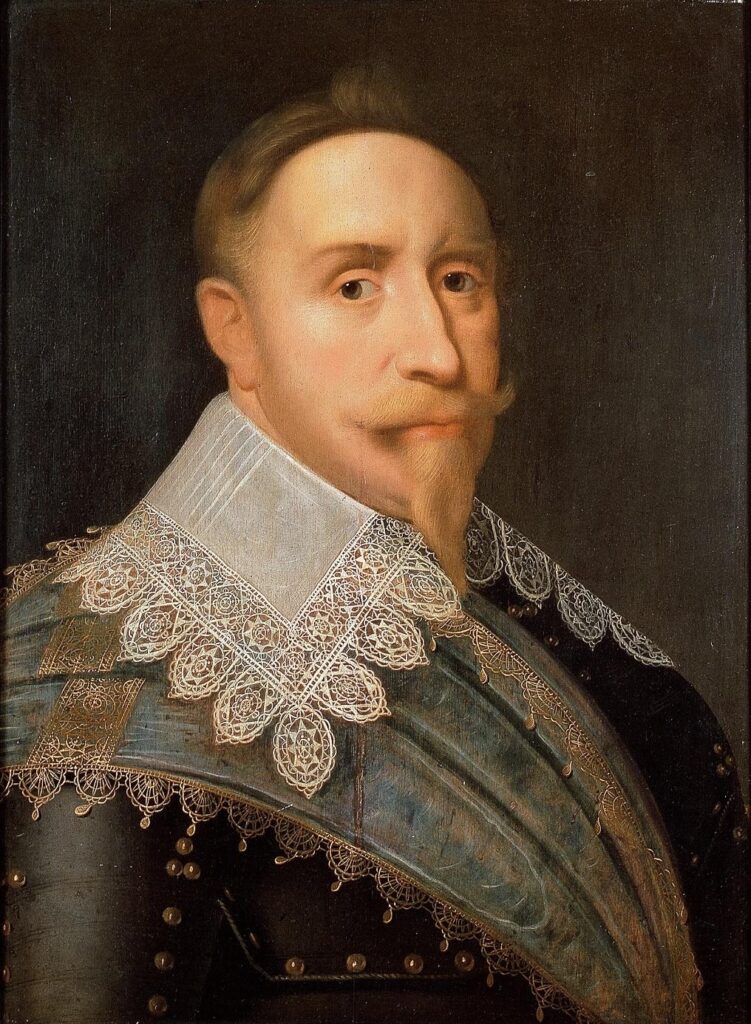
Duke Bogislaw XIV’s response to this situation was the appointment of a military commission, composed of ducal councilors, tasked with determining the state and defensive needs of Pomerania. At this point, the floor should be given to Radosław Gaziński once again: “In May 1626, at the Pomeranian assembly (sejmik) in Uckermünde (Wkryujście), under the influence of the presented report on the weak state of fortifications and the lack of border security, funds for levies were approved. The troops gathered in this manner were to protect selected ports as well as certain border crossings and bridges. In June 1626, the collection of a separate tax (contribution), approved by the aforementioned assembly for the maintenance of regular troops, began. The entire collection was to be supervised by a specially appointed War Council coordinating defense operations in Pomerania. Concurrently, there were plans to establish a War Chest, into which the funds designated for the maintenance of the army were to flow.”
-
assembly (sejmik) – słowo sejmik w kontekście dawnej Rzeczypospolitej i państw ościennych najczęściej tłumaczy się jako assembly lub dietine. Dodanie oryginalnej polskiej nazwy w nawiasie lub kursywą zachowuje lokalny kontekst ustrojowy.
-
Uckermünde (Wkryujście) – w angielskich tekstach historycznych dotyczących Pomorza Zachodniego powszechnie stosuje się historyczne nazwy niemieckie (jako wówczas obowiązujące), podając współczesną nazwę polską obok.
-
War Chest – to tradycyjne i najbardziej precyzyjne tłumaczenie historycznego pojęcia „Kasa Wojenna”.
In organizing this new levy (which ultimately numbered around 500 soldiers), lessons were drawn from the situation of three years prior, and the soldiers were forbidden from looting and carrying out confiscations at the expense of the local population. Concurrently, a levée en masse (pospolite ruszenie) was called, which, although numbering around 4,500 men, mostly possessed little combat value—it was undisciplined and poorly armed (for the most part only with pikes, halberds, and outdated muskets). Plans to reinforce it with a levy of 3,000 professional soldiers, as before, fell through due to financial difficulties. lessons were drawn – to naturalne i eleganckie sformułowanie odpowiadające polskiemu „wyciągnięto wnioski”. at the expense of – standardowy zwrot oznaczający „kosztem [kogoś/czegoś]”. fell through – to precyzyjny idiom oznaczający, że plany „spaliły na panewce” lub nie doszły do skutku.
As already mentioned above, in 1627, mercenary Swedish troops entered Pomerania first, only to be subsequently defeated at Czarne. Regardless of this, in the eastern parts of the Duchy—mainly in the Lębork and Bytów Land—the requisitioning of forage by Polish and Swedish troops was taking place; the latter ventured as far as Słupsk and Sławno. Fearing the westward advance of these troops, another levée en masse (pospolite ruszenie) was called, funded jointly by the Pomeranian cities and, partially, the nobility. It numbered just under 3,000 men, of which slightly over 700 were cavalry. Within a month, most of them had also dispersed to their homes.
In the same year, 1627, imperial troops also appeared in Pomerania. Their commander, Albrecht von Wallenstein, through his general, Hans Georg von Arnim, demanded Duke Bogislaw XIV’s consent to station imperial troops in the Duchy and garrison Pomeranian ports, arguing the need to cut off Swedish ports from grain supplies. The duke was unprepared for this turn of events, as he had received guarantees from Emperor Ferdinand II regarding the inviolability of his declared neutrality. Attempts to bribe the imperial commanders came to nothing; on November 2, at the ducal castle in Franzburg, Duke Bogislaw XIV, in the presence of the imperial envoy, signed the act of the so-called capitulation, in which he was forced to agree to the stationing of Wallenstein’s troops in Pomerania. Military weakness on one hand and the legal status (the duke was a formal vassal of the emperor) on the other essentially left no room for any other decision. The Capitulation of Franzburg ultimately drew the Duchy of Pomerania into the war, and its territory was soon to become a theater of military operations.
This occurred in 1630, when Swedish troops landed in Pomerania—a consequence of Denmark’s defeat and King Christian IV’s withdrawal from the war. It was Gustavus Adolphus who was to assume the role of the new Lion of the North and liberate German Protestants. The intervention was the realization of earlier plans, dating back to 1623, which envisioned the creation of a grand coalition involving, among others, Sweden, Mecklenburg, Brandenburg, the imperial cities of Lübeck and Rostock, and Pomerania itself. The primary objective of this coalition was originally intended to be operations directed against the Polish-Lithuanian Commonwealth.
These changed along with the shifting situation in the Empire and the “orphaning” of the Protestant leadership, and the truce with Poland, concluded on September 26, 1629, in Stary Targ (Altmark), also closed this theater of military operations. On July 6 of the following year, 13,000 well-trained soldiers landed at Peenemünde: 10,413 infantrymen, 2,755 cavalrymen, and 425 artillerymen. Although these initial Swedish forces were relatively modest, their core consisted of experienced and battle-hardened soldiers. Following a swift march southward, Szczecin was occupied without major difficulties “by right of conquest,” and Duke Bogislaw XIV was forced to abandon the emperor (bearing in mind the Capitulation of Franzburg) and enter into an alliance with the King of Sweden, which took place on July 20. It provided, among other things, for the right of the Swedes to take over the entirety of Pomerania after the death of Bogislaw XIV, with the proviso that the remaining claimants—namely Brandenburg—would not accept an “amicable” solution. Gustavus Adolphus consistently built a bridgehead in the southern Baltic, securing his supply lines from Sweden, while advancing southward along the Oder (the Elector of Brandenburg also became a rather hesitant ally of Gustavus Adolphus) and toward Pomeranian Stralsund (where Swedish reinforcements had been stationed for a year, supporting the burghers against Wallenstein’s troops) and Mecklenburg. On this axis, Swedish successes were of a limited nature.
A diplomatic success, however, proved to be the treaty signed with France on January 23, 1631, in Mieszkowice (Bärwalde) in the New March, guaranteeing the Swedes financial subsidies amounting to 400,000 talers, in exchange for which the Swedes committed to waging war against France’s enemy—the emperor. In turn, operations in Brandenburg, and particularly the capture of Frankfurt an der Oder and Gorzów, opened the way to Silesia and further into the heart of the Empire.
Regardless of this, subsequent strategically important points were being occupied in Pomerania. Since, as already mentioned above, the cities of the Duchy basically did not possess modern fortifications, securing them became the need of the hour, thereby strengthening the Swedes’ hold on their new acquisitions. Above all, Szczecin, but also Dąbie, Stargard, Kołobrzeg, and others were successively provided with bastion fortifications. A significant number of design and inventory plans have survived from this undertaking, providing an insight into the scale and modern way of thinking about the conduct of war. In the mid-1630s, already after the death of Gustavus Adolphus at Lützen (1632), the Swedish garrisons in Pomerania, commanded by General Johan Banér, numbered around 11,000 soldiers. In 1635, they were reinforced by General Lennart Torstenson’s army, recalled from Prussia, which marched further into Brandenburg. As subsequent developments showed, Pomerania became a staging ground for the Swedes, primarily toward Brandenburg, which was wavering between loyalty to the emperor and forced support for Protestant Sweden.
The main theater of military operations was gradually moving away from Pomerania; however, the Swedish occupation of the country did not remain outside the orbit of interest of the imperial commanders. General Ottavio Piccolomini, who enjoyed a well-deserved reputation as an excellent strategist, pointed out the necessity of shifting the fighting to the north, liberating the Duchy, and thus cutting off the Swedes from their domestic supply lines, while simultaneously finding another territory for troop recruitment. In the 1640s, when the fighting was practically dying down gradually, Jean-Louis Raduit de Souches, considered one of the most prominent commanders of the era, appeared on the Pomeranian theater of war. We will see him again in Pomerania during the siege of Swedish Szczecin in the autumn of 1659.
From 1641, diplomatic preparations for the commencement of peace negotiations were underway. These were initiated only in 1645 and concluded with the signing of the so-called Peace of Westphalia in 1648. In the context of Pomerania, it assumed the “sacrifice” of the country and the division of the former Duchy’s territory between Brandenburg and Sweden, a solution supported primarily by France, periodically by Wallenstein himself, and one that found acceptance at the imperial court. The partition of the Pomeranian lands was caused by the death of Bogislaw XIV without issue and the actual Swedish occupation. Brandenburg’s claims were also taken into account, as a series of treaties had been concluded between the House of Griffins and the Hohenzollerns, regulating succession matters in the event of the extinction of either dynasty. The last of these, signed in 1571 by Duke John Frederick and Elector John George in Choszczno, specified the complete takeover of Pomerania by the Hohenzollerns in the event of the extinction of the Griffins; conversely, the Griffins could inherit in the New March (the part of Brandenburg lying east of the Oder). Succession in the Electoral March would require the emperor’s consent, as it entailed the granting of the title of Prince-Elector of the Empire.
Although Pomerania was not the main theater of war, the scale of destruction was unprecedented. It is estimated that in certain areas, population losses reached as high as 70%, though this was not always linked to direct military action. Marching troops, both hostile and allied, brought about devastation and triggered the flight of the rural population to the towns; they carried diseases, forcibly levied recruits, and exacted high contributions. The stationing of a garrison in a town forced the burghers to quarter soldiers and maintain them at their own expense. The soldiers, in turn, well aware of the temporary nature of their stay, frequently acted hostilely toward the residents, committed acts of violence, and careless handling of fire could lead to devastating blazes, as occurred in Stargard in October 1635. According to the findings of Agnieszka Gut, the city as a whole was roughly 50% destroyed at the time, although it should be noted that these losses were not distributed evenly across the urban area.
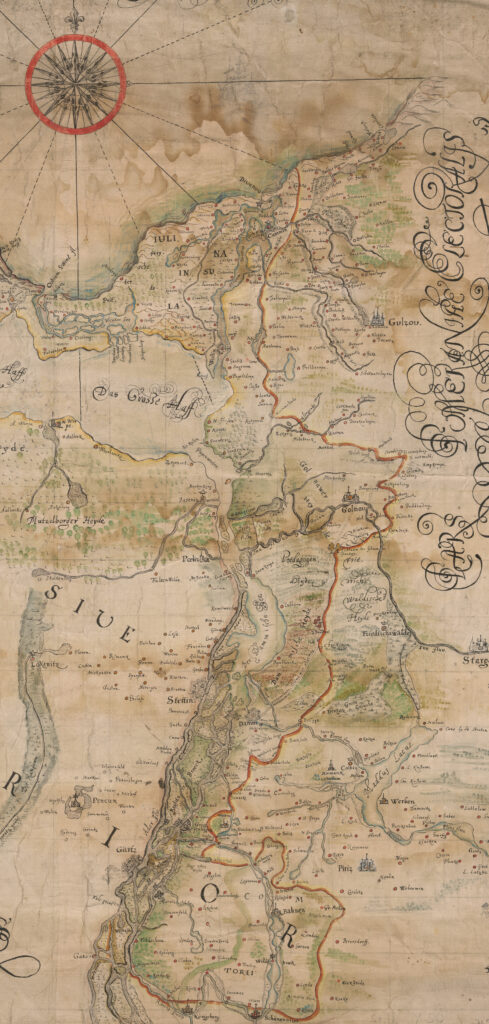
The end of the war and the extinction of the dynasty also had far-reaching consequences for Pomerania. The division of lands decreed in the Peace of Westphalia took place only five years after the signing of the peace treaty (in 1653), when the border was demarcated on the ground. The entire “Pomeranian” course of the Oder, with Szczecin and a several-kilometer “buffer” on the eastern side (rapidly narrowing toward Pyrzyce south of Gryfino), fell to Sweden. This became a hotbed of subsequent conflicts, as Brandenburg, cut off from access to the Baltic Sea through Szczecin, never reconciled itself to this situation and made successive attempts to capture the city. This was ultimately accomplished in 1713.
The final act of finis Pomeraniae was the funeral ceremonies of Bogislaw XIV. The duke, who died in 1637, “waited” for 17 years to be laid to rest. The reason for this was the unsettled political situation of the Duchy; bearing in mind that whoever performed the burial would de facto become the heir to the Griffins, the issues of the partition had to be conclusively resolved first. Both historical capitals—Wolgast (Wołogoszcz) and Szczecin—remained in Swedish hands, while Stargard took over the capital functions for the Brandenburgian part.

More:
Radosław Gaziński, „Preparations” of Western Pomerania for the Thirty Years’ War, „Przegląd Zachodniopomorski” XXXIV, 2019, z. 4.
Agnieszka Gut, Pożar Stargardu 7 października 1635 r., [w:] Archeologia Stargardu. Wojna trzydziestoletnia. Pożar miasta w dniu 7 października 1635 r., red. Marcin Majewski, Poznań-Stargard: Bogucki. Wydawnictwo Naukowe 2019.
Historia Pomorza, t. II, cz. I, red. Gerard Labuda, Poznań: Wydawnictwo Poznańskie 1976.
Peter H. Wilson, Wojna trzydziestoletnia 1618–1648. Tragedia Europy, Oświęcim: Wydawnictwo Napoleon V 2017.
Radosław Skrycki