


Railways in Western Pomerania in the First Half of the 20th Century (until 1945)
In November 1918, World War I was drawing to a close. Western Pomerania, much like the rest of defeated Germany, found itself facing transformations that were extremely painful for both the state and society. However, the end of prolonged military operations did not mean an immediate return to pre-war and predictable stability. The transport system of the Pomeranian province was severely overexploited and stood on the verge of total technical collapse. Hundreds of locomotives had been destroyed or drastically worn out on the eastern and western fronts, the freight cars that survived remained in a deplorable state, and the tracks on provincial secondary lines, deprived of essential ongoing maintenance for years, required immediate and extremely costly repairs.
The Treaty of Versailles brought profound transformations on the political map of Europe, which decisively influenced the shape of railway administration in Western Pomerania. As a result of the emergence of independent Poland and the demarcation of the so-called “Pomeranian corridor” (“Korridor”), which separated East Prussia from the rest of the German state territory, the existing railway management had to undergo a complete reconstruction. This change forced the dissolution of the previous East Pomeranian railway directorate in Gdańsk, which formally took place in December 1919, and which supervised, among others, railway junctions from the Pomeranian province in Bytów, Koszalin, Lębork, Sławno, and Słupsk.
As a consequence of these events, the western sections of the Pomeranian lines that did not fall within the borders of the reborn Polish Republic were directly incorporated into the administrative structures of the railways in Szczecin. Effective December 8, 1919, the traffic offices (*Betriebsämter*) in Koszalin, Szczecinek, Słupsk, and Lębork came under Szczecin’s management. Szczecin, as a thriving urban and port center, unexpectedly advanced to the role of the most important (and the last in northeastern Germany, if one excludes Königsberg in East Prussia and the Free City of Gdańsk created slightly later) communication hub in this part of Germany. To accommodate the expanding bureaucratic apparatus, the former Royal Railway Directorate in Szczecin had to search for new premises; in 1922, a building at the present-day 3 Maja Street in Szczecin was acquired for this purpose, and by 1930, further neighboring properties and barracks were adapted.
In accordance with Article 89 of the new constitution of the Weimar Republic of August 11, 1919, the state was obliged to take over all existing state railways and integrate them into a single, nationwide organization. As a result of these provisions, in the summer of 1922, the former Royal Prussian Railway Directorate in Szczecin was officially renamed the Reich Railway Directorate in Szczecin (*Reichsbahndirektion Stettin* – RBD Stettin). Under its management was a large operational area of 37,000 square kilometers. It encompassed not only the Pomeranian province itself, but also significant fragments of Brandenburg, the former province of Posen-West Prussia (*Grenzmark Posen-Westpreußen*), and Mecklenburg-Strelitz. This network then comprised 1,206 kilometers of main lines and 1,808 kilometers of secondary lines, serving a population of around 2.32 million inhabitants.
The beginnings of the new administrative unit coincided with an extremely turbulent period. The young republic struggled with a giant, out-of-control hyperinflation that quite literally ruined state and household budgets month by month, making it impossible to pursue any rational investment policy. In addition to the economic collapse, there were dramatic political tensions. A prime example of this was the right-wing Kapp Putsch, during which the then-president of the Szczecin railway directorate, Adolph Schultze, refused to transmit information about railway workers’ strikes via internal communication channels. This stance later led to disciplinary proceedings being initiated against him and other officials sympathetic to him. The daily operation of the railways in the early years of the Weimar Republic was a series of constant organizational compromises and struggles with growing poverty, including among railway employees.
The situation was only remedied in the mid-1920s. Pursuant to international financial arrangements related to war reparations (the Dawes Plan), a completely new entity—the large state enterprise “Deutsche Reichsbahn-Gesellschaft” (DRG)—was established on August 30, 1924. Although this organization was state-owned, it operated on strictly commercial principles, and the profits it generated served largely as a fund to pay off the huge war indemnities imposed on Germany. The stabilization of the currency and the introduction of the new Reichsmark paved the way for the reconstruction of the destroyed track network and the replacement of obsolete rolling stock, which had been postponed for years. However, this restructuring came with a high social cost. Reductions became necessary; due to soaring operating costs, overall employment had to be cut, resulting in the dismissal of many civil servants and manual workers. In the Pomeranian province, a number of small, scattered station ticket offices and minor technical departments were liquidated, consolidating management into larger hubs. A progressive centralization of tasks was underway.
The 1920s and 1930s, despite initial difficulties, ultimately proved to be a period of major structural investments. The Pomeranian railway network, in order to meet growing transport demands, had to be continuously modernized. Particular attention is due to the transformations within the largest Pomeranian stations. Szczecin Main Station (*Stettin Hauptbahnhof*), which as early as the mid-19th century had replaced the former terminal station, captivated travelers with its elegance and functionality following its rebuilding during the interwar period.
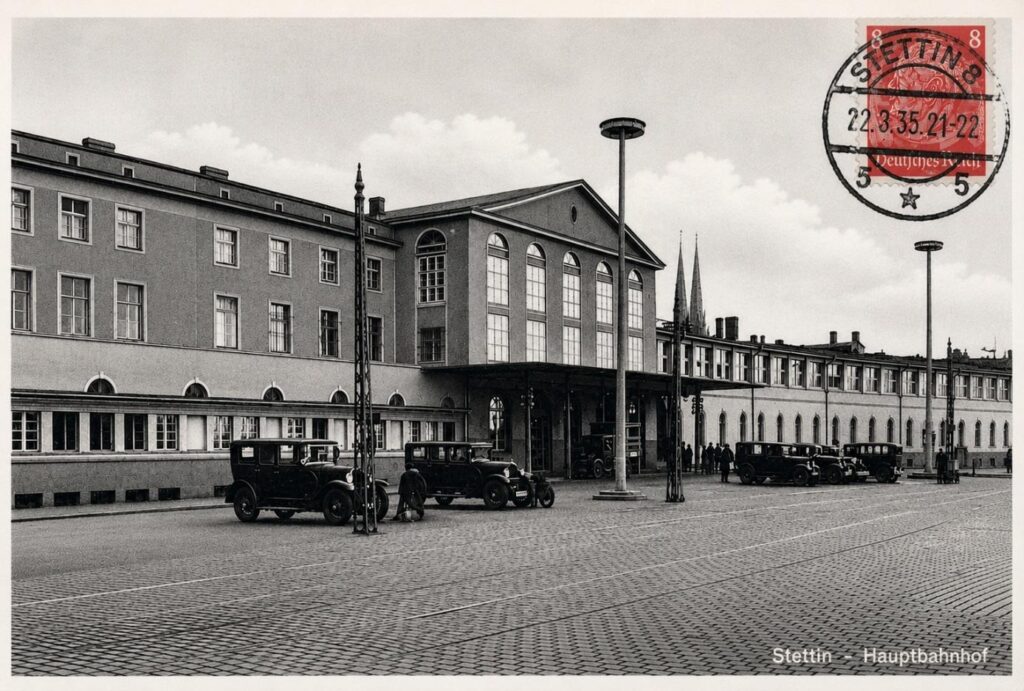
Inside were luxury spaces such as the “Fürstenzimmer” (Prince’s Room), designated for the highest dignitaries, and the representative “Preußenzimmer” within the station restaurants. The entire station complex expanded, forcing constant regulation of the Oder river embankments, with which it directly bordered. Alongside passenger traffic, immense work was carried out by specialized freight terminals, such as the Szczecin station on the Dunica River (*Dunzigbahnhof*), designed specifically for handling waterborne freight and goods subject to customs duties. This infrastructure in the region was complemented by majestic station buildings in other towns, such as the impressive red-brick station building in Pasewalk, which at the time dominated the surrounding area with its castle-like style.
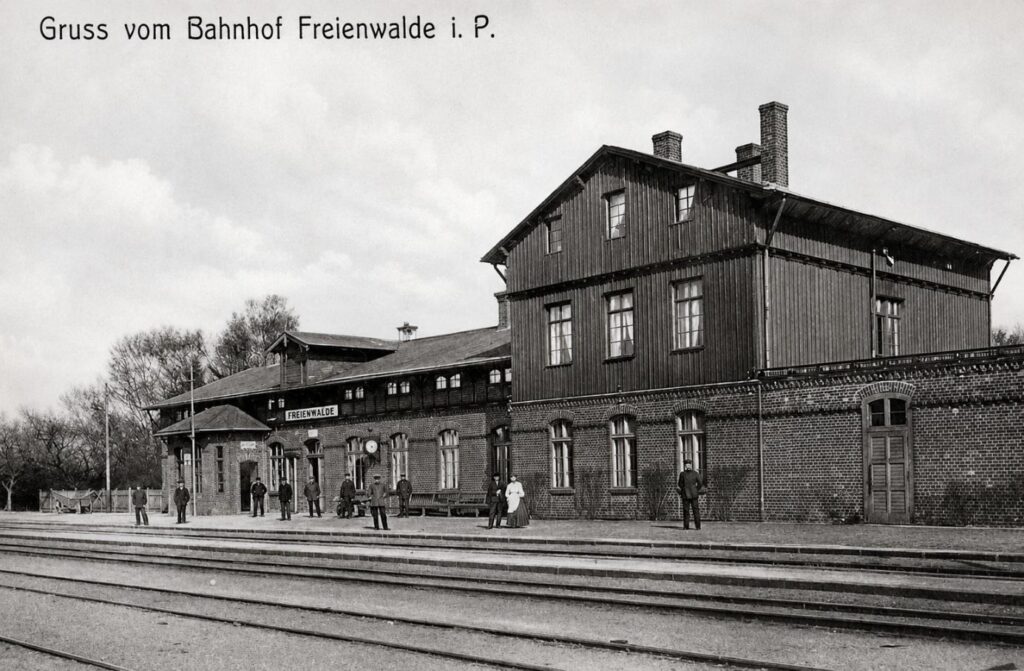
Parallel to this, engineering architecture developed. The progressive expansion of inland waterways forced the railways to implement bold bridge projects. A prime example of this was the area of the Eberswalde station. When the construction of the large ship canal (*Großschifffahrtsweg Berlin–Stettin*) was completed at the beginning of the 20th century, it became necessary to route the tracks over this water artery. In this way, monumental viaducts and truss structures were created, which not only allowed for collision-free movement of trains and barges, but also stood as proof of the highest craftsmanship of the builders of that era.
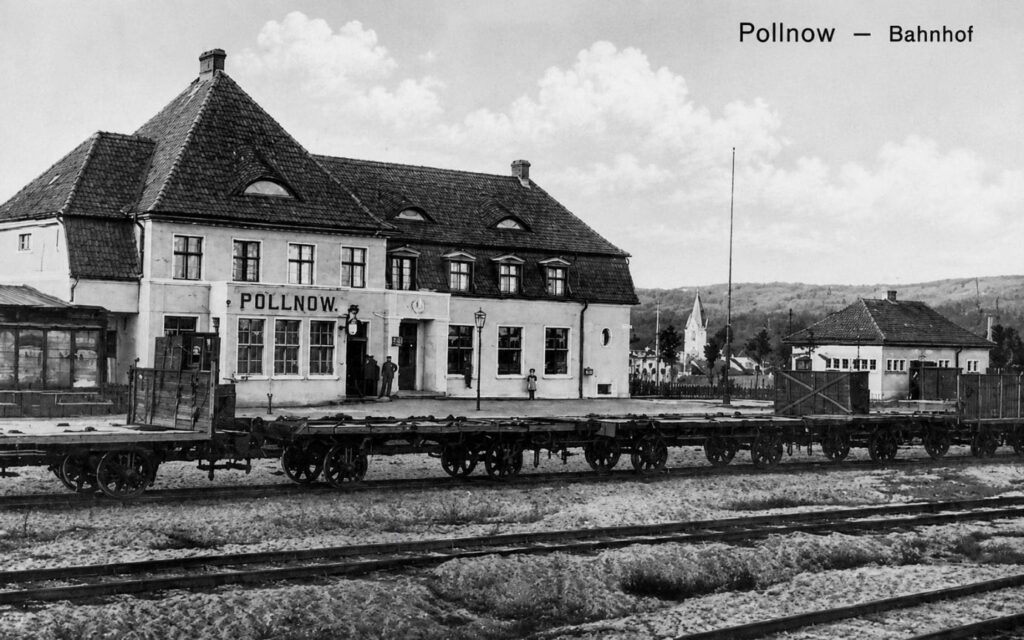
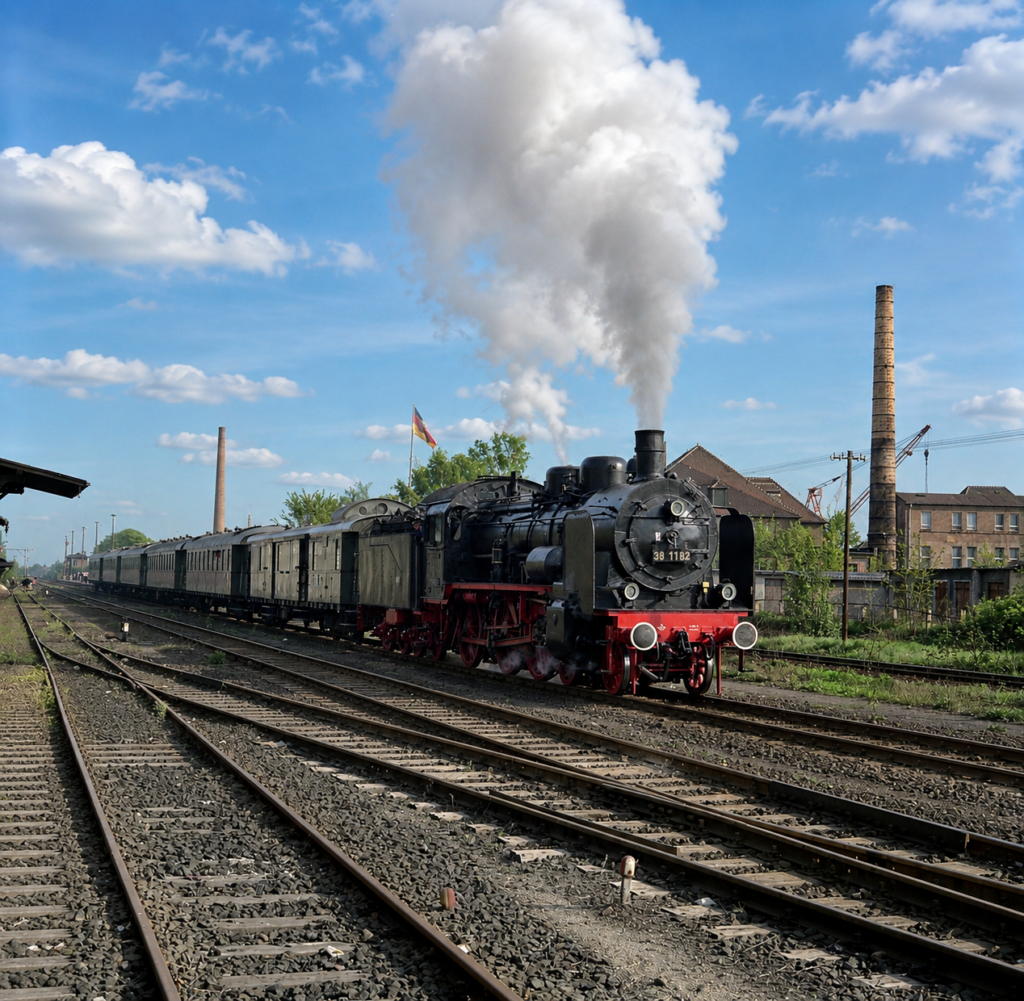
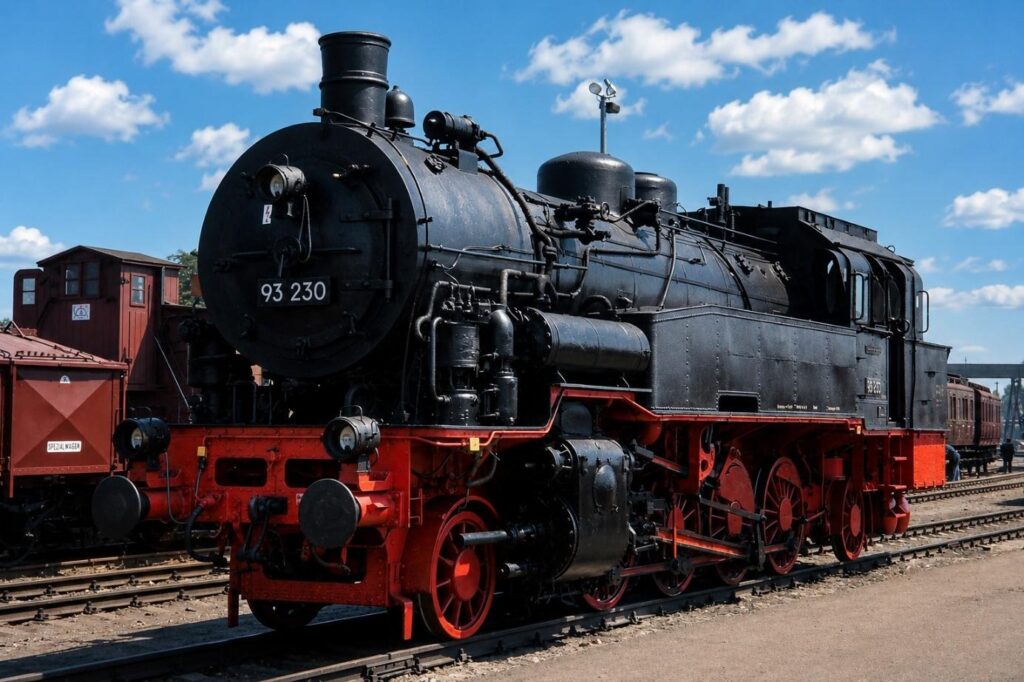
The incorporation of local lines under the wings of the large state corporation initiated a process of rolling stock unification and the withdrawal of the oldest, non-standard designs dating back to the 1840s and 1850s. Modern machines were deployed to handle the growing passenger traffic and freight transport. The “Vulcan” machine factory played a major role in supplying railway equipment used on the Pomeranian routes. This plant, world-famous for building powerful ships, possessed an extremely efficient locomotive construction department. Technologically advanced machines that became the pride of the railways rolled out of its assembly halls. Among them were the powerful T 18 series locomotives (later designated as BR 78), which, thanks to their universal design and ability to reach high speeds in both directions without the need for turning on a turntable, were ideally suited for hauling trains on short and medium distances.
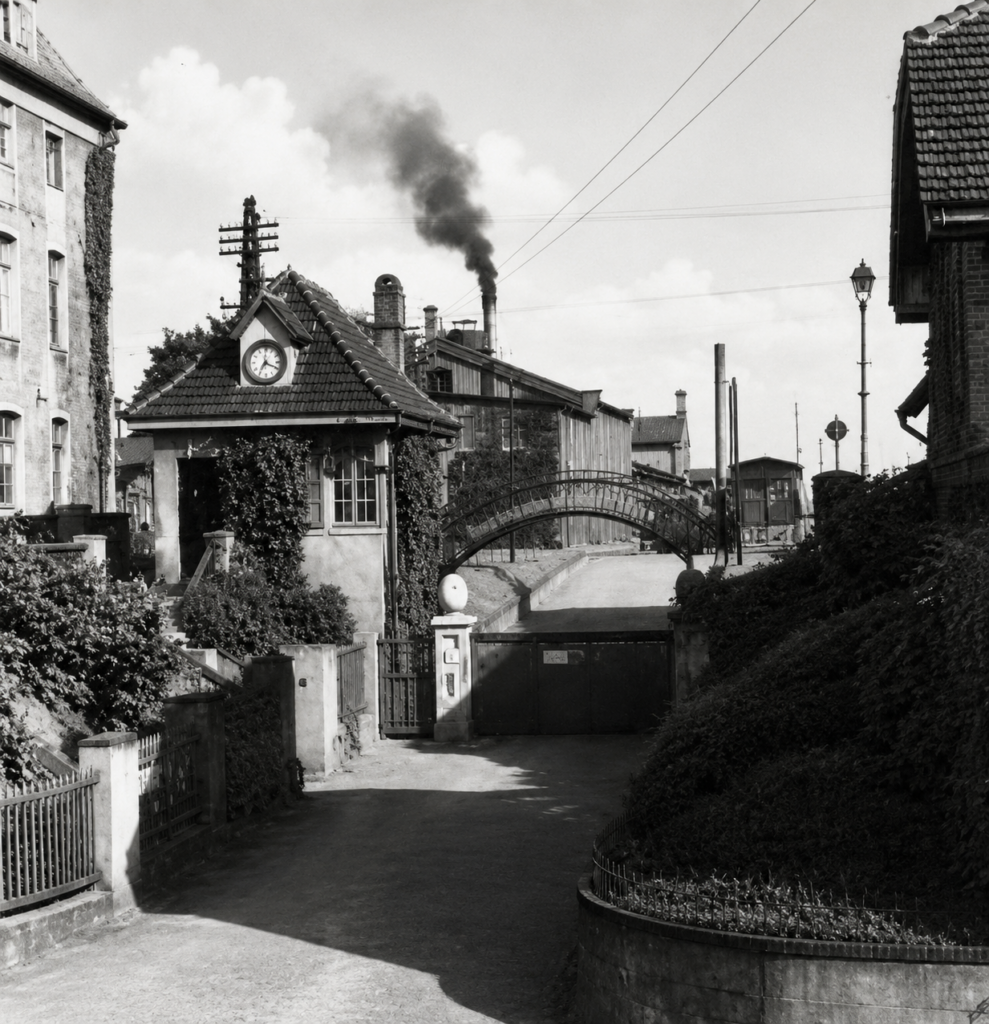
Aside from these, the tracks were ruled by reliable express locomotives, such as the then-popular P 8 series (BR 38), and in the 1930s, aerodynamic and large BR 03 series trainsets began to appear. The latter boasted exceptional performance and allowed for a significant reduction in travel time on the main lines. Meanwhile, handling heavy freight traffic, especially timber and coal transport, utilized massive T 14 series locomotives (later BR 93), among others. Specialized repair facilities oversaw the maintenance of this large fleet of machinery, including major main workshops located, among other places, in Eberswalde and Stargard.
The economy of the Pomeranian province during the interwar period was largely based on agriculture, the timber industry, as well as broadly defined services and maritime trade. In each of these sectors, rail transport played the role of an irreplaceable lifeblood. Freight trains ran constantly, carrying significant quantities of sugar beets, potatoes, construction timber, as well as coal and iron ore imported from Sweden. Even in the 1930s, agriculture remained the main supplier of cargo for the railways in these areas.
Simultaneously, there was a phenomenal boom in mass tourism, which meant a completely new quality and scale of passenger transport for the Pomeranian railways. The Baltic Sea became a desirable and almost mandatory destination for summer relaxation for millions of residents from overcrowded Berlin, as well as Saxony and Silesia. Special timetables were created, taking into account exclusively holiday and vacation trains (*Ferien-Sonderzüge*). At its peak for the Weimar Republic in 1929, the Szczecin directorate recorded unimaginable sales of around 25 million tickets annually, which accounted for nearly 2.25% of all passenger transport in the whole of Germany.
This phenomenon gained even greater significance after the National Socialists came to power in 1933. Tourism was centralized and used as a propaganda tool by the state organization “Kraft durch Freude” (KdF), which organized mass, subsidized holiday trips for workers. Hundreds of special KdF trainsets brought vacationers to the beaches of Usedom, Rügen, and Wolin, as well as to Kolberg (Kołobrzeg), Rügenwalde (Darłowo / Darłówko), Stolpmünde (Ustka), and Leba (Łeba). During the summer months, this required the railway workers to mobilize all available passenger rolling stock to an extraordinary degree.
Ferry crossings managed directly by the railway administration also experienced a golden age at that time. The famous Royal Line (“Königslinie”), connecting the Pomeranian port of Sassnitz with Swedish Trelleborg, served growing crowds of travelers, reaching figures of tens of thousands of passengers annually. Luxury international express trains, such as the “Skandinavien-Express,” were smoothly rolled onto the decks of the ferries, enabling a comfortable journey from Stockholm deep into the continent.
Due to the post-war territorial division and the creation of the Polish state, another specific type of transport also flourished—the East Prussia Maritime Service (*Seedienst Ostpreußen*). Because direct overland connection between the Reich and East Prussia involved burdensome customs and transit formalities through Polish territory, a special fleet of passenger and cargo ships operating from ports in Szczecin and Świnoujście to Pillau (Piława) was launched in 1920.
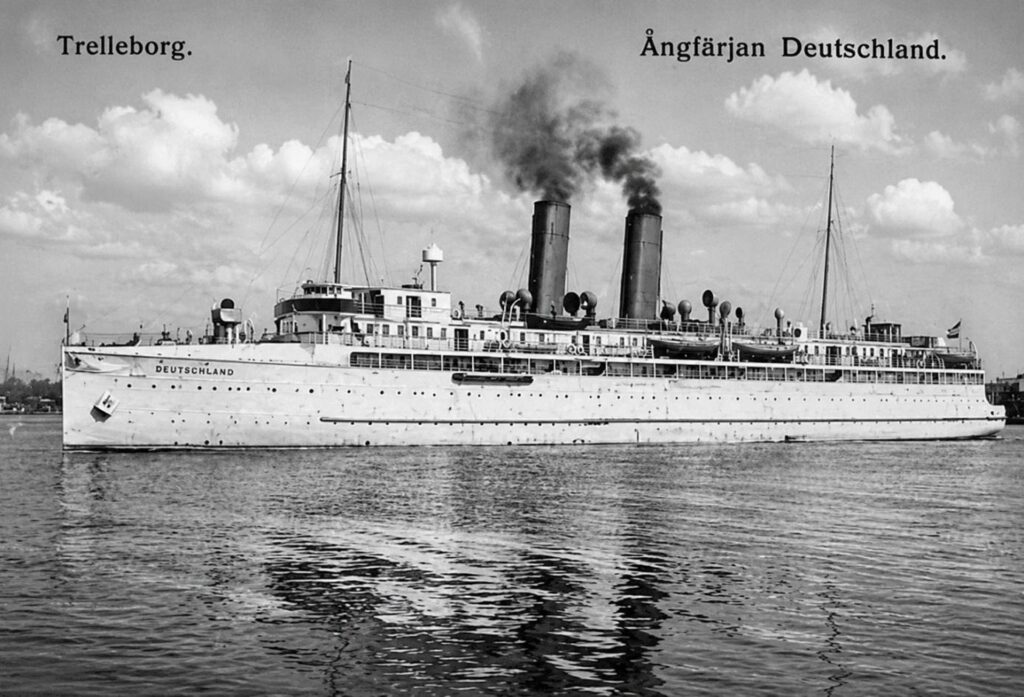
Although it was actually maritime shipping, this service was integrated into the tariff and organizational framework of the Reich Railway. A traveler could buy a single ticket for a train from Berlin and simply transfer to the side of a ship at the Szczecin port. By the outbreak of World War II, a total of over 1.8 million passengers had used this state-subsidized sea route.
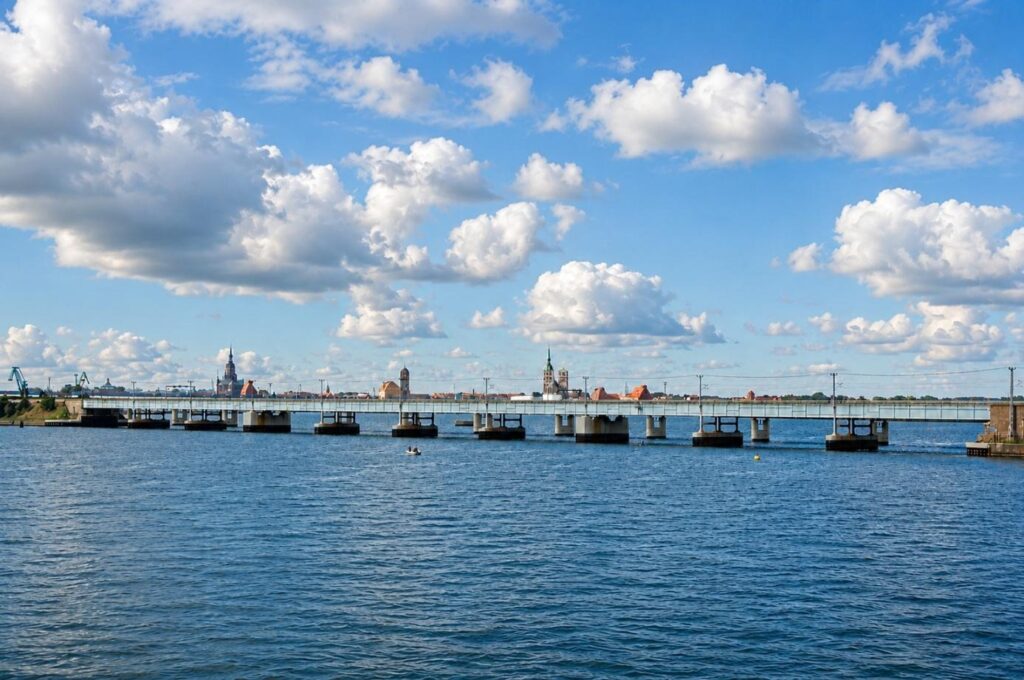
One of the greatest limitations to the avalanche-like growth of tourist and freight traffic in the north of the Pomeranian province was the difficult transport crossing across the narrow Strelasund strait, which separates the mainland from Germany’s largest island, Rügen. For decades, trains had to use a cumbersome ferry service (Stralsund Ferry) at this location. This led to a significant transport bottleneck. During the summer season, trainsets would sometimes wait for hours to board the small ferry vessels.
The decision to build a permanent road and rail connection was made during the era of major state infrastructure programs in the first half of the 1930s. The work on the project named “Rügendamm” (“Rügen Causeway”) required the commitment of significant financial resources. Millions of cubic meters of earth were used to build up the embankments and the bases of the fills, and steel bascule spans weighing 532 tons, which allowed maritime traffic to pass through, were constructed over the navigational channel itself. This engineering feat, consuming huge reserves of steel and concrete, was officially opened to traffic on October 5, 1936. As a result, the new crossing significantly shortened travel times for trains to the island of Rügen and streamlined freight exchange with the port in Sassnitz.
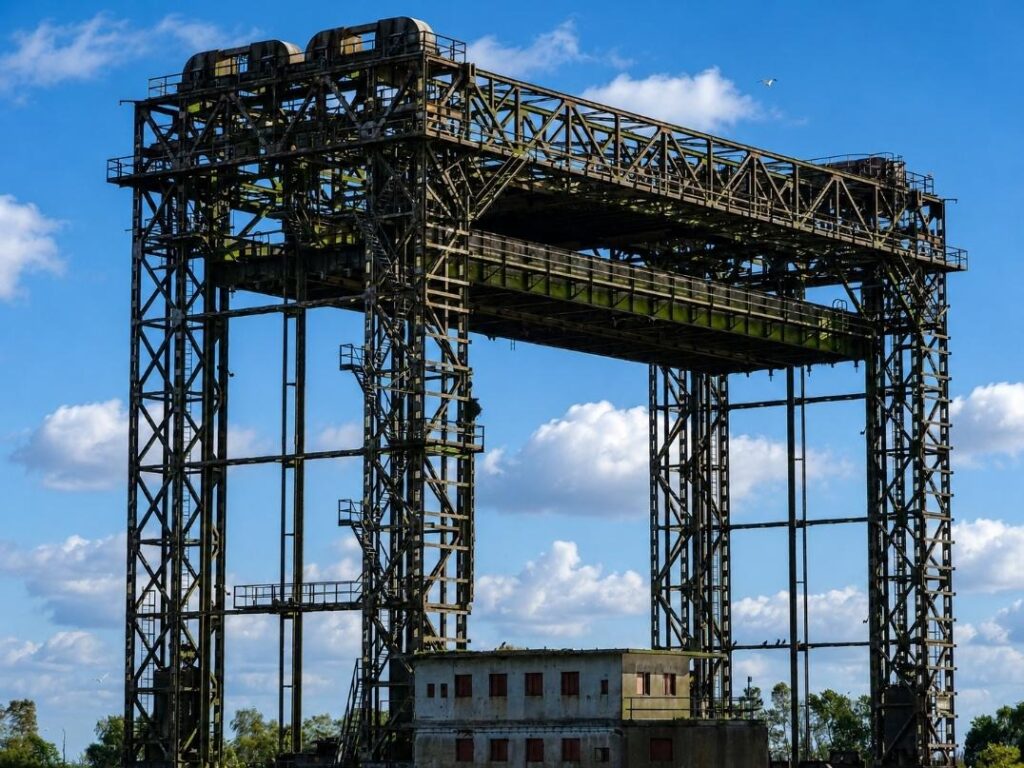
Similar, highly advanced engineering structures were also erected in other places in Pomerania. An outstanding achievement was the vertical-lift bridge (*Hubbrücke*) in Karnin, commissioned in 1933, which at the time was the most modern facility of its kind in Europe. By lifting its heavy central segment on large steel towers, this bridge ensured smooth train traffic to the island of Usedom, becoming one of the symbols of the technical power of the railway system of that era.
Soon, the entire railway infrastructure was to serve as a tool for Nazi Germany’s aggression against Poland in September 1939. The outbreak of the full-scale global conflict resulted in tourist passenger trains being replaced by grim troop trains painted in camouflage colors. Priority on the tracks was given to massive military transports moving soldiers and military equipment. As the war years passed, regular long-distance traffic for civilian citizens was almost completely frozen, and timetables were subject to the strictest guidelines dictated by military district commanders, including the command of the 2nd Military District in Szczecin.
The Pomeranian railway painfully felt the overload of this conflict. Thousands of experienced railwaymen from the Szczecin district were called up for military service, often directly into front-line military formations. As during World War I, staffing gaps in signal boxes, offices, and manual labor positions once again had to be filled by women, and subsequently also by thousands of prisoners of war and forced laborers. These people worked beyond their limits, often performing tasks in terrible weather conditions. A dark chapter in the history of the railway infrastructure of Western Pomerania from that time was the involvement of trains in the crimes of the regime—including the transport of prisoners to concentration camps, among them the transport of women forced into slave labor to the Ravensbrück camp.
The final, dramatic act of this history began with the severe winter at the turn of 1944 and 1945, when the skies over Pomerania were dominated by Allied aviation. Massive bombings of railway junctions, locomotive depots, and marshalling yards led to unimaginable destruction. A particularly tragic fate befell the ports of Sassnitz and Świnoujście at the beginning of March 1945, where heavy air raids reduced dozens of railway cars, ferries, and crane infrastructures used for loading rail transports to rubble, and most importantly—cost the lives of huge masses of civilian refugees from East Prussia, evacuated from the ports and gathered at that time in trains and on the quays. It is estimated that in Sassnitz alone, several hundred people died at that time, and twisted tracks heated by fires protruded from the ruins, resembling scenes from an apocalypse.
Faced with the rapidly advancing winter offensive of the Red Army, the previously efficient and massive railway directorate in Szczecin effectively ceased to function as a unified management body. The events of the final weeks consisted of a frantic and panicked flight of the population alongside desperate attempts to rescue personnel and property. In mid-March 1945, as the ring of the siege tightened around Szczecin and Soviet artillery shelled the southern districts of the city, the last director of the Szczecin railway, Wenzel, in agreement with the army command, issued an order for evacuation. Amidst the chaos of the retreat, the management personnel left the ruined directorate building, heading by special command trains to the Pasewalk area and subsequently, still pushed by the front lines, towards the vicinity of Greifswald. Using the surviving remnants of rolling stock, the decimated staff carried out evacuation operations for civilians and the wounded for as long as railway tracks—shattered by bomb strikes and machine-gun fire—allowed. Acts of immense courage and desperation occurred: entire trainsets were evacuated right under the eyes of Soviet tanks, and due to a lack of coal, locomotives were sometimes fueled with hastily chopped, raw wood.
When the war finally came to an end in May 1945, the former, vibrant lifeblood of Pomeranian railway power was completely destroyed. The infrastructure was ruined, hundreds of kilometers of tracks had been torn up or dismantled by Soviet troops, and monumental bridges and viaducts, such as the structure in Karnin, were partially or entirely blown up by the retreating Wehrmacht. In the summer of 1945, with the decisions of the Potsdam Conference and the transfer of Szczecin to Polish administration, the Reich Railway Directorate in Szczecin finally ceased to exist. Upon its wartime ruins, on both sides of the new border on the Oder and Lusatian Neisse, a completely new era in railway history began.
More:
Ryszard Burzykowski, Koleje wąskotorowe na Pomorzu Zachodnim, Rybnik: Eurosprinter 2019.
Jerzy M. Kosacki Kolej na Pomorzu Zachodnim 1945-1999, Szczecin: 1999
Kacper Pencarski