


Stoewer and others—automotive brands from Szczecin
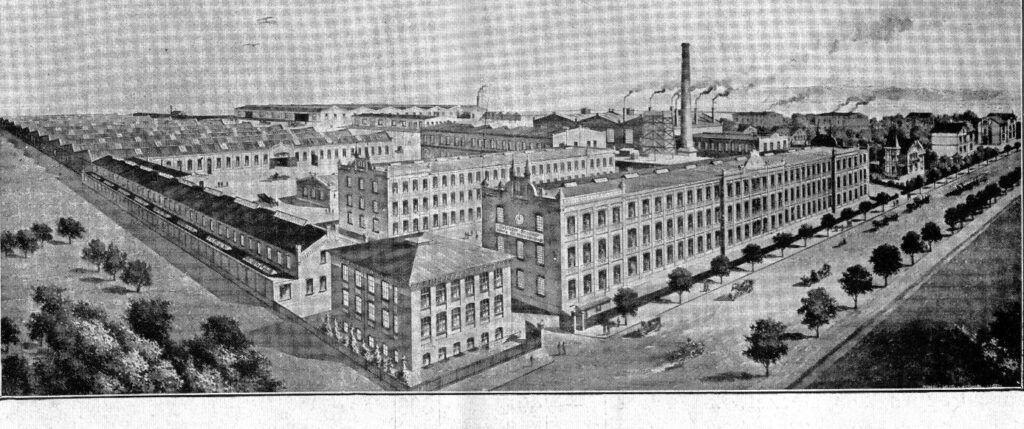
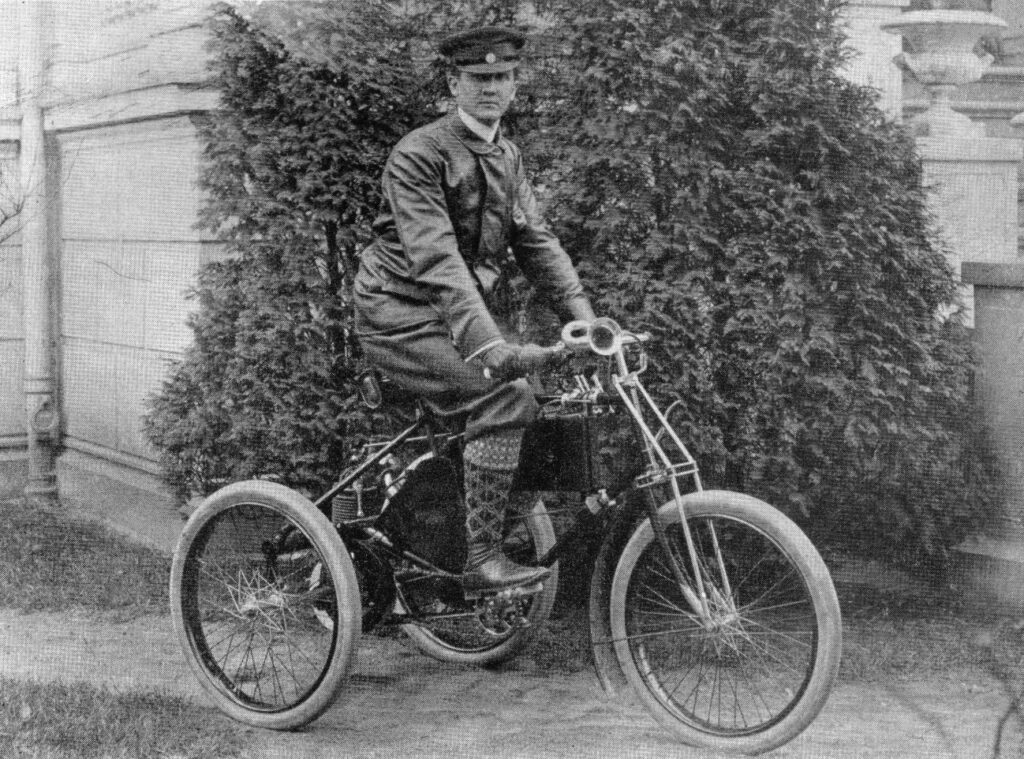
24-year-old Emil Stoewer and 22-year-old Bernhard Junior, having discovered the charms of the new invention that was motor-driven vehicles quite early on, set about convincing their father of the idea to start building mechanical vehicles based on bicycles—structures they knew intimately from being produced at the Stoewer company. The brothers began their first trials and experiments related to the design and construction of their first original vehicle, which featured a frame from their own bicycle factory and was equipped with a French De Dion-Bouton engine (240 cc).
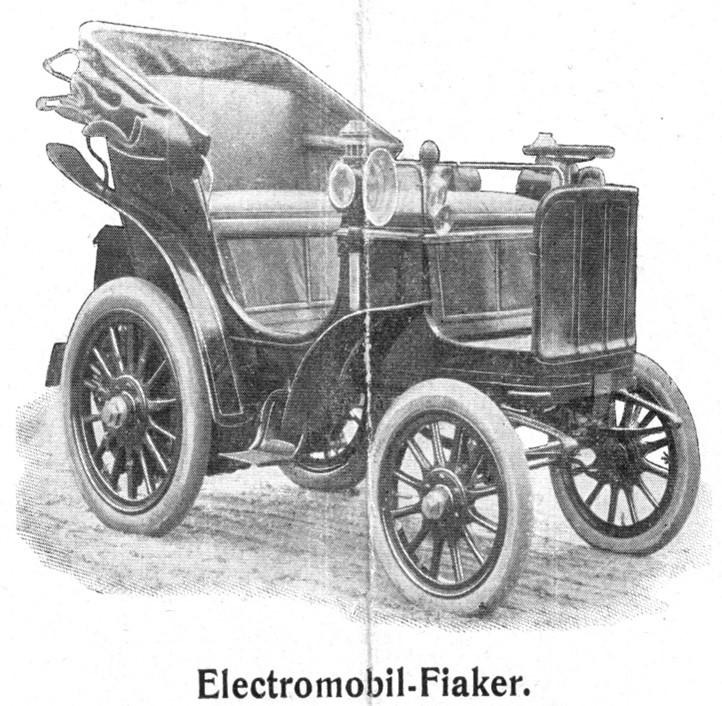
Alongside the production of the gasoline-powered car, the Stoewer brothers built their first electric car. Attempts to apply electric propulsion in the Stoewer brothers’ early vehicles also date back to 1899. Between 1899 and 1905, electric vehicles accounted for half of the Stoewer factory’s production. Out of the 32 types of vehicles produced at that time, as many as 22 were electric car versions. The factory’s sales catalog included luxurious (for those times) electric passenger cars as well as trucks, buses, taxis, fire engines, ambulances, and cabs.
However, in 1905, the production of electric vehicles was discontinued. The Stoewer brothers focused on combustion-engine vehicles, on which they continuously carried out design work. In 1901, the company launched its new serial model equipped with a two-cylinder internal combustion engine.
From 1900 onwards, the Stoewer brothers’ automobile factory offered passenger buses and trucks alongside passenger cars. The production momentum of this new generation of vehicles must have been significant, as by 1904 Stoewer was recognized as one of the major suppliers of passenger buses. A very significant event for this still young and developing enterprise was securing an order in 1906 to supply 200 double-decker buses with 4,600 cc engines for the County of London. In 1906, the Szczecin plant also introduced Germany’s first car with a 6-cylinder engine (the P6 model).
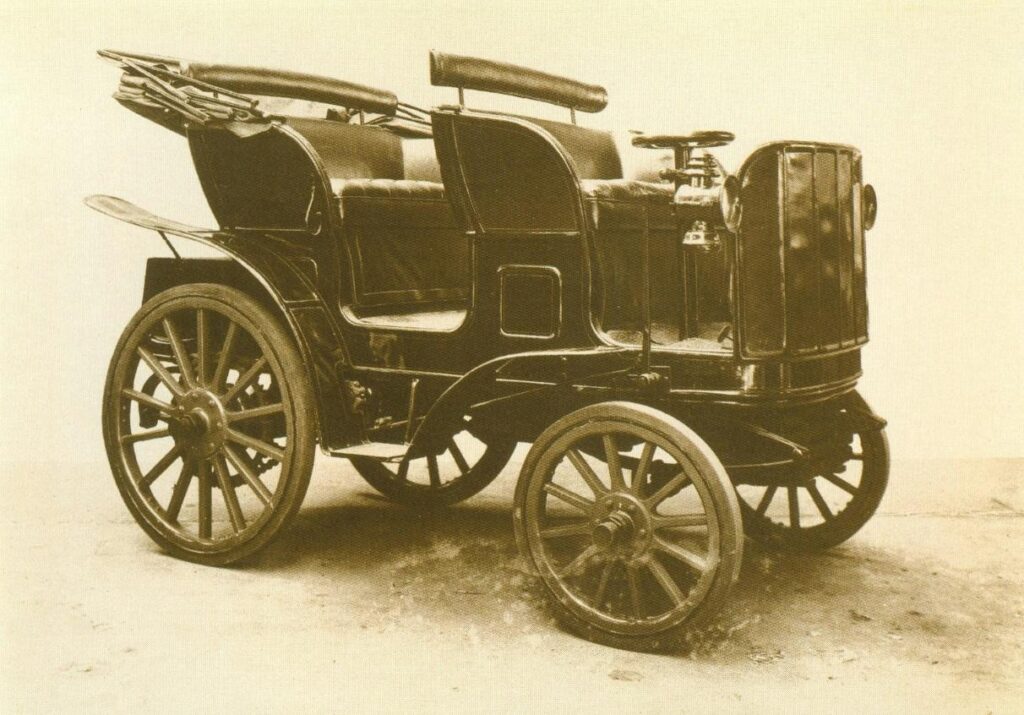
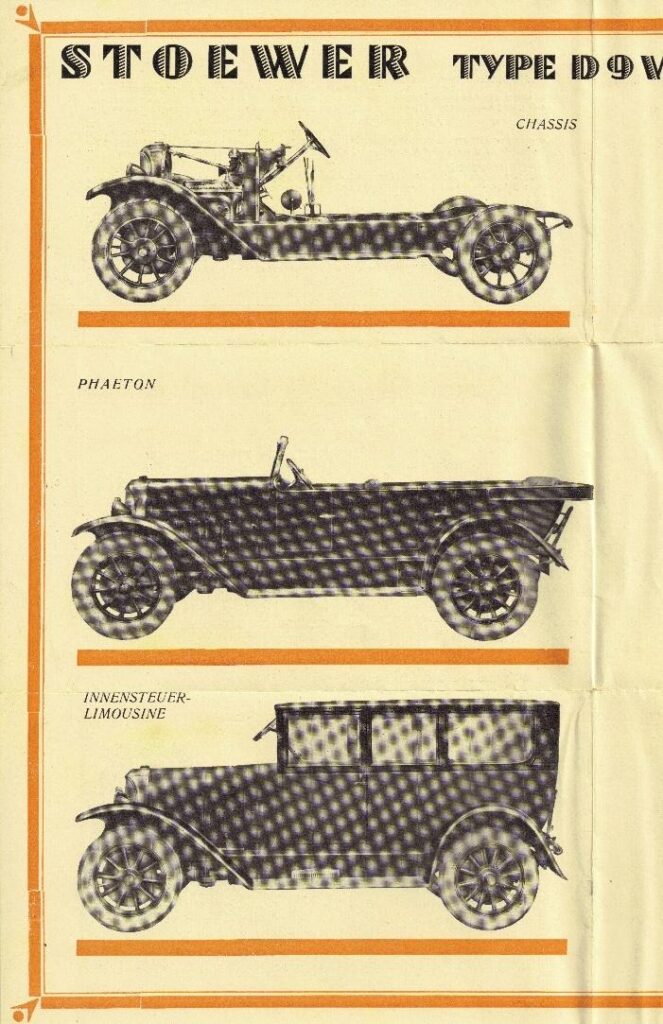
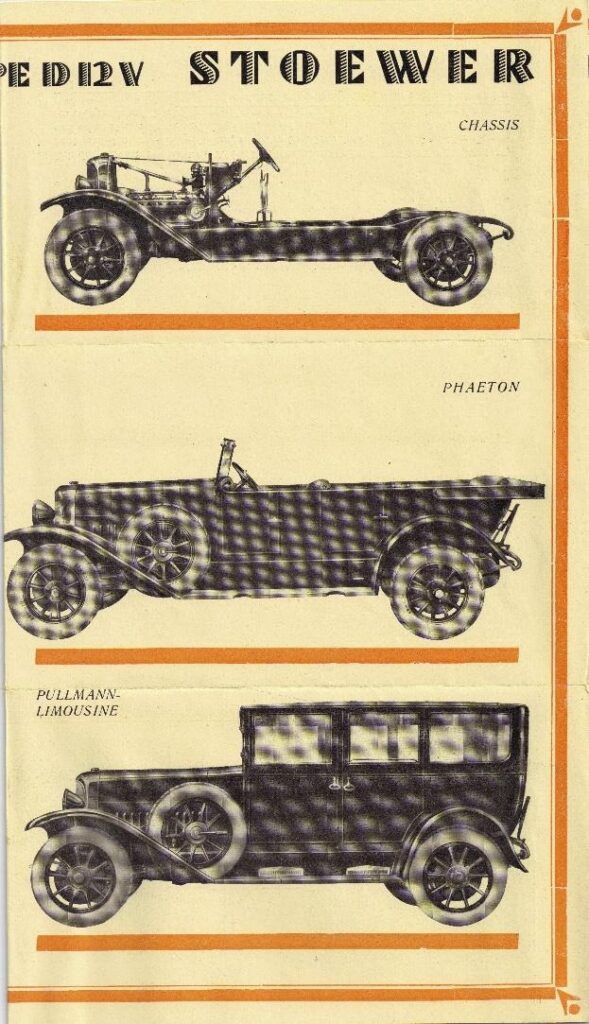
From the beginning of production, the Stoewer company offered various body design options for passenger vehicles as well as buses and trucks. One of the first vehicle price lists, from 1903, still included 21 body design variants for electric vehicles (passenger cars, trucks, and omnibuses) and 10 versions of gasoline-powered vehicles. A review of subsequent price lists, which no longer feature electric vehicles, indicates that several basic body styles were preferred. These were primarily the landaulet, phaeton, limousine (with a closed, folding, or roll-up roof), Pullman limousine, cabriolet limousine, cabriolet, a special sport version cabriolet, and cabriolet roadster.
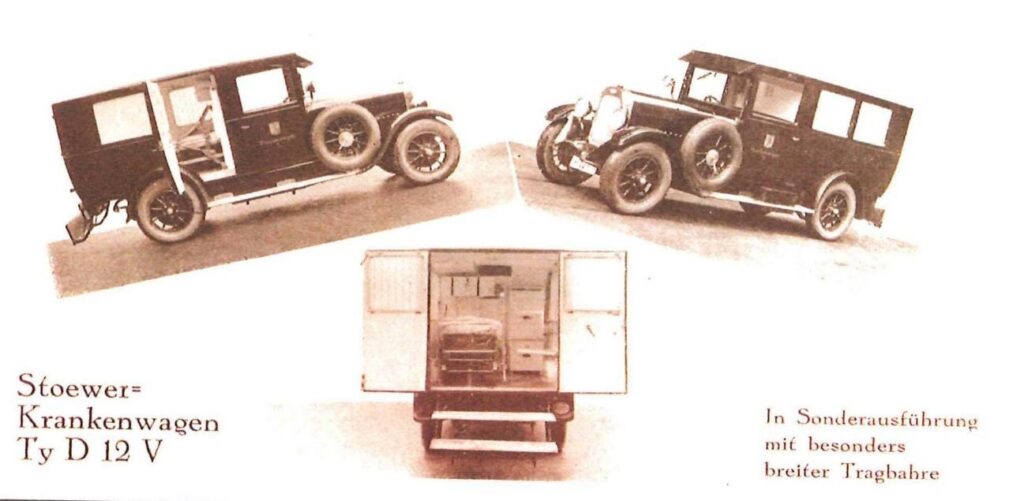
The evolution of the product range, including the abandonment of electric drive, may have been related to changing trends and customer tastes. On the other hand, the fact that too much variety in the offerings posed an excessive burden on the factory itself could also have played a role. A simple comparison to a restaurant can be applied here—the longer the menu, the more time is needed to prepare dishes, which generates higher expenses for purchasing materials and subsequently requires more space for gathering and storing all the necessary products. Some of the Stoewer passenger vehicles produced also had versions adapted to the needs of various types of special tasks, such as uniformed services and ambulances.
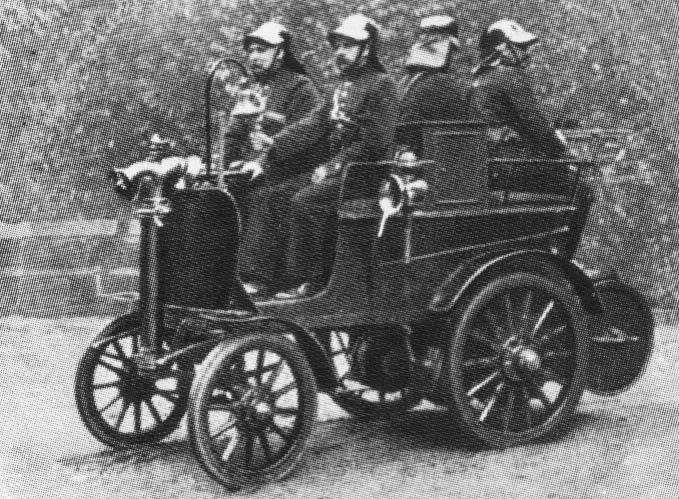
The pursuit of product versatility was also a testimony to the ability to efficiently adapt the factory’s production cycle to various customer requirements. In 1905, at the International Motor Show in Berlin, among 10 presented vehicles of various types, Stoewer showcased a 4-seater vehicle still equipped with an electric drive, designed for the needs of the fire department (likely the only serial model of an electric firefighting vehicle from the Stoewer factory).
Stoewer vehicles had several versions as practical or utility cars. Alongside transport versions (e.g., with a closed cargo box), ambulance vehicles for transporting the sick, small taxi versions of Stoewers also rolled off the assembly line. Until 1925, an important segment of the factory’s production consisted of trucks and buses. The company also boasted a range of various special vehicles built on the basis of its truck designs. Truck production intensified during the First World War due to orders for trucks for military needs. In total, between 1897 and 1925, 2,190 trucks (electric and combustion-engine powered) left the factory halls.
The design of Stoewer trucks also allowed for the construction of various versions of omnibuses for urban public transport and intercity transport based on them.
When, after the end of World War I, the continued production of aircraft engines for military needs became impossible, the factory halls and machinery park were used to launch the production of a new type of vehicle – a motor plow, a multifunctional vehicle for carrying out field work as well as transport. The Stoewer plow was a versatile machine, adapted for work on medium-sized farms. The machine could also be used as a portable steam engine to drive stationary machinery, such as threshers, chaff cutters, grain cleaning machines, etc.
Like the owners of many other automotive companies, the Stoewer brothers appreciated the importance of advertising the quality of their vehicles in extreme situations. A way to test and present the parameters of the manufactured vehicles was through participation in races, rallies, and reliability trials. The list of rallies, races, reliability trials, and beauty contests in which Stoewer cars competed—frequently taking top positions—is long and covers over 110 various types of events between 1905 and 1939.
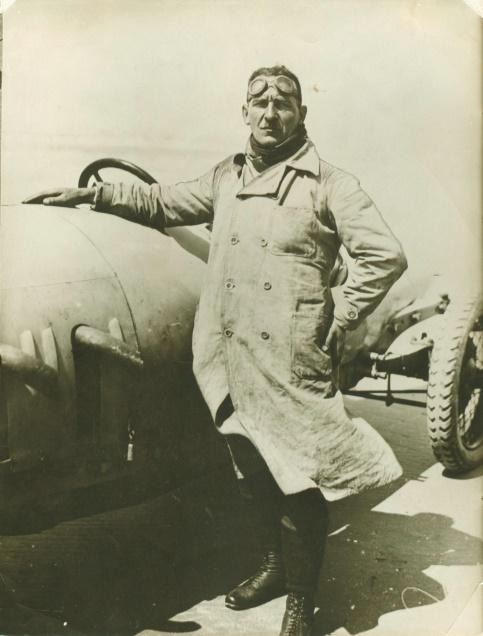
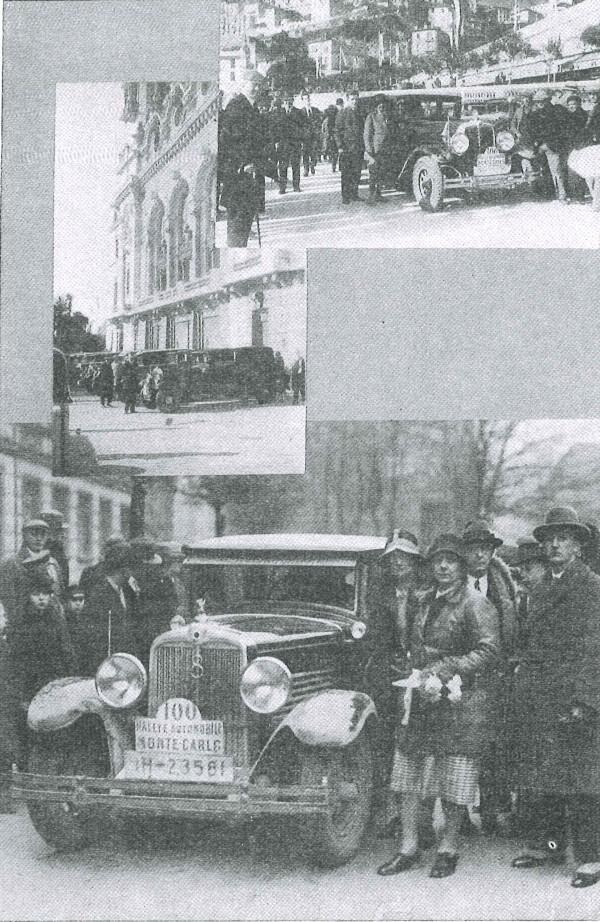
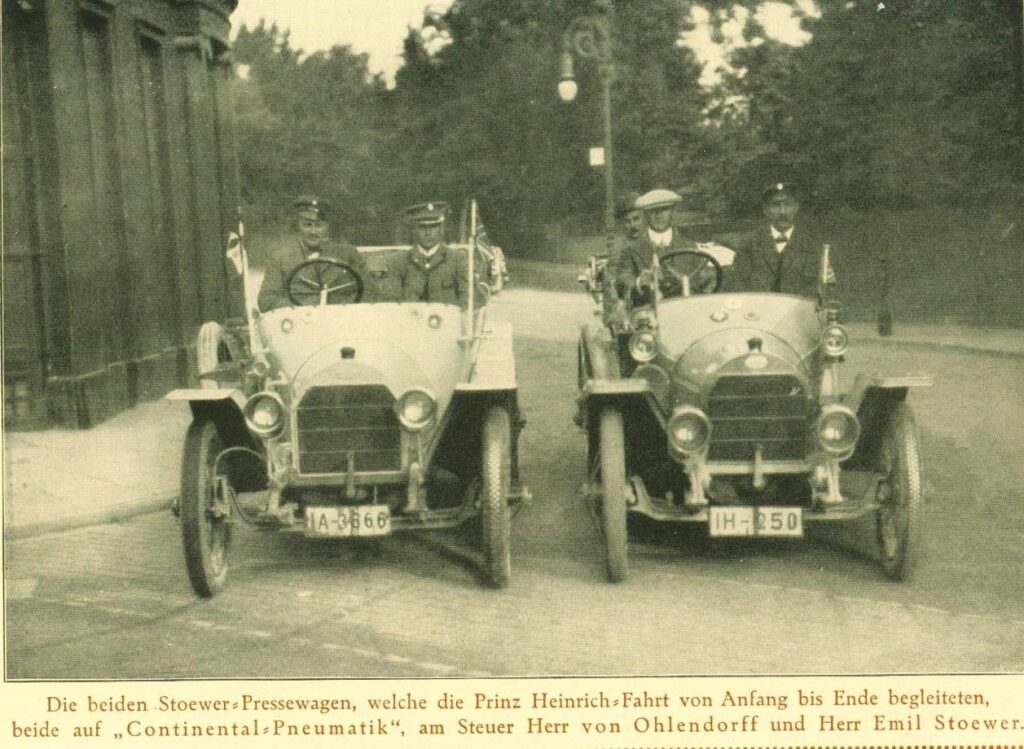
Stoewer cars could be seen on the routes of both classic domestic rallies (such as ADAC rallies, the Prinz-Heinrich-Fahrt—the precursor to the German Grand Prix) and the Herkomer Fahrt (one of the oldest German automobile rallies). Stoewer cars also participated in numerous foreign rallies (Lorraine, winter rallies in Sweden and Finland, the Monte Carlo Rally, and the Paris–Nice rally). On many occasions during these rallies, both Stoewer brothers personally sat behind the steering wheel. In most of the rallies and reliability trials, mass-produced Stoewer brand cars took part.
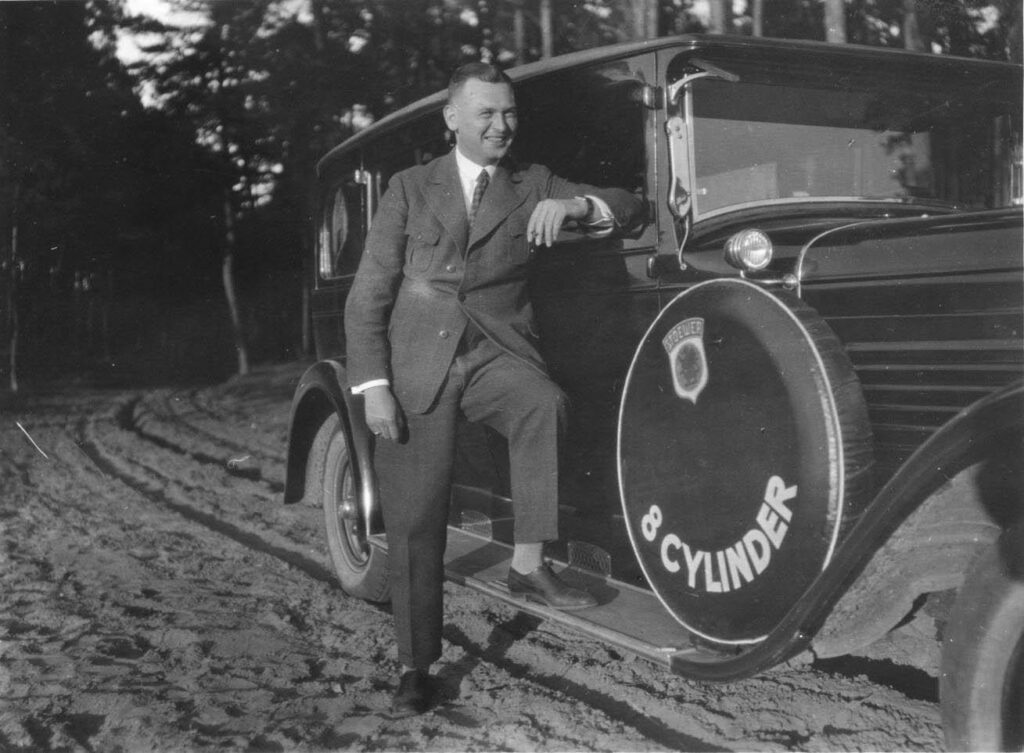
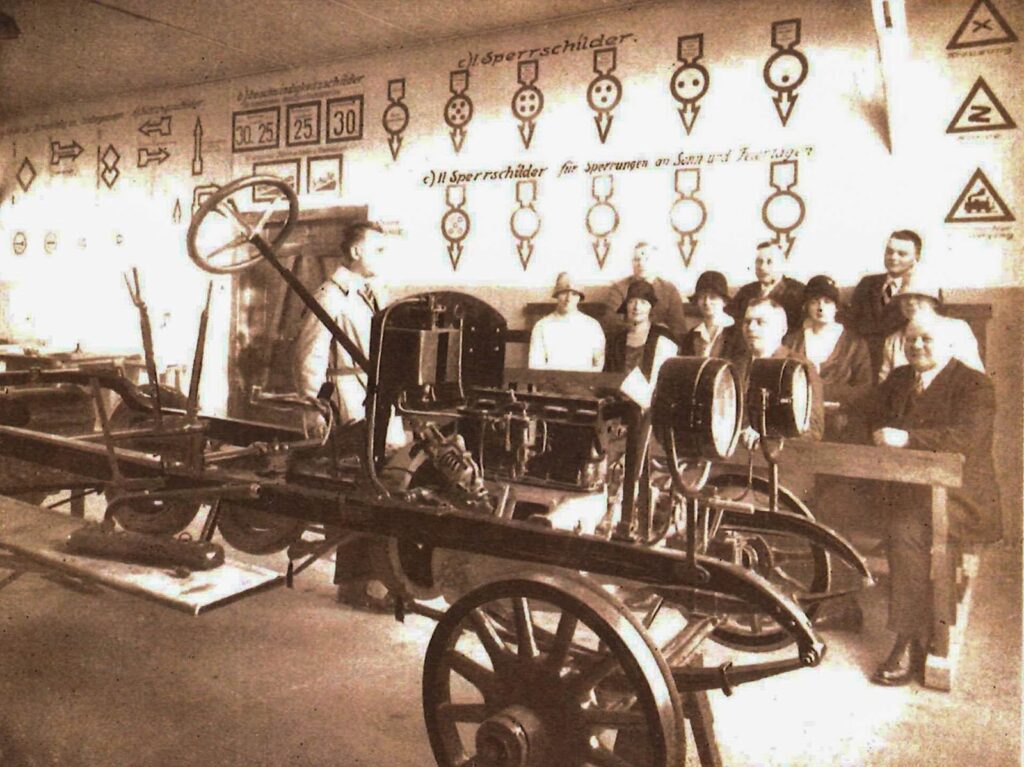
Out of concern for its customers, the Stoewer company, in addition to comprehensive information on the principles of ongoing operation of the offered vehicles, also offered them free courses and training in vehicle handling and driving lessons. This applied to passenger cars as well as trucks and motor plows. Training sessions for companies were also conducted.
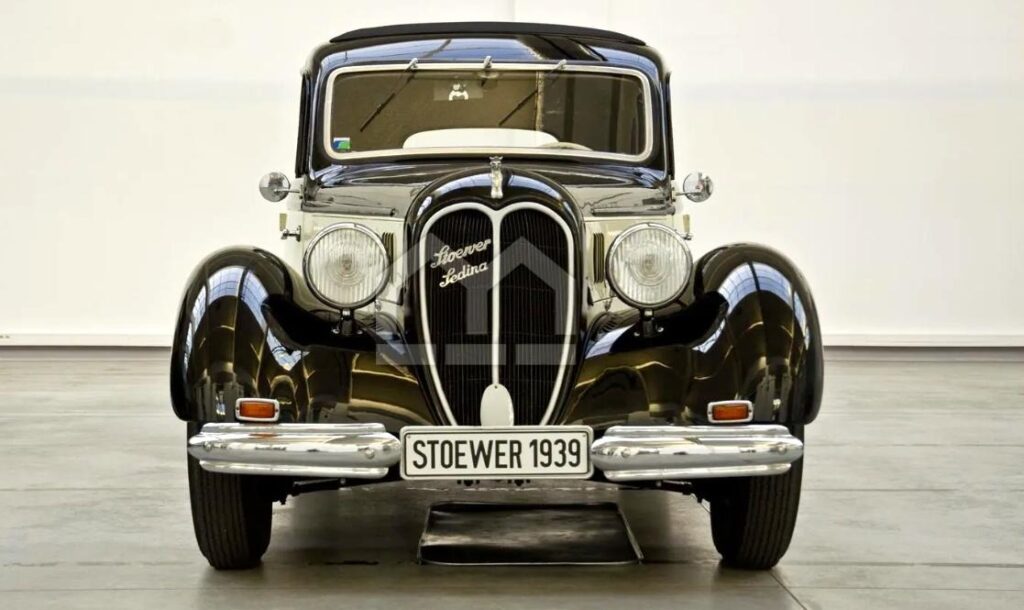
Despite the rapid and dynamic growth of “Auto-Stoewer-Werke”, the Stoewer brothers’ company faced serious problems on several occasions. The banking crisis that occurred in mid-1931 caused a sharp economic downturn in the German economy, which had catastrophic consequences for the entire automotive industry. Stoewer also had to bear the consequences. The company subsequently filed for a composition proceeding, which was initiated on January 9, 1932, before the district court in Szczecin. The composition proposal was accepted by the majority of creditors, but General Director Emil Stoewer had to leave the enterprise. The creditors intended to appoint their own representative to the position of commercial director. As a result, in November 1932, Emil Stoewer left the enterprise he had co-founded. Meanwhile, Bernhard Stoewer came into conflict with the leadership of the NSKK (Nationalsozialistisches Kraftfahr-Korps), who believed that front-wheel-drive cars were unsuitable for off-road driving and therefore unfit for use in the Reichswehr, and should be rejected. This meant that Bernhard Stoewer no longer found sufficient support for his model policy (front-wheel drive) on the supervisory board, which had in the meantime come under the control of the NSDAP. In 1934, he left the Stoewer factory.
In the 1930s, the factory’s production became increasingly tied to military orders. In 1934, a branch of the Stoewer factory producing aircraft engines was established in Załom. From 1937 onwards, it was already an independent plant operating under the name “Pommersche Motorenbau GmbH” (Pomeranian Engine Manufacturing Company), which functioned until the end of World War II. After the outbreak of the war, the automobile factory on Falkenwalder Straße adapted its production to meet the needs of the Wehrmacht. Between 1939 and 1940, around 2,000 Geländewagen R200 off-road vehicles (powered by 60 hp engines) and about 500 motorcycles equipped with two iron tracks instead of a rear wheel (the Kettenkraftrad HK 101, powered by 36 hp engines, built under NSU license) rolled off the assembly lines. The end of the war brought an end to the history of the factory in the form created by its founders.
More:
Bogdana Kozińska, Rozwój przestrzenny Szczecina na początku XIX wieku do II wojny światowej, Szczecin: Stowarzyszenie Historyków Sztuki Oddział Szczeciński, Muzeum Narodowe w Szczecinie 2002
Hans Mai, Stoewer Automobile 1896-1945, Vom Einzylinder zum Achtzylinder, Preuß, Darmstadt: Verlag Günter Preuß 1999
Hans Falkenberg, Stoewer, Automobile aus Pommern, Historischer Arbeitskreis der Stadt Stettin, Kiel 1986
Gerhard Maerz „Die Geschichte der Stoewer-Automobile Gebundene Ausgabe”, 1983 r.
Andrzej Wojciech Feliński