


The Griffin Dynasty, 1523–1637
Dynastic policy
The reign of Duke Bogusław X, who died in 1523, was a turning point—a transition from the medieval monarchy to the modern state and Renaissance culture (also in its political dimension). He had nine legitimate children: Christopher (d. c. 1521), Anne (b. 1491/1492, d. 1550), George (1493–1531), Casimir (1494–1518), Elizabeth (d. before 1518), Sophia (c. 1500–1568), Barnim (c. 1500–1501), Barnim again (1501–1573), and finally Otto (1502/1503–1518), as well as an illegitimate son, Joachim (d. c. 1549). After Bogusław’s death in 1523, the oldest living son, George I, was the natural heir. The duke was married twice; from his first marriage to Amalia of the House of Wittelsbach, he had a son, Philip (1515–1560), who will be discussed later. Following the death of George, who ruled for barely eight years, a re-division of the Duchy into the Szczecin and Wołogoszcz parts occurred.
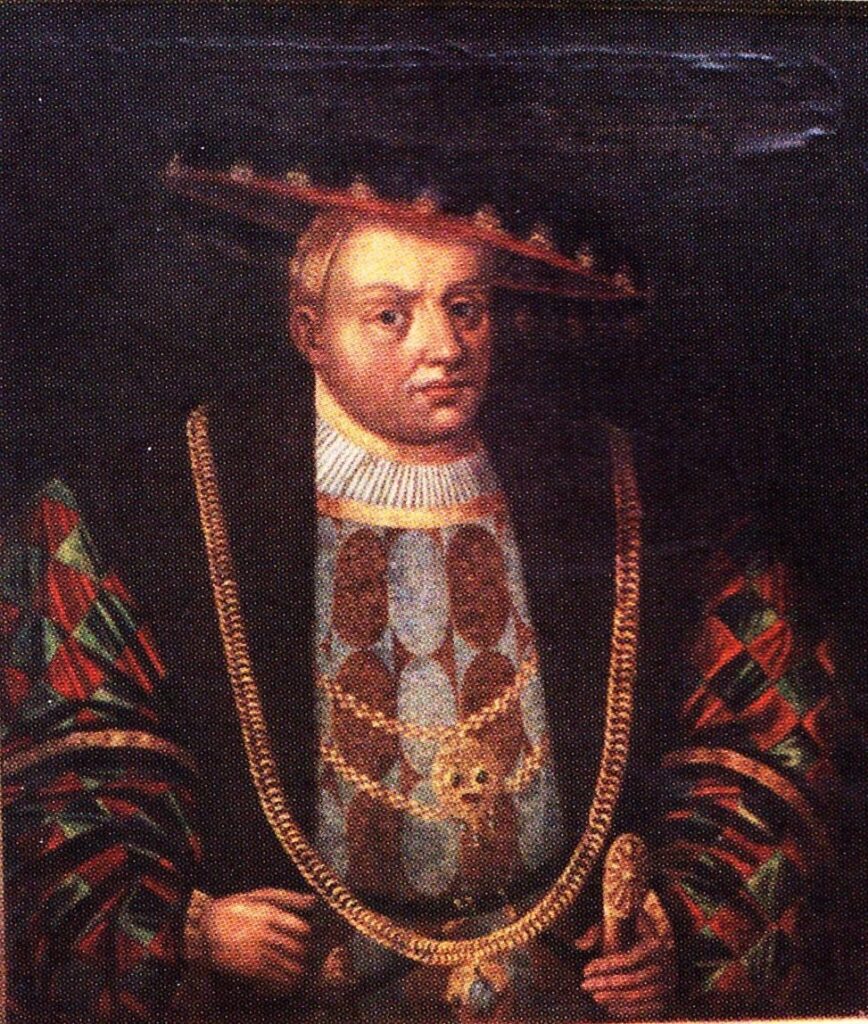
As a result of drawing lots, both parts of the Duchy were assumed by: the Szczecin part by Barnim IX the Old (also referred to in historiography as XI; he had already ruled during the last two years of George I’s reign), while the Wołogoszcz part was taken by the aforementioned Philip I the Pious. From then on, until the reunification under Bogusław XIV in 1625, we are dealing with two parts of the Duchy (de facto with two duchies): the Duchy of Szczecin and the Duchy of Wołogoszcz.
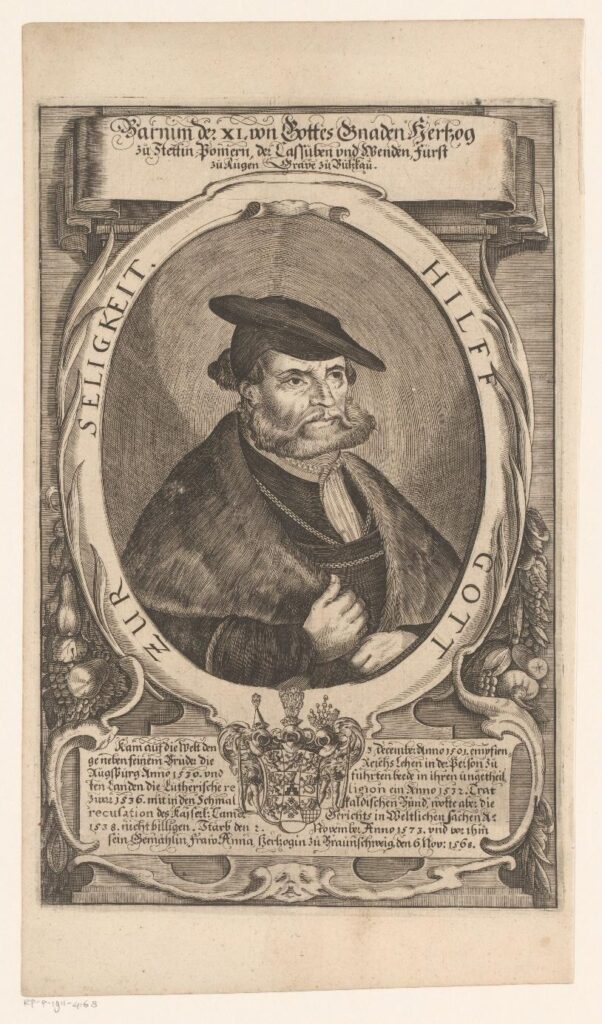
Linia szczecińska przedstawiała się następująco. Po śmierci Barnima IX (XI) w 1573 rządy przejął Jan Fryderyk, syn księcia Filipa I. Jego następcą na Szczecinie został jego brat Barnim X Młodszy, który panował jednak tylko 3 lata. Następnym panującym, jednak ledwie kilka tygodni, był kolejny syn Filipa I – książę Kazimierz VII (tylko w 1603). Po jego rezygnacji kolejne trzy lata to rządy Bogusława XIII, którego następcą w 1606 został Filip II Pobożny. Po jego śmierci w 1618 rządy (na dwa lata) przejął jego brat Franciszek, a następnie ostatni z Gryfitów na książęcym tronie – Bogusław XIV. Za jego rządów Księstwo Pomorskie ponownie zostało zjednoczone (1625), jednak splot niekorzystnych okoliczności – bezpotomna śmierć, wojna trzydziestoletnia i panowanie Szwedów na Pomorzu – sprawił, że Księstwo upadło i w ten sposób po 500 latach zakończył się okres pomorskiej państwowości i istnienia samej dynastii.
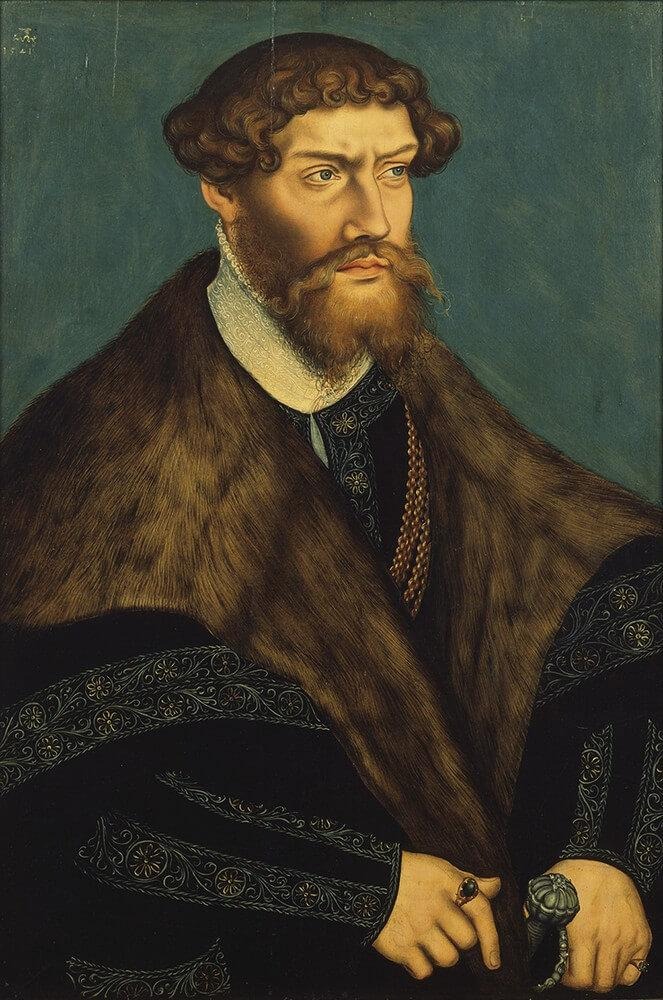
In turn, in the Duchy of Wołogoszcz, following the death of Philip I (1560), the throne was assumed by his son, John Frederick, who ruled jointly with his brother Bogusław XIII until 1569, when he took over the Duchy of Szczecin. Duke Bogusław XIII did not formally assume control of the entire Duchy of Wołogoszcz, but only its western stretches. The throne in Wołogoszcz was taken by his brother Ernest Louis, who ruled until 1592. He was succeeded by his son, Philip Julius, over whom, due to his minority, guardianship was exercised by his uncle—Bogusław XIII. Philip Julius was the last independent Duke of Wołogoszcz; after his death in 1625, both parts were reunited in the hands of his cousin, Bogusław XIV.
The complex history of divisions and inheritance outlined above sketches the fate of the Griffin state only within a general framework. For not all members of the lineage inherited; we must also remember the duchesses and princesses, whose role was often significant and influenced both dynastic and international politics. Additionally, the clarity of the situation is complicated by internal (administrative) divisions, including the separate Bishopric of Kamień, the Lębork-Bytów fief, and other areas, sometimes possessing a semi-independent status. Younger princes frequently received such endowments while preparing for independent rule, or could treat them as a source of income in the event of a low probability of ascending the ducal throne in Szczecin or Wołogoszcz. The scheme below organizes this—perhaps—complex knowledge:
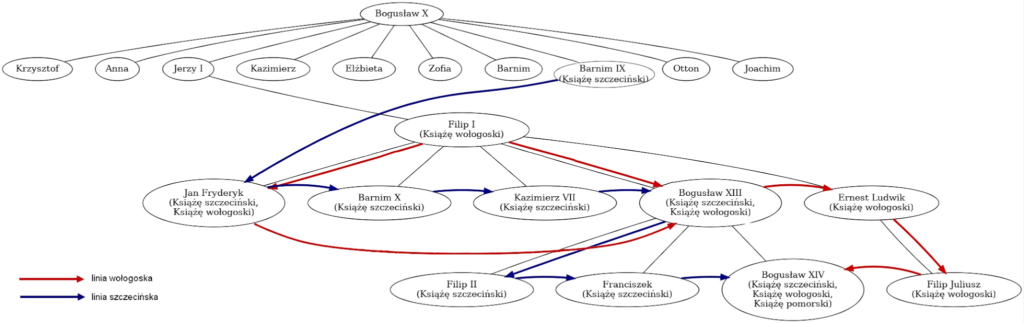
The Szczecin line
Barnim IX (XI) 1523–1573 -> Jan Fryderyk 1573–1600 -> Barnim X Młodszy 1600–1603 Kazimierz VII 1603 -> Bogusław XIII 1603–1606 -> Filip II 1606–1618 -> Franciszek 1618 – 1620 -> Bogusław XIV 1620 – 1637
The Wołogoszcz line:
Filip I 1523–1560 -> Jan Fryderyk i Bogusław XIII 1560–1569 -> Ernest Ludwik 1569–1592 -> Filip Juliusz 1592–1625 -> Bogusław XIV 1625–1637
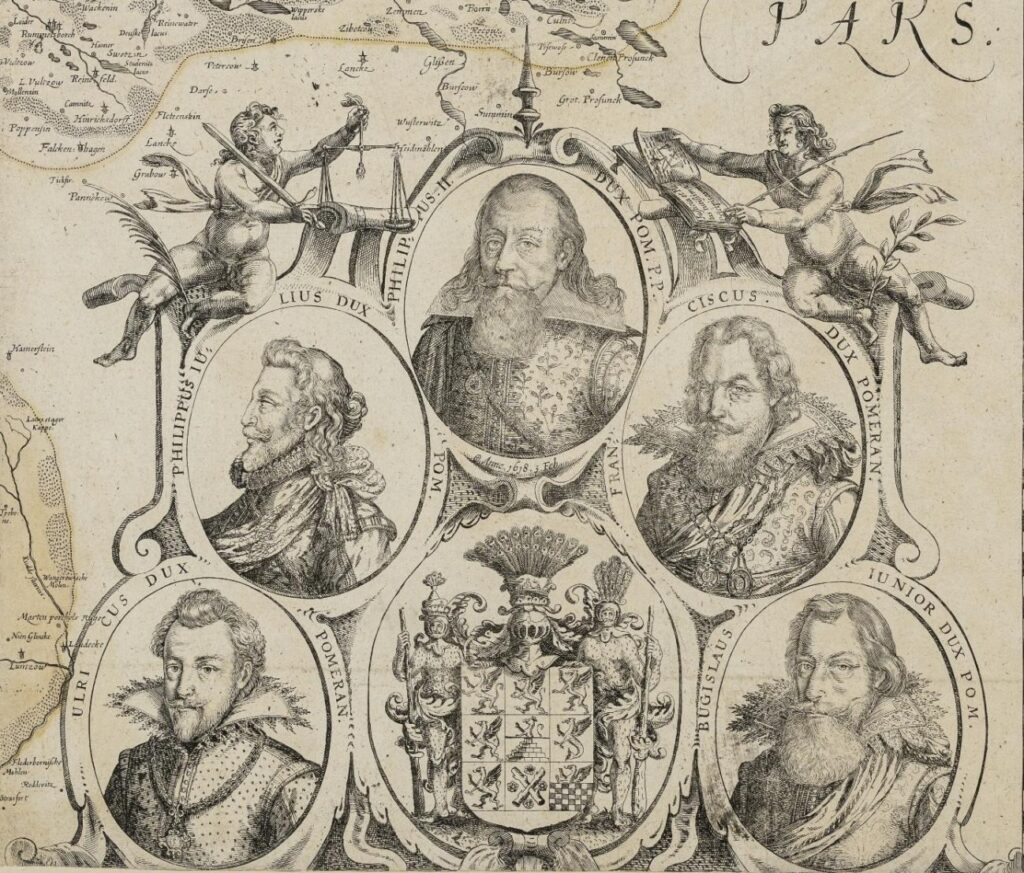
The connections of the Griffins with other ruling houses and dynasties in Europe were also highly significant. The Hohenzollerns of Brandenburg come to the fore, but among the spouses of Pomeranian princes and princesses, we also note families from Silesia, the distant Palatinate (the Wittelsbachs), Schleswig-Holstein, Brunswick-Lüneburg, the Saxon Wettins, and the Dukes of Mecklenburg. Ultimately, the ties with Poland under the last Jagiellonians and the first elected kings loosened during this period. Such extensive marital contacts, focused on the Reich, served not only to forge political alliances but also to elevate the dynasty’s prestige, which was grounded in family relations.
The childless death of Bogusław XIV did not de facto mean the immediate end of the lineage. The duke’s sister, Anne, who had married Duke Ernest von Croy, was still alive. Her only son, Ernest Bogislaw von Croy, was therefore a descendant of Philip I through the female line; one can hypothetically assume that under favorable circumstances, he would have become Bogusław XIV’s successor. Unfortunately, the war and the political weakness of the last Griffin caused matters to take a different direction…
Domestic and international policy
The matters related to the religious breakthrough in Pomerania, which occurred after the death of Bogusław XIV, were discussed in a separate essay. At this point, it should only be mentioned that the adoption of Lutheranism as the ruling religion in the Duchy stimulated the development of science and art, thanks to which, from the second half of the 16th century, we can speak of a ‘golden age’ of Pomeranian culture. The dukes became the primary and most important patrons, drawing models from Western Europe. Such projects as the reconstruction of the ducal castle in Szczecin, initiated during the reign of John Frederick, the construction of Philip II’s Kunstkammer, and the commissioning of the great map of the Duchy from Eilhard Lubinus are but a few of the initiatives that built the splendor of the rulers.
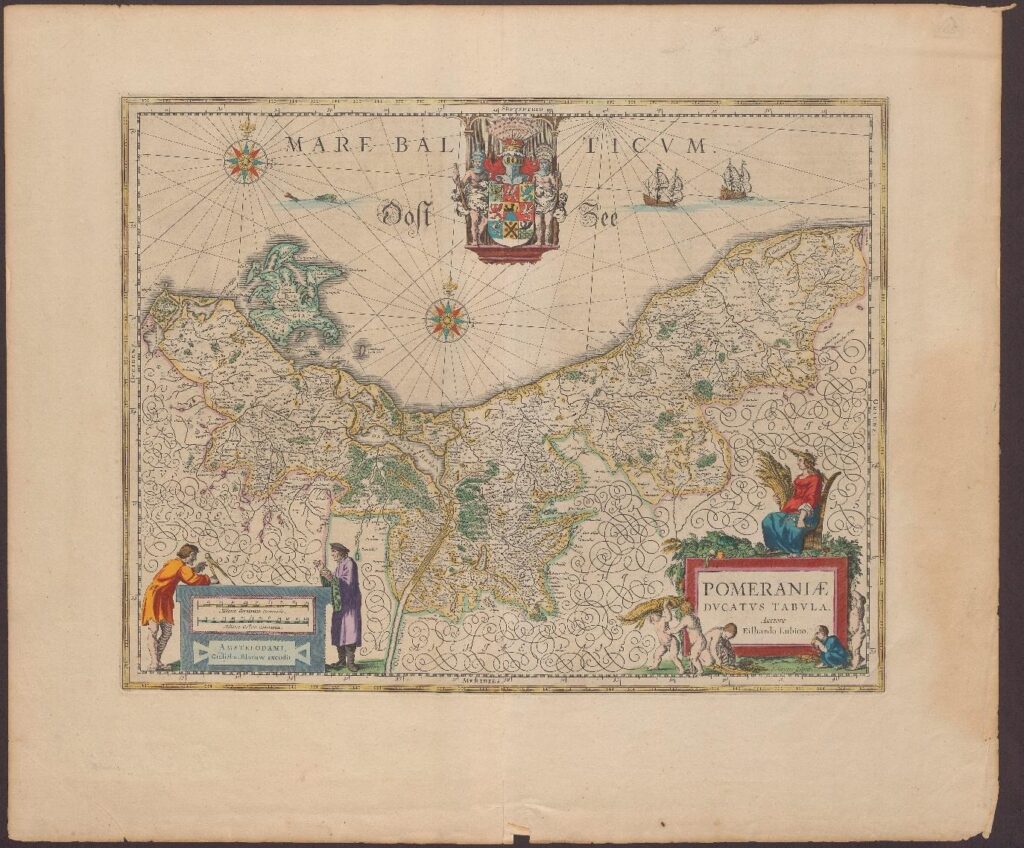
The interests and broad horizons of the dukes during this period were fostered by numerous travels, including the Grand Tours they undertook across almost the entirety of Western Europe, as well as visits to universities. Along with stays in other countries, their experience, contacts, and… collections grew, becoming an indispensable element for building the position of a modern and enlightened ruler, while simultaneously allowing them to overcome the geographic and cultural peripherality of Pomerania. This period is well documented by the permanent exhibition ‘The Golden Age of Pomerania’ at the National Museum in Szczecin.
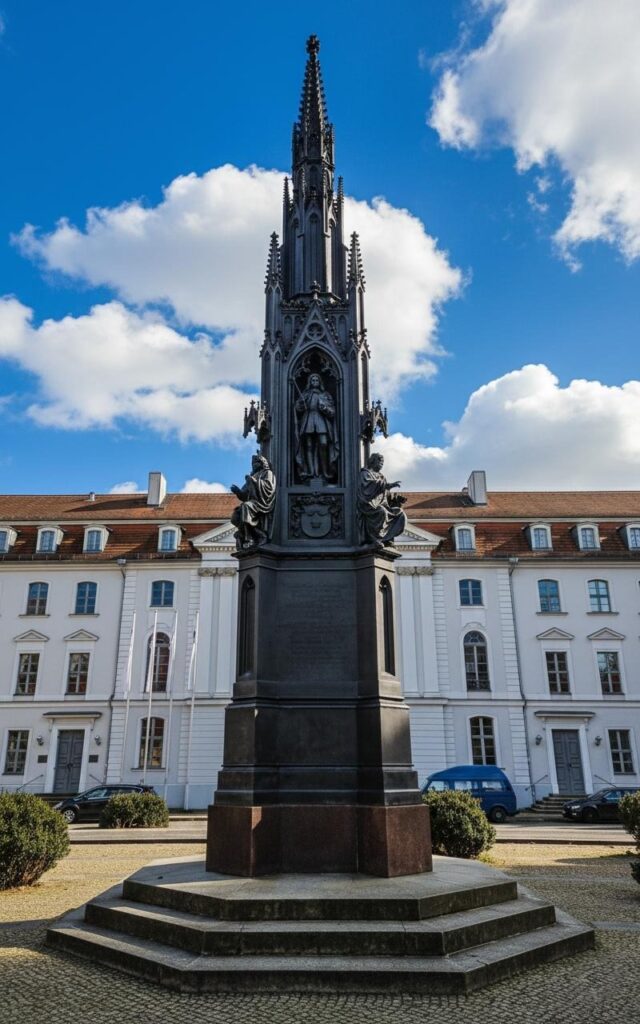
Istotnymi instytucjami budowania pomorskiej tożsamości były dwie placówki naukowe i edukacyjne: uniwersytet w Greifswaldzie, założony w 1456 roku oraz Pedagogium Książęce w Szczecinie (1544). Wokół tego ostatniego toczyły się dyskusje na temat jego charakteru; projektowano je nawet jako uniwersytet, ewentualnie miało zastąpić podupadłą akademię greifswaldzką. Ostatecznie przybrało charakter szkoły „półwyższej”. Na mapę Pomorza po przyjęciu reformacji należy nałożyć całą siec szkół elementarnych, wiejskich i – przede wszystkim – miejskich. W tych ostatnich, zwanych łacińskimi, musiało uczyć przynajmniej dwóch nauczycieli (na wsiach z reguły był jeden). W 1563 roku liczba szkół miejskich wzrosła do około 30, przy czym uczono tam w kilku klasach i robiła to większa (niż zalecanych minimum dwóch) liczba nauczycieli. Program nauczania był ściśle związany z nową religią. Oprócz szkół łacińskich, „koncesjonowanych”, istniały także tzw. szkoły niemieckie, o niższym statusie, działające czasami bez, a czasami z koncesją władz miejskich.
***
Throughout nearly the entire period under discussion, two centers of power existed in Pomerania—the courts in Szczecin and Wołogoszcz. Gradually, the structure of the division of power and the competencies of individual offices crystallized, focusing primarily around the ruler, yet with a clear distinction between court and state administration. The most important office at the ducal court, which in both cases numbered approximately 200 people, was the marshal, who was primarily responsible for the organization and functioning of the duke’s immediate entourage. The ducal chancellery, headed by a chancellor, operated separately; its competencies included international and domestic affairs, court administration, court justice, and fiscal matters.
The court of justice (sąd nadworny) served as the central judicial body. With limited possibilities of appeal to the Imperial Chamber Court (Reichskammergericht), it constituted the highest legal authority in both duchies (excluding the Bishopric of Kamień). Appeals against judgements of lower courts—municipal, castle, and landvogt courts—were brought before it. In certain cases (concerning the nobility and municipal patriciate), it could simultaneously act as a court of first instance.
Najwyższym urzędnikiem skarbowym był rentmistrz krajowy. Początkowo podlegały mu dochody zarówno książęce jak i krajowe, natomiast z czasem jego kompetencje zostały ograniczone do kasy „rządowej” oraz prywatnej szkatuły księcia. Mimo tego ograniczenia, sekularyzacja dóbr kościelnych po przyjęciu reformacji wzmocniła dochód państwowy, zatem i rola rentmistrza wzrosła. Sam Kościół na Pomorzu, wraz ze zmianą wyznania, został całkowicie podporządkowany książętom, którzy byli także tytularnymi biskupami kamieńskimi. Na jego czele stał superintendent, a funkcjonowanie, uposażenie i organizację określały kolejne ordynacje kościelne. Zmiany te doprowadziły nie tylko do wzmocnienia skarbu i utworzenia Kościoła „państwowego”, ale także nowego podziału terytorialnego – liczba domen wzrosła o 11 (do łącznej liczby 25, do których należy doliczyć kolejnych 6 w księstwie kamieńskim).
During this period, and particularly in its second half, a further strengthening of the role of the Pomeranian estates occurred, especially that of the nobility. This would have tragic consequences during the Thirty Years’ War, when the defense of the Duchy largely depended on the attitude of the levée en masse summoned by the duke and the self-taxation of the nobility for war purposes. The source of the political and economic power of this social group was the intensive development of the manorial-serf economy, which was reinforced following the secularization of church property. The rise in the significance of the nobility took place at the expense of the autonomy of towns, particularly medium and small ones, which was further compounded by the loosening of ties with the Hanseatic League, then losing its importance. The largest of them, primarily Stralsund, retained relative independence, while the residential towns—Szczecin and Wołogoszcz—held somewhat less. As a rule, the interests of a town abroad were represented by the duke himself.
***
A relatively long period of peace, free from conflicts with neighbors, allowed for a focus on domestic affairs and the settlement of relations with the southern neighbor—Brandenburg.
Following the wars waged by Bogusław X in the previous century, relations with the Brandenburg Hohenzollerns steadily improved. Still during Bogusław’s time, the Pomeranian-Brandenburg treaty was signed in Pyrzyce (1493), according to which Brandenburg renounced its feudal suzerainty over Pomerania, in exchange for which the electors received the right of inheritance in the Duchy in the event of the extinction of the Griffins. The terms were reaffirmed in Grimnitz (1529), a treaty (ratified by the emperor) in which the electors were granted the right to style themselves Dukes of Pomerania. Ultimately, following the almost simultaneous deaths (1571) of the co-rulers in Brandenburg, Elector Joachim II and Margrave John (who ruled only in the New March), a meeting took place in Choszczno in 1572 between Duke John Frederick and Elector John George, resulting in the signing of another mutual inheritance treaty (a so-called survivorship agreement). It confirmed the Hohenzollerns’ right to Pomerania in the event of the Griffins’ extinction, while the latter had the right to assume control of the New March if the Hohenzollern dynasty died out (sanction from the emperor was required to take over the Electoral March). This issue arose on the diplomatic stage several more times (1598, 1601, 1609, 1620), but these talks merely confirmed the previously concluded agreements. They became the basis for Brandenburg claims after 1637, when the problem of the Duchy’s future emerged following the childless death of Bogusław XIV.
Kolejną konsekwencją poprawy wzajemnych stosunków pomorsko-brandenburskich była próba uregulowania żeglugi warciańsko-odrzańskiej, w którym to procesie aktywnie uczestniczyła również Rzeczpospolita. W 1618 roku, w nowomarchijskim Trzebiszewie doszło do podpisania stosownego dokumentu między Brandenburgią a Polską, który ułatwiał handel m.in. zbożem, jednak nie kończył definitywnie walki gospodarczej między Szczecinem a brandenburskim Frankfurtem, który posiadał prawo składu.
Ważnym wydarzeniem dyplomatycznym, które potencjalnie mogło wzmocnić międzynarodową pozycję Pomorza, był zorganizowany w Szczecinie tzw. Kongres Pomorski (1570), na którym dyplomaci państw basenu Morza Bałtyckiego mieli dokonać pacyfikacji po I wojnie północnej. Choć Pomorze miało stać się ważnym podmiotem polityki międzynarodowej i jednocześnie arbitrem, poza zrujnowaniem finansów państwa niewiele dobrego z tego wydarzenia wynikło. Zagadnienie to również zostało omówione w osobnym eseju.
***
The years between the death of Bogusław X and the childless death of Bogusław XIV were a period of intense change and an exceptional flourish of the culture of the Duchy of Pomerania. Numerous reforms took place, including, above all, the change of confession, which brought about a strengthening of the princes’ position and unprecedented investments in education, science, and art. The activity of native creators should also be mentioned: chronicles of Pomerania and Szczecin were written, some of which were published in print (also with illustrations), the history of the Pomeranian Church was compiled, the first ducal printing houses with an ever-expanding publishing repertoire were established, and the community of Pomeranian scholars successfully practiced elaborate poetry. Knowledge about the Duchy found its way into the most important cosmographical works, such as Civitates Orbis Terrarum by Georg Braun and Frans Hogenberg or Cosmographia by Sebastian Münster.
Simultaneously, however, the second half of the 16th century revealed a severe economic weakness of the Duchy, which successively sank into debt. The balance of income and expenditure, despite the splendor built by the dynasty, proved to be one of the causes of the downfall of statehood in the long run. These weaknesses manifested themselves with full force during the reigns of Duke Francis and, later, Bogusław XIV. Pomerania had to confront the two greatest military powers of contemporary Europe—the Empire and Sweden. Diplomatic maneuvering and attempts to maintain neutrality in a completely new political reality proved ineffective and consequently led to the partition of the state’s territory between Sweden and Brandenburg.

More:
Agnieszka Borysowska, Kultura książki w dawnym Szczecinie, Studia z pogranicza bibliologii i literaturoznawstwa, Szczecin: Książnica Pomorska im. Stanisława Staszica, 2018. (https://zbc.ksiaznica.szczecin.pl/Content/44443/A_Borysowska_Kultura%20ksi%C4%85%C5%BCki_ma%C5%82y.pdf)
Filipa Hainhofera dziennik podróży, zawierający obrazki z Frankonii, Saksonii, Marchii Brandenburskiej i Pomorza w roku 1617, oprac. Radosław Skrycki, Szczecin: Wydawnictwo Naukowe Uniwersytetu Szczecińskiego 2020.
Historia Pomorza, t. II, cz. 1, red. G. Labuda, Poznań: Wydawnictwo Poznańskie 1976.
Edward Rymar, Rodowód książąt pomorskich, t. II, Szczecin: Książnica Pomorska 1995.
Radosław Skrycki