


Modern times
-
Jedynka like in a kaleidoscope
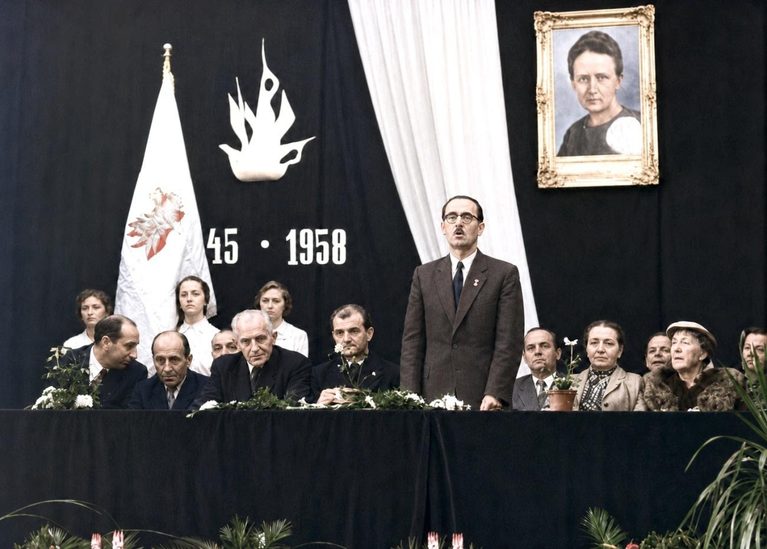
By • September 2, 2026The story of Maria Skłodowska-Curie High School No. 1 in Szczecin This statement will be in the form of a capsule summary. The point was to capture the history of Szczecin since 1945 in a kaleidoscopic abridgement. For this abridgement, it was necessary to find a certain key that would make it possible to… -
Ińsko Film Summer
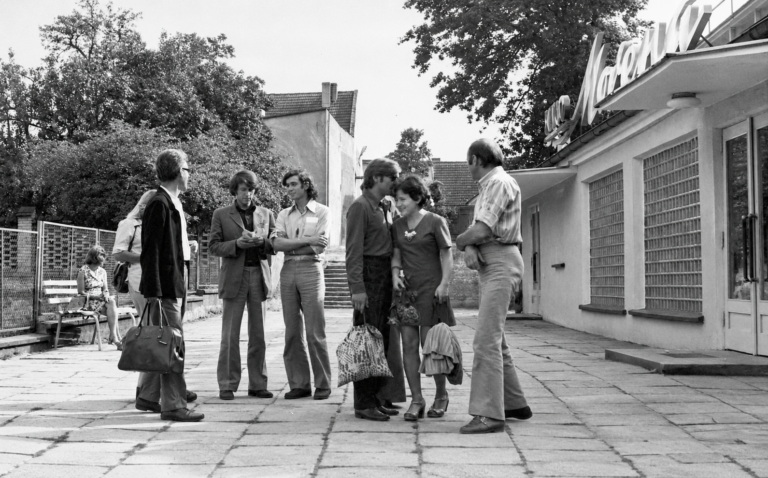
By • September 2, 2026a festival with a long tradition and a transformative turn According to the festival’s main initiator and long-time organizer, Bogdan Kowalski, Ińsko—situated by a beautiful lake and equipped with a cinema—was an ideal place for summer film gatherings. The inspiration came from Łagów and the Lubuskie Film Summer held there since 1969, while… -
Wały Chrobrego – the landmark of the capital of Western Pomerania
By • September 2, 2026When talking about Szczecin, it is very quickly associated with the post-war name “Wały Chrobrego” (Chrobry Embankment). It is one of the most recognizable places in the city. It constitutes a beautiful complex of public utility buildings, especially the current West Pomeranian Voivodeship Office. This building, along with its surroundings in the past and present,… -
The Border in Pomerania in the International Political Game of the 20th Century
By • July 6, 2026The shifting of Poland’s borders far to the west, and along with it, the division of Pomerania by a state border, was among the most significant and unexpected geopolitical consequences of World War II. Even before 1939, there was little indication that West Pomerania, and particularly Szczecin (Stettin) and the mouth of the Oder River,… -
Museums of West Pomerania after World War II
By • June 17, 2026Museums of West Pomerania after World War II In the spring of 1945, West Pomerania found itself in a state of deep social and material crisis. The fighting at the end of the war had led to the destruction of many towns, and a significant portion of the former public institutions ceased to function. The… -
Mikhail Gorbachev in Szczecin – July 13, 1988
By • April 28, 2026On July 13, 1988, Szczecin was visited by the top leader of the USSR: Mikhail Gorbachev, General Secretary of the Central Committee of the Communist Party of the Soviet Union. At that time, he was one of the most recognizable and widely discussed world leaders. The reasons for Gorbachev’s popularity lay in his… -
John Paul II in Szczecin – June 11, 1987
By • April 28, 2026On June 11, 1987, Szczecin was on the route of John Paul II’s third pilgrimage to Poland. The pope’s only visit to the city was a major religious celebration and at the same time a massive organizational undertaking. The election of Polish Cardinal Karol Wojtyła as pope in 1978 was met in Poland with… -
Our window to the world: How people escaped from Western Pomerania during the Polish People’s Republic
By • April 21, 2026The phenomenon of escapes from communist Poland accompanied the regime almost from its inception. In this context, the years 1945–1949 constituted a particular period in Western Pomerania. It was a time of mass migrations within the newly demarcated state borders and the construction of the structures of the new authorities. The specific chaos accompanying these… -
The conflict in the Pomeranian Bay in the years 1985–1989 and after 1990
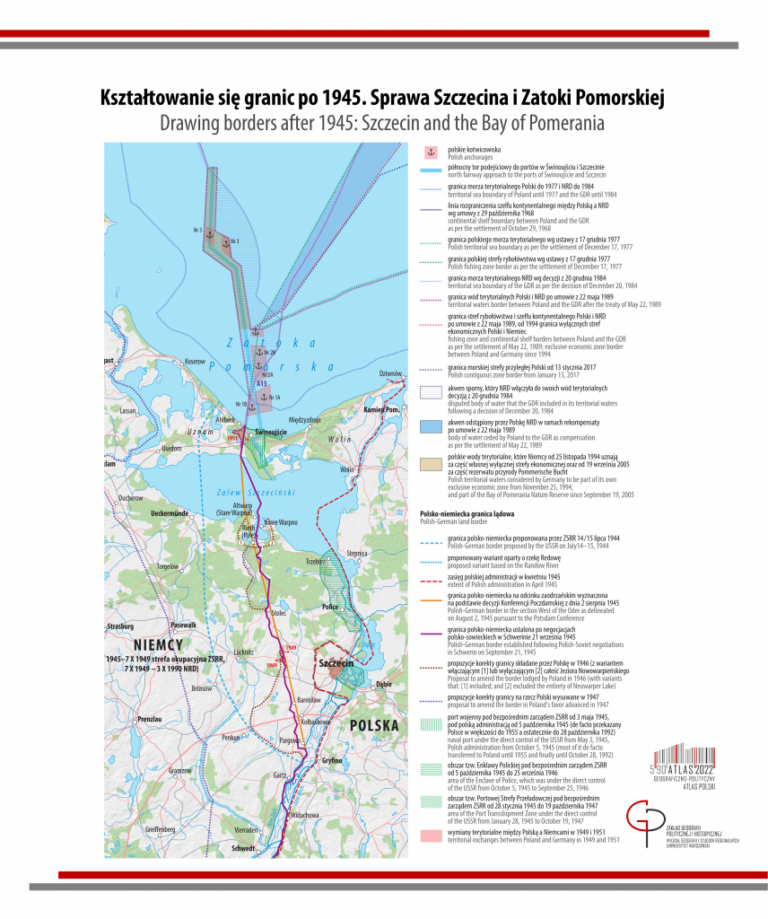
By • February 10, 2026The conflict in the Pomeranian Bay in the years 1985–1989 and after 1990 On January 1, 1985, the decree issued by the government of the German Democratic Republic on the extension of territorial waters to 12 nautical miles (M) entered into force. This document, dated December 20, 1984, implemented the 1982 GDR State… -
Junak and Smyk – legends of Szczecin’s automotive industry
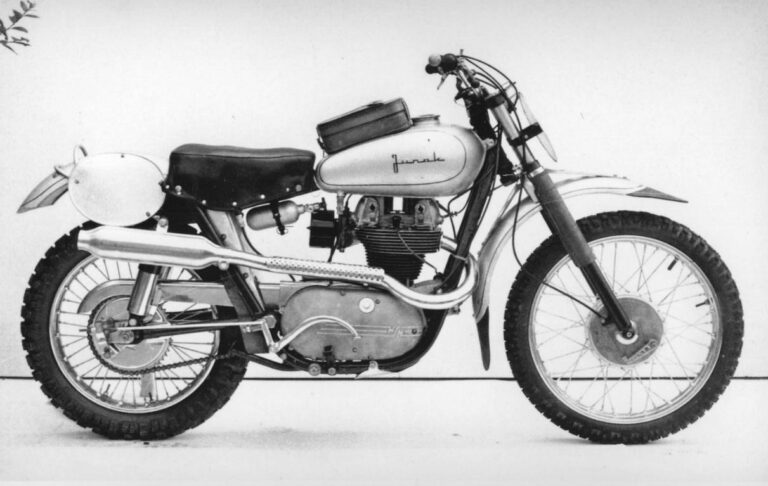
By • February 10, 2026The time has come to face the legend of the Junak. This is a dangerous task, because for many people it is a practically mythically perfect vehicle, simply because it is Polish. As if we were marked by God to invent and produce perfect things, in this case motorcycles. […] Every word of criticism… -
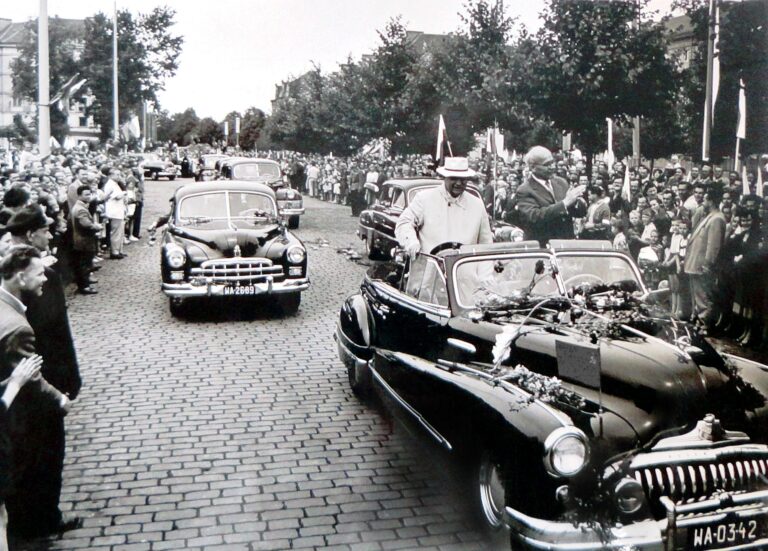
Nikita Khrushchev in Szczecin.
By • February 4, 2026On a beautiful, sunny Friday, July 17, 1959, at 11:45 AM, an Il-18 landed at the airport near Szczecin in Goleniów, carrying the Prime Minister of the Soviet Union and First Secretary of the Central Committee of the CPSU, Nikita Khrushchev. This visit—one of three, alongside the city’s visits by John Paul II in 1987… -
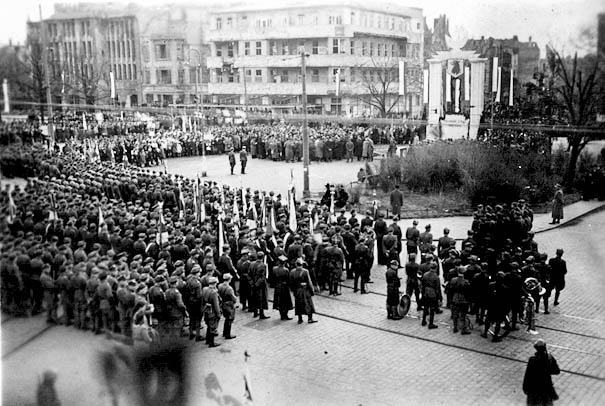
We hold watch over the Oder
By • February 3, 2026The slogan ‘We hold watch over the Oder’ returns every few or dozen years, and although the political and social contexts change, it still evokes emotions. Their scale is no longer what it was when it was conceived—during the initial postwar period—yet it remains fraught with references that trigger broad historical connotations. The most important… -
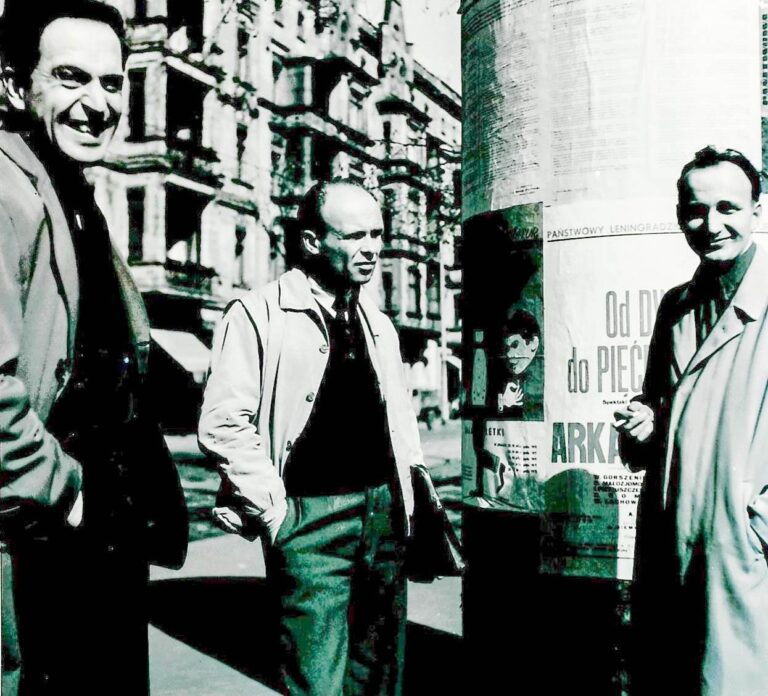
The literary environment of Szczecin (1945–1989)
By • February 3, 2026The beginning of Polish literary life in Szczecin was marked by the campaign of “cultural repolonization of the Recovered Territories,” also known as “literary settlement.” Prof. Erazm Kuźma, an eminent literary theorist and historian, considered this project to be “an artificial creation that disintegrated as quickly as it arose.” At the same time, he pointed… -
Transformations in Szczecin’s education system in the years 1989–2000
By • February 3, 2026The political and systemic transformations that occurred in Poland after 1989 manifested themselves in all major spheres of state functioning, including education. They concerned, among other things, the reorganization of the school management system, the development of institutional autonomy, the emergence of proprietary curricula, as well as new forms of general and vocational education. These… -
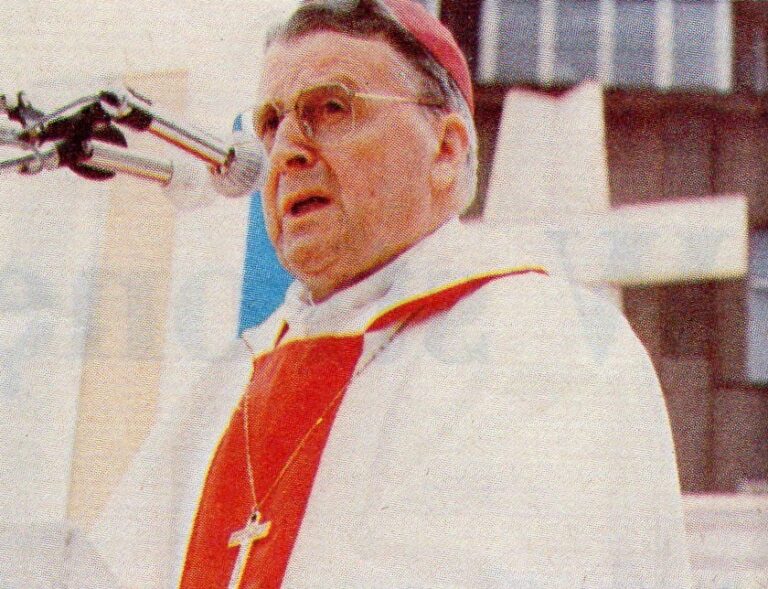
Archbishop Kazimierz Majdański
By • February 3, 2026Kazimierz Majdański was born on March 1, 1916, in Małgów near Kalisz, as the youngest of thirteen children of Rozalia and Józef Majdański. His family was deeply religious, so it came as no surprise to anyone that after graduating from the Pius X Gimnazjum (secondary school) in Włocławek and passing his matura (high school exit… -
Multinational Pomerania
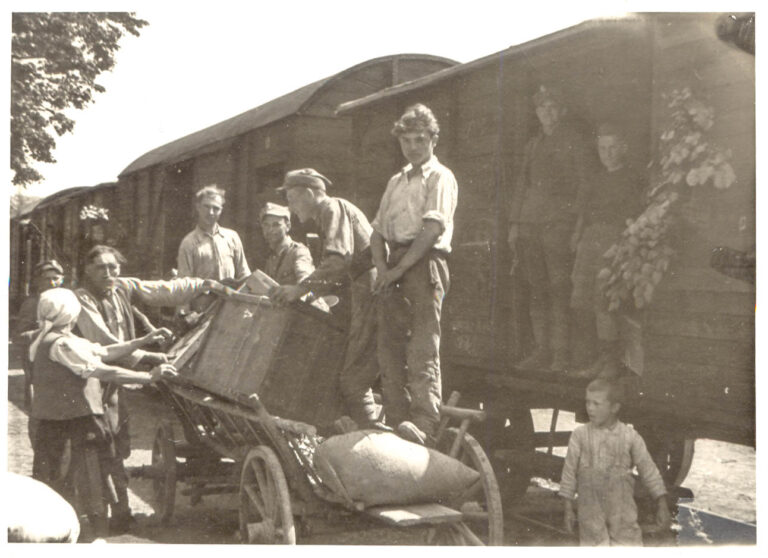
By • January 30, 2026Demographic and cultural transformations that took place in West Pomerania after 1945 constitute one of the most dramatic and complex chapters of Poland’s post-war history. Immediately after the war, the region became a melting pot where the remaining German population encountered Polish settlers. Alongside Poles, representatives of various national and ethnic minorities also arrived or… -
The Rise and Fall of the Loitz Banking House
By • January 20, 2026Oto tłumaczenie na język angielski:The driving force behind the urban economy at the turn of the 15th and 16th centuries was international trade and the development of banking operations, which allowed the wealthiest burghers to dynamically multiply their fortunes. The patricians held both economic and political power in the cities, serving as councillors, bankers, landowners,… -
Euroregion Pomerania – Past, Present, and Future
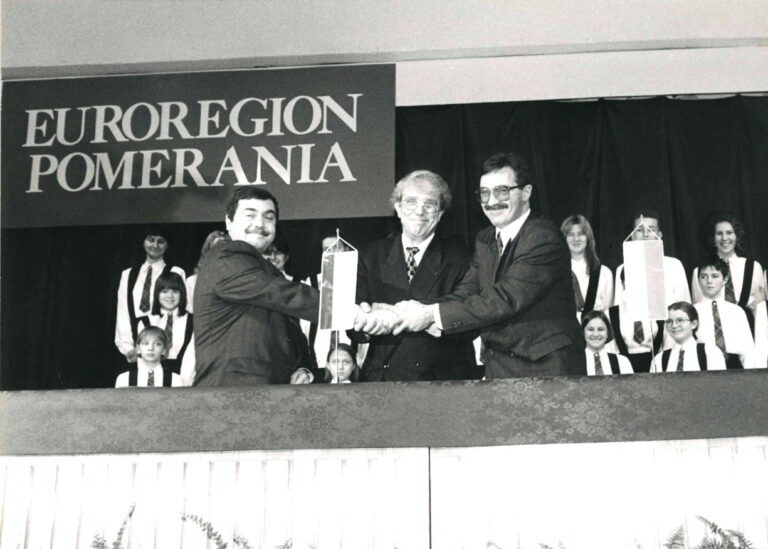
By • January 8, 2026The idea of establishing euroregions in Europe emerged in the second half of the 1950s. The underlying basis for such cross-border agreements was the economic devastation of borderlands following World War II, as well as a lack of mutual understanding among people resulting from war trauma and language barriers. The first euroregion was established on… -
The Economy of Western Pomerania 1945–1989
By • October 22, 2025Western Pomerania before 1945 Before the Second World War, Western Pomerania occupied a marginal position in the economic life of Germany. The most important branch of the economy was agriculture, while major state investments and the involvement of large capital were limited to Szczecin and were mainly connected with the maritime economy. However, the economic… -
From Protest to Transformation
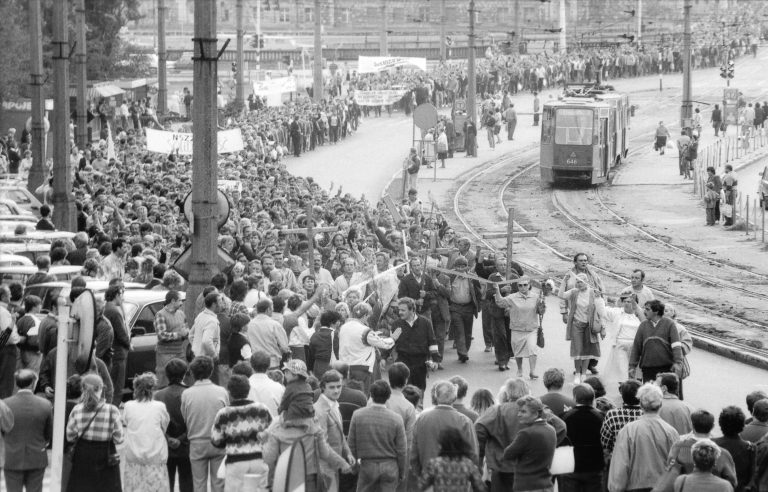
By • August 26, 2025Szczecin and the Peaceful Dismantling of Communist Rule, 1988–1989 In 1988, the process of a gradual and peaceful dismantling of the communist dictatorship in Poland began. Szczecin and the Western Pomerania region played an important role in this transformation. From the mid-1980s, Poland experienced a kind of stalemate in relations between the authorities and the… -
The “Solidarity” Carnival
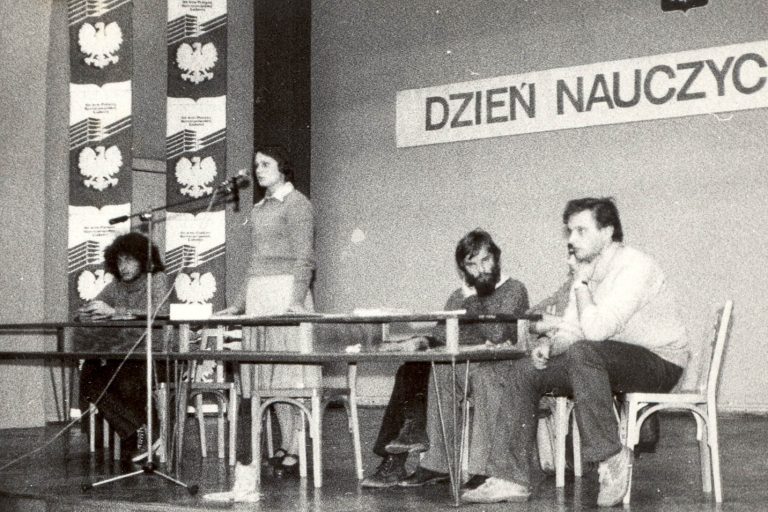
By • August 26, 2025In the summer of 1980, a massive wave of strikes swept across Poland, leading to the creation of the Independent Self-Governing Trade Union “Solidarity” and the emergence of a vast ten-million-strong social movement that transformed the one-party socio-political system of the Polish People’s Republic. Western Pomerania was one of its birthplaces and most important centers…. -
“Dana” Clothing Industry Plant
By • August 26, 2025The “Dana” Clothing Industry Plant (1945–2002) was not only one of Szczecin’s symbols but also a reflection of the ambitions and limitations of the socialist economy. Its history tells the story of building an industry almost from scratch, in the realities of postwar chaos, ideological control, and shortages—yet also of creativity, determination, and the importance… -
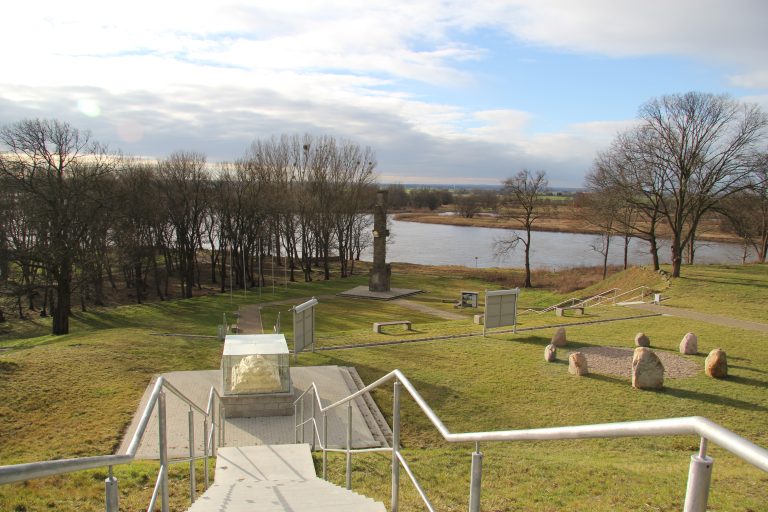
The Cedynia–Gozdowice–Siekierki National Memorial Area
By • August 26, 2025The Cedynia–Gozdowice–Siekierki National Memorial Area is located in a bend of the Oder River, encompassing the westernmost part of Poland. It includes a series of memorial sites and monuments situated along the riverbank, stretching from Cedynia in the north through Osinów Dolny, Stara Rudnica, Siekierki, Stare Łysogórki, and Gozdowice, down to Czelin in the south…. -
State Agricultural Farms in Western Pomerania (1945–1991)
By • August 26, 2025The beginning of the state sector in Polish agriculture is usually associated with the establishment of the State Agricultural Farms (Państwowe Gospodarstwa Rolne, PGR) in 1949. In reality, however, the creation of the state agricultural sector had already begun in 1946, with the formation of the State Land Estates (Państwowe Nieruchomości Ziemskie, PNZ). Their task… -
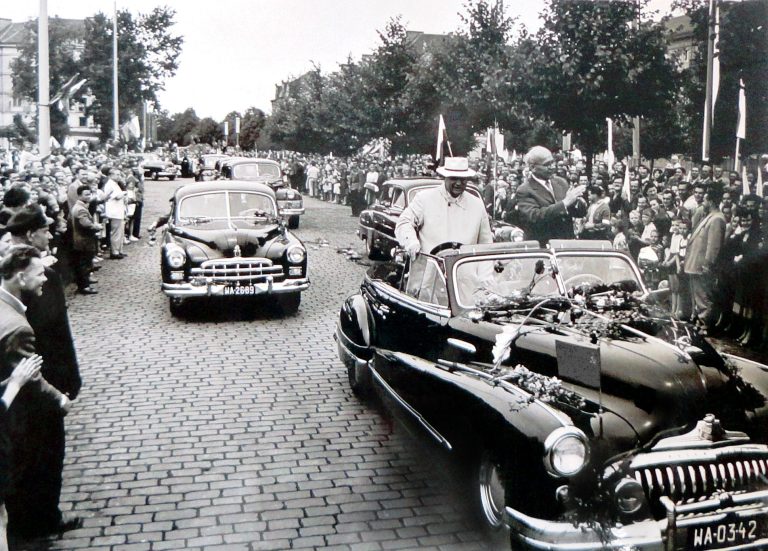
Nikita Khrushchev in Szczecin.
By • August 26, 2025ChatGPT powiedział: On a beautiful, sunny Friday, July 17, 1959, at 11:45 a.m., an IL-18 aircraft landed at the Goleniów airport near Szczecin, carrying the Prime Minister of the Soviet Union and First Secretary of the CPSU Central Committee, Nikita Khrushchev. This visit, along with the city visits by Pope John Paul II in… -
Under the Czechoslovak flag.
By • August 26, 2025Institutional Presence of the Southern Neighbor in Szczecin, 1945–1989 After 1945, Szczecin, as a Polish port, became an important component of Czechoslovakia’s economic infrastructure, particularly for maritime trade. The presence of the southern neighbor on the Oder took on an institutional and multi-faceted character — ranging from a free-trade zone in the port, through industrial… -
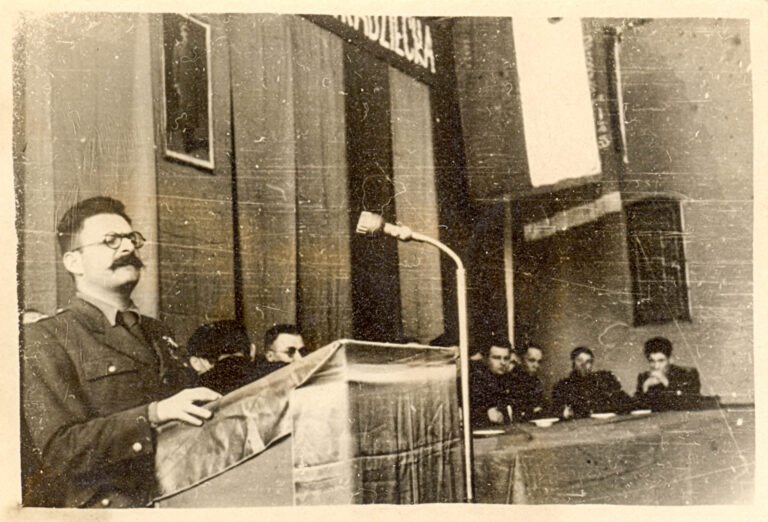
Leonard Borkowicz and His Pomerania
By • August 26, 2025“When I began dealing with the affairs of the Szczecin Land, which was in the spring of 1945, I had just turned thirty-four. Behind me was a rather eventful life: prisons, the Bereza camp, emigration, service in the Soviet Army and the Polish Army. There was enough time for my views, in the light of…