


-
](https://historiapomorza.pl/wp-content/uploads/2026/09/image-21-767x632.jpeg)
Oderburg (Oderburg Castle)
By • September 2, 2026Oderburg – Oderburg Castle, although it has long ceased to exist, arouses great interest among both the residents of Western Pomerania and visiting guests. It was located between the present-day Ignacy Łyskowski Street (formerly Burgstrasse), the small streets of Schifferstrasse (Żeglarska, later liquidated after the war) connecting with Werftstrasse (Stoczniowa, also non-existent), as well… -
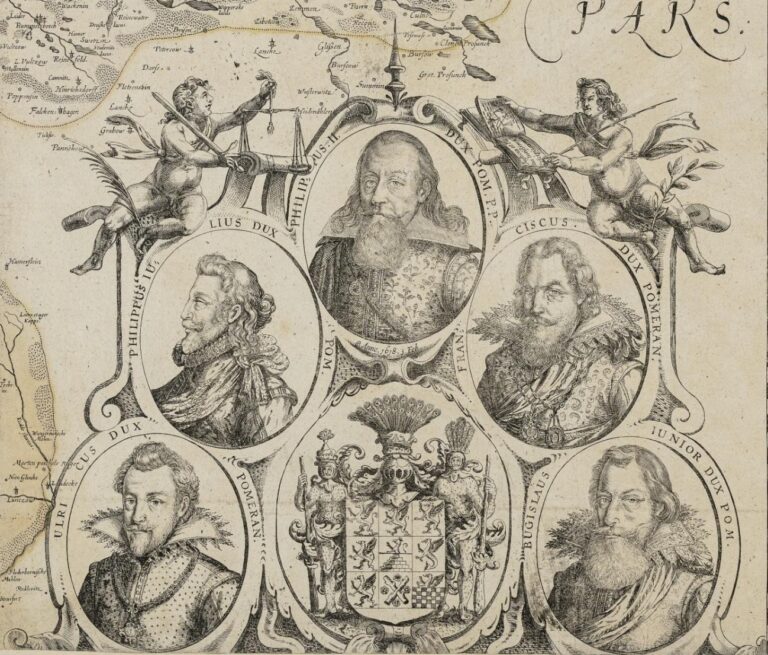
The Griffin Dynasty, 1523–1637
By • April 21, 2026Dynastic policy The reign of Duke Bogusław X, who died in 1523, was a turning point—a transition from the medieval monarchy to the modern state and Renaissance culture (also in its political dimension). He had nine legitimate children: Christopher (d. c. 1521), Anne (b. 1491/1492, d. 1550), George (1493–1531), Casimir (1494–1518), Elizabeth (d. before 1518),… -
Augustine of Stargard and the Beginnings of Pomeranian Historiography
By • April 21, 2026Augustine was a monk at the Augustinian monastery in Stargard. In older literature, he was referred to as Angelus; however, more recent research indicates that the more accurate form of his name is Augustine. His work, which has survived to our day through copies included in later records, is the so-called Protocol (Protocollum), written in… -
Eric of Pomerania, King of Denmark, Norway, and Sweden, and Duke of Słupsk (c. 1382 – May 23, 1459)
By • April 21, 2026There are few figures in the medieval history of Western Pomerania of such stature as the King of Denmark, Norway, and Sweden, and Duke of Słupsk, Eric of Pomerania. His life embodies nearly everything that fate can prepare for a human being, beginning with his almost miraculous discovery in childhood by the Danish Queen Margaret… -
St. Mary’s Church in Stargard
By • April 21, 2026Stargard’s Church of St. Mary, which currently serves as a collegiate church, is the most important Late Gothic monument of Western Pomerania. Its architecture, despite the near-total destruction of the Old Town, did not suffer too severely, and the “renovation of the century” carried out in recent years restored the splendor of its re-Gothicization conducted… -
Hanseatic Culture and Art in Western Pomeranian Towns
By • April 21, 2026The Hanseatic League was primarily a community of merchants engaged in long-distance trade. Western Pomerania was the Baltic coastal region with the highest number of members in this union, which included the following urban centers: Białogard, Darłowo, Goleniów, Gryfice, Kamień, Kołobrzeg, Koszalin, Sławno, Słupsk, Stargard, Szczecin, Trzebiatów, and Wolin. Their participation in Hanseatic life was… -
Pomeranian guilds and their organization
By • April 21, 2026Cechy w pomorskich miastach zaczęły się kształtować w II połowie XIII wieku. W niektórych ośrodkach ich rozwój zapoczątkowały już przywileje lokacyjne wspominające o możliwości zakładania organizacji zawodowych i wolności gospodarczej. W innych proces powstawania systemu cechowego przebiegał stopniowo. Przyczyniała się do tego z jednej strony koncentracja produkcji, z drugiej zaś walka konkurencyjna. W zasadzie w… -
The Szczecin Congress of 1570
By • April 21, 2026In the era of the Age of Discovery, new trade routes were formed. The Mediterranean Sea was losing its significance, while the role of routes passing through the Baltic and North Seas was growing. States with capitalist economies began to emerge in Europe, needing raw materials from Central and Eastern Europe for their development. Their… -
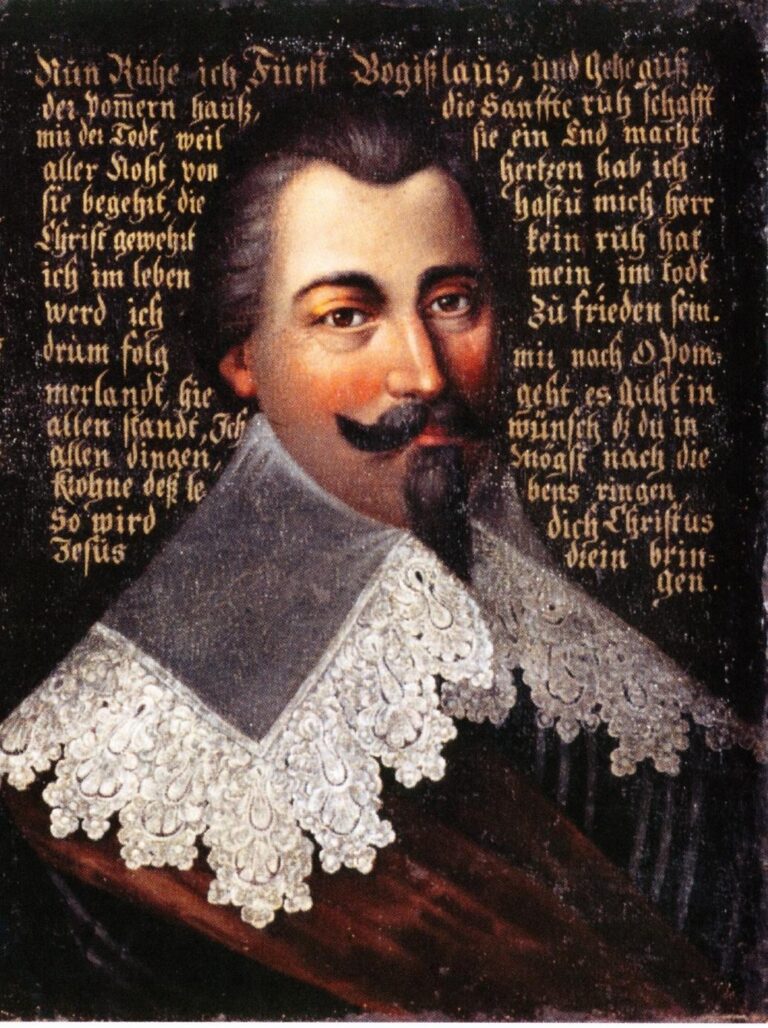
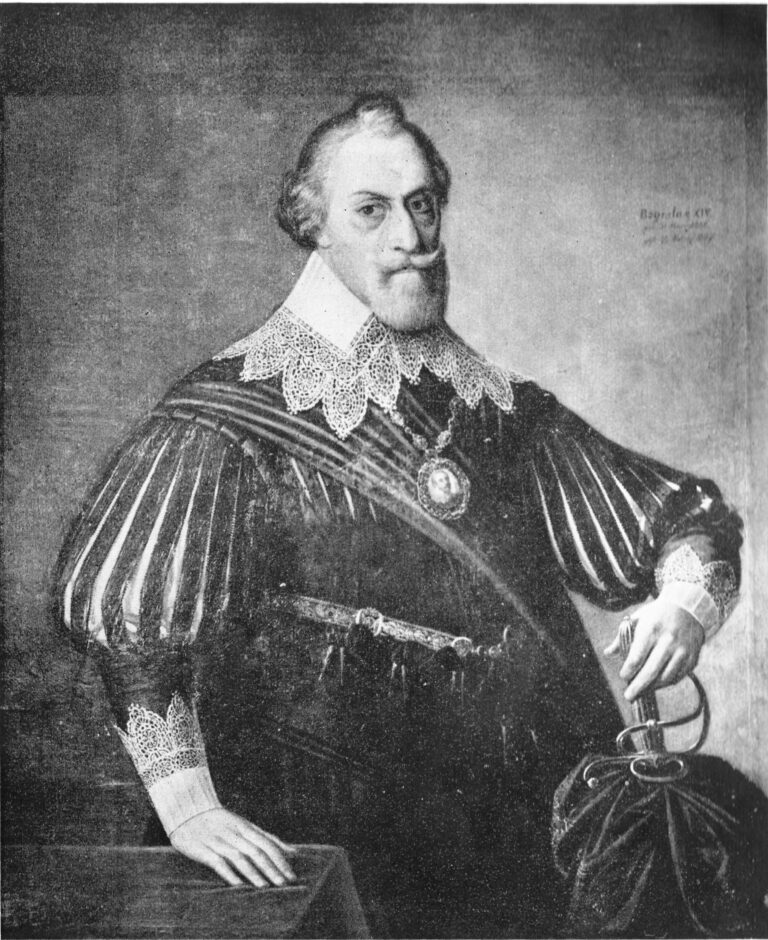
Bogusław XIV ostatni Gryfita
By • April 21, 2026Ostatni Gryfita Bogusław XIV urodził się 31 marca 1580 roku na zamku w Barth i był trzecim z kolei synem Bogusława XIII i jego pierwszej żony Klary księżnej brunszwickiej. W młodości wraz z braćmi pobierał nauki domowe. Jednocześnie był też przygotowywany przez ojca do pełnienia samodzielnych rządów. Uczestniczył w obradach sejmików stanów pomorskich, zapoznawał… -
Pomeranian-Polish relations in the times of the Griffins
By • February 10, 2026Pomeranian-Polish relations in the times of the Griffins in the 12th century included the exercise of supremacy over the Duchy of Pomerania by Polish rulers (Polish fiefdom). In the following centuries, mutual relations were based on dynastic ties, including those of Bogislaw X with Anna Jagiellon (1491), as well as political and military alliances against… -
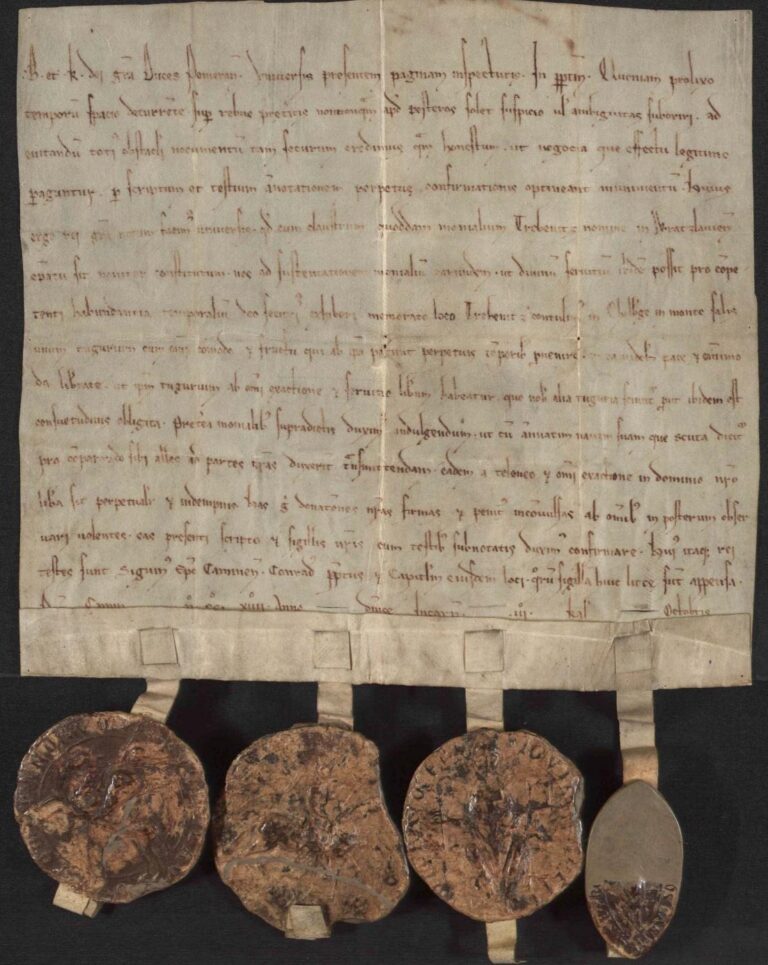
The Political System of Pomerania Under the Griffin Dynasty
By • February 3, 2026Initially, the Duchy of Pomerania constituted a patrimonial monarchy governed by ducal law. During the thirteenth century, with colonization and the adoption of Western models (colonization under German law), the duchy transformed into a feudal monarchy, with relations based on feudal law and estate privileges. Following a period of feudal dependence on Polish dukes, the… -
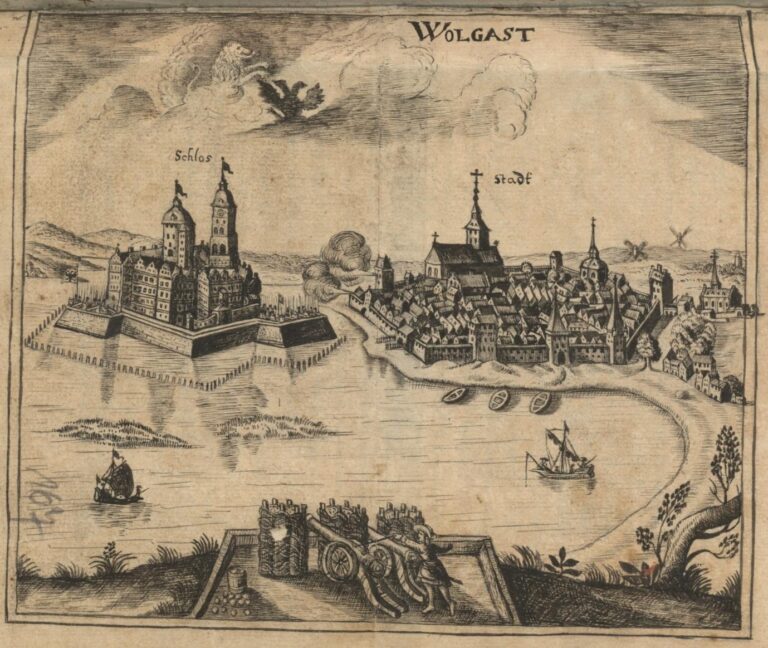
The Municipal System in Ducal Pomerania
By • February 3, 2026The colonization under German law in Pomerania during the thirteenth century introduced a new form of organization for the population engaged in non-agricultural occupations. In place of strongholds and their adjacent trading settlements (suburbia), towns chartered under Magdeburg or Lübeck law emerged in accordance with Western models. They constituted self-governing communes, with their own administrative… -
The Duchy of Pomerania and the Thirty Years’ War
By • January 30, 2026On May 23, 1618, the Second (according to some researchers, the Third) Defenestration of Prague took place in Prague. Two imperial governors and their secretary were thrown out of the windows of Prague Castle (Hradčany), which triggered one of the bloodiest conflicts in early modern Europe, known as the Thirty Years’ War (1618–1648). This was… -
The Rise and Fall of the Loitz Banking House
By • January 20, 2026Oto tłumaczenie na język angielski:The driving force behind the urban economy at the turn of the 15th and 16th centuries was international trade and the development of banking operations, which allowed the wealthiest burghers to dynamically multiply their fortunes. The patricians held both economic and political power in the cities, serving as councillors, bankers, landowners,… -
Griffin – Coat of Arms of Western Pomerania
By • January 9, 2026A coat of arms is a graphic symbol placed on the field of a shield, created according to specific rules, symbolically representing its owner. However, we can only call such a graphic sign a coat of arms when it becomes hereditary, when a given person, family, clan, or city uses it continuously without changing it… -
The Manorial–Serf Economy in the Ducal Domains
By • September 28, 2025When Bogislaw X succeeded in uniting Pomerania in 1478, the ducal estates were in a deplorable condition. Severely diminished, they were almost entirely in the hands of land vogts (stewards), who remitted only a small portion of the income derived from peasant labor to the ducal treasury. In this situation, Bogislaw X decided to… -
The economy of Pomerania in the ducal period (16th – early 17th century)
By • September 28, 2025The Economy of Pomerania in the Ducal Period (16th – early 17th century) In the 16th and early 17th centuries, agriculture was the main branch of the Pomeranian economy, even though the region’s soils were not among the most fertile. Medium- and low-quality soils dominated, while the more fertile black earths and brown soils were… -
Pomeranian society in the ducal period (16th – early 17th century)
By • September 28, 2025The total population of Pomerania in the 16th and early 17th centuries is very difficult to calculate precisely. We have only estimates, which indicate that in the first decades of the 16th century about 350,000 people lived in Pomeranian lands. Around 100 years later (before the catastrophe of the Thirty Years’ War), the population of… -
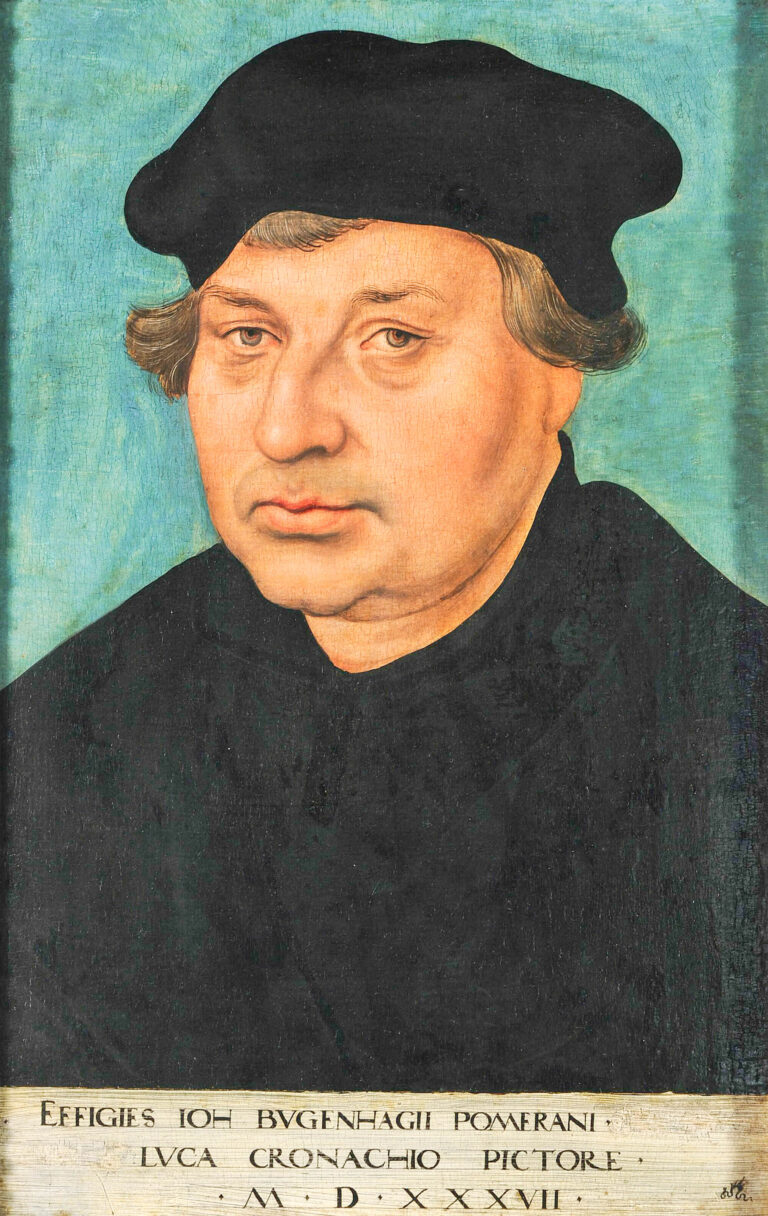
Lutheran religious breakthrough in Pomerania
By • August 26, 2025Martin Luther’s appearance in 1517 caused great upheaval throughout the Empire. It did not yet mean a break with the Catholic Church; nevertheless, it could not pass without a reaction, both from the ecclesiastical hierarchy and from the emperor himself (from 1519 – Charles V). By “diagnosing” the state of the Church and the role…